A nurse is caring for a client who has streptococcal pharyngitis and an allergy to penicillin. The nurse
should recognize that which of the following drugs can be safely administered to this client?
- Azithromycin/Eryt
...
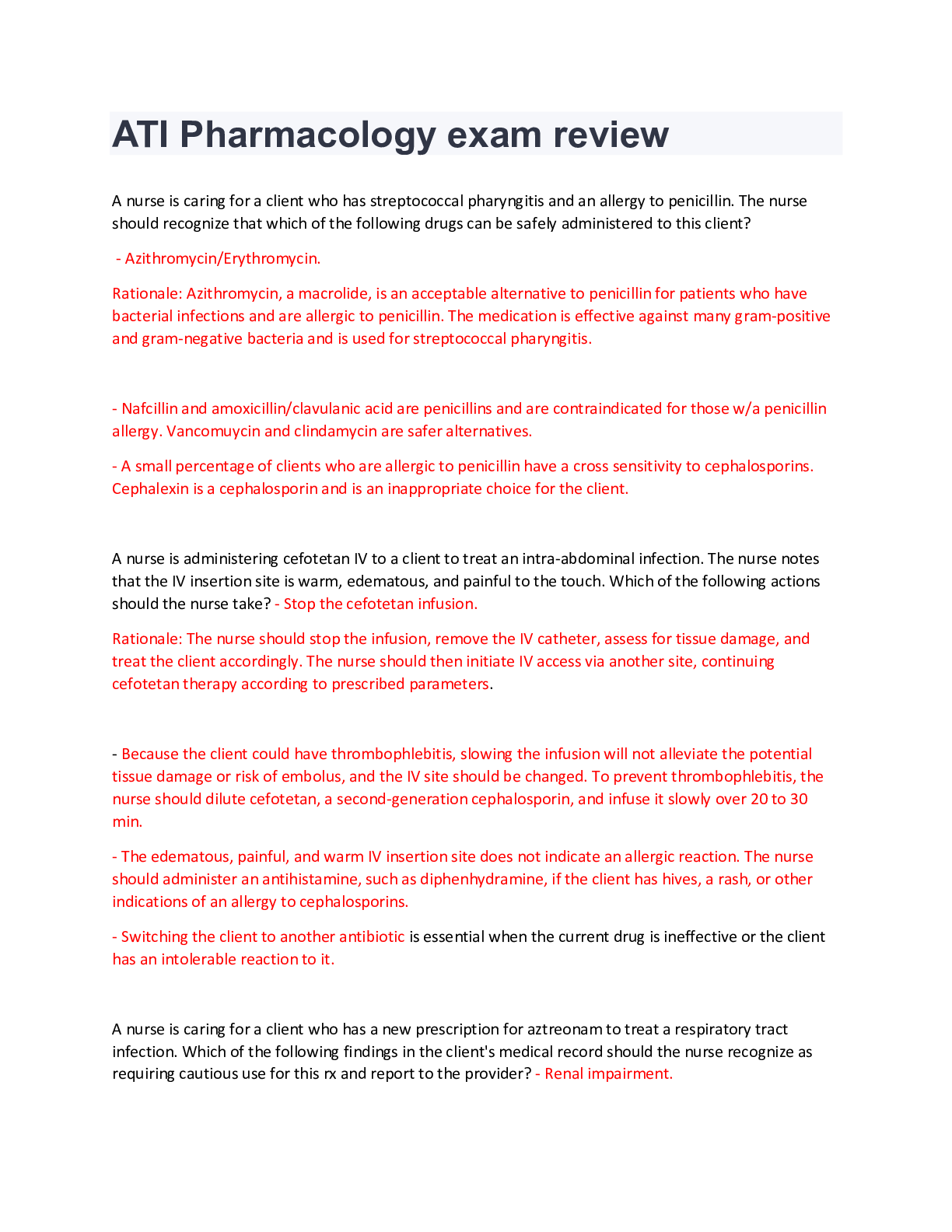
A nurse is caring for a client who has streptococcal pharyngitis and an allergy to penicillin. The nurse
should recognize that which of the following drugs can be safely administered to this client?
- Azithromycin/Erythromycin.
Rationale: Azithromycin, a macrolide, is an acceptable alternative to penicillin for patients who have
bacterial infections and are allergic to penicillin. The medication is effective against many gram-positive
and gram-negative bacteria and is used for streptococcal pharyngitis.
- Nafcillin and amoxicillin/clavulanic acid are penicillins and are contraindicated for those w/a penicillin
allergy. Vancomuycin and clindamycin are safer alternatives.
- A small percentage of clients who are allergic to penicillin have a cross sensitivity to cephalosporins.
Cephalexin is a cephalosporin and is an inappropriate choice for the client.
A nurse is administering cefotetan IV to a client to treat an intra-abdominal infection. The nurse notes
that the IV insertion site is warm, edematous, and painful to the touch. Which of the following actions
should the nurse take? - Stop the cefotetan infusion.
Rationale: The nurse should stop the infusion, remove the IV catheter, assess for tissue damage, and
treat the client accordingly. The nurse should then initiate IV access via another site, continuing
cefotetan therapy according to prescribed parameters.
- Because the client could have thrombophlebitis, slowing the infusion will not alleviate the potential
tissue damage or risk of embolus, and the IV site should be changed. To prevent thrombophlebitis, the
nurse should dilute cefotetan, a second-generation cephalosporin, and infuse it slowly over 20 to 30
min.
- The edematous, painful, and warm IV insertion site does not indicate an allergic reaction. The nurse
should administer an antihistamine, such as diphenhydramine, if the client has hives, a rash, or other
indications of an allergy to cephalosporins.
- Switching the client to another antibiotic is essential when the current drug is ineffective or the client
has an intolerable reaction to it.
A nurse is caring for a client who has a new prescription for aztreonam to treat a respiratory tract
infection. Which of
[Show More]






.png)




.png)