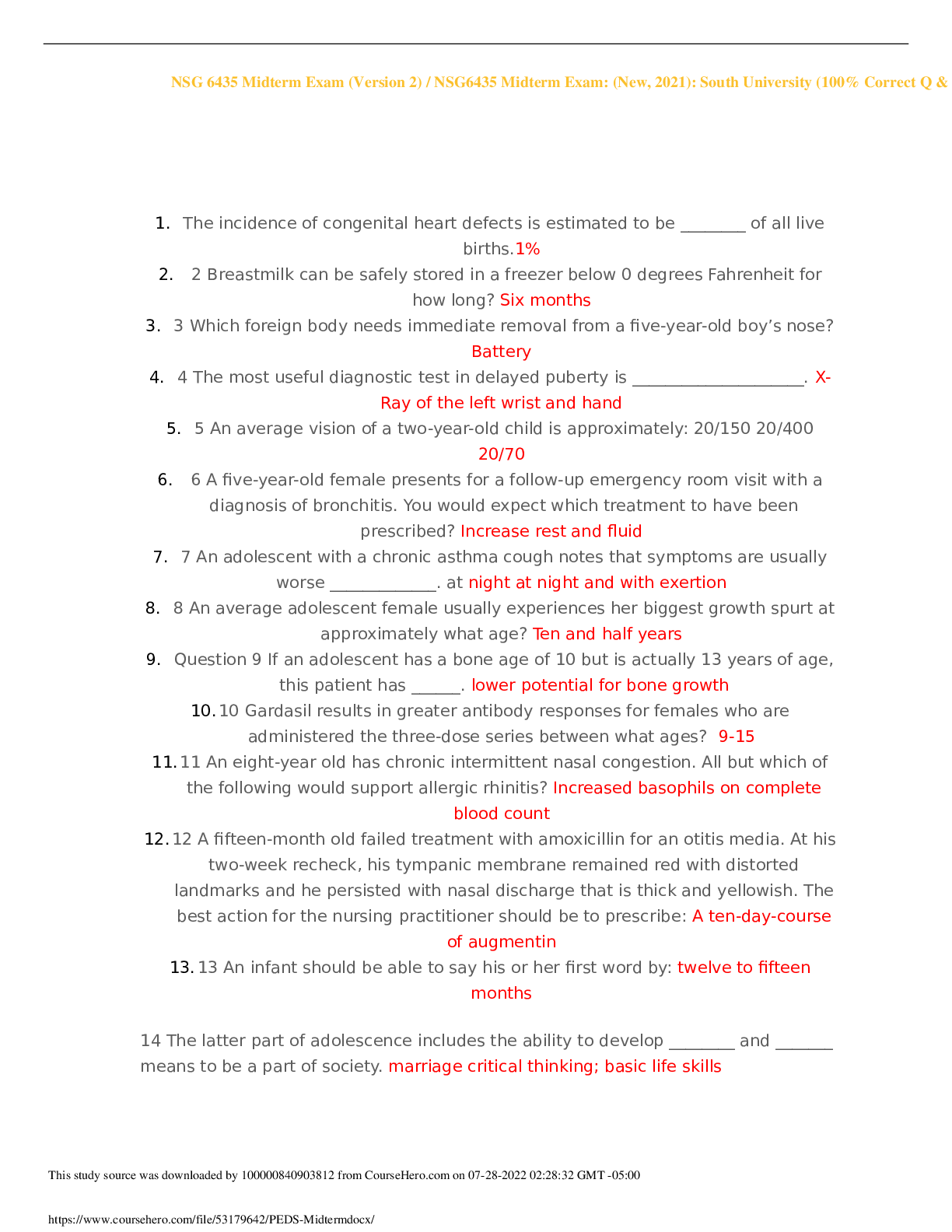
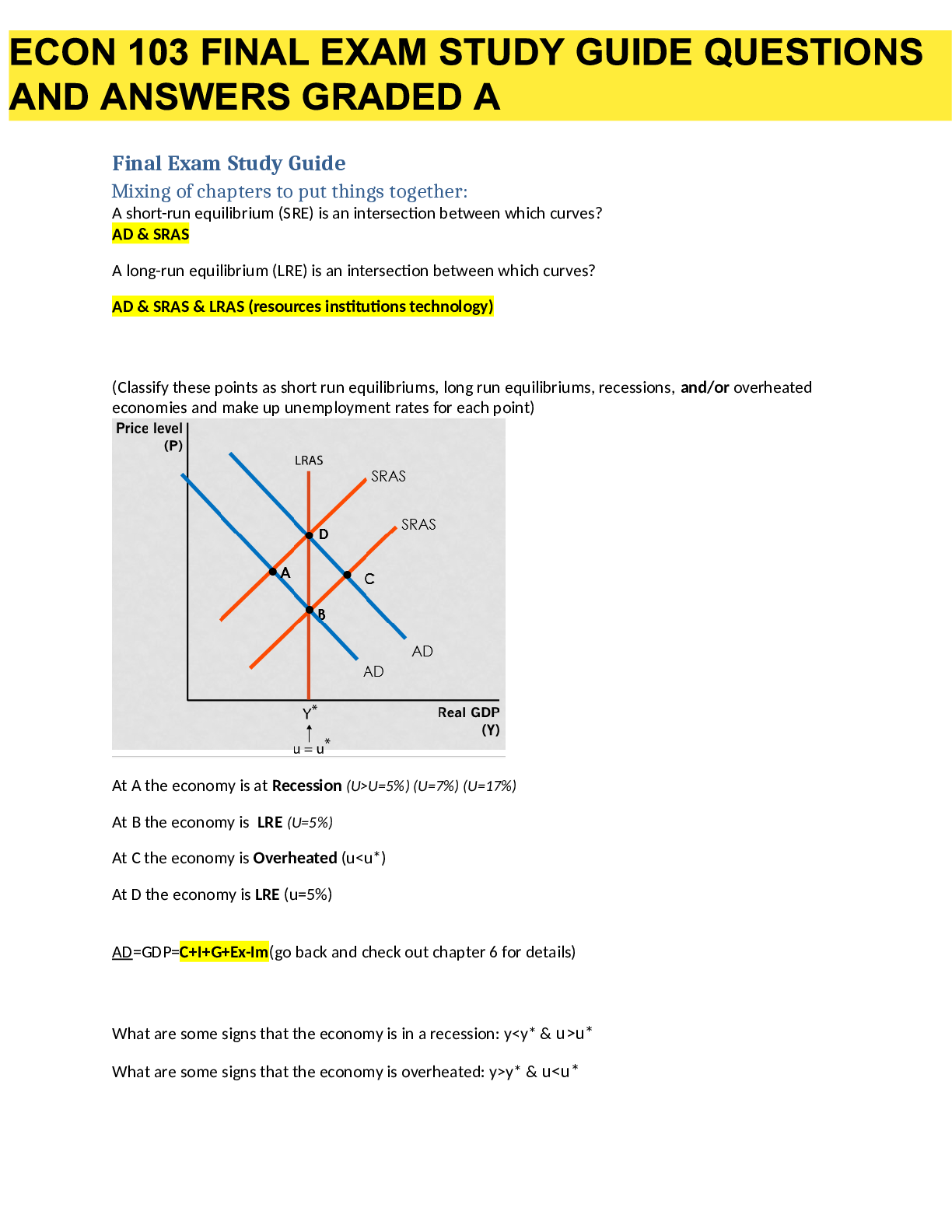
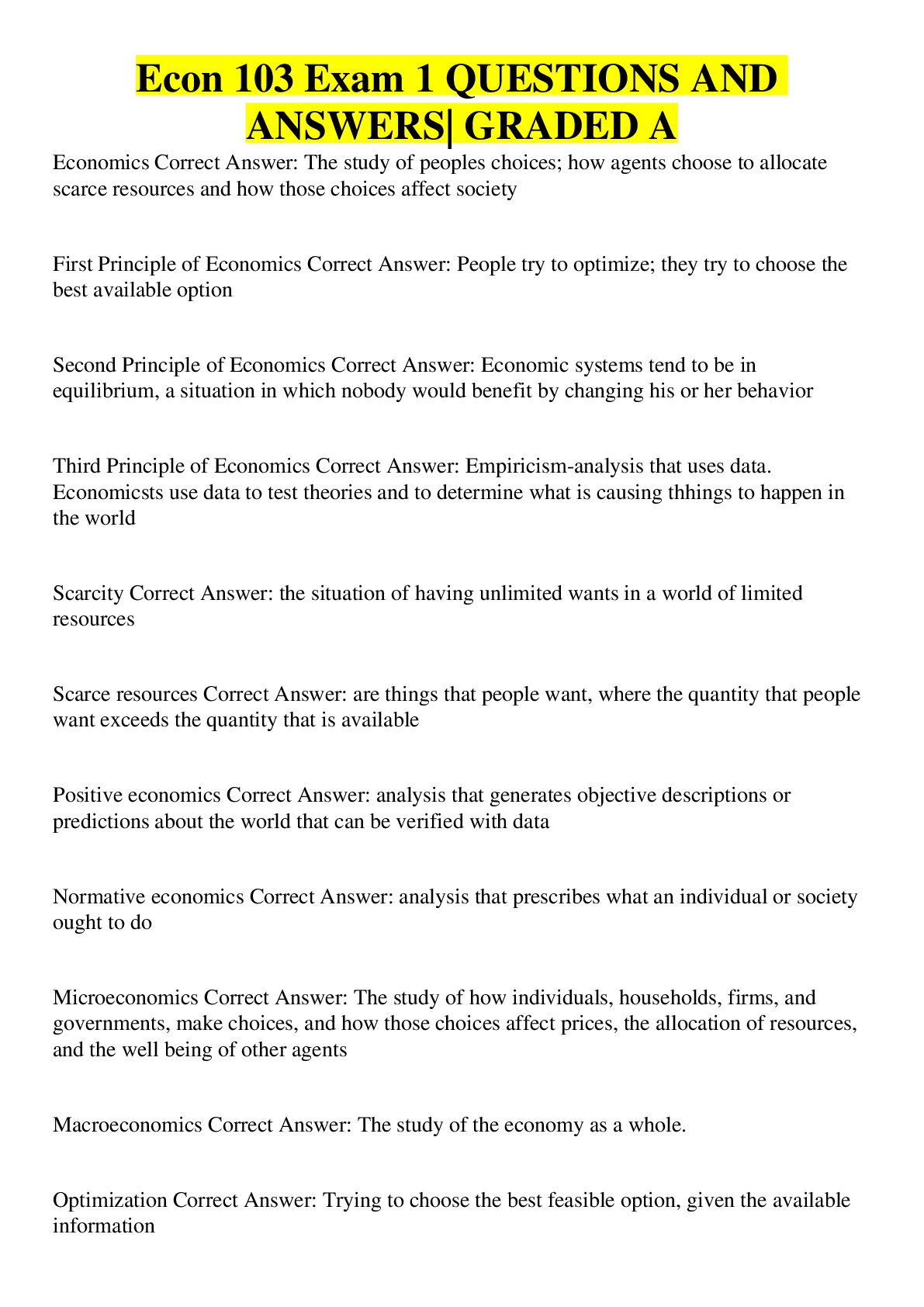
ECON 103 FINAL EXAM STUDY GUIDE QUESTIONS AND ANSWERS GRADED A
Document Content and Description Below
Final Exam Study Guide
Mixing of chapters to put things together:
A short-run equilibrium (SRE) is an intersection between which curves?
AD & SRAS
A long-run equilibrium (LRE) is an intersection between which curves?
...
[Show More]
Last updated: 4 years ago
Preview 1 out of 12 pages
Instant download
Buy this Document to get the Full Access Instantly
Provided by Students Who Aced it
We Verify Document Content to Gurantee Accuracy
Reviews( 0 )
Document information
Connected school, study & course
About the document
Uploaded On
Sep 17, 2022
Number of pages
12
Written in
All

Additional information
This document has been written for:
Uploaded
Sep 17, 2022
Downloads
0
Views
83
Topic Tags
Recommended For You
Get more on EXAM »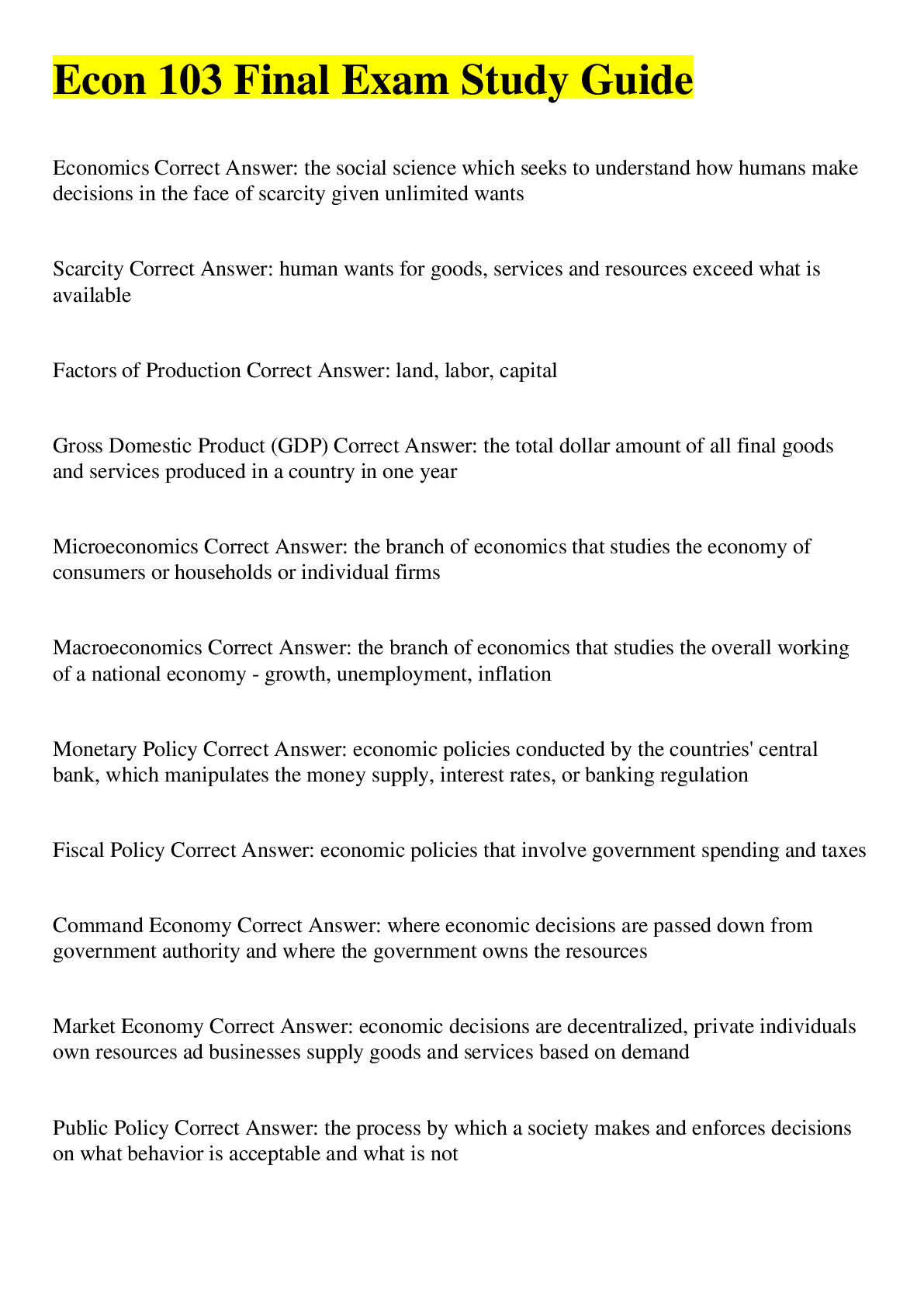

$10
16 Pages
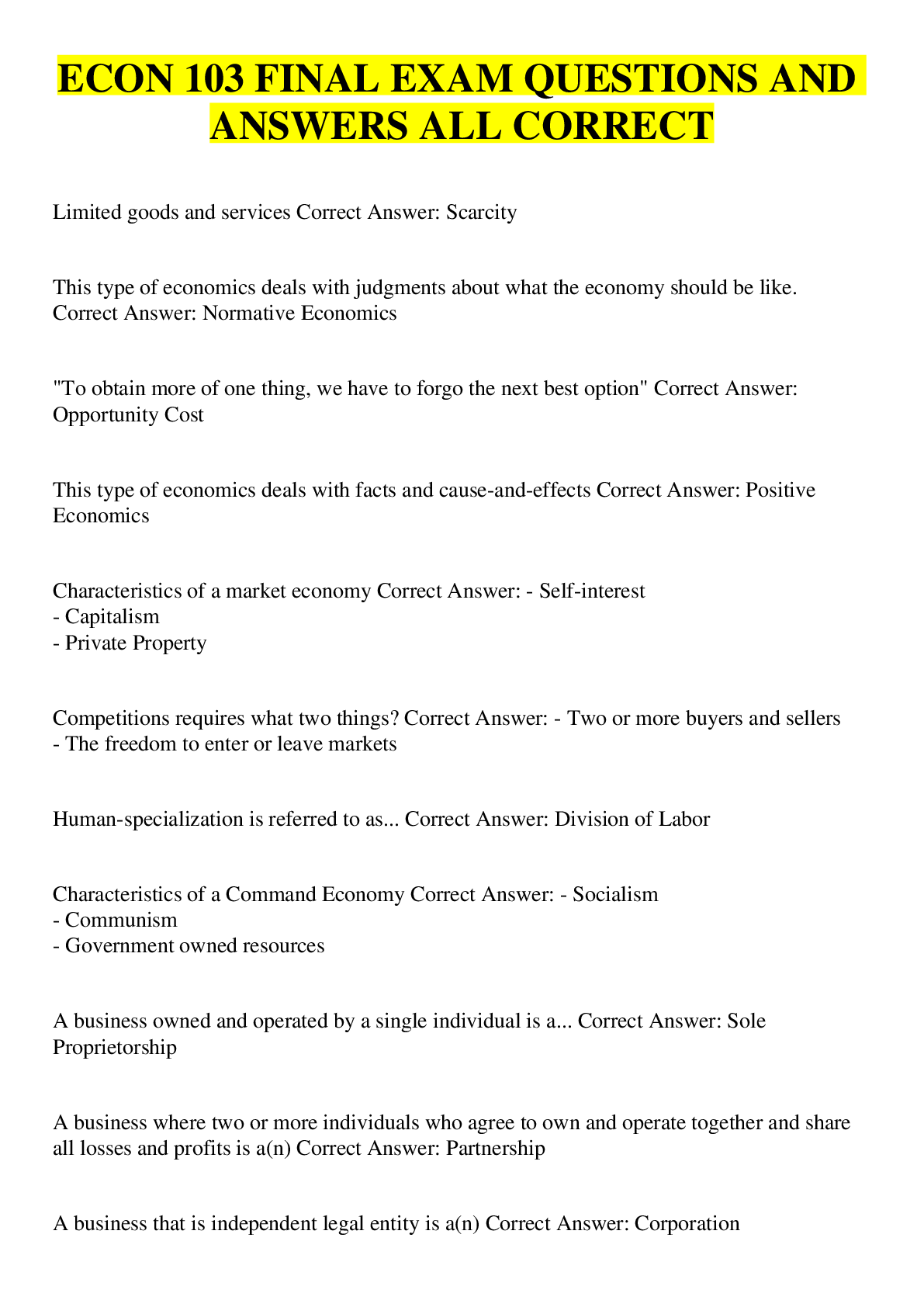
ECON 103 Test Bank for Essentials of Marketing Research 5th Ed...
$16
120 Pages
ECON 103 Principles of Microeconomics Practice Multiple Choic...

$8
4 Pages
University of California, Los Angeles ECON 103 Implicit Cost...
.png)
$9
4 Pages
University of California, Los Angeles ECON 103 Market Demand...

$9
3 Pages
University of California, Los Angeles ECON 103 Price Discrim...
$14
23 Pages
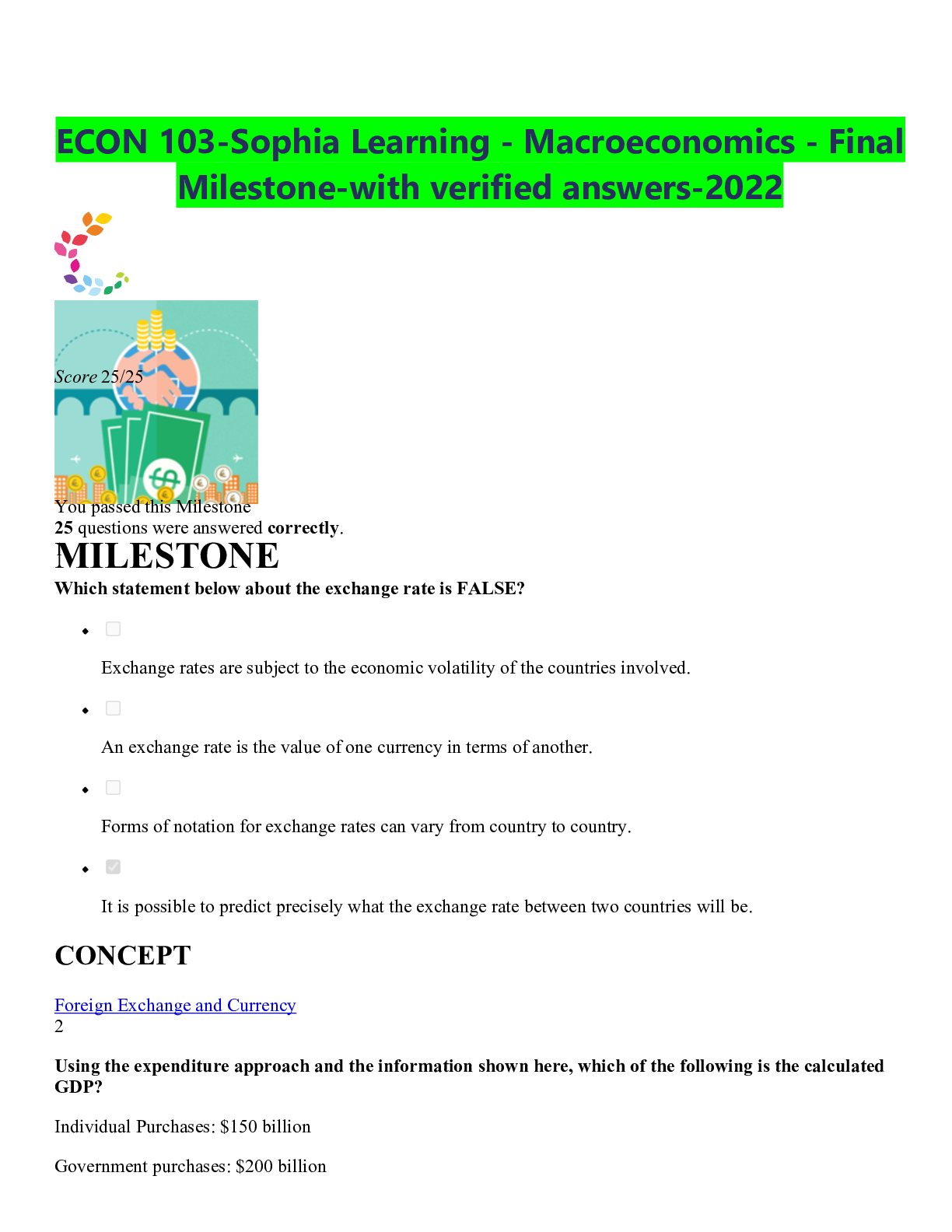
ECON 103-Sophia Learning - Macroeconomics - Final Milestone-wi...
.png)
$25
228 Pages
Essentials of Econometrics, 5th Edition by Damodar Gujarati, D...
.png)
$25
1176 Pages
Microeconomics Theory and Applications, 13e Edgar Browning, Ma...
.png)
$25
104 Pages
Microeconomics Theory and Applications, 13e Edgar Browning, Ma...
More related documents below


.png)