This term is used when patients have a decrease level of platelets? - ANSWER Thrombocytopenia
Within the blood, what are the white blood cells referred as? - ANSWER Leukocytes
This type of anemia is treated with vi
...
This term is used when patients have a decrease level of platelets? - ANSWER Thrombocytopenia
Within the blood, what are the white blood cells referred as? - ANSWER Leukocytes
This type of anemia is treated with vitamin B12 injections. - ANSWER Pernicious anemia
•Vitamin B12 deficiency usually caused by a lack of intrinsic factor.
•Cause: autoimmune.
•Vitamin B12 is required for DNA synthesis.
•Leads to decreased maturation and cell division.
•May see myelin breakdown and neurological complications.
Most common treatment for leukemia? - ANSWER Chemotherapy and bone marrow transplant
Term used when a patient has a decrease level of white blood cells? - ANSWER Leukopenia
This condition has a hypercoagulation that depletes platelet levels. - ANSWER Thrombotic Thrombocytopenic purpura
When is hemostasis considered abnormal? - ANSWER When it causes inappropriate clotting or insufficient to stop blood flow.
What regulates erythropoiesis and where is that hormone produce? - ANSWER erythropoietin in the kidneys
This type of Leukemia affects adults primarily, responds poorly to therapy, yet most patients live many years after diagnosis? - ANSWER Chronic lymphoid leukemia
They are the first to arrive to the infection site. - ANSWER neutrophils
This platelet condition is caused due to a hypocoagulation resulting from an autoimmune destruction of platelet? - ANSWER Idiopathic Thrombocytopenia purpura
Which component of the blood carry oxygen? - ANSWER Hemoglobin
What is the primary goal when treating Anemia? - ANSWER Improve tissue oxygenation
This leukemia affects children primarily and responds well to therapy? - ANSWER Acute lymphoblastic leukemia
What is the manifestations and treatment options for Neutropenia? - ANSWER Manifestations: Depends on severity and cause
-Infections and ulcerations, especially of the respiratory tract, skin, vagina, and gastrointestinal tract
-Signs and symptoms of infection (e.g., fever, malaise, and chills)
Treatment: antibiotic therapy and hematopoietic growth factors.
With DIC (disseminated intravascular coagulation) what is happening to our patient's blood? - ANSWER Widespread coagulation followed by massive bleeding.
a life threatening complication of many conditions
◦ Results from an inappropriate immune response
◦ widespread coagulation followed by massive bleeding due to the depletion of clotting factors
Term used for the process of forming blood? - ANSWER Hematopoiesis
This form of sickle cell is most severe and almost all erythrocytes are sickled? - ANSWER Homozygous Sickle cell disease
This type of lymphoma is more common, has No Reed-Sternberg cells, and has a poor prognosis. - ANSWER Non-Hodgkin's Lymphoma
This diagnosis occurs when neutrophils drop below 1500 cells/mL? - ANSWER Neutropenia
In hemophilia A this clotting factor is deficient thus treatment includes replacing the clotting factor? - ANSWER Factor VIII
**In order, name the stages of hemostasis. - ANSWER 1- Vessel Spasm
2- Formation of platelet plug
3- Blood coagulation
4- Clot retraction
5- Clot dissolution
This type of anemia is caused by an excessive erythrocyte destruction. - ANSWER Hemolytic anemia
In Hodgkin's Lymphoma this type of cells are present where as in Non-Hodgkin's lymphoma they are not. - ANSWER Reed-Sternberg cells
Infectious Mononucleosis "kissing disease" is caused by this virus? - ANSWER Epstein-Barr virus
What are the 3 stages of fight or flight - ANSWER alarm, resistance, exhaustion
Alarm stage of flight or fight - ANSWER Increased heart rate
Increased blood pressure
Dilated pupils
Resistance stage - ANSWER The body chooses the most effective response
Exhaustion stage - ANSWER The stressor is prolonged/overwhelms the body
Burns - ANSWER 1st degree- Affect only the epidermis and cause pain, erythema, and edema
2nd degree- Affect the epidermis and dermis and cause pain, erythema, edema, and blistering
3rd degree- Extend into deeper tissues and cause white or blackened, charred skin that may be numb
Serious complication of a fracture - ANSWER - Compartment syndrome: A serious condition resulting from increased pressure and the muscle fascia. It causes excruciating pain. The treatment is to remove the cast and perform a fasciotomy.
- Osteomyelitis: An infection of the bone tissue. Can take months to resolve. The only treatment is antibiotics and surgery.
What are the components of Pathophysiology - ANSWER Etiology,
pathogenesis,
clinical manifestation,
treatment implications
Know difference between signs & symptoms - ANSWER Sign: Objective evidence; manifestation of a disease perceived by doctor/nurse.
Symptom: subjective evidence; manifestation of a disease perceived by the patient himself
Cancer Concept - ANSWER (Cause) Cancer cells invade areas around them by metastasizing(spread)
(Effect) Cachexia- generalized wasting (weight loss); Anemia; Fatigue; Infection; Leukopenia; Thrombocytopenia; Pain
Immunoglobulins and Functions - ANSWER IgG-Main defense against bacteria (passive immu.)
IgA- found in resp. And gastro. Tracts, tears, saliv., And mucus
IgM- Fights blood infections and triggers prod. Of IgG
IgE-triggers allergies+responds to parasites
IgD- Present in blood serum (recepto. For antigens)
Hypersensitivities - ANSWER 4 types:
1. IgE mediated (Anaphylactic Shock) (swelling)
2. Cytotoxic (hemolytic disease of new borns)
3. Immune Complex (Arthritis) RA
4. Cellular (Contact Dermatitis) (Rash, warmth)
Cells in adaptive Immunity - ANSWER T Cells:
Helper - regulate cells ; call for back up for B cells
Killer: Kill/Destory Cells
B Cells: found in bone marrow
Eliminate bacteria, neutralize bacteria, prevent viral infections
What is and How do we acquire adaptive immunity? - ANSWER Takes 7-10 days to provide protection Specific to antigen
**Acquired via vaccines/exposure**
Innate Immunity - ANSWER Provides immediate protection
Non-Specific
What are the 6 manifestations of the Inflammatory Response? - ANSWER Pain
Erythema
Edema
Loss of function
Swelling
Warmth
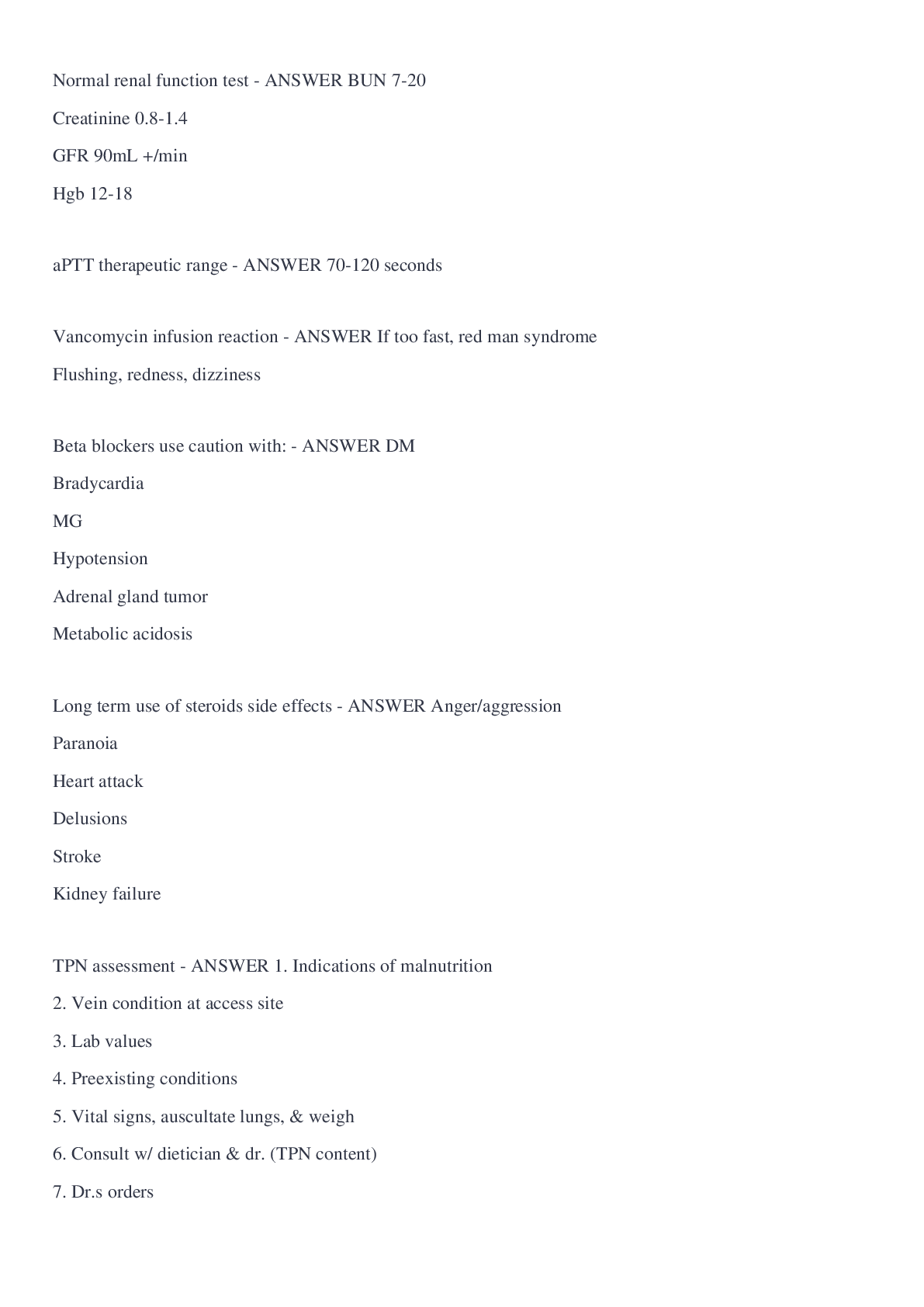
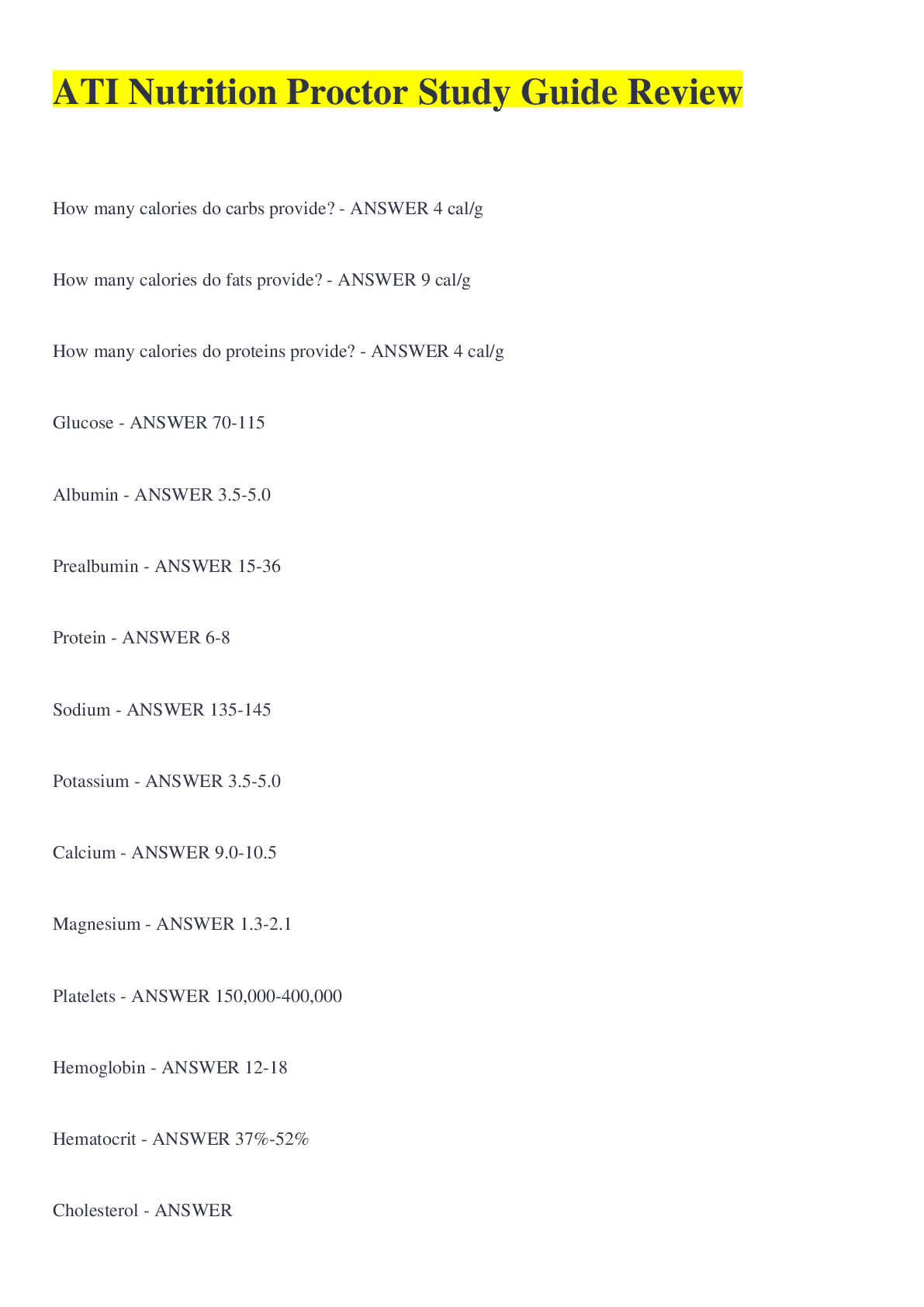
Electrolyte Normal Values - ANSWER Sodium(Na)-> 135-145
Potassium(K)-> 3.5-5
Calcium(Ca)-> 8.5-10.5
Magnesium-> 1.8-2.4
Bicarbonate(HCO3)-> 22-26
Chloride-> 96-106
Phosphorus-> 2.4-4.5
What kind of blood does the pulmonary artery carry - ANSWER deoxygenated
Infectious endocarditis is commonly caused by streptococcus and what other type of infection? - ANSWER staphylococcus
Term used for the heart valve if they have insufficient closure? - ANSWER regurgitation
What type of heart failure does the patient have if they are experiencing pulmonary congestion and activity intolerance? - ANSWER left-sided
In letter abbreviation, what lipoprotein is considered the "good" cholesterol? - ANSWER HDL
What type of angina is the patient exhibiting if the pain is not relived by rest? - ANSWER unstable
For pregnancy induce hypertension, what electrolyte is given to manage the hypertension? - ANSWER magnesium
Beside getting an embolectomy, what other treatment options are available for a patient with a thrombus? - ANSWER thrombolytic agents
What tool is used to identify changes for a patient experiencing and MI? - ANSWER EKG/ECG
They are known as cell eaters - ANSWER Macrophages
This cell call B cells to produce antibodies - ANSWER Helper T-Cell
The TB skin test is what type of hypersensitivity? - ANSWER Type 4, delayed hypersensitivity reaction
This WBC is involved in wound healing and microbial defense - ANSWER Mast cell
(Adaptive) This type of cell produces the immediate inflammatory response - ANSWER B cells
What is increased during the alarm phase - ANSWER The production of *epinephrine* (Response/Effect- increase bp & heart rate, and dilated pupils)
This modifiable risk factor will cause cardiovascular complications? - ANSWER Smoking is #1 for any disease process
This WBC is the most abundant and first to respond to infection? - ANSWER Neutrophil
What chemical is released during stress response? - ANSWER Epinephrine
This lab work will help measure inflammation in clients? - ANSWER *Erythrocyte Sedimentation Rate *
This type of reaction can happen from hemolytic disease of newborn - ANSWER Type 2, cytotoxic hypersensitivity
These 2 population group are higher risk for developing compromised immunity - ANSWER Pediatric and Geriatric population
An infant obtains what type of immunity by being breastfed? - ANSWER Passive Immunity
increasing the following in a person's diet will help build immunity? - ANSWER Increasing Antioxidants
What part of the brain controls the fight or flight response? - ANSWER The Amygdala
This immunoglobulin is involved in Type 1 hypersensitivity - ANSWER IgE
How can an individual obtain active immunity? - ANSWER By vaccination or infection of the pathogen
They destroy virus-infected cells - ANSWER Killer T-cell
Innate- This WBC is responsible for various alert allergies like asthma? - ANSWER Eosinophils
This WBC will be elevated in a CBC in a client with allergies? - ANSWER Basophil
Gangrene and the types? - ANSWER caused by severe hypoxic injury
• Dry -> Coagulative
• Wet -> liquefactive
• Gas -> releases gas into tissue
3 Steps in carcinogenesis - ANSWER ◦ Initiation: Intro of the agent
◦ Promotion: Initiation of uncontrolled growth
◦ Progression: Permanent malignant changes
3 goals in cancer treatment - ANSWER ◦ Curative- Looking to put pt. In remission
◦ Palliative- Keep pt. Comfortable and quality of life
◦ Prophylactic- Make sure keep treatment for pt. Doesn't come back with disease
Renin-Angiotensin-Aldosterone System (RAAS) - ANSWER a hormone system within the body that is essential for the regulation of blood pressure and fluid balance. The system is mainly comprised of the three hormones renin, angiotensin II and aldosterone. Primarily it is regulated by the rate of renal blood flow.
-is a regulator of blood pressure and cardiovascular function.
- Renin is a hormone regulates blood pressure
-aldosterone within the kidneys.
-The hormone aldosterone attracts sodium and water, thus causing fluid retention.
-Fluid balance, combined with electrolyte balance is essential to maintaining homeostasis and allostasis.
This condition is typically unilateral and erupts of vesicle follows nerve path? - ANSWER Shingles
What type of medication will be order to treat conditions such as impetigo and cellulitis? - ANSWER Antibiotics
Dry and Flaky: this condition is a common chronic inflammatory condition that affects skin cell life cycle? - ANSWER Psoriasis
Results from a type 1 hypersensitivity: Can impair breathing if around the face and progress to anaphylaxis and shock? - ANSWER Urticaria
Atopic Dermatitis is also known as? - ANSWER Eczema
Metabolic condition characterized by a progressive loss of bone calcium that leaves the bones brittle - ANSWER Osteoporosis
Degenerative joint disease characterized by local deterioration of articulating cartilage and its underlying bone as well as bony overgrowth - ANSWER Osteoarthritis
Inflammatory disease resulting from deposits of (increased) uric acid crystals in tissues and fluid - ANSWER GOUT
Characterized by widespread pain, typically described as a constant, dull muscle ache - ANSWER Fibromyalgia
Rheumatoid Arthritis - ANSWER Usually affects joints unilaterally
• Type 3 hypersensitivity
• Limited joint range of motion
• Fatigue
• Low-grade fever
• Muscle spasms
• warmth, tenderness, and stiffness in the joints when not used
• progressively worsen
• anorexia
• joint deformity
• morning stiffness lasting more than 1 hour
Hepatobiliary System - ANSWER Liver, Gallbladder, and Pancreas
Pancreas- 2 functions - ANSWER • Exocrine functions- Produces enzymes, electrolytes, and water necessary for digestion
• Endocrine Functions- Produces hormones to help regulate blood glucose
Disorders of the upper GI tract: - ANSWER Congenital defects (Cleft lip and palpate and pyloric stenosis), Dysphagia, vomiting, hiatal hernia, gastroesophageal reflux disease, gastritis, peptic ulcers, cholelithiasis**
Disorders of the lower GI tract: - ANSWER Diarrhea, constipation, intestinal obstruction, appendicitis, peritonitis, celiac disease, inflammatory bowel disease, irritable bowel syndrome, diverticular disease.
Pyloric Stenosis - ANSWER The exact cause is unknown. Narrowing-> not enough nutrition going in
• Manifestations- Appear within several weeks after birth and include a hard mass in the abdomen, regurgitation, projectile vomiting, wavelike stomach contractions, small and infrequent stools, failure to gain weight, dehydration, and irritability
Dysphagia - ANSWER Difficulty swallowing
Gastroesophageal Reflux Disease (GERD) - ANSWER • Manifestations- Heartburn, epigastric pain (usually after a meal or when recombinant), dysphagia, dry cough laryngitis, pharyngitis, regurgitation of food, and sensation of a lump in the throat
• Diagnosis- History, physical exam., barium swallow, esophagogastroduodenoscopy, esophageal pH monitoring, and esophagus manometry
• Treatment- Avoid triggers, avoid clothing that is restrictive around the waist, eat small frequent meals, high Fowler's positioning 2-3 hours after meals, weight loss, stress reduction, elevate the head of the bed approx. 6 inches, antacids, acid-reducing agents, mucosal barrier agents, herbal therapies (Example: Licorice, slippery elm, and chamomile), and surgery
• Complications- Esophagitis, strictures, ulcerations, *esophageal cancer (fatal), and chronic pulmonary disease
Diverticular Disease - ANSWER Conditions related to the development of diverticula, outwardly bulging pouches of the intestinal wall that occur when mucosa sections or large intestine submucosa layers herniate through a weakened muscular layer
• Diverticulosis- Asymptomatic diverticular disease, usually with multiple diverticula present
• Diverticulitis- Diverticula have become inflamed, usually because of retained fecal matter
◦ Can result in potentially fatal obstruction, infection, abscess, perforation, peritonitis, hemorrhage, and shock
◦ Often asymptomatic until the condition becomes serious
• Manifestations: Abdominal cramping followed by passing a large quantity of frank blood, low-grade fever, abdominal tenderness (usually left lower quadrant), abdominal distention, constipation, obstipation, nausea, vomiting, palpable abdominal mass, and leukocytosis
• Diagnosis: History, phys.exam., stool analysis (including blood occult), abdominal computed tomography, abdominal magnetic resonance imaging, colonoscopy, barium enema, and biopsy
• Treatment: High-fiber diet, omitting foods with seeds or popcorn, decreased food intake when active bleeding is present, adequate hydration, proper bowel habits (ex: defacating when urge is sensed and not straining), stool softeners, antibiotics, analgesiscs, colon resection, and blood transfusion
Irritable Bowel Syndrome (IBS) - ANSWER Chronic, noninflammatory, GI condition characterized by exacerbations associated with stress
Ulcerative Colitis - ANSWER • Progressive condition of the rectum and colon mucosa
• The mucosa becomes inflamed, edematous, and frail
Crohn's Disease - ANSWER • Characterized by patchy areas of inflammation involving the full thickness of the intestinal wall and ulcerations (skip lesions)
Inflammatory Bowel Disease - ANSWER • Chronic inflammation of the GI tract, usually the intestines
• chiefly seen in women, caucasians, persons of jewish decent, and smokers
• **Includes Crohn's disease and ulcerative colitis
• Characterized by periods of exacerbations and remissions
• Thought to be caused by a genetically associated autoimmune state that has been activated by an infection
• Immune cells located in the intestinal mucosa are stimulated to release inflammatory mediators that alter the function and neural activity of the secretory and smooth muscle cells
• Fluid, electrolyte, and pH imbalances develop
• Can be painful, debilitating, and life-threatening
Celiac Disease (aka Celiac sprue or gluten-sensitive enteropathy) - ANSWER • Inherited, autoimmune, malabsorption disorder
• Primarily a childhood disease, but can develop at any age
• Results from a combo of the immune response to an environmental factor (gliadin) and genetic predisposition
Peritonitis - ANSWER Inflammation of peritoneum
• Causes:
◦ Chemical irritation -> ruptured gallbladder or spleen / or direct organism invasion -> appendicitis and peritoneal dialysis
◦ Several protective mechanisms are activated
‣ Thick, sticky exudate that bonds nearby structures and temporarily seals them off
‣ abscesses may form in an attempt to wall of the infections
‣ peristalsis may slow down in a response to the inflammation, decreasing the spread of toxins and bacteria
• Manifestations-
◦ Usually sudden then severe
◦ classical manifestation=abdominal rigidity
◦ abdominal tenderness and pain
◦ large volumes of fluid leak into the peritoneal cavity
◦ nausea and vomiting
◦ **decreased peristalsis (movement)
◦ intestinal obstruction
◦ indicators of infection -> fever, malaise, and leukocytosis
◦ indications of sepsis and shock -> tachycardia, hypotension, restlessness, and diaphoresis
Intestinal Obstruction - ANSWER • Blockage of intestinal contents* in the small intestine or large intestine
• Causes:
◦ **Mechanical Obstructions- Foreign bodies, tumors, adhesions, hernias, intussusception, volvulus, strictures, Crohn's disease, diverticulitis, Hirschspring's disease, and fecal impaction
• Can develop either suddenly or gradually and can be either partial or complete
• Chyme and gas accumulate at the site of the blockage
• Saliva, gastric juices, bile, and pancreatic secretions begin to collect as the blockage lingers
• Serum electrolytes and protein increase, causing abdominal distension and pain
• Intestinal blood flow can become impaired, leading to strangulation and necrosis
• Intestinal contents can seep into the abdomen as the pressure increases
• Complications: perforation, pH imbalances, fluid disturbances, shock, and death
Cirrhosis - ANSWER Chronic, progressive, irreversible, diffuse damage to the liver resulting in decreased liver function
• Causes: Hep. and all those factors that can lead to hepatitis
[Show More]


![Preview of Pathophysiology Exam 1 2024 – [Rasmussen]](https://browseimages.nyc3.digitaloceanspaces.com/paper-images/2024/Jun/29/XCUuZSO52024-06-29-06-27667f7f2ebabd1.png)