Clinical manifestations that may result from diarrhea (Please use critical thinking to determine what is happening to fluid volume with diarrhea) (Select all that apply) mod 1 - ANSWER Frequent loose, watery stools. Abdo
...
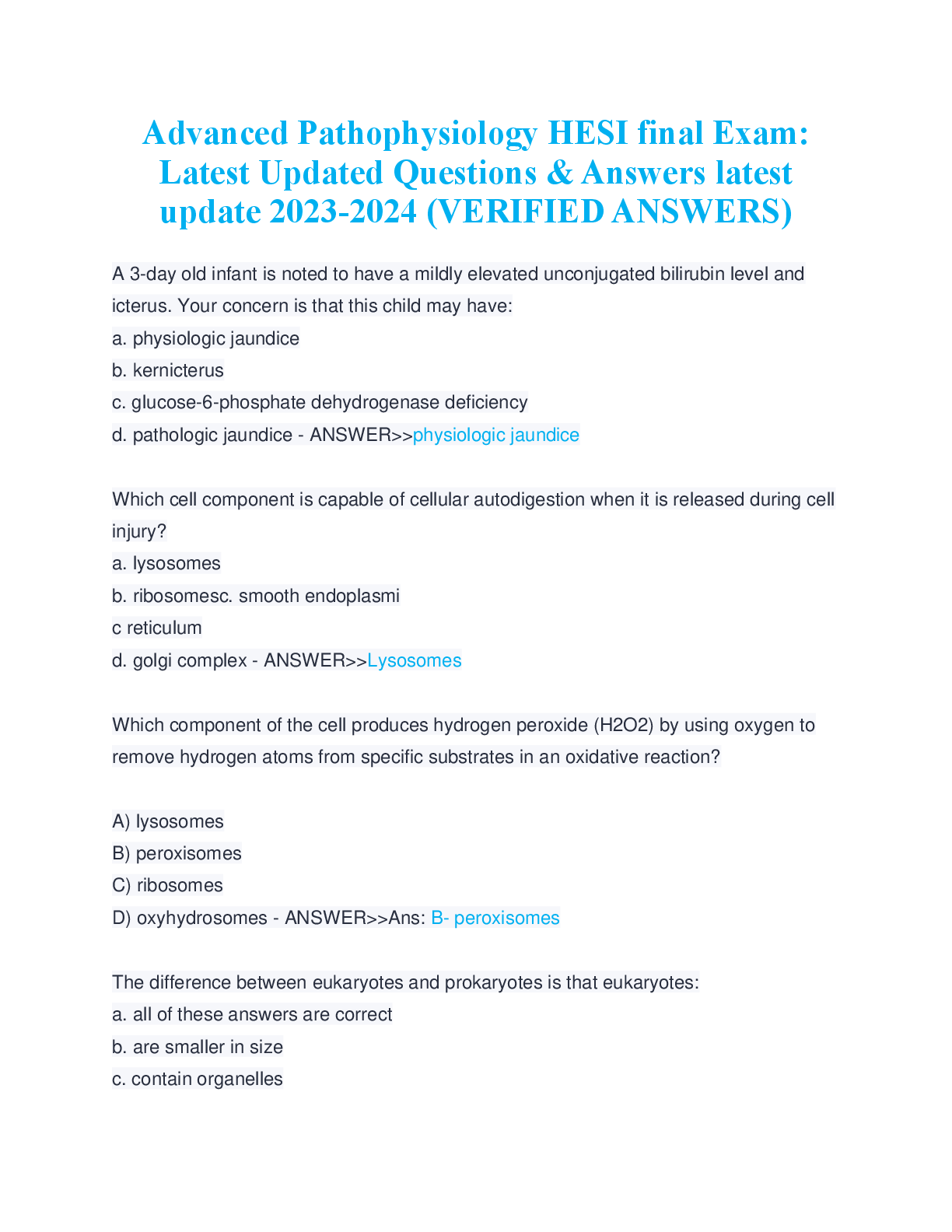
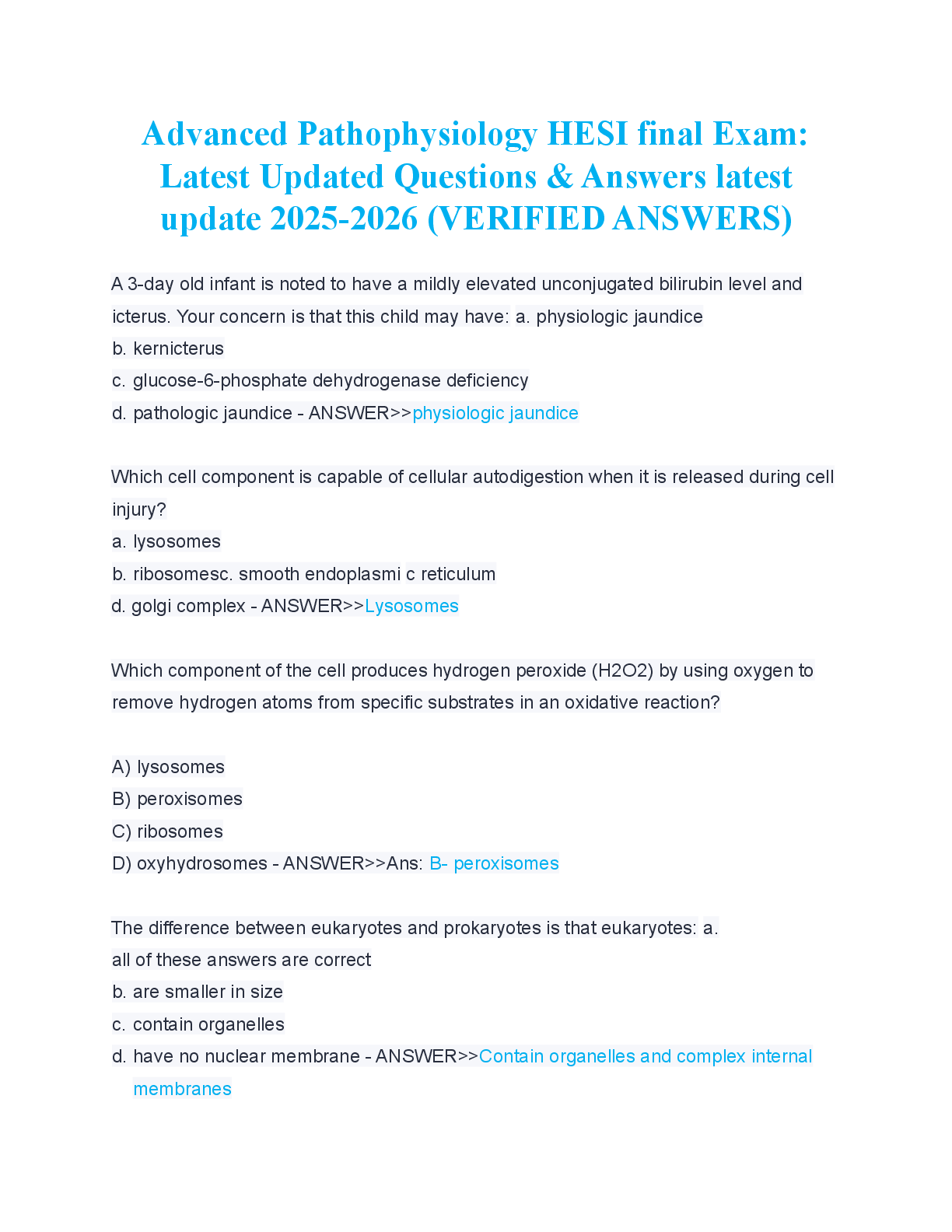
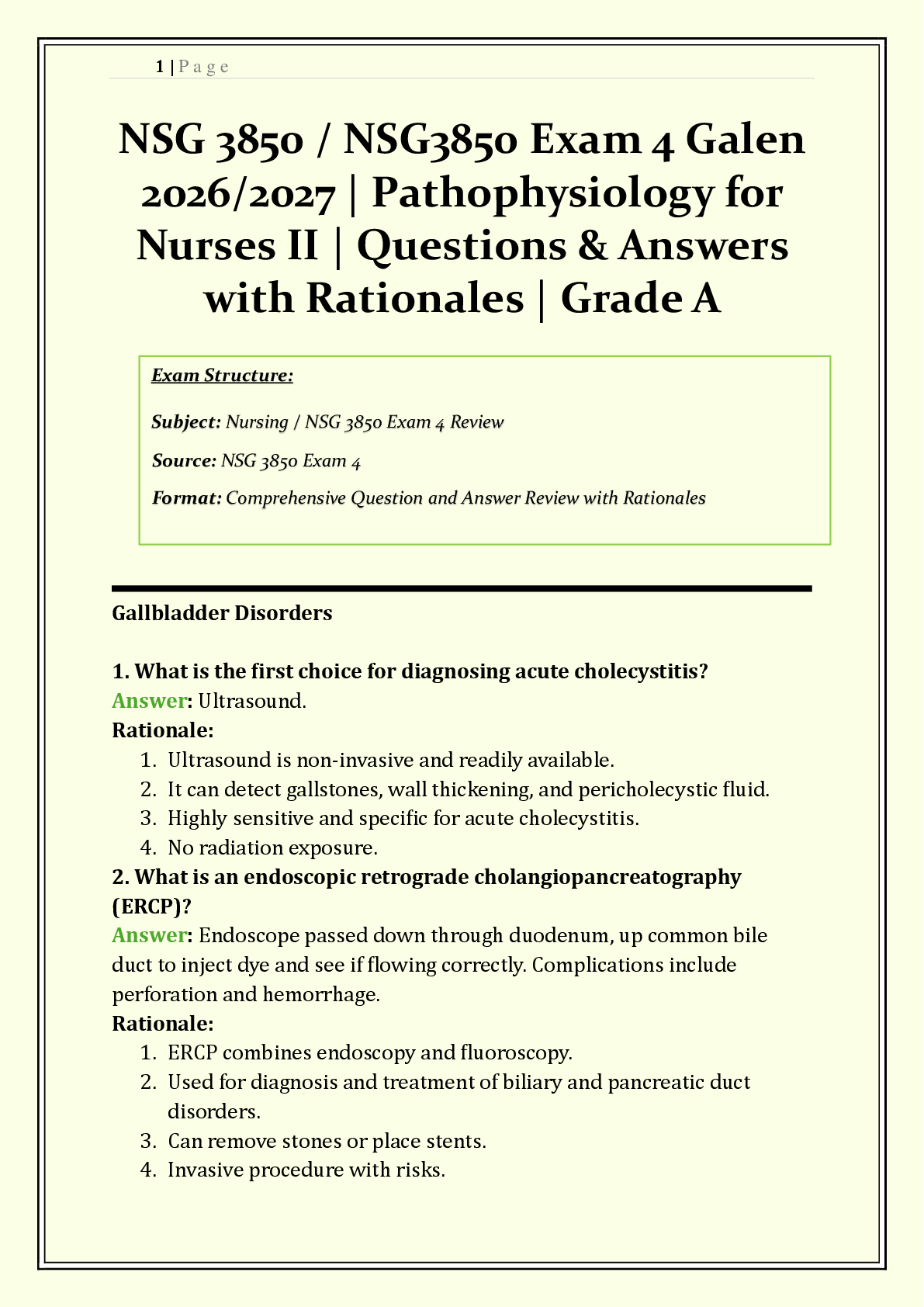
Clinical manifestations that may result from diarrhea (Please use critical thinking to determine what is happening to fluid volume with diarrhea) (Select all that apply) mod 1 - ANSWER Frequent loose, watery stools. Abdominal cramps. Abdominal pain. Fever. Bleeding.
Lightheadedness or dizziness from dehydration.
Complications may result from diarrhea of any etiology. Fluid loss with consequent dehydration, electrolyte loss (sodium, potassium, magnesium, chloride), and even vascular collapse sometimes occur.
Lymph node locations (Select All) mod 2 - ANSWER head, neck, armpits, groin
What are the properties of benign tumors? (Select All)mod 2 - ANSWER A benign neoplasm looks a lot like the tissue with normal cells from which it originated, and has a slow growth rate. Benign neoplasms do not invade surrounding tissues and they do not metastasize.
Identify examples of types of malignant cells (Select All)mod 2 - ANSWER 1 carcinoma,2 sarcoma,3 melanoma,4 lymphoma, and 5 leukemia.
Rheumatoid arthritis clinical manifestation? (Select all)mod 3 - ANSWER Tender, warm, swollen joints.
Joint stiffness that is usually worse in the mornings and after inactivity.
Fatigue, fever and loss of appetite.
Characteristics of a wound that is granulated (Select All)mod 3 - ANSWER is defined as follows: a wound bed filled with granulation tissue to the level of the surrounding skin or new epithelium; no dead space; no avascular tissue; no signs or symptoms of infection; and with open wound edges (it is healing)
Symptoms of a patient with a herniated disc (Select All)mod 3 - ANSWER Pain areas: in the arm, back, foot, or leg
Muscular: muscle weakness, muscle spasms, or overactive reflexes
Sensory: leg numbness, pins and needles, or uncomfortable tingling and burning
Also common: foot numbness, hand numbness, or stiff neck
Clinical manifestation of Addison's disease (Select all that apply) mod 4 - ANSWER Pain areas: in the abdomen or muscles
Whole body: dehydration, dizziness, fainting, fatigue, lightheadedness, loss of appetite, low blood pressure, low blood sugar, water-electrolyte imbalance, or sweating
Gastrointestinal: nausea or vomiting
Also common: absence of menstruation, craving salty foods, darkening of the skin, excess urination, muscle weakness, reduced sex drive, or weight loss
Kidney failure or end-stage main electrolyte imbalance (Select All) mod 5 - ANSWER hypervolemia, hyperkalemia, hyperphosphatemia, hypocalcemia, and bicarbonate deficiency (metabolic acidosis). Hyponatremic.
What happens during Hemostasis (Select All) mod 9 - ANSWER is the physiological process by which bleeding ceases. Hemostasis involves three basic steps: vascular spasm, the formation of a platelet plug, and coagulation, in which clotting factors promote the formation of a fibrin clot. Fibrinolysis is the process in which a clot is degraded in a healing vessel.
Increased Intracranial Pressure (ICP) pathogenesis and clinical findings (Select all) mod 7 - ANSWER Causes: compression of the brain, inflammation of the brain tissues, inability of the cranium to expand (adults), reduced blood flow to the brain from increased pressure. Symptoms: initial-headache, vomiting, altered LOC (drowsiness), blurred vision, edema of optic disc (papilledema). Higher levels of ICP-LOC decrease, impaired pupil responsiveness to light, altered respiratory patterns, unresponsive to stimulation, unable to move/verbalize/open eyes.
What is gluconeogenesis? - ANSWER production of glucose from non-carbohydrate sources
What are two lab tests that help to determine kidney function (i.e. BUN and creatinine). Know the normal for these values. - ANSWER BUN In general, around 7 to 20 mg/dL (2.5 to 7.1 mmol/L) is considered normal. Urea nitrogen levels tend to increase with age.
The normal range for creatinine in the blood may be 0.84 to 1.21 milligrams per deciliter (74.3 to 107 micromoles per liter),
Consequences of uncontrolled blood sugar - ANSWER Heart disease and a higher risk for heart attack and stroke.
Eye and vision problems, including blindness.
Kidney disease that can lead to kidney failure.
Neuropathy (nerve damage) that can cause tingling and pain the hands and feet.
Infections.
Dental problems.
Amputations due to infections in the feet.
What is diabetes insipidus? - ANSWER A disorder of salt and water metabolism marked by intense thirst and heavy urination.
Diabetes insipidus occurs when the body can't regulate how it handles fluids. The condition is caused by a hormonal abnormality and isn't related to diabetes.
In addition to extreme thirst and heavy urination, other symptoms may include getting up at night to urinate or bed-wetting.
effects of hipoxia (low oxygen in tissues) in brain injury - ANSWER brain is starved from oxygen, can range from mild, short-term symptoms such as dizziness or concentration problems, through severe, long-term issues including vision, speech and memory.
types of brain injuries - ANSWER PRIMARY result of initial trauma/injury on brain cells. Focal injuries (coup) localized to site of impact. Polar injuries (coup contrecoup) caused by acceleration-deceleration movement of the brain within the skull resulting in double injury (usually opposite focal injury) Diffuse injury caused by movement of the brain within the skull resulting in widespread axonal injury.
brain injury postures - ANSWER DECORTICATE flexed wrists and arms, extended legs and feet.
DECEREBRATE arm and leg extension
Glasgow Coma Scale Scores - ANSWER MILD (12+) MODERATE (9-12) SEVERE (8-)
Symptoms of bacterial MENINGITIS - ANSWER headache, fever, stiff neck (meningismus) gets worst when head is tilted forward, signs of cerebral dysfunction (confusion, delirium)
Impact of HYPOXIA on brain cells - ANSWER brain cells are extremely sensitive to oxygen deprivation and can begin to die within 5 minutes after oxygen supply has been cut off. Longer hypoxia coma, seizures and brain death.
HEMORRHAGIC STROKE VS ISCHEMIC STROKE - ANSWER Hemorrhagic caused by rupture of blood vessels and blood flows to the brain tissue.
ISCHEMIC (most common type) It is usually caused by a blood clot that blocks or plugs a blood vessel in the brain. This keeps blood from flowing to the brain. Within minutes, brain cells begin to die. Another cause is stenosis, or narrowing of the artery.
What causes gout? - ANSWER uric acid, depositing acid crystals in joint. Risk age
hyperucemia-urate crystal induced arthritis
4 phases asymptomatic hyperucemia, acute gouty arthritis, intercritical gout and chronic tophaceus gout.
Assessment findings for shingles - ANSWER aka herpes zooster. linear unilateral rash, pruritus (itch) postherpetic neuralgia (pain nerve fibers and skin)
Priority assessment for a leg injury - ANSWER 1 Pain, 2 Poikilothermia, 3 Paresthesia, 4 Paralysis, 5 Pulselessness, and 6 Pallor. The earliest indicator of developing ACS is severe pain. Pulselessness, paresthesia, and complete paralysis are found in the late stage of ACS.
Characteristics of serous exudate - ANSWER Serous drainage is clear, thin, watery plasma. It's normal during the inflammatory stage of wound healing and smaller amounts is considered normal wound drainage. However, a moderate to heavy amount may indicate a high bioburden.
Composition of purulent exudate - ANSWER A purulent exudate is an inflammatory exudate with a high concentration of leukocytes - predominantly neutrophils - dead cell matter and inflammatory molecules e.g. cytokines, lysozymes. The degree of enzyme proteolysis determines the thickness of the fluid.
Assessment findings in a patient with crisis related to myasthenia gravis - ANSWER 1 weakness of the eye muscles (called ocular myasthenia) 2 drooping of one or both eyelids (ptosis) 3 blurred or double vision (diplopia)
4 a change in facial expression.5 difficulty swallowing. 6 shortness of breath. 7 impaired speech (dysarthria)
Difference between Angina and MI - ANSWER ANGINA is caused by reduced blood flow to your heart muscle. Your blood carries oxygen, which your heart muscle needs to survive. When your heart muscle isn't getting enough oxygen, it causes a condition called ischemia. The most common cause of reduced blood flow to your heart muscle is coronary artery disease (CAD).
MYOCARDIAL INFARCTION also known as a heart attack, occurs when blood flow decreases or stops to a part of the heart, causing damage to the heart muscle.
Hypovolemic Shock Etiology and pathogenesis - ANSWER Hypovolemic shock is a life-threatening condition that results when you lose more than 20 percent (one-fifth) of your body's blood or fluid supply. This severe fluid loss makes it impossible for the heart to pump a sufficient amount of blood to your body. Hypovolemic shock can lead to organ failure.
Role of the lymphatic system in reducing interstitial edema - ANSWER As the interstitial fluid begins to accumulate, it is picked up and removed by tiny lymphatic vessels and returned to the blood. As soon as the interstitial fluid enters the lymph capillaries, it is called lymph. Returning the fluid to the blood prevents edema and helps to maintain normal blood volume and pressure.
Priority assessment for someone experiencing chest pain - ANSWER Position/Provoking factors, Quality, Radiation (where does pain radiates), Severity/Symptoms and Time.
Perform a 12-lead ECG and have it checked by a medical officer as soon as possible. Performing and interpreting a 12-lead ECG is a vital assessment in the setting of chest pain. An ECG will help the medical team determine if and when a patient requires reperfusion therapy to treat the cause of the chest pain
Priority assessment for a patient with CHF CONGESTIVE HEART FAILURE - ANSWER Lung sounds
Priority assessment for a patient with left sided heart failure - ANSWER Respiratory. The left ventricle doesn't pump effectively causing the buildup of fluid around the lungs.
Causes: SOB, cough, dizziness, fatigue, rapid pulse and frothy mucus.
What is phlebitis? - ANSWER means inflammation of a vein. Thrombophlebitis is due to one or more blood clots in a vein that cause inflammation. Thrombophlebitis usually occurs in leg veins, but it may occur in an arm. The thrombus in the vein causes pain and irritation and may block blood flow in the veins.
Cause of septic shock - ANSWER Septic shock is a severe and systemic infection. It is caused when bacteria get into your bloodstream and it most often occurs after trauma or surgery.
Symptoms of absolute anemia - ANSWER dyspnea (SOB), tachycardia, dizziness, pale skin, low hemoglobin levels, low temp, loss of appetite and digestive disorders.
What is stroke volume and what effect does a change in stroke volume have on heart rate - ANSWER is the volume of blood in millilitres ejected from the each ventricle due to the contraction of the heart muscle which compresses these ventricles. SV IS THE DIFFERENCE BETWEEN END DIASTOLIC VOLUME (EDV) AND END SYSTOLIC VOLUME (ESV)
What causes Pseudomembranous Colitis - ANSWER refers to swelling or inflammation of the large intestine (colon) due to an overgrowth of Clostridium difficile (C difficile) bacteria. This infection is a common cause of diarrhea after antibiotic use.
Antibiotic-Associated Colitis (Pseudomembranous Colitis) treatment - ANSWER Stopping the antibiotic or other medication that's thought to be causing your signs and symptoms, if possible
Starting an antibiotic likely to be effective against C. difficile
Having fecal microbial transplantation (FMT).
What is congenital esophageal atresia? - ANSWER Esophageal atresia is a birth defect in which part of a baby's esophagus (the tube that connects the mouth to the stomach) does not develop properly. Esophageal atresia is a birth defect of the swallowing tube (esophagus) that connects the mouth to the stomach.
Term for hidden blood in the stool - ANSWER The fecal occult blood test (FOBT) is a lab test used to check stool samples for hidden (occult) blood. Occult blood in the stool may indicate colon cancer or polyps in the colon or rectum — though not all cancers or polyps bleed.
What clinical manifestations would we expect in a patient with gastric carcinoma and what are important assessments by the nurse. - ANSWER Early cancer: typically no manifestations.
Advanced cancer: penetrates muscle layer of the stomach, produces manifest of anorexia, weight loss and GI bleeding.
Priority assessment for a neonate with cleft palate - ANSWER respiratory status, airway, assess oxygenation, sucking ability for feeding, oral or nasal PRN pro re nata ("as the situation demands.")
Cause of hiatal hernia - ANSWER A condition in which part of the stomach pushes up through the diaphragm muscle.
In hiatal hernia, part of the stomach pushes into the chest cavity. It enters via an opening where the food tube (esophagus) passes on its way to the stomach.
Hiatal hernias can have no symptoms. In some cases, they may be associated with heartburn and abdominal discomfort.
Hiatal hernias may not require any treatment. Some are treated with drugs and a few types need surgical repair.
What is the role of trypsin? (It is an enzyme that help us to digest proteins. It breaks down proteins in the small intestine) - ANSWER Trypsin is an enzyme that helps us digest protein. In the small intestine, trypsin breaks down proteins, continuing the process of digestion that began in the stomach. It may also be referred to as a proteolytic enzyme, or proteinase. Trypsin is produced by the pancreas in an inactive form called trypsinogen.
Most frequent location of peptic ulcers - ANSWER stomach and duodenum
How does kidney disease relate to metabolic acidosis? - ANSWER In patients with chronic kidney disease (CKD), the causes of metabolic acidosis include: impaired ammonia excretion, decreased tubular reabsorption of bicarbonate and insufficient production of bicarbonate in relation to the amount of acids synthesized in the body and ingested with food
What are the complications of Hydronephrosis (the accumulation of excess fluid in the kidney due to backup of urine)? - ANSWER The most common complication of hydronephrosis is the development of a urinary tract infection (UTI). When the UTI is associated with a high fever, a kidney infection is (pyelonephritis) is suspected. This is caused by bacteria spreading from the bladder to the kidney and invading the kidney tissue.
Serum marker for prostate cancer screening - ANSWER Prostate-specific antigen, or PSA, is a protein produced by cells of the prostate gland. The PSA test measures the level of PSA in a man's blood. PSA is present in small quantities in the serum of men with healthy prostates, but is often elevated in the presence of prostate cancer or other prostate disorders.
What is the renin-angiotensin system and when is it most likely activated? - ANSWER THE RENIN-ANGIOTENSIN SYSTEM (RAS) IS A HORMONE SYSTEM THAT REGULATES BLOOD PRESSURE AND FLUID BALANCE. HYPOVOLEMIA ACTIVATES SYSTEMIC RAS THROUGH A COMPLEX CASCADE TO PRODUCE ANGIOTENSIN II (ANG II). ANG II INCREASES BLOOD PRESSURE, STIMULATES DRINKING, AND INCREASES SODIUM REABSORPTION IN KIDNEY TUBULES, TO RESTORE BLOOD VOLUME.
Review chronic renal failure and what type of patients are at risk for this. - ANSWER An individual's genetic and phenotypic make-up puts him/her at risk for kidney disease. Factors such as race, gender, age, and family history are highly important. For instance, being of African-American decent, older age, low birth weight and family history of kidney disease are considered to be strong risk factors for chronic kidney disease. Moreover, smoking, obesity, hypertension, and diabetes mellitus can also lead to kidney disease. An uncontrolled diabetic and/or hypertensive patient can easily and quickly progress to an end-stage kidney disease patient.
What is the function of the parathyroid hormone? - ANSWER The parathyroid glands monitor the calcium in the blood 24 hours per day. The four parathyroid glands make more or less parathyroid hormone (PTH) in response to the level of calcium in the blood. When the calcium in our blood goes too low, the parathyroid glands make more PTH.
Symptoms of Benign Prostatic Hypertrophy (BPH) - ANSWER Common signs and symptoms of BPH include:
· Frequent or urgent need to urinate.
· Increased frequency of urination at night (nocturia)
· Difficulty starting urination.
· Weak urine stream or a stream that stops and starts.
· Dribbling at the end of urination.
· Inability to completely empty the bladder.
Review the function of antidiuretic hormone (ADH) - ANSWER It's a hormone made by the hypothalamus in the brain and stored in the posterior pituitary gland. It tells your kidneys how much water to conserve. ADH constantly regulates and balances the amount of water in your blood. Higher water concentration increases the volume and pressure of your blood.
Acute and Chronic Myeloid Leukemia - ANSWER is a type of cancer in which the bone marrow makes abnormal myeloblasts (a type of white blood cell), red blood cells, or platelets. Leukemia may affect red blood cells, white blood cells, and platelets
In terms of how quickly it develops or gets worse, leukemia is classified as either acute (fast-growing) or chronic (slow-growing). Acute leukemia is rapidly progressing and results in the accumulation of immature, functionless blood cells in the bone marrow.
What is polycythemia vera? And how can it contribute to pulmonary hypertension - ANSWER is a type of blood cancer. It causes your bone marrow to make too many red blood cells. These excess cells thicken your blood, slowing its flow, which may cause serious problems, such as blood clots.
Thrombocytosis may cause pulmonary hypertension, mediated by pulmonary capillary obstruction from cellular components involving platelet aggregation, microthrombosis, stasis, and possible vasoconstrictor effects.
Sickle cell crisis - ANSWER is pain that can begin suddenly and last several hours to several days. It happens when sickled red blood cells block small blood vessels that carry blood to your bones. You might have pain in your back, knees, legs, arms, chest or stomach. The pain can be throbbing, sharp, dull or stabbing.
Distinguishing feature of Hodgkin's Disease - ANSWER Hodgkin disease is a malignant disorder of the lymph nodes characterized by the presence of Reed-Sternberg cells on histologic examination. Reed-Sternberg cells originate from B cells in the germinal centers of lymph nodes. Reed-Sternberg cells are malignant, but they tend to grow and spread in a predictable manner. This predictability differentiates Hodgkin disease from other types of lymphoma. Hodgkin disease usually metastasizes along contiguous lymphatic pathways.
Prothrombin Time- What is it and what does it measure? - ANSWER Prothrombin time (PT) is a blood test that measures how long it takes blood to clot. A prothrombin time test can be used to check for bleeding problems. PT is also used to check whether medicine to prevent blood clots is working.
Think about types of patients that would need blood coagulation studies done. (It would be helpful if you focus on the purpose of coagulation studies) - ANSWER 1 liver disease
2 thrombophilia, which is excessive clotting
3 hemophilia, which is an inability to clot normally
The effect of liver failure on clotting - ANSWER The liver plays a central role in the clotting process, and acute and chronic liver diseases are invariably associated with coagulation disorders due to multiple causes: decreased synthesis of clotting and inhibitor factors, decreased clearance of activated factors, quantitative and qualitative platelet defects,
how clots are formed - ANSWER Blood clots form when certain parts of your blood thicken, forming a semisolid mass. This process may be triggered by an injury or it can sometimes occur inside blood vessels that don't have an obvious injury.
Hormone secreted by kidneys to promote the making of red blood cells. - ANSWER In order to make red blood cells, the body maintains an adequate supply of erythropoietin (EPO), a hormone that is produced by the kidney. EPO helps make red blood cells.
symptoms of a pulmonary embolism - ANSWER Rapid or irregular heartbeat. Lightheadedness or dizziness. Excessive sweating. Fever. Leg pain or swelling, or both, usually in the calf caused by a deep vein thrombosis. Clammy or discolored skin (cyanosis)
Clinical manifestations of bronchitis - ANSWER Production of mucus (sputum), which can be clear, white, yellowish-gray or green in color — rarely, it may be streaked with blood. Fatigue. Shortness of breath. Slight fever and chills
Emphysema - ANSWER is a lung condition that causes shortness of breath. In people with emphysema, the air sacs in the lungs (alveoli) are damaged. Over time, the inner walls of the air sacs weaken and rupture — creating larger air spaces instead of many small ones.
Signs of pulmonary embolus - ANSWER a blood clot, air bubble, piece of fatty deposit, or other object which has been carried in the bloodstream to lodge in a vessel and cause an embolism.
Rapid or irregular heartbeat.
Lightheadedness or dizziness.
Excessive sweating.
Fever.
Leg pain or swelling, or both, usually in the calf caused by a deep vein thrombosis.
Clammy or discolored skin (cyanosis)
Cor pulmonale? - ANSWER is defined as an alteration in the structure and function of the right ventricle (RV) of the heart caused by a primary disorder of the respiratory system. Pulmonary hypertension is often the common link between lung dysfunction and the heart in cor pulmonale.
inspiratory capacity? - ANSWER The maximum volume of air that can be inspired after reaching the end of a normal, quiet expiration. It is the sum of the TIDAL VOLUME and the INSPIRATORY RESERVE VOLUME.
atelectasis? - ANSWER is a complete or partial collapse of the entire lung or area (lobe) of the lung. It occurs when the tiny air sacs (alveoli) within the lung become deflated or possibly filled with alveolar fluid. Atelectasis is one of the most common breathing (respiratory) complications after surgery.
Why would surfactant be given to a premature infant? (Hint: Make the link with atelectasis) - ANSWER Babies born without enough surfactant are said to have respiratory distress syndrome or RDS. Surfactant replacement therapy for premature babies acts to keep the alveoli from sticking together, and is supplemented with oxygen or ventilation to help the baby breathe.
pleural effusion - ANSWER sometimes referred to as "water on the lungs," is the build-up of excess fluid between the layers of the pleura outside the lungs. The pleura are thin membranes that line the lungs and the inside of the chest cavity and act to lubricate and facilitate breathing.
Signs of Diabetes Insipidus - ANSWER Signs and symptoms of diabetes insipidus include: Extreme thirst. Producing large amounts of diluted urine.
Most common form of hypothyroidism - ANSWER GRAVES DISEASE is an autoimmune disorder that causes hyperthyroidism, or overactive thyroid. With this disease, your immune system attacks the thyroid and causes it to make more thyroid hormone than your body needs.
Cause of Cushing Syndrome - ANSWER is excess cortisol secretion that doesn't depend on stimulation from ACTH and is associated with disorders of the adrenal glands. The most common of these disorders is a noncancerous tumor of the adrenal cortex, called an adrenal adenoma.
Clinical manifestations of Grave's Disease - ANSWER Anxiety and irritability.
A fine tremor of your hands or fingers.
Heat sensitivity and an increase in perspiration or warm, moist skin.
Weight loss, despite normal eating habits.
Enlargement of your thyroid gland (goiter)
Change in menstrual cycles.
Cause of Gigantism - ANSWER is a serious condition that is nearly always caused by an adenoma, a tumor of the pituitary gland. Gigantism occurs in patients who had excessive growth hormone in childhood. The pituitary tumor cells secrete too much growth hormone (GH), leading to many changes in the body.
Most common mechanism that regulates and controls hormone release - ANSWER A feedback mechanism is a loop in which a product feeds back to control its own production. Most hormone feedback mechanisms involve negative feedback loops. Negative feedback keeps the concentration of a hormone within a narrow range.
Properties of cancer cells - ANSWER Self-sufficiency in growth signals.
Insensitivity to anti-growth signals.
Evading programmed cell death.
Limitless replicative potential.
Sustained angiogenesis.
Tissue invasion and metastasis.
Emerging Hallmarks.
Enabling Characteristics.
Leukemia - ANSWER is cancer of the body's blood-forming tissues, including the bone marrow and the lymphatic system. Many types of leukemia exist. Some forms of leukemia are more common in children. Other forms of leukemia occur mostly in adults. Leukemia usually involves the white blood cells
Monocytes that engulf foreign substances are called ___? - ANSWER Macrophages
Types of white blood cells seen with allergies - ANSWER Basophils are the cells mainly responsible for allergic reactions. They defend against parasites and bacteria by excreting two chemicals: heparin and histamine.
Where white and red blood cells are formed - ANSWER Red blood cells, most white blood cells, and platelets are produced in the bone marrow, the soft fatty tissue inside bone cavities. Two types of white blood cells, T and B cells (lymphocytes), are also produced in the lymph nodes and spleen, and T cells are produced and mature in the thymus gland.
Inflammation and its link to healing - ANSWER The first phase of healing is inflammation, the body's natural response to trauma. ... Once homeostasis is achieved the blood vessels dilate, letting nutrients, white blood cells, antibodies, enzymes and other beneficial elements into the affected area to promote good wound healing and stave off infection.
how cancer cells work - ANSWER Cancer develops when the body's normal control mechanism stops working. Old cells do not die and instead grow out of control, forming new, abnormal cells. These extra cells may form a mass of tissue, called a tumor.
Review chemical mediators that are released during an inflammatory response - ANSWER histamine, which triggers vasodilation and increases vascular permeability. Stored in granules of circulating basophils and mast cells, histamine is released immediately when these cells are injured.
A type of lymphocyte that matures in the thymus - ANSWER T CELLS
What is priority assessment for chronic heart failure? - ANSWER lung sounds
Effect of catecholamines during the stress response - ANSWER Via the hypothalamus and the sympathetic nervous system, psychological stress stimulates the adrenal medulla to secrete the two catecholamines, epinephrine (adrenaline) and norepinephrine (noradrenaline), into the bloodstream. This rapid defence reaction (occurring in less than a minute) prepares the body for battle.
allostasis? - ANSWER the process by which the body responds to stressors in order to regain homeostasis.
Differences between aldosterone and ADH and when are both released? - ANSWER Antidiuretic hormone (ADH) and aldosterone are hormones that tell your kidney to put water back in the blood. ... Both work in the collecting duct - ADH causes it to take up water, whereas aldosterone causes it to take up salt and, in turn, causes water to follow.
energy currency of the cell - ANSWER ATP (adenosine triphosphate)
function of aldosterone - ANSWER is a steroid hormone. Its main role is to regulate salt and water in the body, thus having an effect on blood pressure.
What space does fluid enter to cause edema? - ANSWER intersitial compartment
Effects of stress on the body - ANSWER Stress that's left unchecked can contribute to many health problems, such as high blood pressure, heart disease, obesity and diabetes. INCREASE CORTISOL SECRETED
normal potassium lab values and the effects of hypo and hyperkalemia - ANSWER 3.5-5.0 Potassium is an important electrolyte for nerve and muscle cell functioning, especially for muscle cells in the heart. Your kidneys control your body's potassium levels, allowing for excess potassium to leave the body through urine or sweat.
hypo vs hypernatremia - ANSWER hyponatremia, an EXCESS of water in the body can lead to a LOW concentration of sodium in the blood, he said. And in hypernatremia, a DEFICIT of water in the body can lead to a HIGH concentration of sodium in the blood
Aldosterone function - ANSWER Its main role is to regulate salt and water in the body, thus having an effect on blood pressure.
Primary vs Secondary hypothyroidism - ANSWER Primary hypothyroidism is most common; it is due to disease in the thyroid, and thyroid-stimulating hormone (TSH) levels are high. Secondary hypothyroidism is less common; it is due to pituitary or hypothalamic disease, and TSH levels are low.
The priority assessment for a patient who produces too much ADH - ANSWER
Types of Diabetes Mellitus (Type 1 vs type 2). Please focus on this. Very important concept that you need to know. Understand the concept of the effect on Diabetes M on associated organs. - ANSWER In general, people with diabetes either have a total lack of insulin (type 1 diabetes) or they have too little insulin or cannot use insulin effectively (type 2 diabetes). ... This is called insulin resistance. As type 2 diabetes gets worse, the pancreas may make less and less insulin.
[Show More]


![Preview of Pathophysiology Exam 1 2024 – [Rasmussen]](https://browseimages.nyc3.digitaloceanspaces.com/paper-images/2024/Jun/29/XCUuZSO52024-06-29-06-27667f7f2ebabd1.png)