passive immunity - ANSWER involves the transfer of plasma containing preformed antibodies against a specific antigen from a protected or immunized person to an unprotected or non-immunized person. (ex: mom to baby)
Po
...
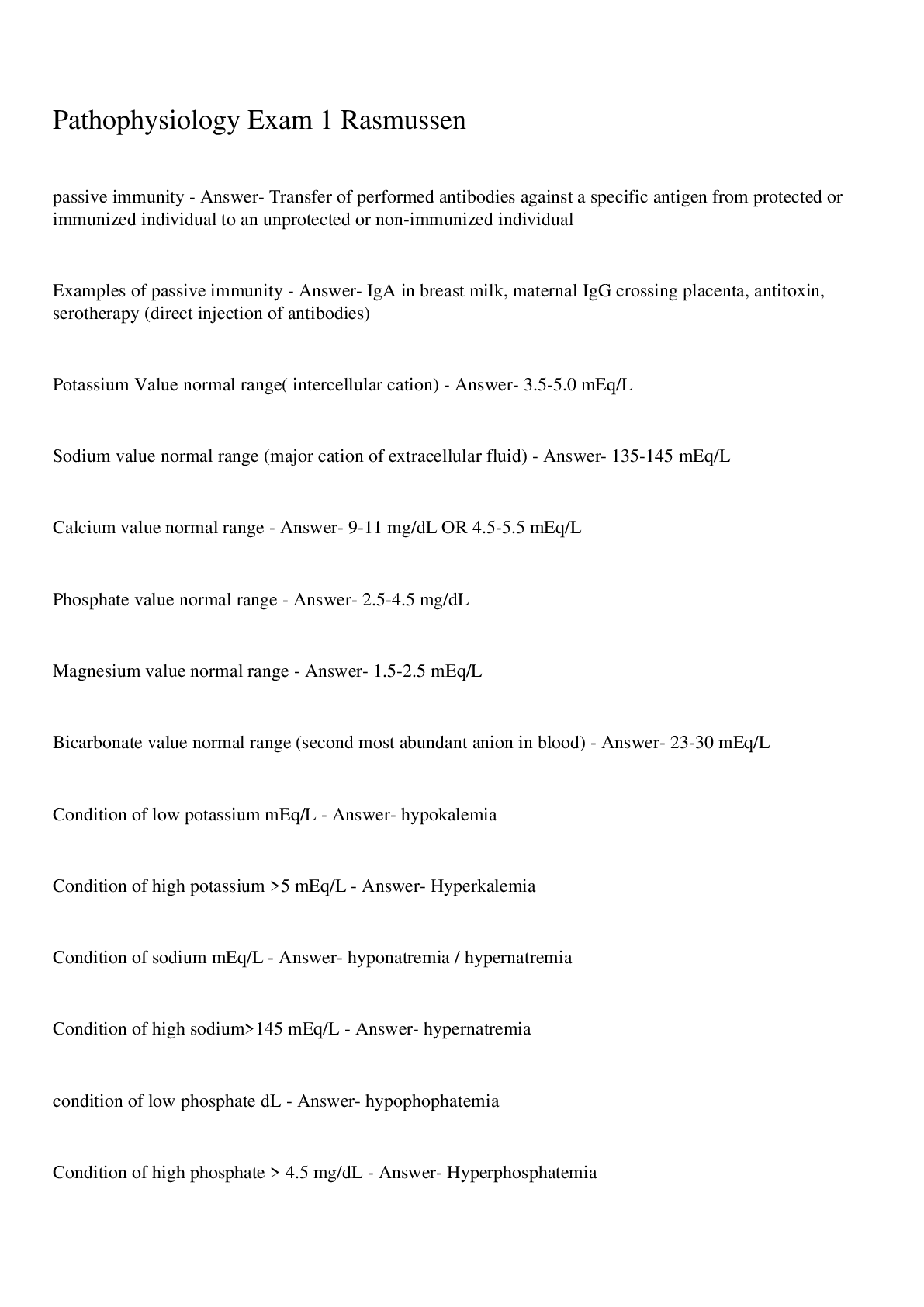
passive immunity - ANSWER involves the transfer of plasma containing preformed antibodies against a specific antigen from a protected or immunized person to an unprotected or non-immunized person. (ex: mom to baby)
Potassium Value - ANSWER 3.5-5.0 mEq/L
Sodium value - ANSWER 135-145 mEq/L
Calcium value - ANSWER 9-11 mg/dL OR 4.5-5.5 mEq/L
Phosphate value - ANSWER 2.5-4.5 mg/dL
Magnesium value - ANSWER 1.5-2.5 mEq/L
Low or high potassium - ANSWER hypokalemia / hyperkalemia
low or high sodium - ANSWER hyponatremia / hypernatremia
low or high phosphate - ANSWER hypophophatemia
low or high chloride - ANSWER hypochloremia
low or high magnesium - ANSWER hypomagnesemia
low or high calcium - ANSWER hypocalcemia
Pathophysiology - ANSWER the study of abnormalities in physiologic functioning of living beings
Pathology - ANSWER the study and diagnosis of disease through examination of organs, tissues, cells, and bodily fluids
Etiology - ANSWER The study of the causes and origins of disease
pathogenesis - ANSWER development or evolution of a disease
clinical manifestation - ANSWER signs and symptoms or evidence of disease
exacerbation - ANSWER a relatively sudden increase in the severity of a disease or any of its signs and symptom
remission - ANSWER decline in severity of symptoms
sequela - ANSWER a disorder or condition usually resulting from a previous disease or injury
acute - ANSWER sudden onset and short duration
chronic - ANSWER long term
Primary level of prevention - ANSWER -addresses needs of healthy clients, prevents disease
ex: immunization programs, health ed in school, car seat education
Secondary level of prevention - ANSWER -conduction activities that help prevent a worsening health status
-identifying disease, screening
ex: early detection & treatment of type 2 diabetes
Tertiary level of prevention - ANSWER -supports optimal functioning
-prevents long term consequences of a chronic illness or disability
ex: preventing pressure ulcer, promoting independence after brain injury
3 stages of adaptation (GAS) - ANSWER alarm, adaptation/resistance, exhaustion
adaptation/resistance stage - ANSWER trying to return to homeotasis,
once in this state, bringing them back to normal is risky
able to function through adaptation
alarm stage - ANSWER fight or flight response
reduced resistance to stressors
all perfusion to major organs
digestion stops
Suppressed immune response
catecholamines (epi and norepi)
adrenocortical steroids (cortisol and aldostrone)
exhaustion stage - ANSWER cannot return to homeostasis, energy sources depleted, disease process sets in and permanent symptoms show up.
Fluid excretion from? - ANSWER skin(sweating), lungs(exhaling), bowels, urine (largest amount from urine)
Causes of fluid deficits - ANSWER Vomiting, diarrhea
what is the electrolyte pool? - ANSWER bone marrow (calcium, magnesium, phosphate)
causes of edema - ANSWER increased capillary hydrostatic pressure, loss of plasma proteins, obstruction of lymphatic circulation, increased capillary permeability
Hypokalemia S/S - ANSWER Fatigue
Muscle weakness
Abd distention, bloating, hypoactive bowels sounds, constipation
Dysrhythmias, Flat T waves on ECG
Hyperkalemia S/S - ANSWER Muscle weakness,
Mild cramping, hyperactive bowel sounds, diarrhea Bradycardia, Dysrhythmias, Tall T waves on ECG, Cardiac arrest
Hypocalcemia S/S - ANSWER Diarrhea, Numbness, Tingling of extremities and around mouth, Convulsions, Positive Chvostek sign, Positive Trousseau sign, painful cramps ('charlie horses')
Brady, brittle bones,
Hypercalcemia S/S - ANSWER Muscle weakness, Constipation, Anorexia, N/V, Polyuria, confusion, increased HR and BP, Dysrhythmias, blood clots form easily, risk for DVT
Hyponatremia S/S - ANSWER N/V, hyperactive bowel sounds, Weakness, Lethargy, Confusion, Muscle cramps, Twitching, Seizures, Coma, Death
Hypernatremia S/S - ANSWER S = Skin flushed
A = Agitation
L = Low-grade fever
T = Thirst
eye twitching
Hypophosphatemia S/S - ANSWER ↓Cardiac Output and Contractility
Slowed Respirations
Weakness
↓DTR
↓Bone Density
Irritability/Confusion/Seizures
↓Platelet aggregation
↑Bleeding
Immunosupression
Hyperphosphatemia S/S - ANSWER Causes hypocalcemia:
+Trousseau's and Chvosteks
Hypomagnesemia S/S - ANSWER Torsades de Pointes (tornado in the heart) Afib, Vfib, Prolonged QT, flattened T wave, N/T, painful muscle contractions, decreased GI, constipations, nausea, paralytic ileus
Hypermagnesemia S/S - ANSWER Brady, hypotension, cardiac arrest, lethargy, coma, resp failure, death
Hyperkalemia causes and treatment - ANSWER Causes: ACE inhibitors, kidney failure, multiple blood transfusions, excessive or too rapid IV potassium
Treatment: Excrete excess potassium (with drugs), force potassium from ECF back into cells
Hypokalemia causes and treatment - ANSWER Causes: Diuretic use, N/V, NPO too long, unbalanced diet, corticosteroids, prolonged ng suctioning, water intoxication
Treatment: Replace potassium either IV or PO
Hypernatremia causes and treatment - ANSWER Causes: Kidney failure, long term corticosteroid use, excessive sodium intake (diet or IV), watery diarrhea, dehydration
Treatment: Hemodialysis for kidney failure, fluid replacement for water loss, diuretics to help rid body of excess fluid and sodium
Hyponatremia causes and treatment - ANSWER causes: Diuretic use, excessive sweating, NPO for too long, excessive consumption of water/beer/other hypertonic fluids
Treatment: if caused by diuretics, doses of those drugs will need to be changes or discontinued
Hypercalcemia causes and treatment - ANSWER Causes: hyperparathyroidism, malignant tumors, kidney failure, excessive calcium or vitamin d supplements, prolonged immobility
Treatment: Cardiac monitoring, interventions depend on cause but drug therapy can be used to reduce levels. If caused by diuretics, dosage changed/discontinued
Hypocalcemia causes and treatment - ANSWER Causes: Hypoparathyroidism, vitamin D deficiency, malabsorption (from Crohn's or Celiac) immobility, diarrhea, inadequate oral calcium intake
Treatment: focus on replacing calcium and/or vitamin D, until corrected keep patients on seizure precautions, in a low stimulus environment
Hyperphosphatemia causes and treatment - ANSWER Causes: increased phosphate intake, shift from cells to EFC, decreased phosphate excretion
Treatment:
Hypophosphatemia causes and treatment - ANSWER Causes: decreased phosphate intake, shift from ECF to cells, increased phosphate excretion.
Treatment:
Hypermagnesemia causes and treatment - ANSWER Causes: Kidney disease, overuse of magnesium-containing antacids or laxatives, excessive mag intake, IV mag replacement therapy
Treatment: If caused by excessive intake, decrease it, if due to kidney failure dialysis is used, if no kidney failure, give IV fluids to dilute, or loop diuretics to help excretion.
Hypomagnesemia causes and treatment - ANSWER Causes: Diuretic use, inadequate intake, chronic alcoholism, diarrhea, celiac, crohns, chemo, anti-rejection drugs, mass transfusion
Treatment: replacement with mag sulfate, monitor closely to prevent hypermag
Chloride value - ANSWER 97-107 mEq/L
Which hormones move electrolytes from the pool to the ECF? - ANSWER epinephrine
Components of the Immune System - ANSWER (1) skin and mucous membranes; (2) the mononuclear phagocyte system; (3) the lymphoid system, including spleen, thymus gland, and lymph nodes; and (4) bone marrow. AND B cells; T cells
5 cardinal signs of inflammation - ANSWER heat, redness, swelling, pain, loss of function
active immunity - ANSWER confers a protected state attributable to the body's immune response as a result of active infection or immunization. (ex: immunizations, having the chicken pox)
Hormones released during GAS - ANSWER catecholamines (epi and norepi)
adrenocortical steroids (cortisol and aldosterone)
endorphines and enkephalins (endogenous opiods, increase pain threshold, produce sedation and euphoria)
Immune cytokines (enhance immune system, when prolonged they suppress it)
Sex hormones (estrogen and testosterone)
Growth hormone
Oxytocin (female "tend+befriend" vs fight or flight)
passive transport - ANSWER requires no energy, along the gradient from high concentration to low
(ex: diffusion, osmosis, facilitated diffusion)
active transport - ANSWER requires energy, against the gradient from low concentration to high
(ex: endocytosis (entering cell), exocytosis(exiting cell), and protein pumps)
osmosis - ANSWER passive transport using pressure, moving from high to low
Dehydration (etiology, clinical manifestations, and treatment) - ANSWER Causes: vomiting, diarrhea, removal of saline from the body causes extracellular volume deficit and removal of extra water from the body causes hypernatremia, the combination is dehydration.
S/S: hard stools, sudden weight loss, rapid pulse, oliguria, prolonged capillary refill time, decreased skin turgor, dry mouth, absence of sweat and tears, confusion, lethargy, thirst
Treatment: replenish fluids PO or IV
Extracellular fluid content (in relation to bicarb) - ANSWER
antimicrobial resistance - ANSWER occurs when pathogens undergo changes that allow them to resist antimicrobials (Ex: MRSA)
Inflammation Etiology and S/S - ANSWER
pg 169 3 purposes - ANSWER
Excessive immune response p1046 - ANSWER
classification of antibodies and what theyre responsible for - ANSWER
mediators of acute inflammation - ANSWER histamine, serotonin, bradykinin, prostaglandins, leukotrienes
test measures for inflammation - ANSWER
Properties of cancer cell - ANSWER
effects of cancer on the body - ANSWER pain
weakness
immune suppression
infection
Compartment Syndrome Etiology - ANSWER Causes: decreased compartment size, increased compartment content, or externally applied pressure
The 5 P's of compartment syndrome are: - ANSWER pain, paralysis, parasthesia, palor, pulselessness
Osteoporosis - ANSWER A condition in which the body's bones become weak and break easily.
muscular dystrophy - ANSWER group of hereditary diseases characterized by degeneration of muscle and weakness
Fibromyalgia - ANSWER chronic condition with widespread aching and pain in the muscles and fibrous soft tissue
myasthenia gravis - ANSWER a chronic AUTOIMMUNE disease that affects the neuromuscular junction and produces serious weakness of voluntary muscles
Osteoarthritis - ANSWER a degenerative joint disease in which the cartilage covering the surface of bone becomes thinner and rougher (noninflammatory)
rheumatoid arthritis - ANSWER a chronic AUTOIMMUNE disorder in which the joints and some organs of other body systems are attacked
Psoriatic arthritis - ANSWER An inflammatory arthritis associated with psoriasis of the skin
Herpes - ANSWER A viral infection causing small painful blisters and inflammation, most commonly at the junction of skin and mucous membrane in the mouth or nose or in the genitals (1 above waist, 2 below) Goes dormant and can come back as shingles.
Gout - ANSWER hereditary metabolic disease that is a form of acute arthritis, characterized by excessive uric acid in the blood and around the joints
atopic dermatitis - ANSWER Excess inflammation; dry skin, redness, and itching from allergies and irritants. (eczema)
osteocarcoma - ANSWER a malignant tumor of the bone and is most common in the mandible.
Carcinogenesis - ANSWER 1. Initiation (DNA damage/mutation)
2. Promotion (proliferation/growth promoters)
3. Progression (development of cancerous phenotype)
7 warning signs of cancer - ANSWER (CAUTION)
Change in bowel or bladder habits
A sore that does not heal
Unusual bleeding or discharge
Thickening or lump in breast or elsewhere
Indigestion or difficulty swallowing
Obvious change in wart or mole
Nagging cough or hoarseness
[Show More]

![Preview of Pathophysiology Exam 1 2024 – [Rasmussen]](https://browseimages.nyc3.digitaloceanspaces.com/paper-images/2024/Jun/29/XCUuZSO52024-06-29-06-27667f7f2ebabd1.png)