NSG 6001 MIDTERM EXAM QUESTIONS AND CORRECT ANSWERS
Document Content and Description Below
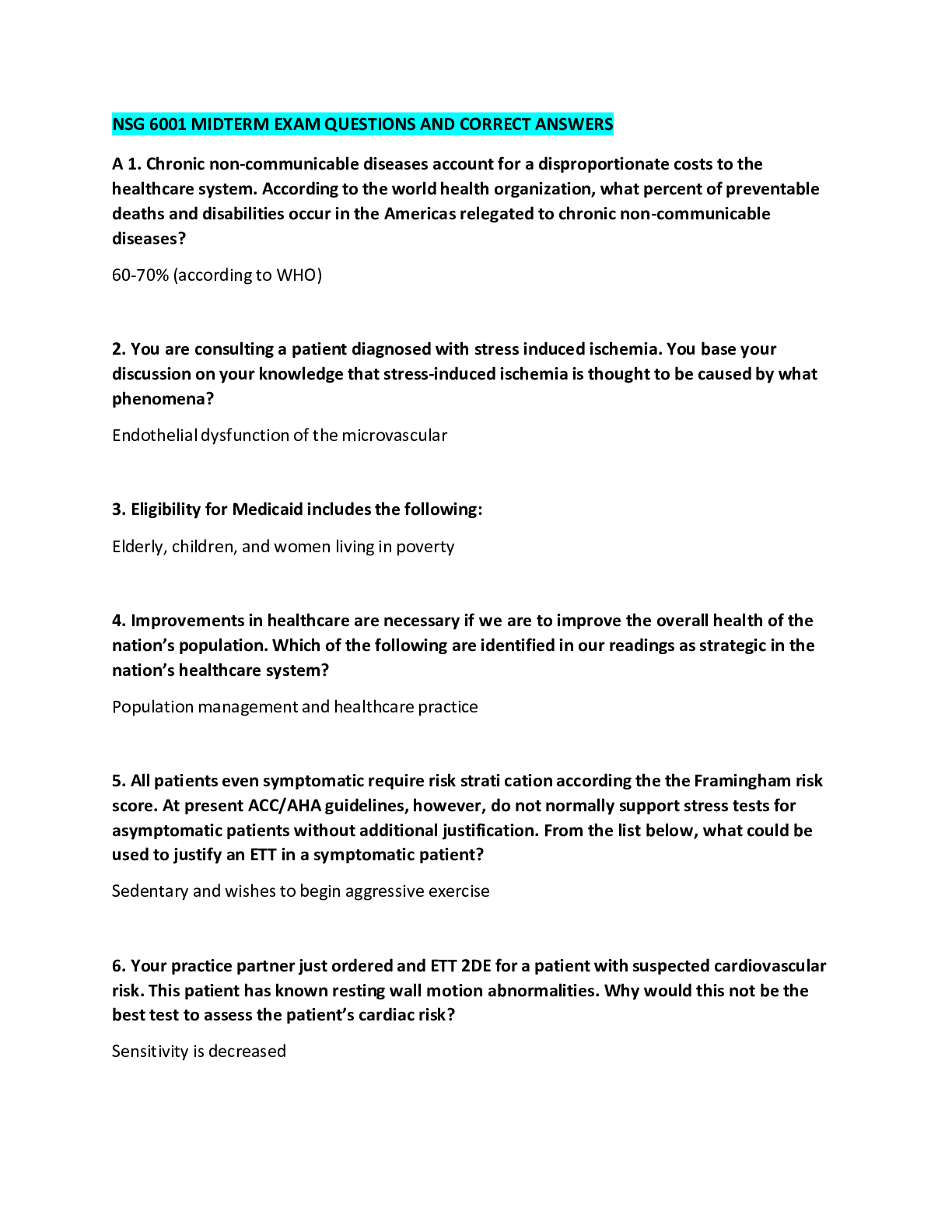
NSG 6001 MIDTERM EXAM QUESTIONS AND CORRECT ANSWERS
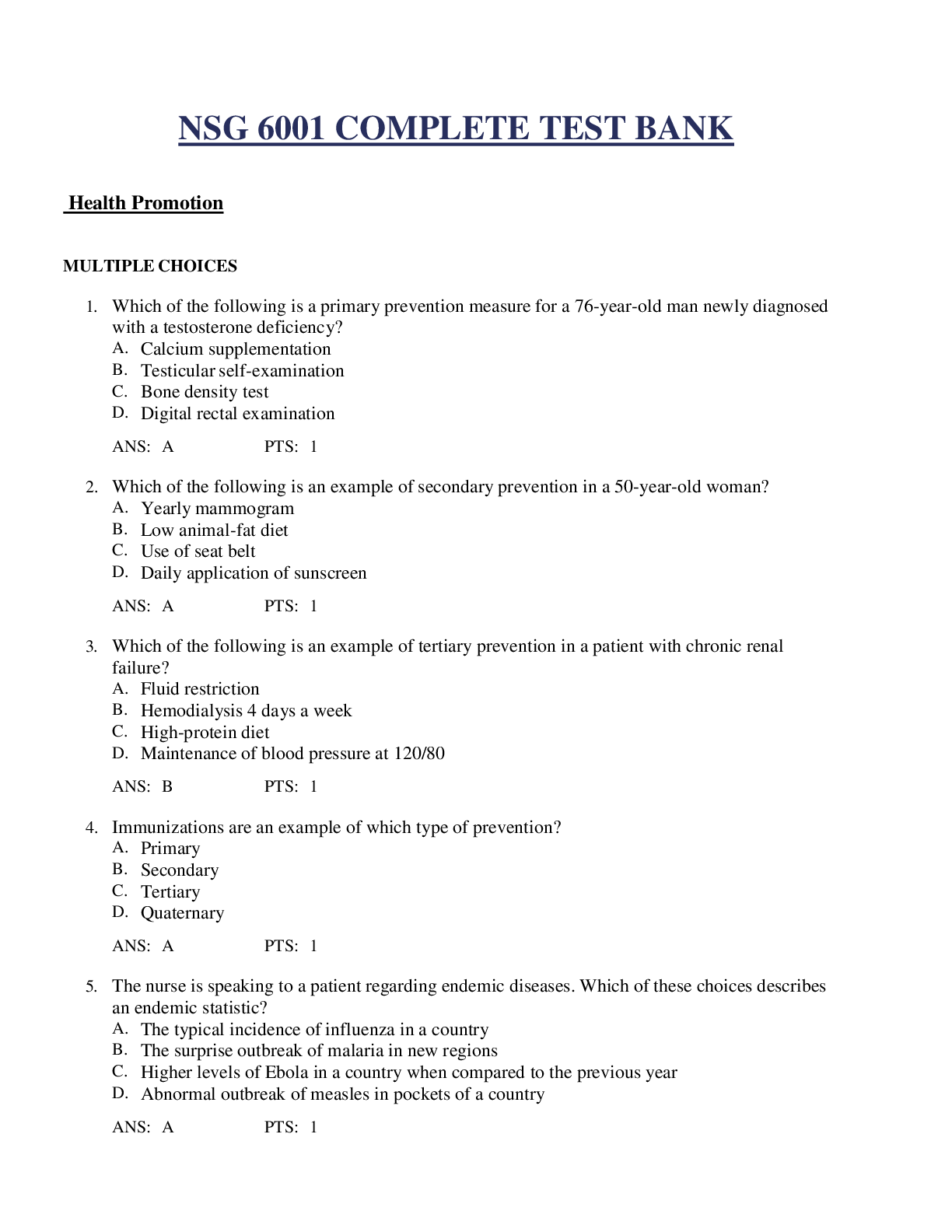
A 1. Chronic non-communicable diseases account for a disproportionate costs to the healthcare system. According to the world health organization, what percent of preve
...
[Show More]
Last updated: 4 years ago
Preview 1 out of 6 pages
Instant download
Buy this Document to get the Full Access Instantly
Provided by Students Who Aced it
We Verify Document Content to Gurantee Accuracy
Reviews( 0 )
Document information
Connected school, study & course
About the document
Uploaded On
Sep 22, 2022
Number of pages
6
Written in
All

Additional information
This document has been written for:
Uploaded
Sep 22, 2022
Downloads
0
Views
104
Topic Tags
Related Subjects & Courses
Explore similar study resources and related concepts.
Recommended For You
Get more on EXAM »
$1
3 Pages
South University, Savannah - NSG 6001 Week 4 Knowledge Check L...
$11
27 Pages
NSG6001 Week 5 Final Exam Latest > South University - All Answ...

$12
9 Pages
NSG 6001 Midterm Exam 2 – Question and Answers – South Univers...



$13
157 Pages
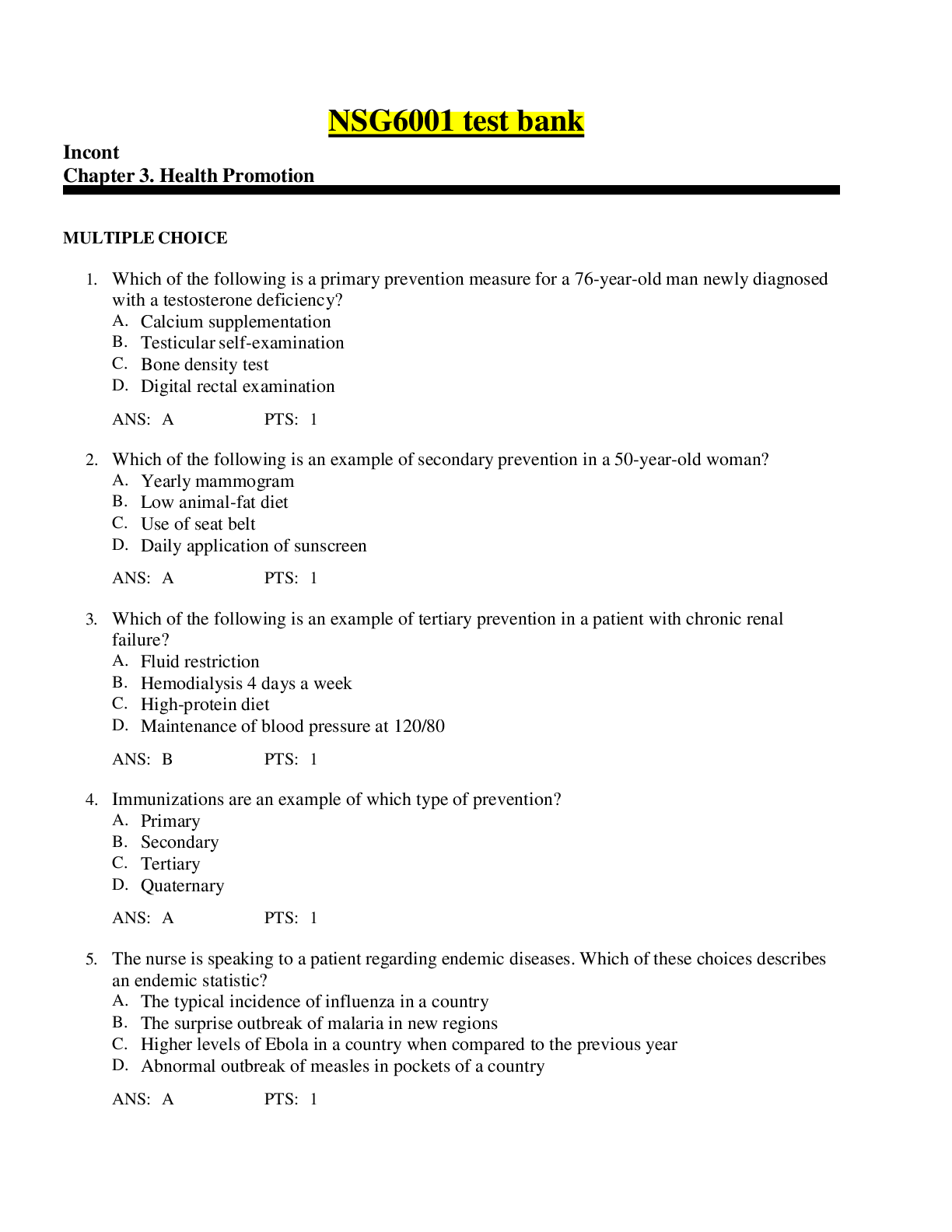
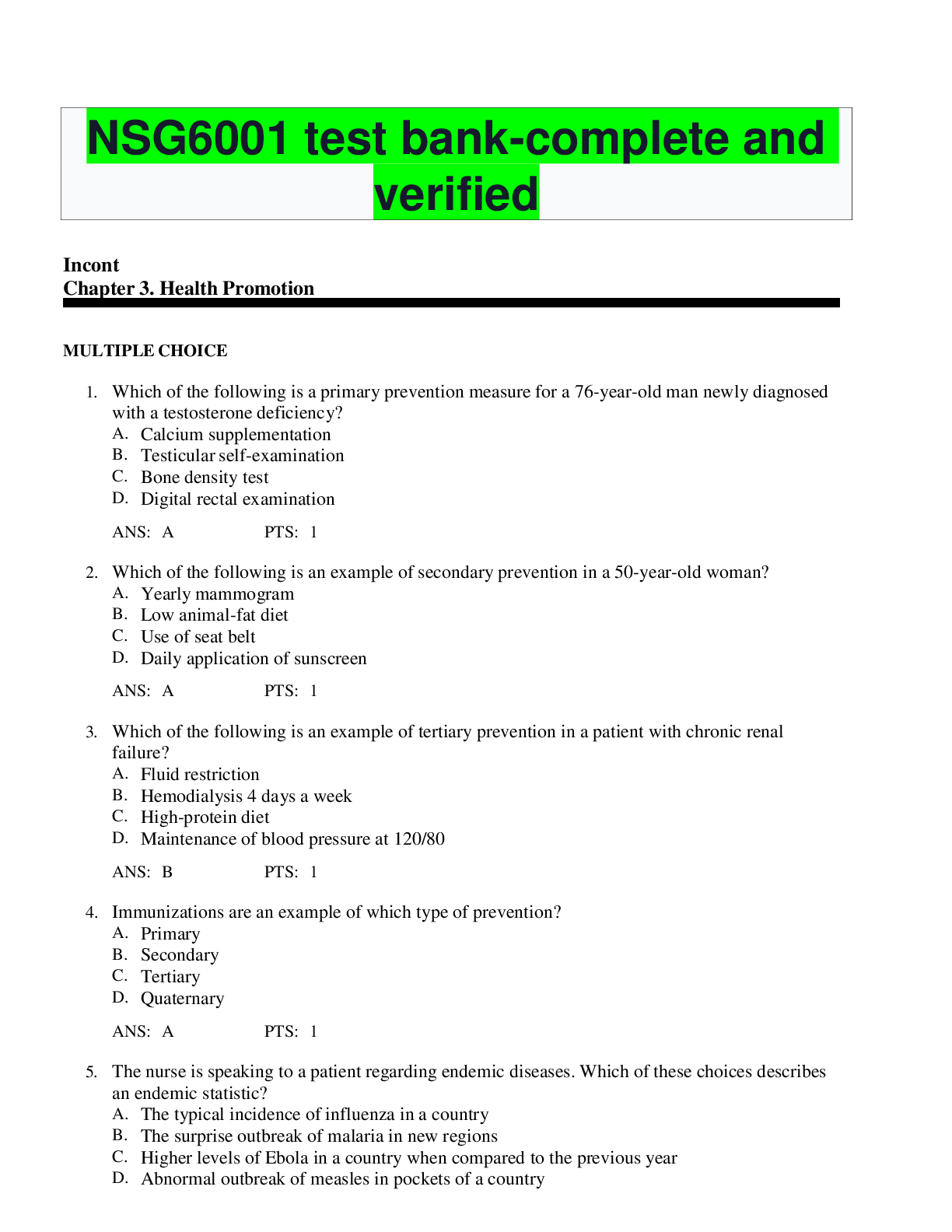
NSG6001 latest updated test bank questions and answers graded...

$18
51 Pages
NSG 6001 Final Test 2 Latest Revised Complete Solution, All An...
$10
17 Pages
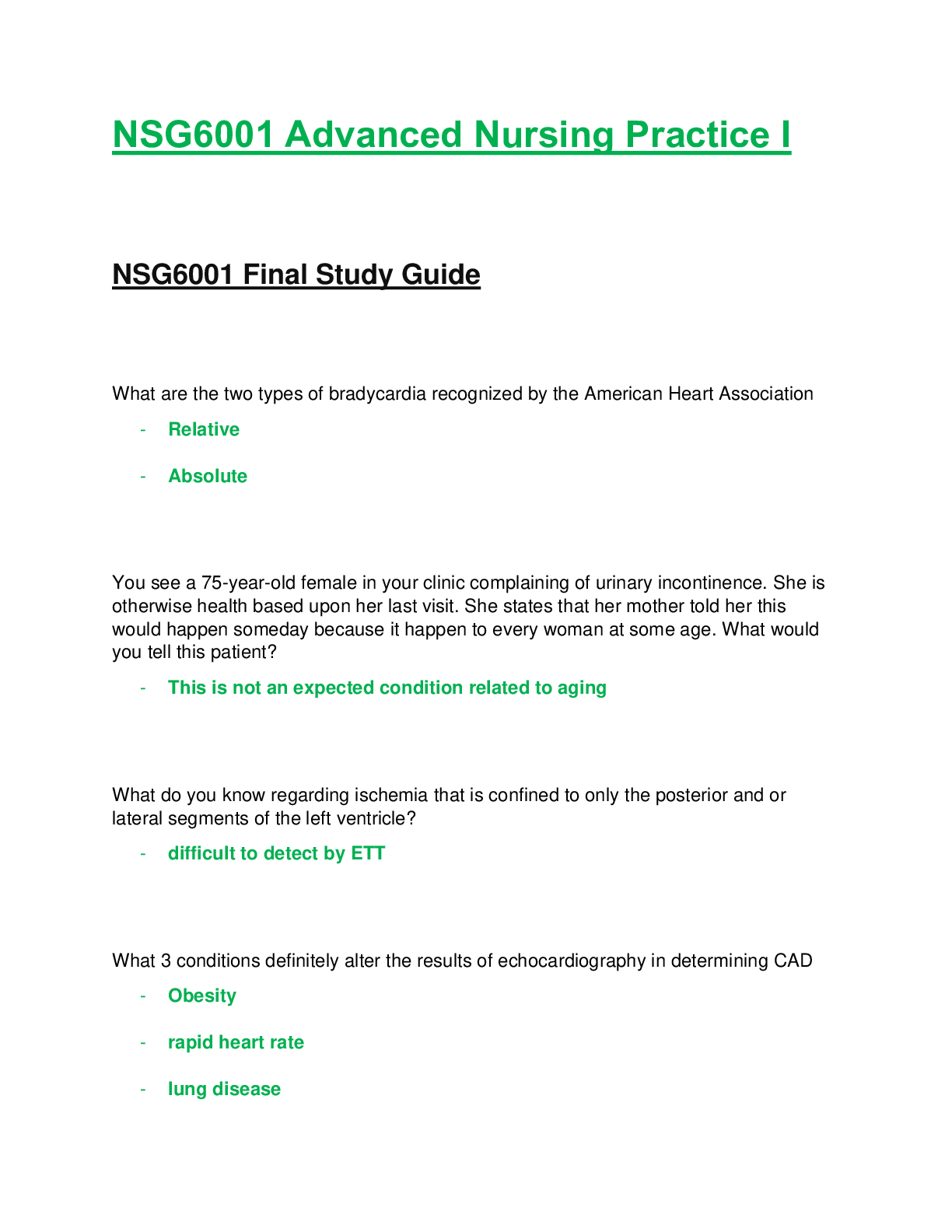
NSG6001 / NSG 6001: Advanced Nursing Practice I Final Study Gu...
$10
13 Pages
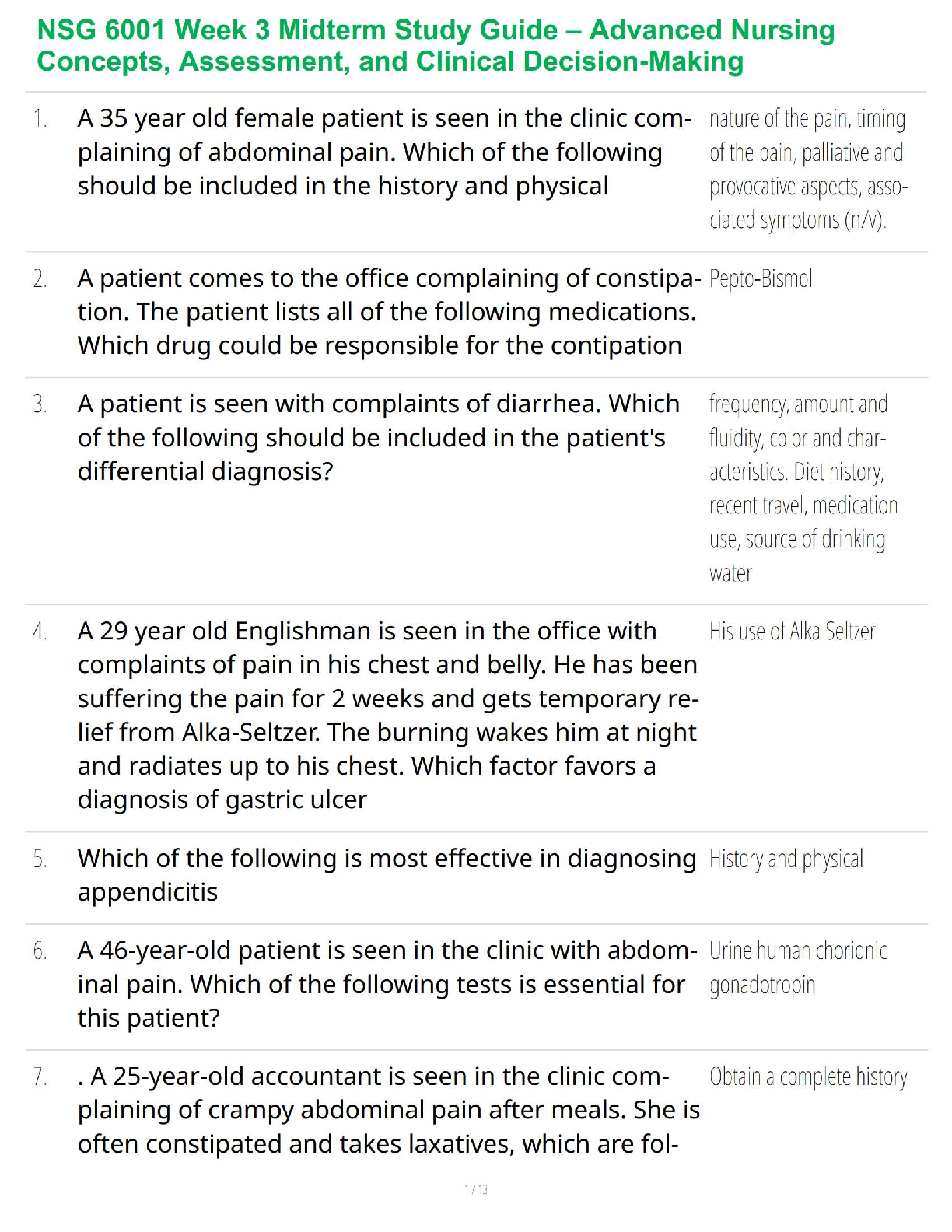
NSG 6001 Week 3 Midterm Study Guide – Advanced Nursing Concept...

$10
4 Pages
NSG 6001 / NSG6001 ADVANCED NURSING PRACTICE UNIT03CHAPTER 76....
$14
157 Pages
SOUTH UNIVERSITY NSG 6001 COMPLETE GUIDE BEST FOR NURSING STUD...

More related documents below