NR 601 WEEK 7 QUIZ DEMENTIA, ELDER ABUSE, DELIERIUM (100% CORRECT)
Document Content and Description Below
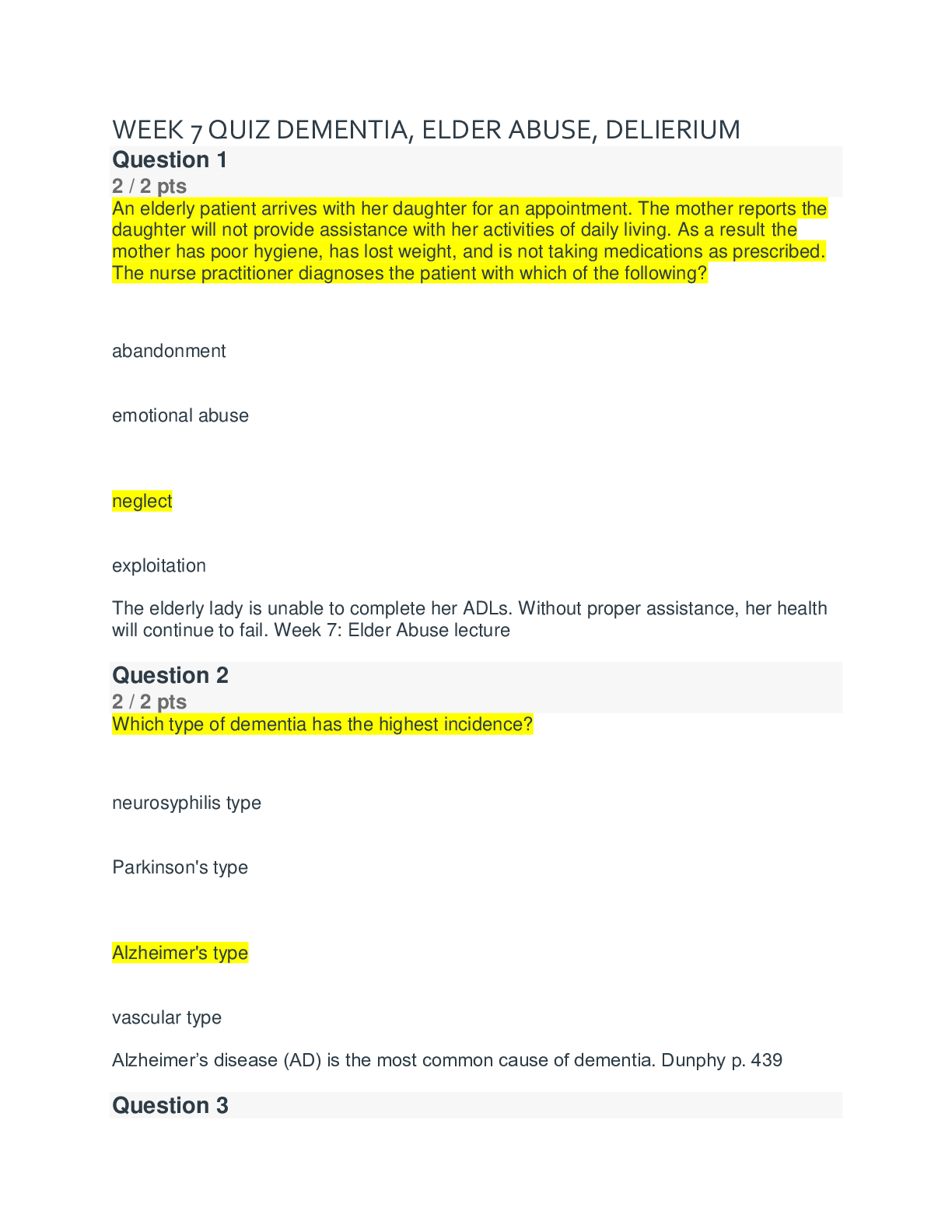
NR 601 WEEK 7 QUIZ DEMENTIA, ELDER ABUSE, DELIERIUM Question 1 2 / 2 pts An elderly patient arrives with her daughter for an appointment. The mother reports the daughter will not provide assistance with her activities of
...
[Show More]
Last updated: 8 months ago
Preview 1 out of 3 pages
Instant download
Buy this Document to get the Full Access Instantly
Provided by Students Who Aced it
We Verify Document Content to Gurantee Accuracy
Reviews( 0 )
Document information
Connected school, study & course
About the document
Uploaded On
Jan 03, 2021
Number of pages
3
Written in
All

Additional information
This document has been written for:
Uploaded
Jan 03, 2021
Downloads
0
Views
90
Topic Tags
Recommended For You
Get more on EXAM »

$20
30 Pages
NR 601 FINAL PRIMARY CARE OF THE MATURING AND AGED FAMILY PRA...
$18
121 Pages
Chamberlain NR 601 Final Exam (2026) – Primary Care Aging Actu...
$15.5
34 Pages
ATI NR 601 NURSING FINAL EXAM 2026 COMPLETE STUDY QUESTIONS WI...
$17
33 Pages
NR 601 ATI NURSING FINAL TEST EXAM 2026 COMPLETE STUDY QUESTIO...
$12.5
36 Pages
NR 601 Midterm Exam - Chamberlain College of Nursing Questi...
$12.5
28 Pages
NR 601 FINAL Exam 110 Questions with 100% Correct Answers | L...
$10
21 Pages
NR601 2026 COMPREHENSIVE STUDY GUIDE COMPLETE QUESTIONS AND VE...
$10
29 Pages
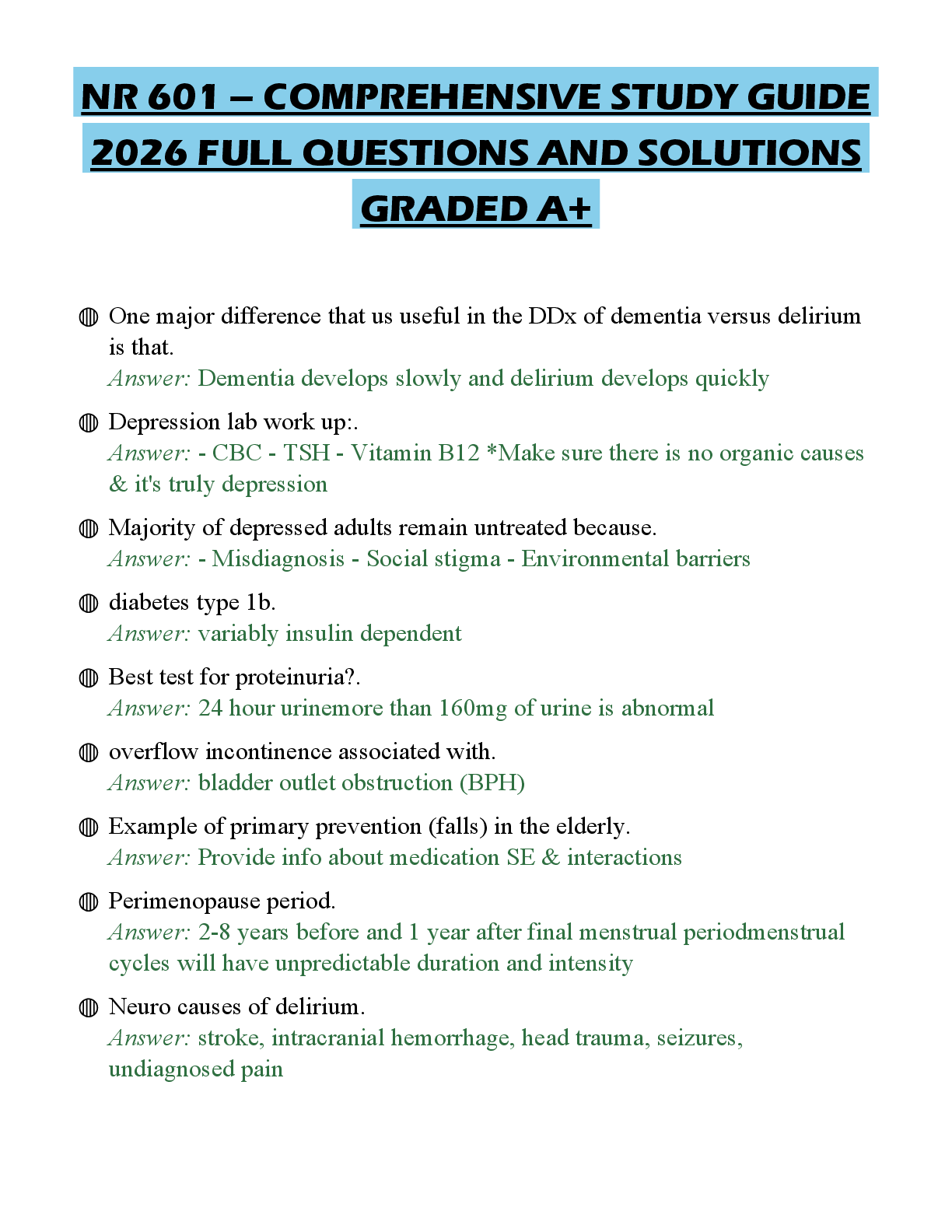
NR 601 – COMPREHENSIVE STUDY GUIDE 2026 FULL QUESTIONS AND SOL...
$21
9 Pages
NR 601 week 1 Discussion Board Comprehensive Geriatric Assessm...
$10
10 Pages
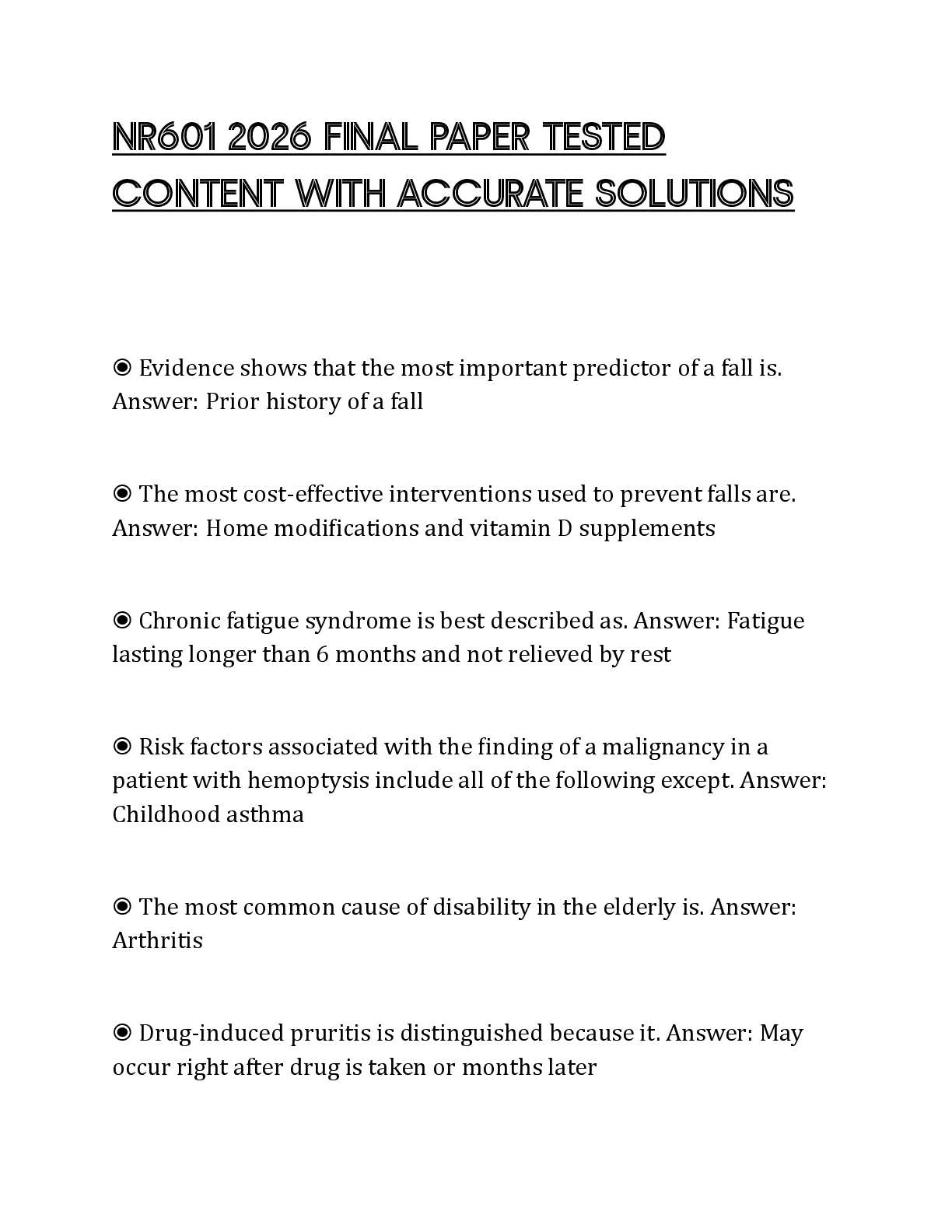
NR601 2026 FINAL PAPER TESTED CONTENT WITH ACCURATE SOLUTIONS

$14.5
49 Pages
NR 601 MIDTERM EXAM AND STUDY GUIDE NEWEST 2026/2027 ACTUAL E...
$8
5 Pages
NR 601 Primary Care of Aging Adult Final Exam Study Guide: (La...
$8
5 Pages
NR 601 Primary Care of the Maturing & Aged Family Final Exam S...
$22
9 Pages
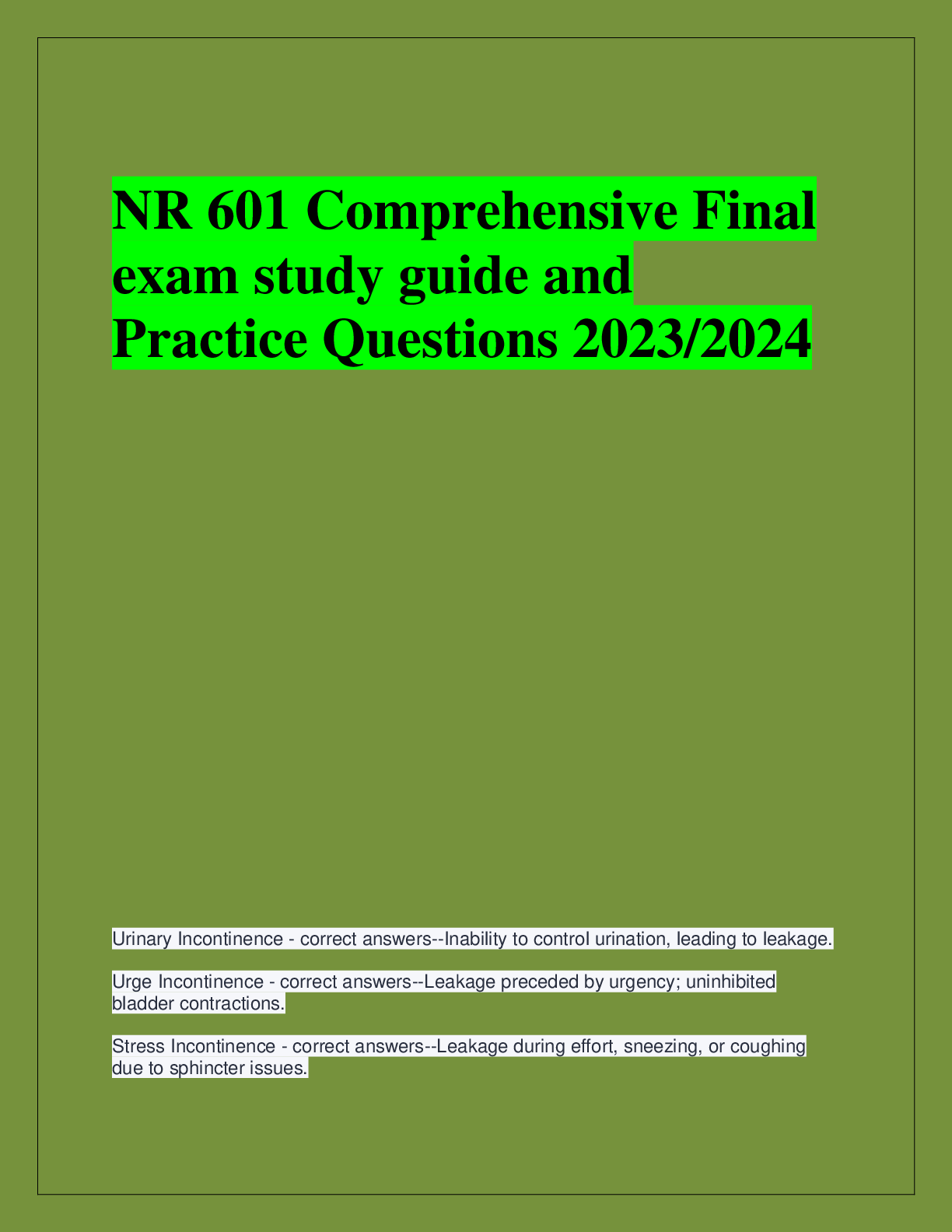
NR 601 Comprehensive Final exam study guide and practice que...
$24
28 Pages
NR 601 i-Human Case Study 2026–2027 | Sophia King Adult Primar...
$22
585 Pages
TEST BANK for Maternity Newborn and Women’s Health Nursing A C...
$19
764 Pages
Test Bank for Primary Care Interprofessional Collaborative Pra...
$20
246 Pages
Test Bank for Pharmacotherapeutics for Advanced Practice Nurse...
More related documents below