art historian skills
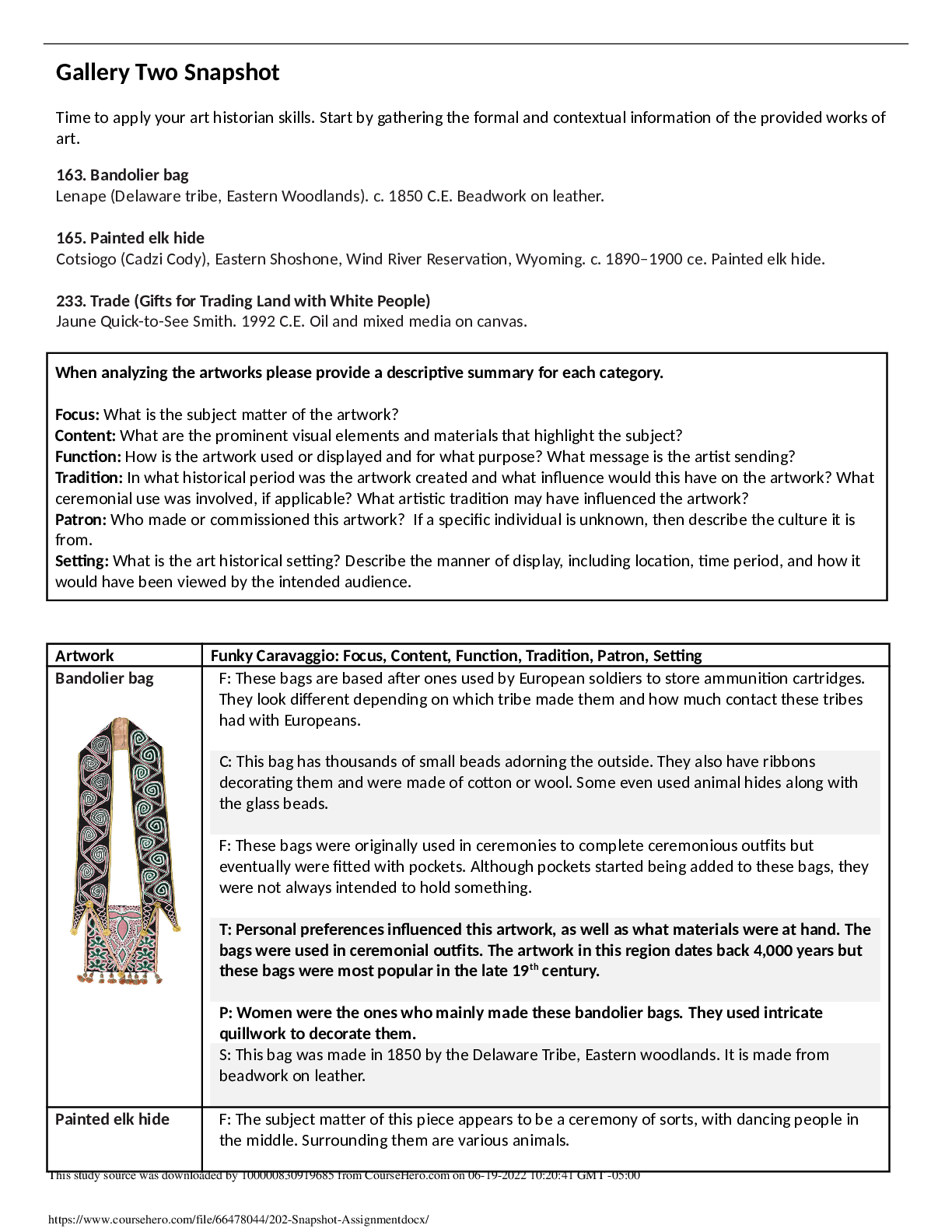
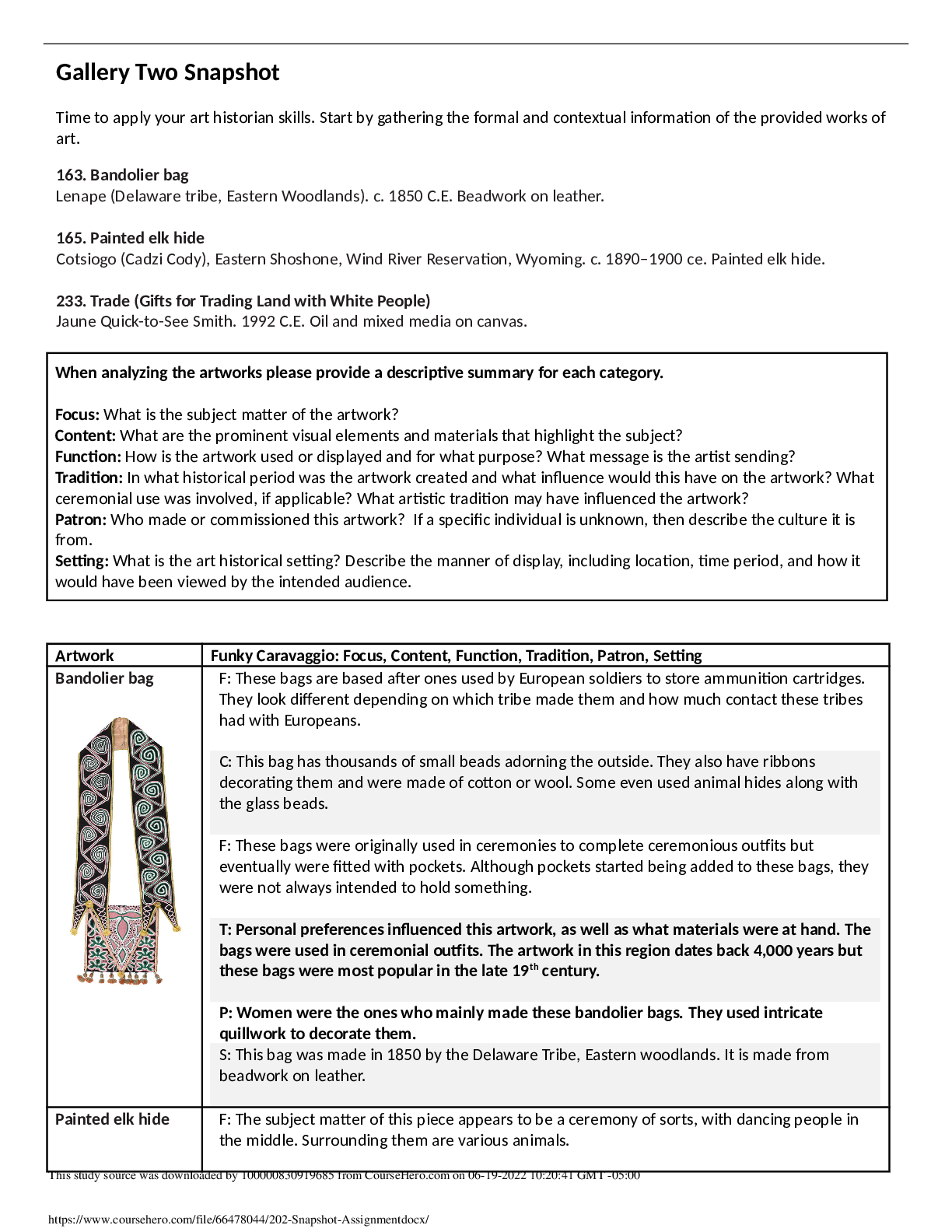
163. Bandolier bag
Lenape (Delaware tribe, Eastern Woodlands). c. 1850 C.E. Beadwork on leather.
165. Painted elk hide
Cotsiogo (Cadzi Cody), Eastern Shoshone, Wind River Reservation, Wyoming.
...
art historian skills
163. Bandolier bag
Lenape (Delaware tribe, Eastern Woodlands). c. 1850 C.E. Beadwork on leather.
165. Painted elk hide
Cotsiogo (Cadzi Cody), Eastern Shoshone, Wind River Reservation, Wyoming. c. 1890–1900 ce. Painted elk hide.
233. Trade (Gifts for Trading Land with White People)
Jaune Quick-to-See Smith. 1992 C.E. Oil and mixed media on canvas.
When analyzing the artworks please provide a descriptive summary for each category.
Focus: What is the subject matter of the artwork?
Content: What are the prominent visual elements and materials that highlight the subject?
Function: How is the artwork used or displayed and for what purpose? What message is the artist sending?
Tradition: In what historical period was the artwork created and what influence would this have on the artwork? What
ceremonial use was involved, if applicable? What artistic tradition may have influenced the artwork?
Patron: Who made or commissioned this artwork? If a specific individual is unknown, then describe the culture it is
from.
Setting: What is the art historical setting? Describe the manner of display, including location, time period, and how it
would have been viewed by the intended audience.
Artwork Funky Caravaggio: Focus, Content, Function, Tradition, Patron, Setting
Bandolier bag F: These bags are based after ones used by European soldiers to store ammunition cartridges.
They look different depending on which tribe made them and how much contact these tribes
had with Europeans.
C: This bag has thousands of small beads adorning the outside. They also have ribbons
decorating them and were made of cotton or wool. Some even used animal hides along with
the glass beads.
F: These bags were originally used in ceremonies to complete ceremonious outfits but
eventually were fitted with pockets. Although pockets started being added to these bags, they
were not always intended to hold something.
T: Personal preferences influenced this artwork, as well as what materials were at hand. The
bags were used in ceremonial outfits. The artwork in this region dates back 4,000 years but
these bags were most popular in the late 19th century.
P: Women were the ones who mainly made these bandolier bags. They used intricate
quillwork to decorate them.
S: This bag was made in 1850 by the Delaware Tribe, Eastern woodlands. It is made from
beadwork on leather.
Painted elk hide F: The subject matter of this piece appears to be a ceremony of sorts, with dancing people in
the middle. Surrounding them are various animals.
This study source was downloaded by 100000830919685 from CourseHero.com on 06-19-2022 10:20:41 GMT -05:00
https://www.coursehero.com/file/66478044/202-Snapshot-Assignmentdocx/C: This painting is very colorful and uses the primary colors as well as brown. It depicts the
Sun Dance and Wolf Dance, although only the Sun Dance was religious.
F: Painting originally was to record history but was later used to support the artist. The images
also changed to what tourists liked instead of recording the artists history.
T: Later paintings were influenced by the need to appeal to tourists so they would buy the
artworks. Men and women both created these paintings, but men were the ones who
generally created scenes on tipis, clothing, or shields.
P: The artist who created this is Cotsiogo (Cadzi Cody), who was a member of the Shoshone
people. He painted many hides while living on the Wind River Reservation.
S: This piece was made between 1890-1900 by Cotsiogo. It is made of painted elk hide. This
piece was made on the Wind River Reservation in Wyoming.
Trade (Gifts for
Trading Land with
White People)
F: The subject matter of this piece is a mockery of the American lore that Native Americans
were lured off their lands by trade goods. The problems surrounding this are the
misunderstandings between Native Americans and Europeans, including the idea of land
ownership.
C: Many layers of paint, objects, and images are on this canvas. Including newspaper articles,
photos, fruit carton labels, tobacco and gum wrappers, and comics. In the front is an outline
of a canoe. Above the canvas are an array of toys and souvenirs, all Native American themed.
F: The artist created this to reverse the narrative of sacred land sold for cheap trinkets. It was
also made to showcase how important Native items are made without a true understanding
of what they mean.
T: This was made as a response to the Quincentennial anniversary of Christopher Columbus’
arrival in North America. The artists heritage influenced her views on this event which lead to
her creating this piece.
P: The artist of this piece is Jaune Quick-to-See Smith. She is from the Confederated Salish and
Kootenai Tribes of the Flathead Indian Nation.
S: This piece was made in 1992 by Jaune Quick-to-See Smith. She made it of oil paint and
mixed media on a canvas.
[Show More]











 (1).png)