CHAPTER 53: VITAMINS AND MINERALS
EXAM REVIEW SOLUTION UPDATE 2022
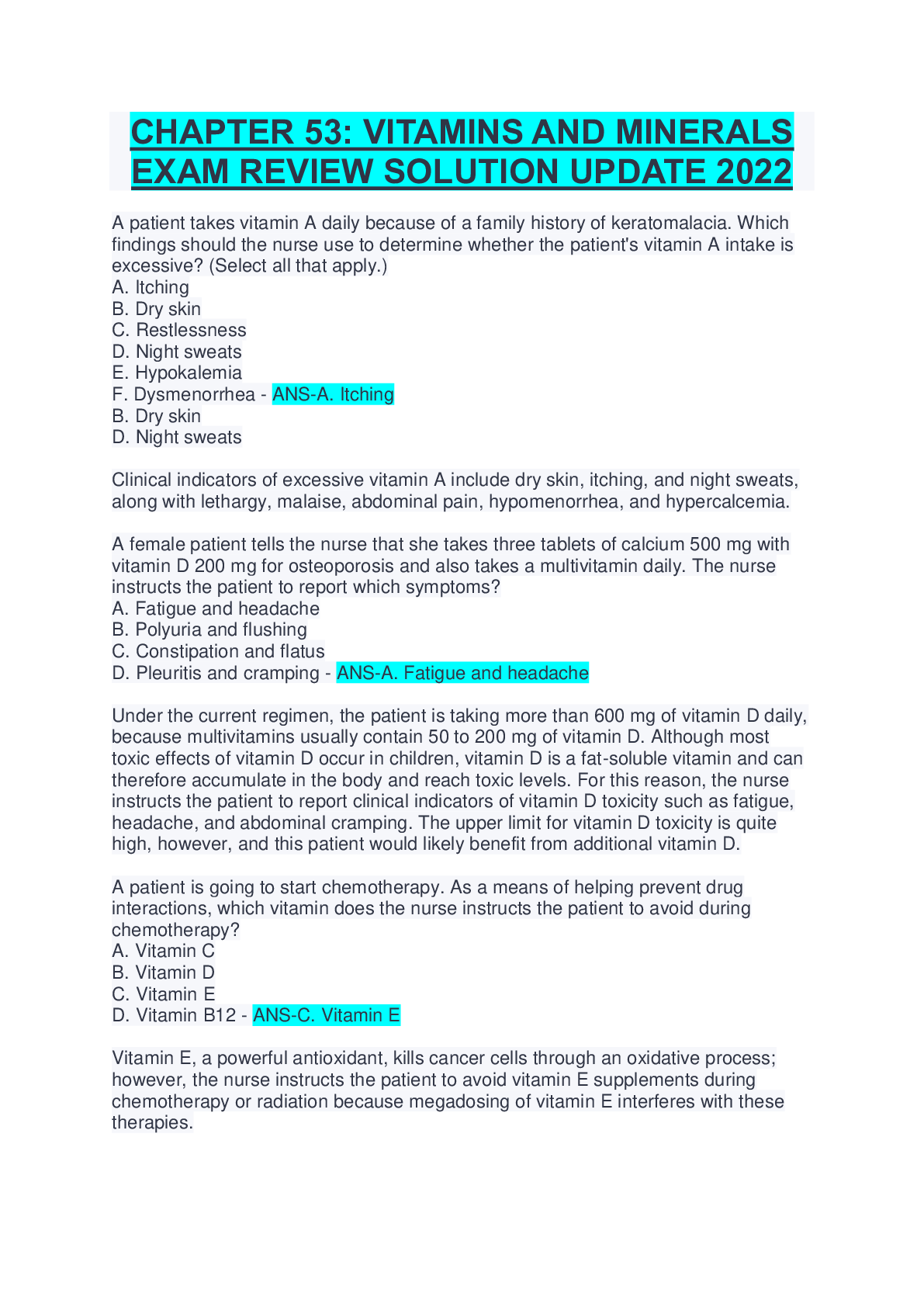
A patient takes vitamin A daily because of a family history of keratomalacia. Which
findings should the nurse use to determine whether the patient's
...
CHAPTER 53: VITAMINS AND MINERALS
EXAM REVIEW SOLUTION UPDATE 2022
A patient takes vitamin A daily because of a family history of keratomalacia. Which
findings should the nurse use to determine whether the patient's vitamin A intake is
excessive? (Select all that apply.)
A. Itching
B. Dry skin
C. Restlessness
D. Night sweats
E. Hypokalemia
F. Dysmenorrhea - ANS-A. Itching
B. Dry skin
D. Night sweats
Clinical indicators of excessive vitamin A include dry skin, itching, and night sweats,
along with lethargy, malaise, abdominal pain, hypomenorrhea, and hypercalcemia.
A female patient tells the nurse that she takes three tablets of calcium 500 mg with
vitamin D 200 mg for osteoporosis and also takes a multivitamin daily. The nurse
instructs the patient to report which symptoms?
A. Fatigue and headache
B. Polyuria and flushing
C. Constipation and flatus
D. Pleuritis and cramping - ANS-A. Fatigue and headache
Under the current regimen, the patient is taking more than 600 mg of vitamin D daily,
because multivitamins usually contain 50 to 200 mg of vitamin D. Although most
toxic effects of vitamin D occur in children, vitamin D is a fat-soluble vitamin and can
therefore accumulate in the body and reach toxic levels. For this reason, the nurse
instructs the patient to report clinical indicators of vitamin D toxicity such as fatigue,
headache, and abdominal cramping. The upper limit for vitamin D toxicity is quite
high, however, and this patient would likely benefit from additional vitamin D.
A patient is going to start chemotherapy. As a means of helping prevent drug
interactions, which vitamin does the nurse instructs the patient to avoid during
chemotherapy?
A. Vitamin C
B. Vitamin D
C. Vitamin E
D. Vitamin B12 - ANS-C. Vitamin E
Vitamin E, a powerful antioxidant, kills cancer cells through an oxidative process;
however, the nurse instructs the patient to avoid vitamin E supplements during
chemotherapy or radiation because megadosing of vitamin E interferes with these
therapies.
A patient has a vitamin K deficiency. Which plasma protein should the nursemonitor
for deficiency?
A. Globulin
B. Albumin
C. Lipoprotein
D. Prothrombin - ANS-D. Prothrombin
Because vitamin K is critical in the hepatic synthesis of clotting factors, the nurse
monitors the patient for a deficiency in prothrombin by analyzing the serum
prothrombin level. Other plasma proteins produced by the liver include globulin,
albumin, and lipoprotein. Globulins are antibodies; albumin is the primary plasma
protein responsible for oncotic pressure; and lipoproteins transport lipids in the
blood.
A patient with a long history of alcoholism has a vitamin B6 deficiency. To which
laboratory tests should the nurse refer to evaluate the therapeutic effects of vitamin
B6 supplementation?
A. Hematocrit
B. Reticulocytes
C. Mean corpuscular hemoglobin
D. Erythrocyte sedimentation rate - ANS-C. Mean corpuscular hemoglobin
The nurse analyzes the hemoglobin concentration in the erythrocytes (mean
corpuscular hemoglobin, or MCH) to determine the therapeutic effect of vitamin B6
supplementation because vitamin B6 is important in the synthesis of heme, the
oxygen-carrying molecule found in hemoglobin. The nurse reviews the MCH
because it quantifies the concentration of hemoglobin in erythrocytes. Vitamin B6 is
not involved in erythrocyte production, so the hematocrit and reticulocytes counts, as
well as the sedimentation rate, are unrelated.
A patient with a history of GI bleeding as a result of peptic ulcer disease is started on
famotidine (Pepcid) upon admission. Which action is the nurse's priority in helping
prevent anemia in the patient?
A. Providing poultry, fish, and eggs
B. Administering parenteral iron
C. Providing lean meat and cheese
D. Administering vegetables and nuts - ANS-A. Providing poultry, fish, and eggs
The patient is receiving an H2 blocker, which inhibits the secretion of hydrochloric
acid by gastric parietal cells; as a result, the patient is at risk for pernicious anemia
because the lack of hydrochloric acid in the stomach inhibits the absorption of
vitamin B12, because of a lack of intrinsic factor (secreted in gastric juices). To help
prevent this anemia, the nurse provides rich dietary sources of vitamin B12 including
poultry, fish, and eggs. Iron is not indicated in the prevention or treatment of
pernicious anemia. Lean meat and cheese provide magnesium and vegetables, and
nuts provide B6.
A patient is recovering from extensive thoracic surgery. Which foods should the
nurse include in the patient's diet to promote healing?....
[Show More]