POUL 1010E Exam 2
dollar value of illegal wildlife trade and its value relative to other organized illegal trade - ANS - $5 to
$20 billion annually. It falls right behind the black marketing of drugs, weapons, and huma
...
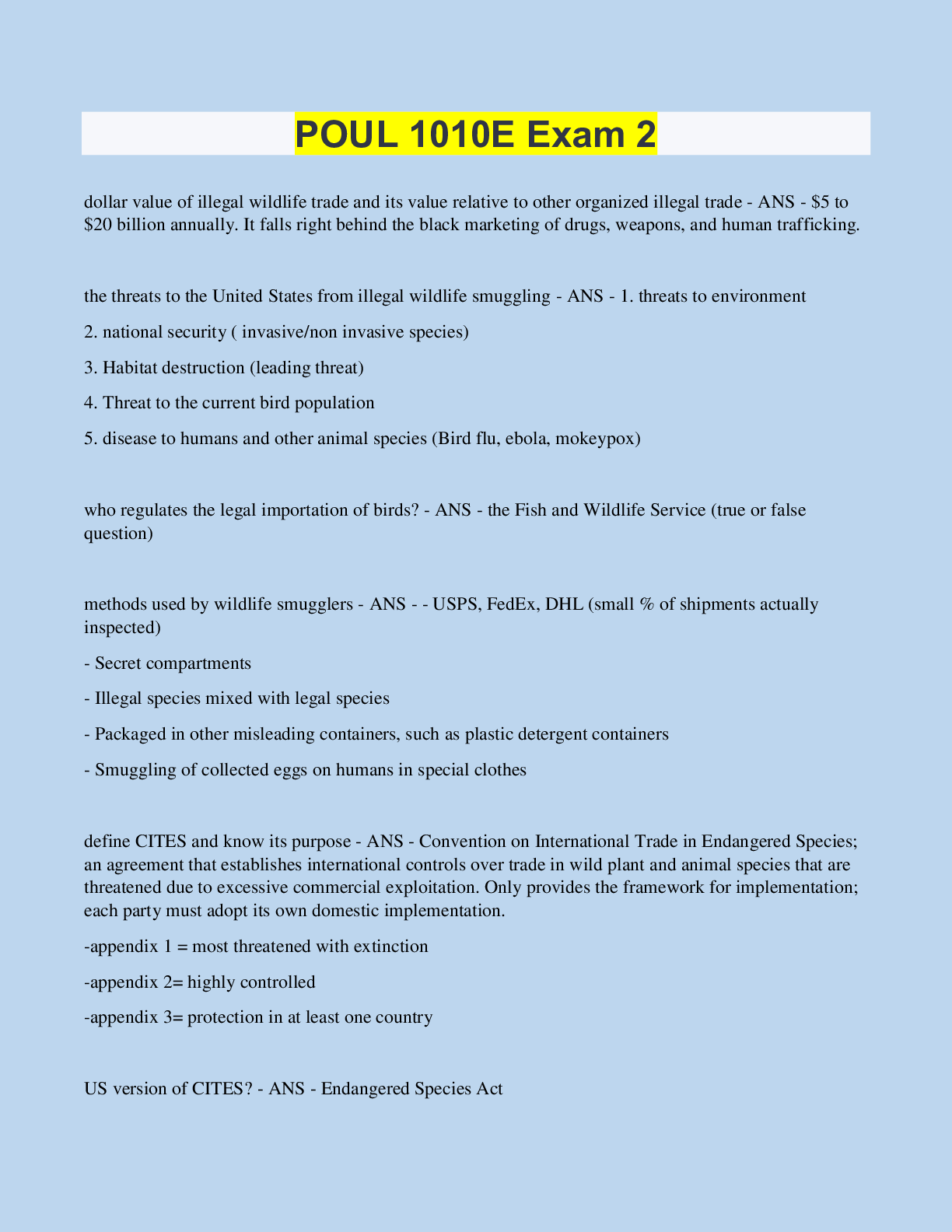
POUL 1010E Exam 2
dollar value of illegal wildlife trade and its value relative to other organized illegal trade - ANS - $5 to
$20 billion annually. It falls right behind the black marketing of drugs, weapons, and human trafficking.
the threats to the United States from illegal wildlife smuggling - ANS - 1. threats to environment
2. national security ( invasive/non invasive species)
3. Habitat destruction (leading threat)
4. Threat to the current bird population
5. disease to humans and other animal species (Bird flu, ebola, mokeypox)
who regulates the legal importation of birds? - ANS - the Fish and Wildlife Service (true or false
question)
methods used by wildlife smugglers - ANS - - USPS, FedEx, DHL (small % of shipments actually
inspected)
- Secret compartments
- Illegal species mixed with legal species
- Packaged in other misleading containers, such as plastic detergent containers
- Smuggling of collected eggs on humans in special clothes
define CITES and know its purpose - ANS - Convention on International Trade in Endangered Species;
an agreement that establishes international controls over trade in wild plant and animal species that are
threatened due to excessive commercial exploitation. Only provides the framework for implementation;
each party must adopt its own domestic implementation.
-appendix 1 = most threatened with extinction
-appendix 2= highly controlled
-appendix 3= protection in at least one country
US version of CITES? - ANS - Endangered Species Act
purpose of the AFA - ANS - To represent all aspects of aviculture and to educate the public about
keeping and breeding birds in captivity. Defines anyone keeping exotic birds in captivity as an
aviculturist.
world (geographical) distribution of parrots in general terms - ANS - Southern hemisphere & tropics;
most are found in South America and Australia.
Carolina parakeet range and extinction - ANS - Most northern of any parrot
Extinct in 1904 due to habitat destruction, hunting due to being agricultural pests, and for food and
feathers.
distinctive anatomical features of parrots (foot arrangement, use as hands and beak
structure) - ANS - Feet: Zygodactyl (4&1 toes backwards)
-Large parrots are slow or flightless, small parrots are faster
-Beak is used as a climbing tool
feather color of most parrots - ANS - green
food source for lories and lorikeets - ANS - pollen & nectar, supplemented with fruits
significance of parrots ingesting clay - ANS - neutralizes toxins that are consumed with their food; could
also be a source of sodium that would otherwise be deficient in parrots without the consumption of clay
parrot male & female relationship (role in family? monogamous or polygamous? - ANS - Role: females
incubate eggs, male gets food
long-term Monogamous
the main threat to parrots is man for pet trade and for food - ANS - Man (for pet and for food)
as a family, the high level of extinction and proportion of parrots threatened with
extinction - ANS - 19 extinct; 1 out of 4
things to consider before buying a parrot (type of parrot, commitment duration, and cost) - ANS - -
Needs lot of attention and physical contact
- commitment; some parrots live 80-90 years
- costs can easily reach $10,000
the significance of closed versus open leg bands on parrots - ANS - Closed leg band = 100% indicator
the bird was born in captivity
open leg band = wild bird
true or false: the purchase of a parrot should never be a rash decision, should involve the whole family
and never involve an un-weaned baby - ANS - true
the importance of toys - ANS - provide the bird with mental stimulation and physical activity while
owners are away; prevent behavioral issues related to boredom; should provide variety of toys in
different colors, shape, and textures
indestructible toys should be rotated to prevent boredom
behavior modification and training in parrots, general guidelines on what to do and what
not to do - ANS - -praise
-make eye contact in order to redirect negative behavior
DO NOT:
-yell
-punish
-correct for an incident after it happened
biting in parrots, why it happens - ANS - - young parrots = curiosity or wanting to feel something with
their tongue
- mature parrots = something is wrong (sick, scared), elevated sexual hormones, or dominance
species of parrots known for their talking ability - ANS - African greys
methods used to teach a bird to talk, and for eliminating language and noises not desired - ANS - -
model/rival method: trainer, bird being taught, and rival (another bird or person); learn by example
screaming in parrots why it happens an
[Show More]

.png)
.png)
.png)