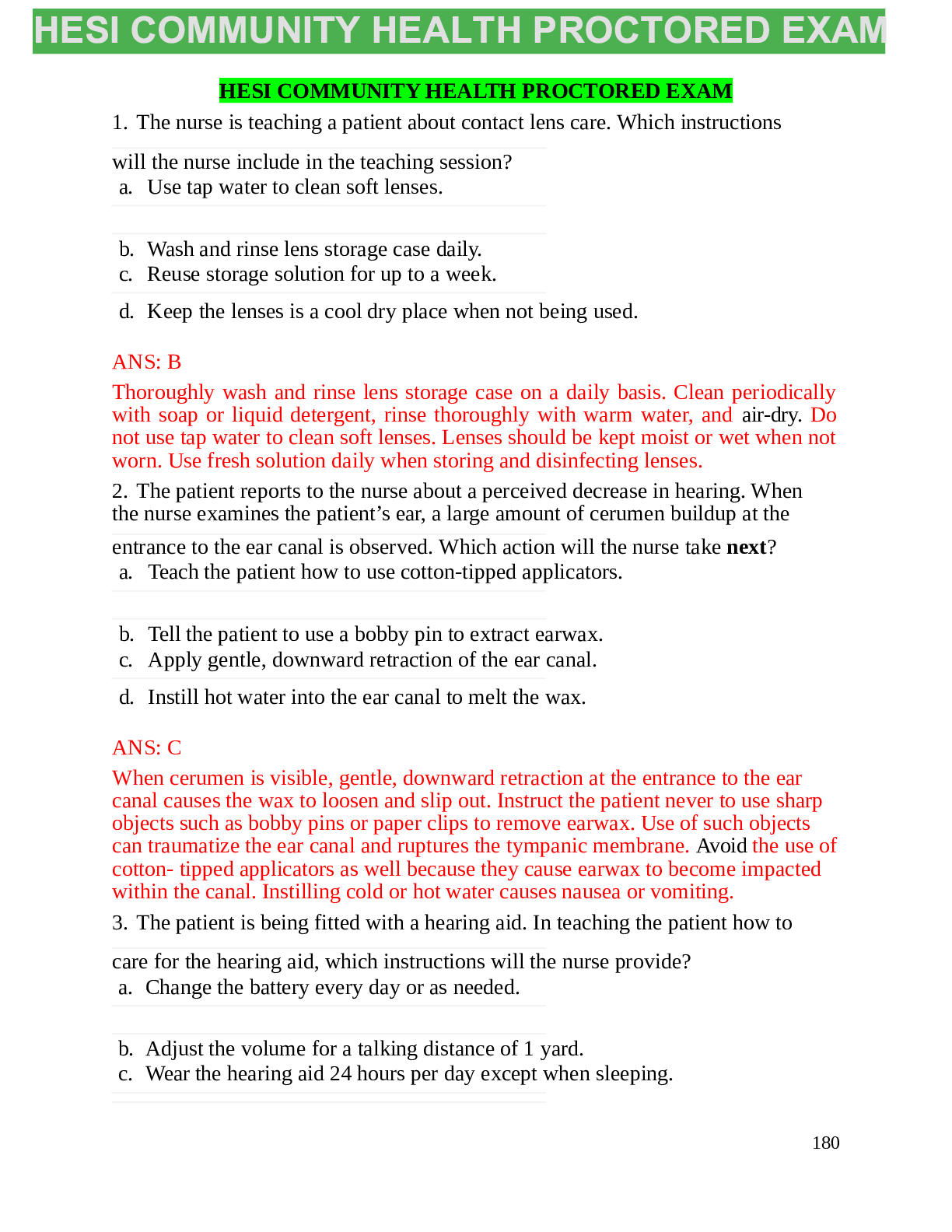
Cummunity Policing > HESI > HESI COMMUNITY HEALTH PROCTORED EXAM 100% Guaranteed (All)
HESI COMMUNITY HEALTH PROCTORED EXAM 100% Guaranteed
Document Content and Description Below
Last updated: 4 years ago
Preview 1 out of 3 pages
Instant download
Buy this Document to get the Full Access Instantly
Provided by Students Who Aced it
We Verify Document Content to Gurantee Accuracy
Reviews( 0 )
Document information
Connected school, study & course
About the document
Uploaded On
Sep 28, 2022
Number of pages
3
Written in
All

Additional information
This document has been written for:
Uploaded
Sep 28, 2022
Downloads
0
Views
359
Topic Tags
Recommended For You
Get more on HESI »
HESI Extra Credit Module 9 Exam 100 QUESTIONS AND ANSWERS SATI...
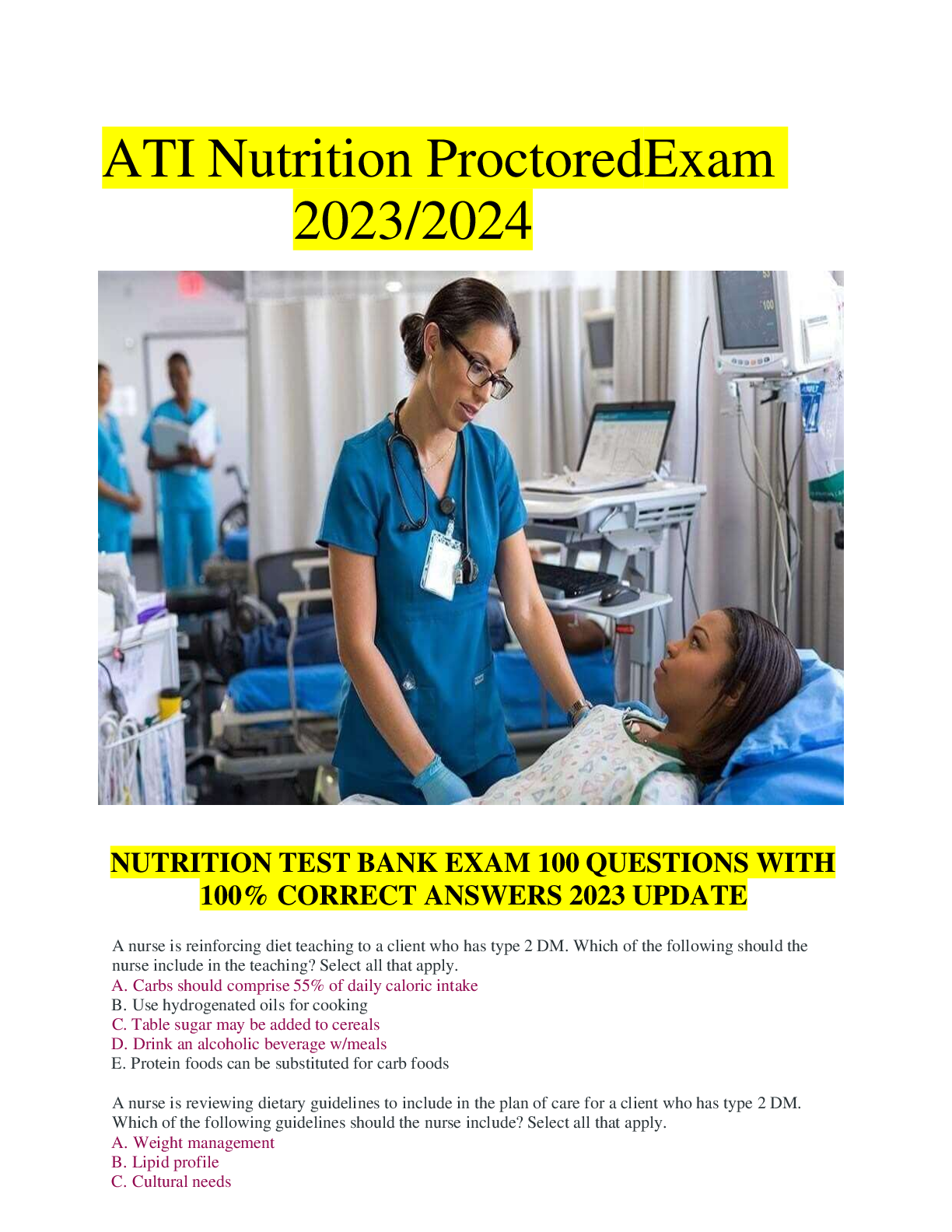
ATI NUTRITION TEST BANK EXAM 100 QUESTIONS WITH 100% CORRECT A...
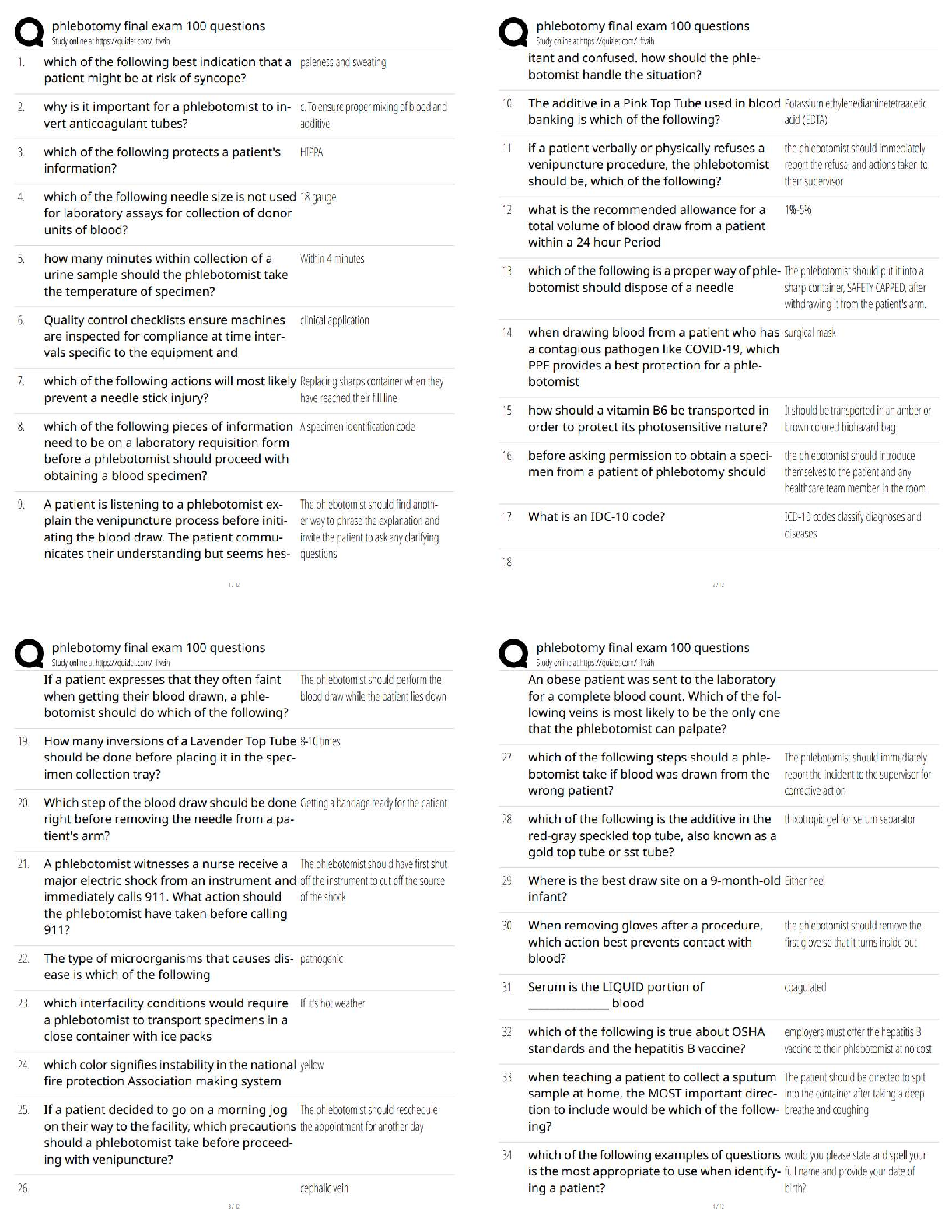
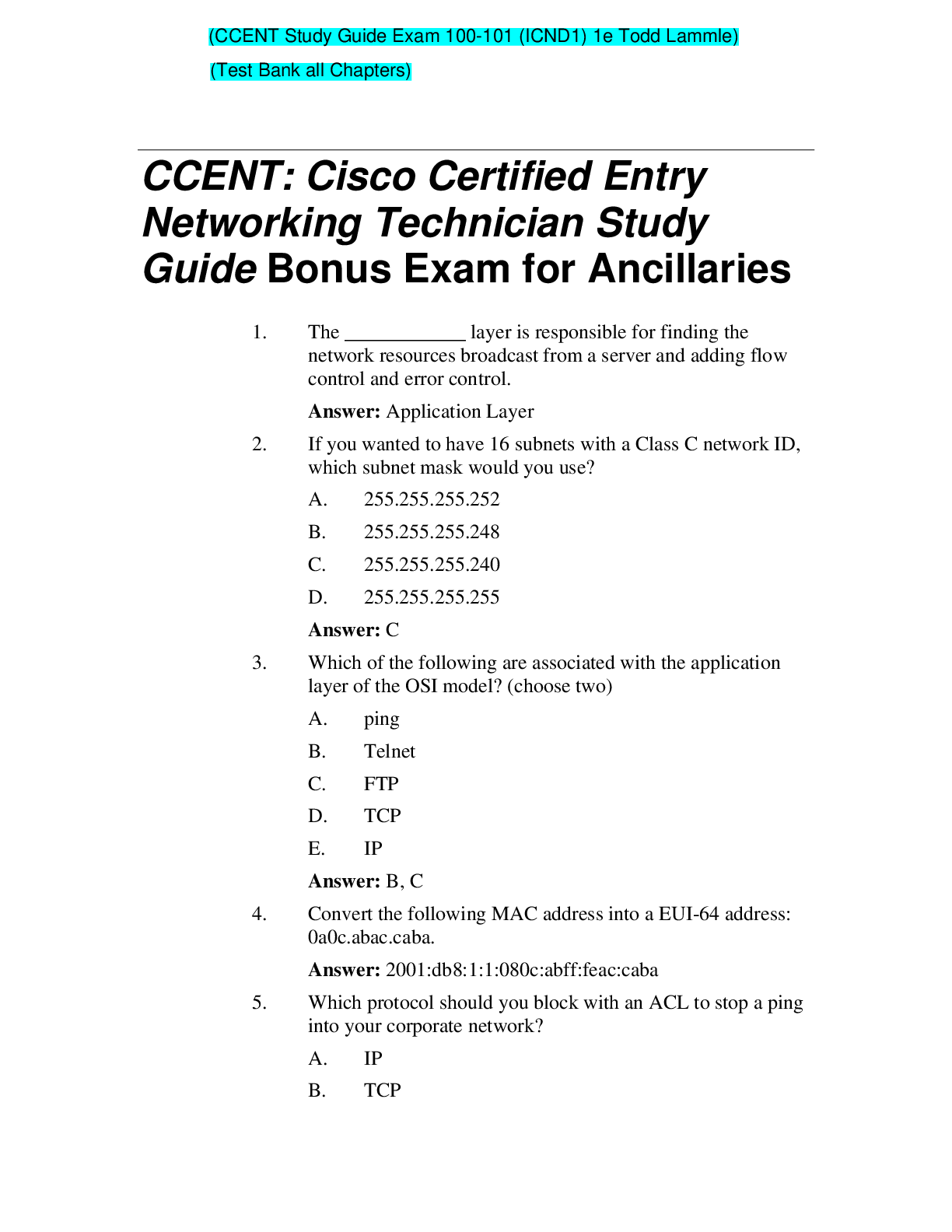
CCENT Study Guide Exam 100-101 (ICND1) 1e Todd Lammle (Test Ba...
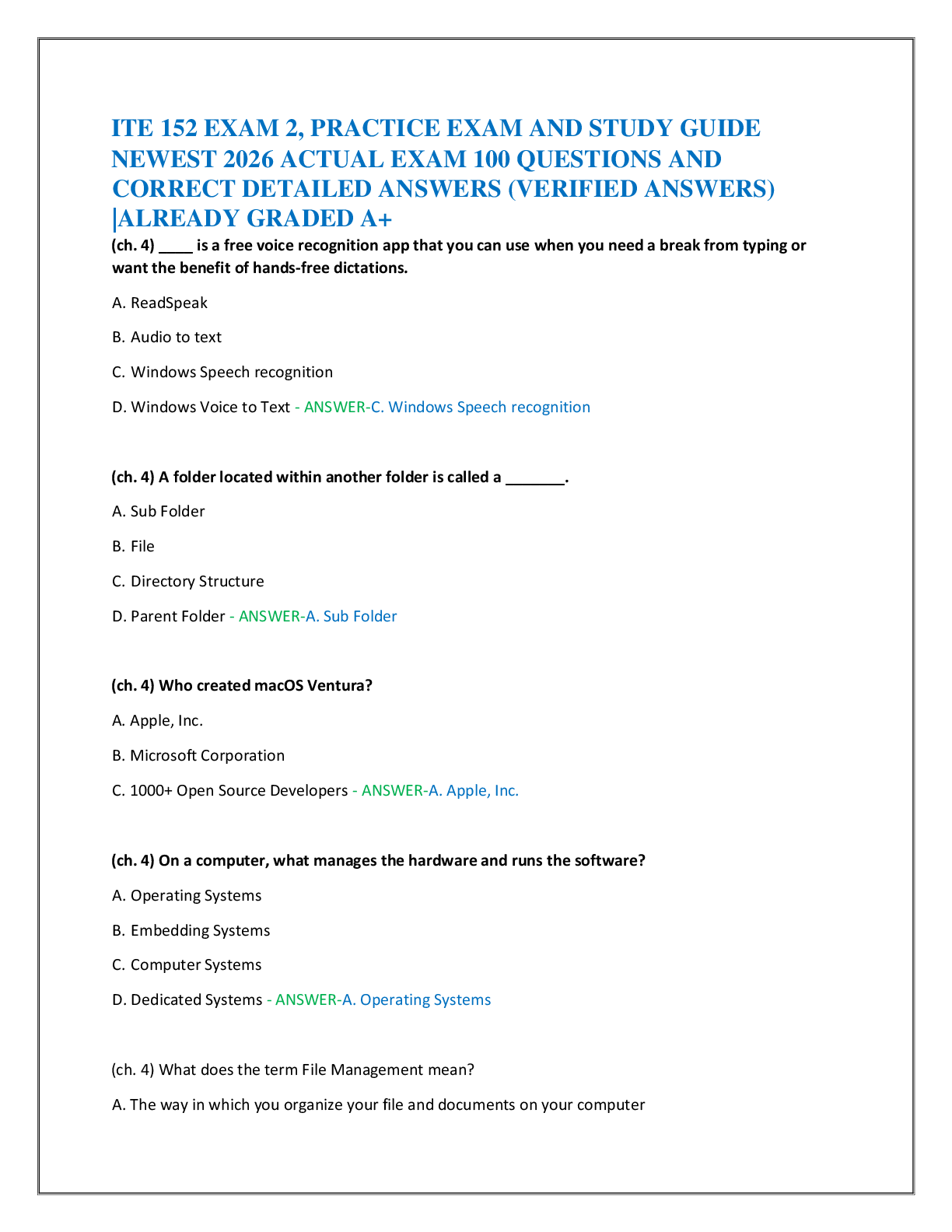
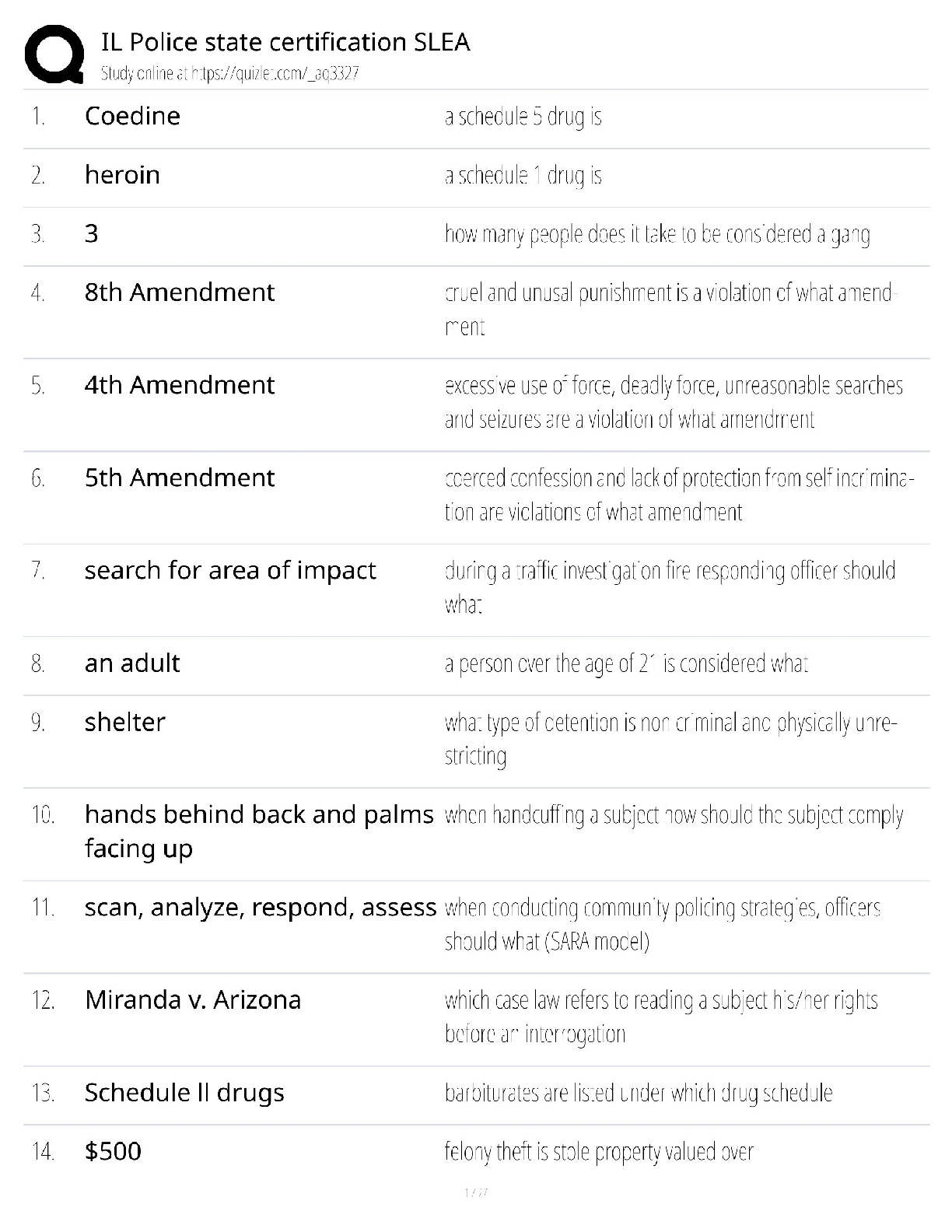
IL Police State Certification SLEA / Illinois Law Enforcement...
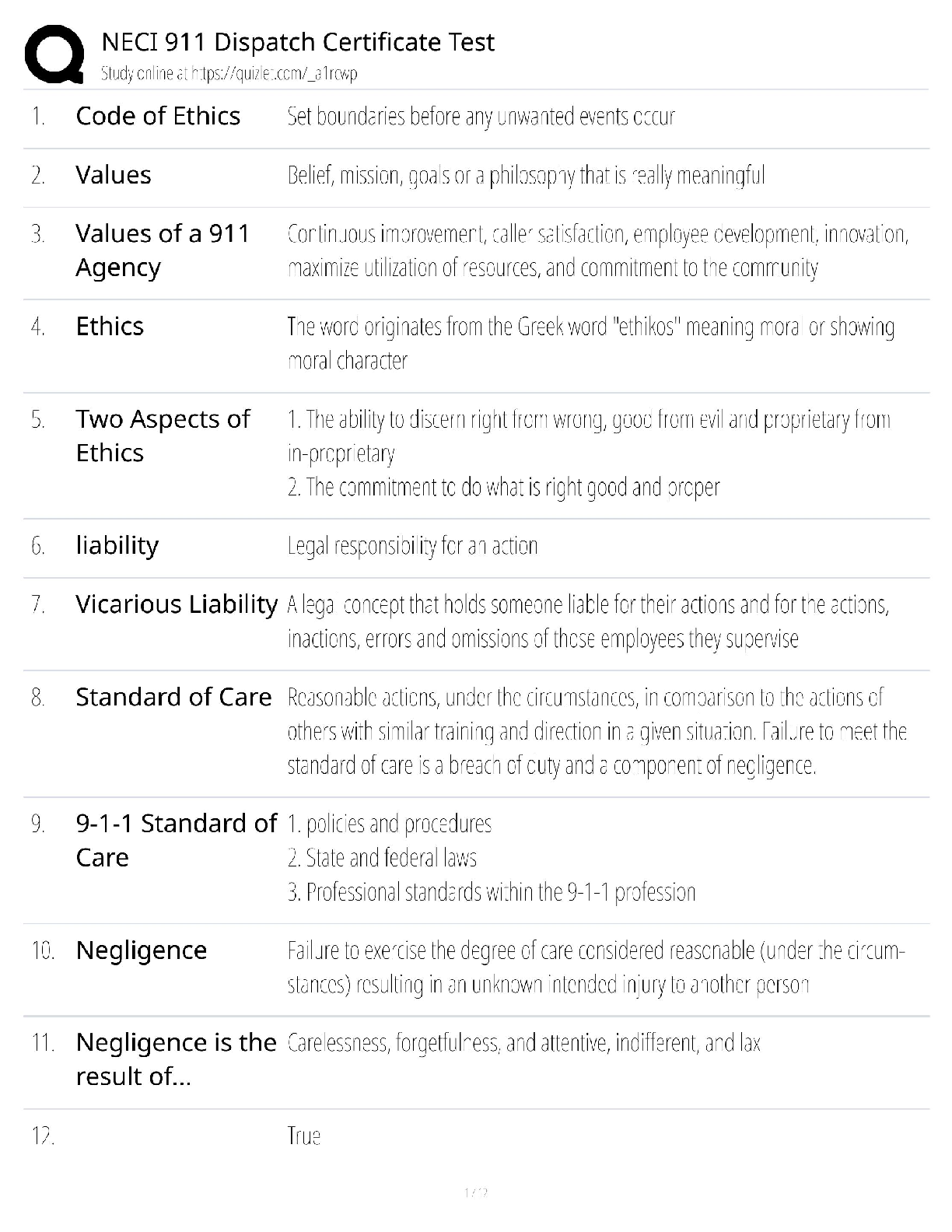
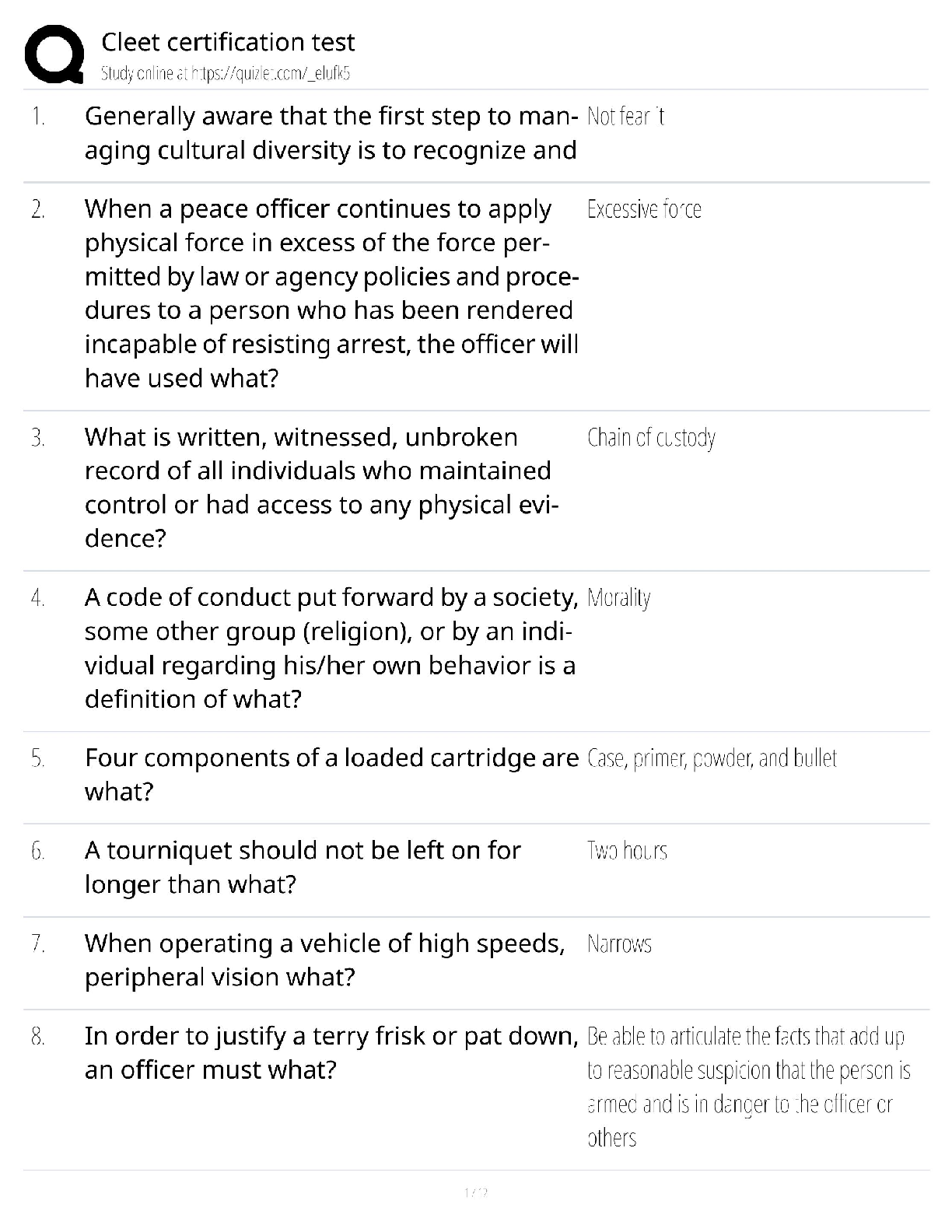
CLEET Certification Test / 2025 Police Exam Prep / Oklahoma Pe...

IAEM AEM Exam Study Guide 2022 with complete solution; works 1...
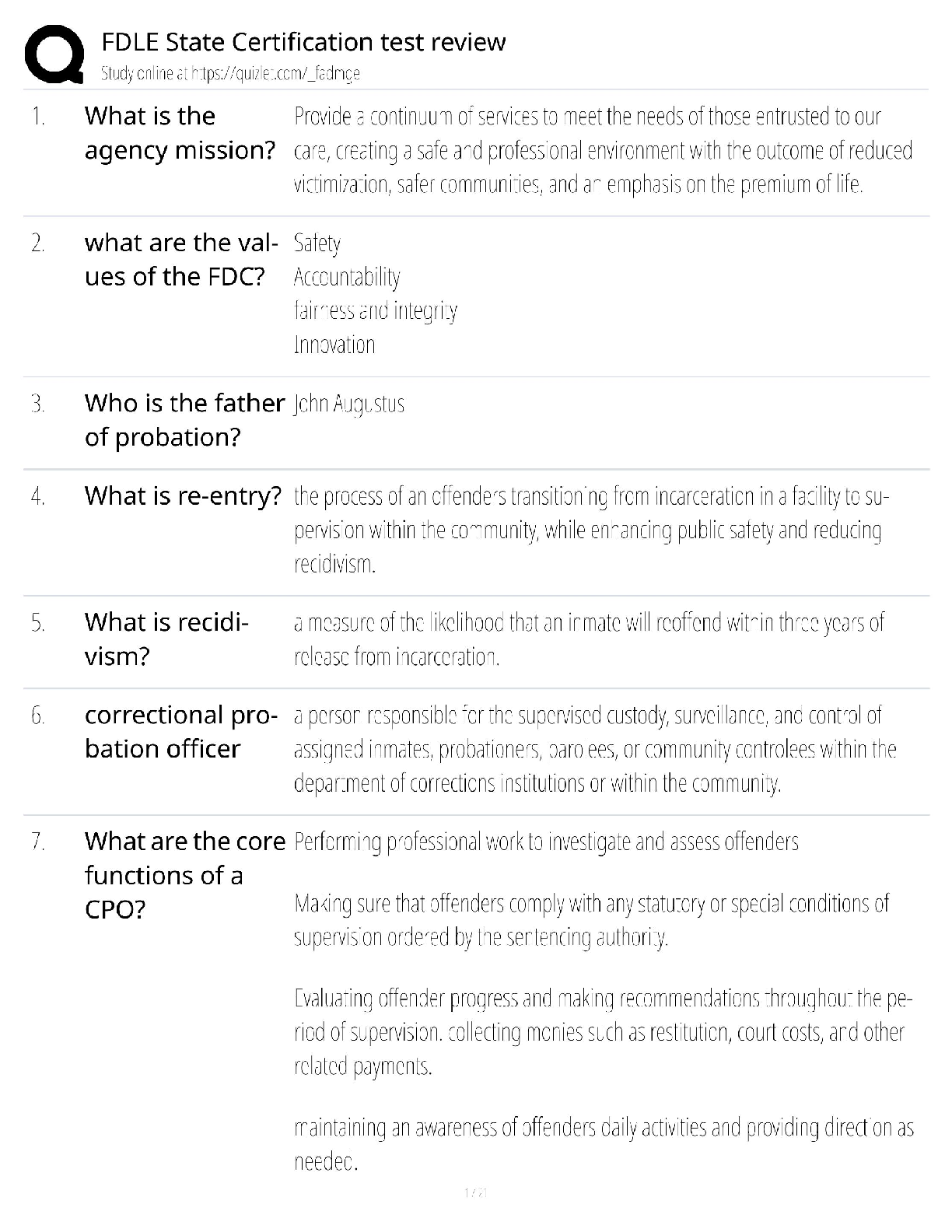
FDLE State Certification Test Review / Florida Law Enforcement...