Which statement about fluid therapy for shock is NOT correct? - ANSWER Fluid therapy is never indicated for cardiogenic shock.
When can post-resuscitation management be necessary? - ANSWER All of the above
All of t
...
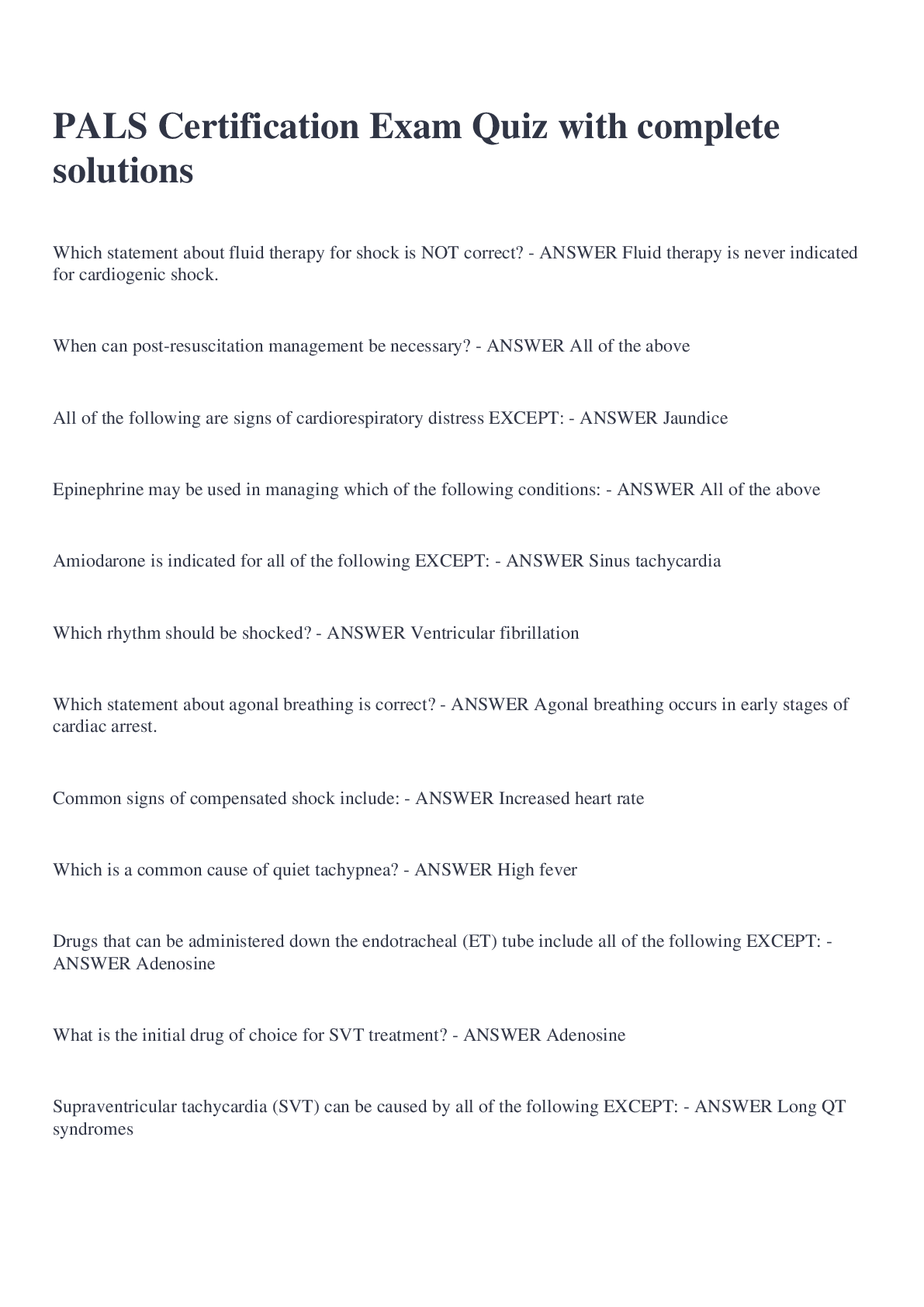
Which statement about fluid therapy for shock is NOT correct? - ANSWER Fluid therapy is never indicated for cardiogenic shock.
When can post-resuscitation management be necessary? - ANSWER All of the above
All of the following are signs of cardiorespiratory distress EXCEPT: - ANSWER Jaundice
Epinephrine may be used in managing which of the following conditions: - ANSWER All of the above
Amiodarone is indicated for all of the following EXCEPT: - ANSWER Sinus tachycardia
Which rhythm should be shocked? - ANSWER Ventricular fibrillation
Which statement about agonal breathing is correct? - ANSWER Agonal breathing occurs in early stages of cardiac arrest.
Common signs of compensated shock include: - ANSWER Increased heart rate
Which is a common cause of quiet tachypnea? - ANSWER High fever
Drugs that can be administered down the endotracheal (ET) tube include all of the following EXCEPT: - ANSWER Adenosine
What is the initial drug of choice for SVT treatment? - ANSWER Adenosine
Supraventricular tachycardia (SVT) can be caused by all of the following EXCEPT: - ANSWER Long QT syndromes
If bradycardia (heart rate less than 60 beats per minute) with a pulse is associated with cardiopulmonary compromise despite effective oxygenation and ventilation, what is the next step in management? - ANSWER Perform CPR.
Effectiveness of fluid resuscitation and medication therapy should be frequently monitored by which of the following? - ANSWER All of the above
Types of shock include all of the following EXCEPT: - ANSWER Hypothermic shock
Common causes of acute community-acquired pneumonia include which of the following? - ANSWER All of the above
The Glasgow Coma Scale (GCS) is scored based on response to all of the following EXCEPT: - ANSWER Minute ventilation
True or False: Milrinone has known hypotensive effects that may be exacerbated by hypovolemia. - ANSWER True
True or False: Immediate intubation is always necessary for proper airway management. - ANSWER False
True or False: Symptomatic bradycardia is defined as bradycardia with signs of shock or respiratory failure or distress. - ANSWER True
True or False: Albuterol is a common recommendation for treatment of wheezing in a child with infectious pneumonia. - ANSWER True
True or False: Early signs of obstructive shock always resemble distributive shock. - ANSWER False
True or False: A respiratory rate consistently less than 10 or greater than 60 breaths per minute in a child of any age is abnormal and suggests the presence of a potentially serious problem. - ANSWER True
[Show More]