Emergency Medicine > EXAM > American Heart Association CPR Test Exam Graded A+ (All)
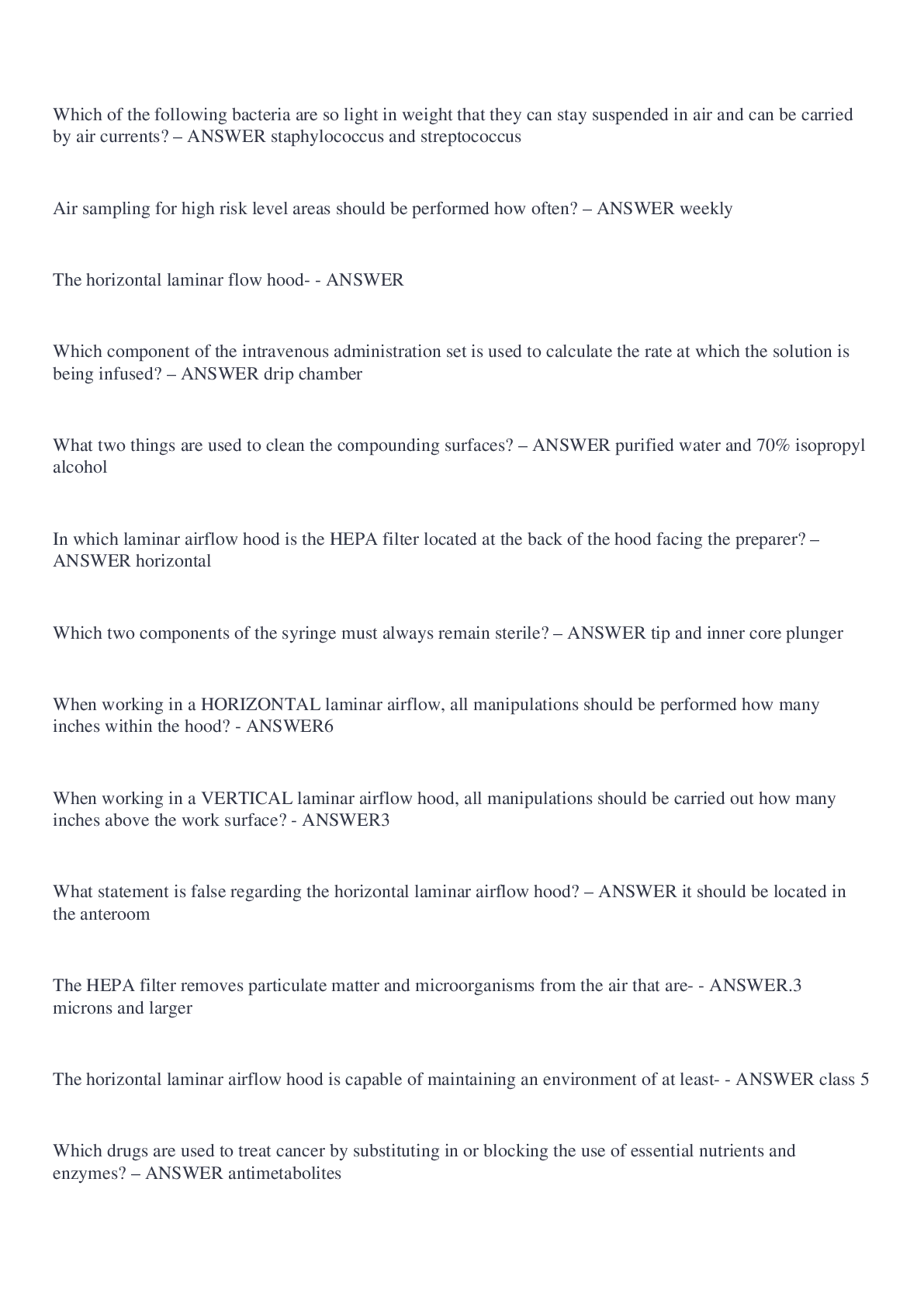
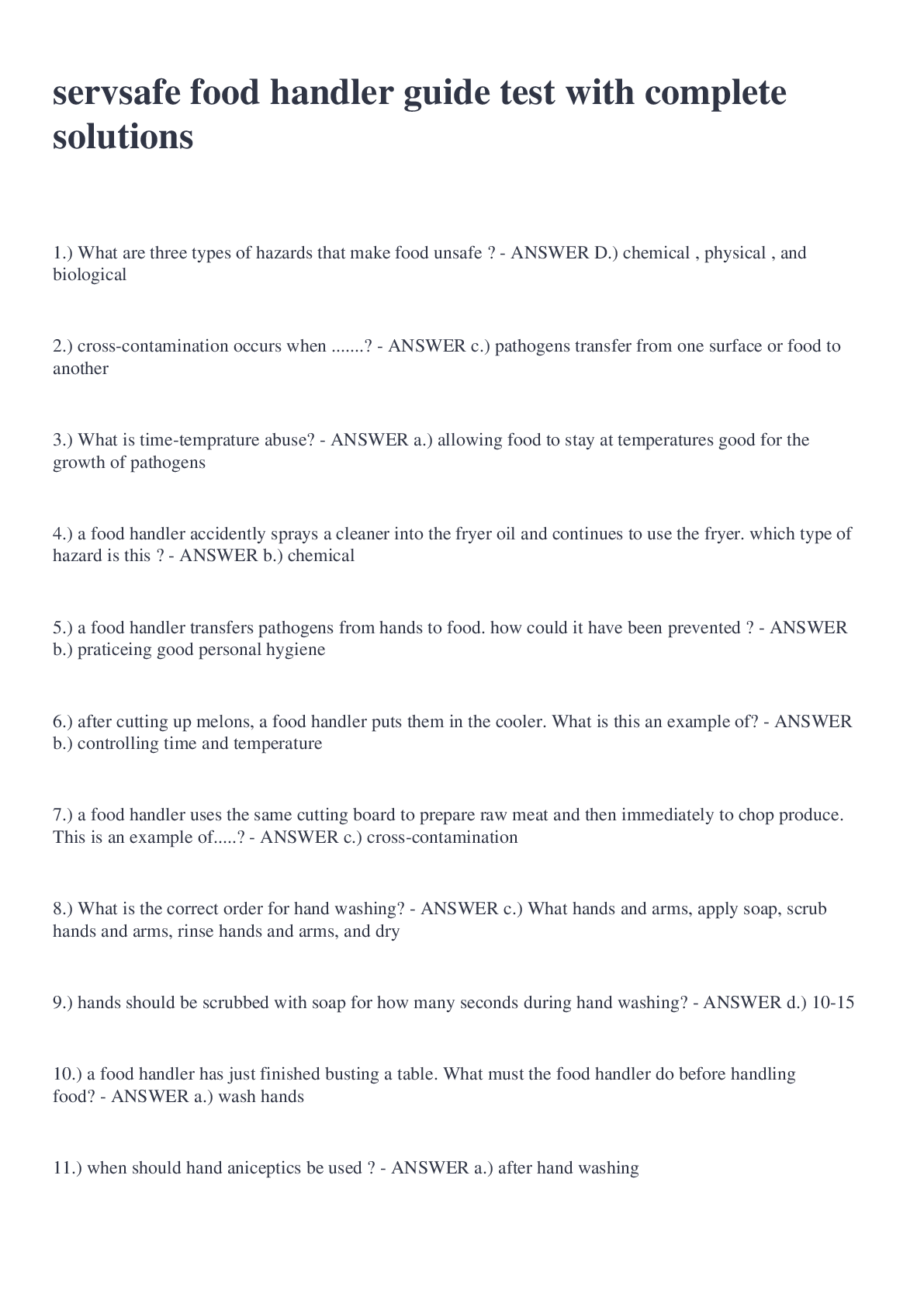
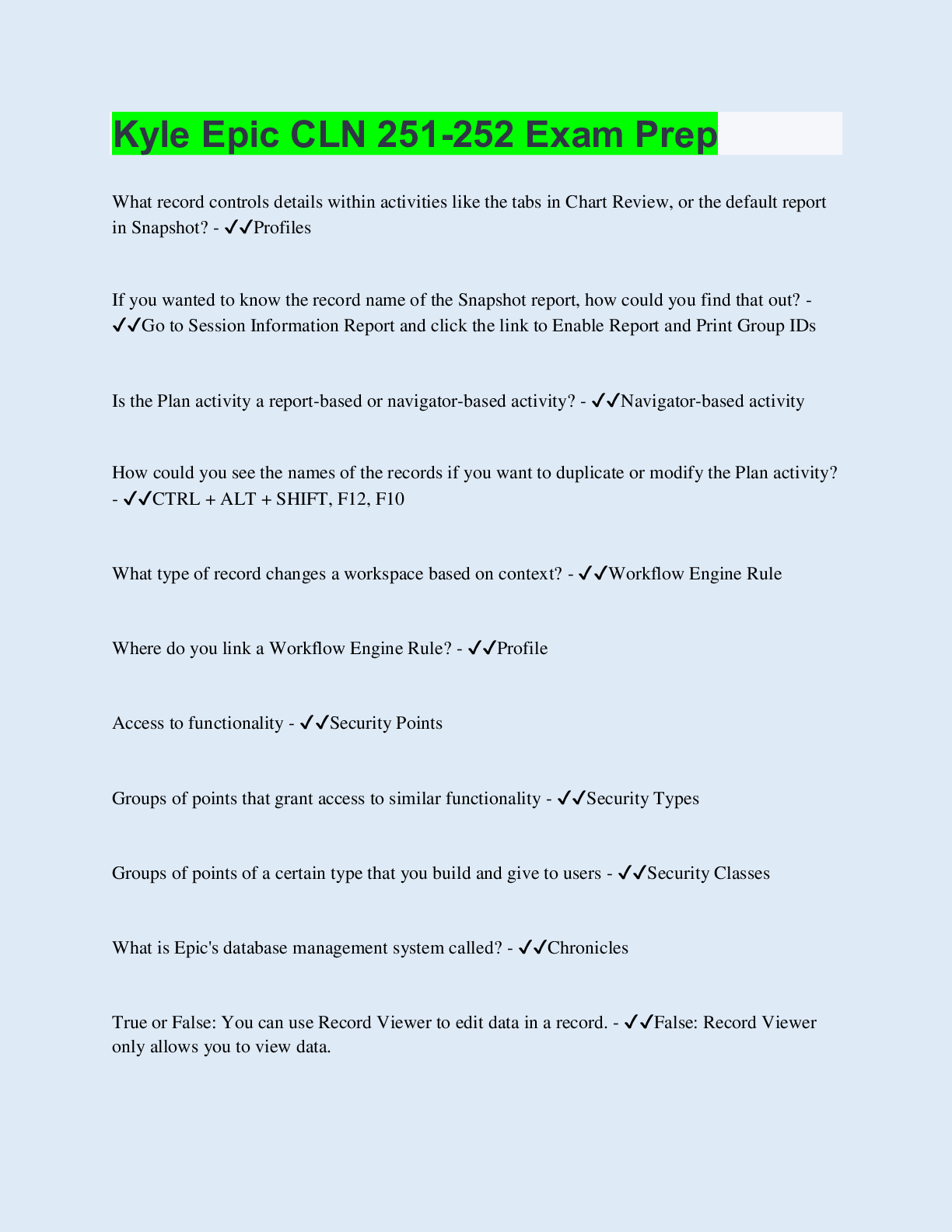
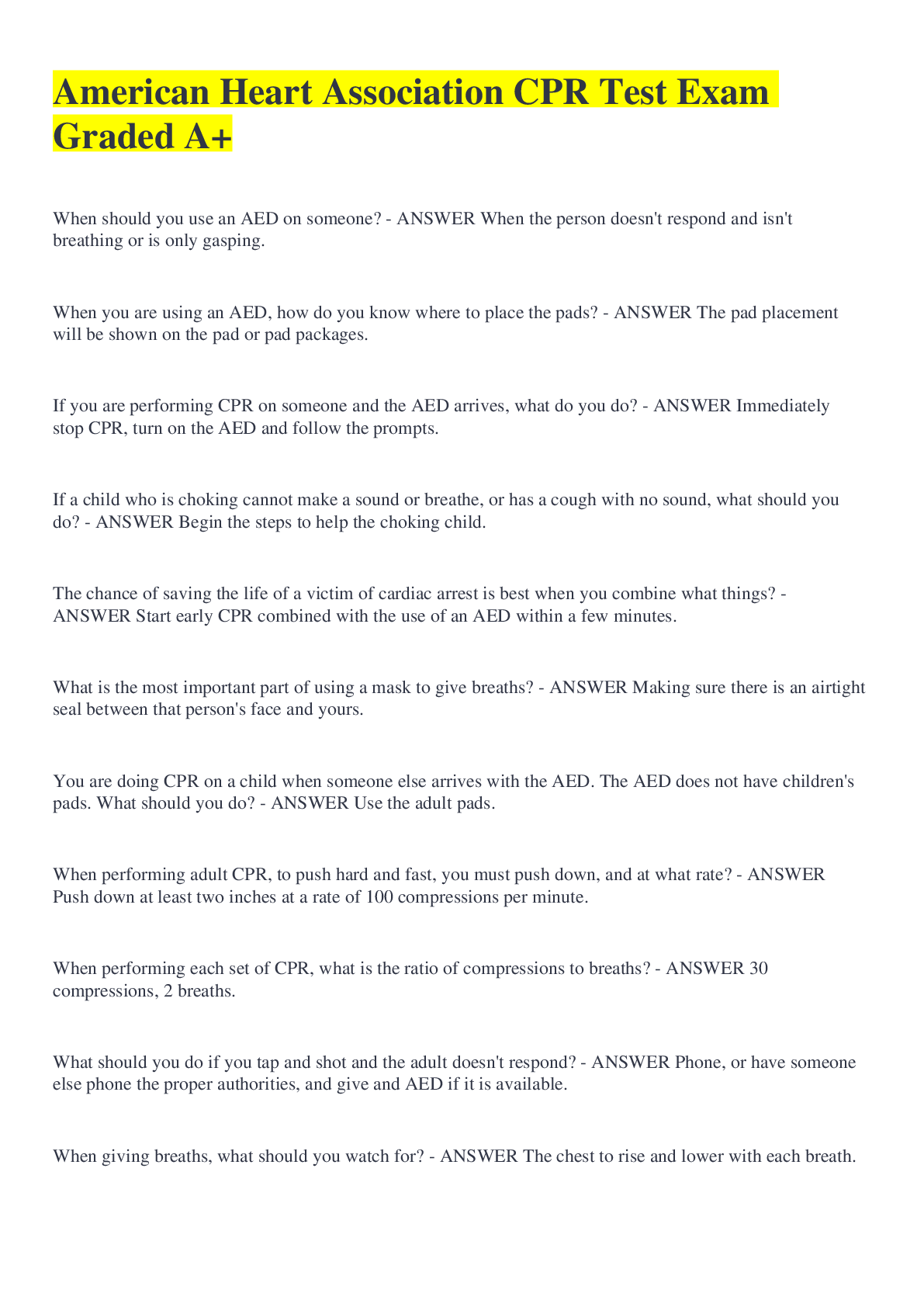
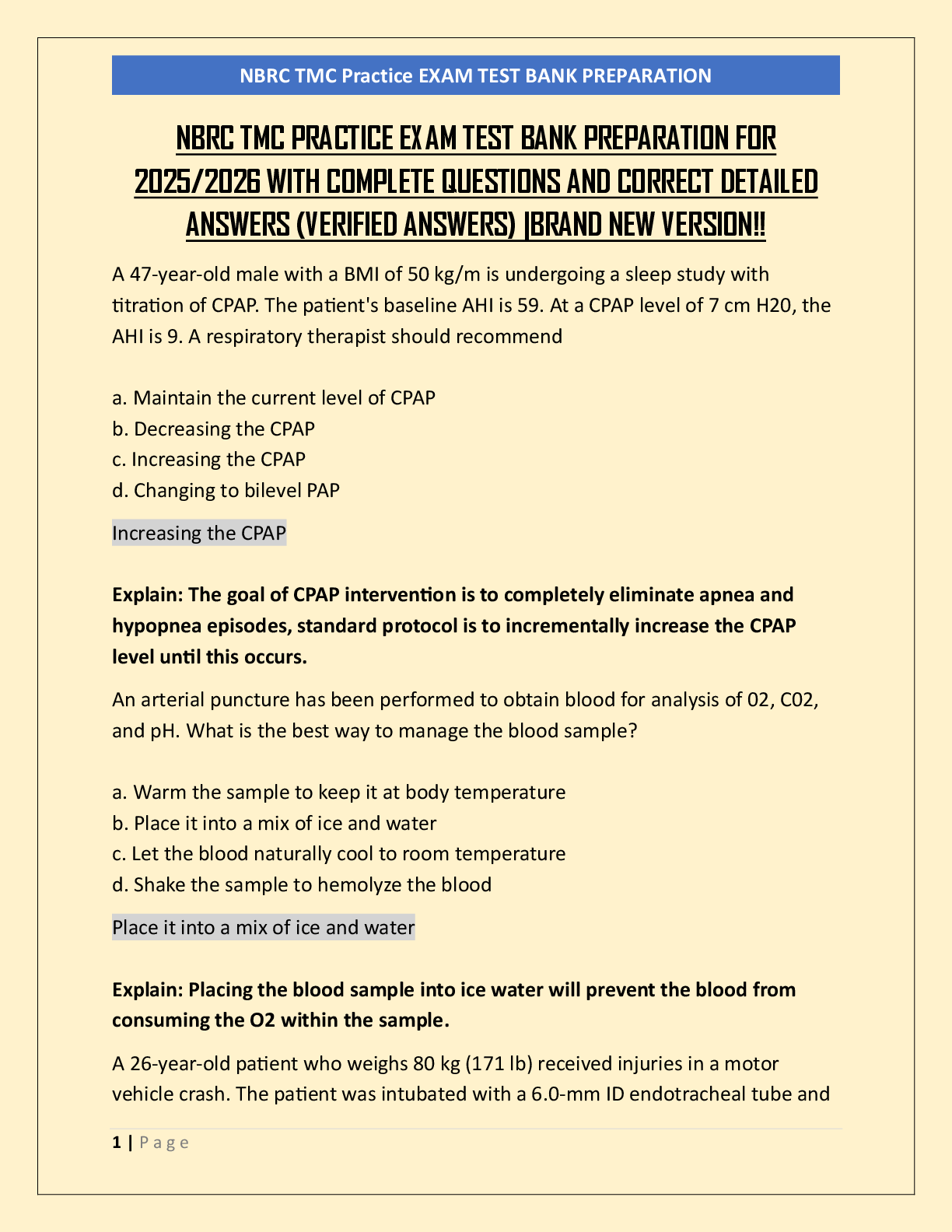
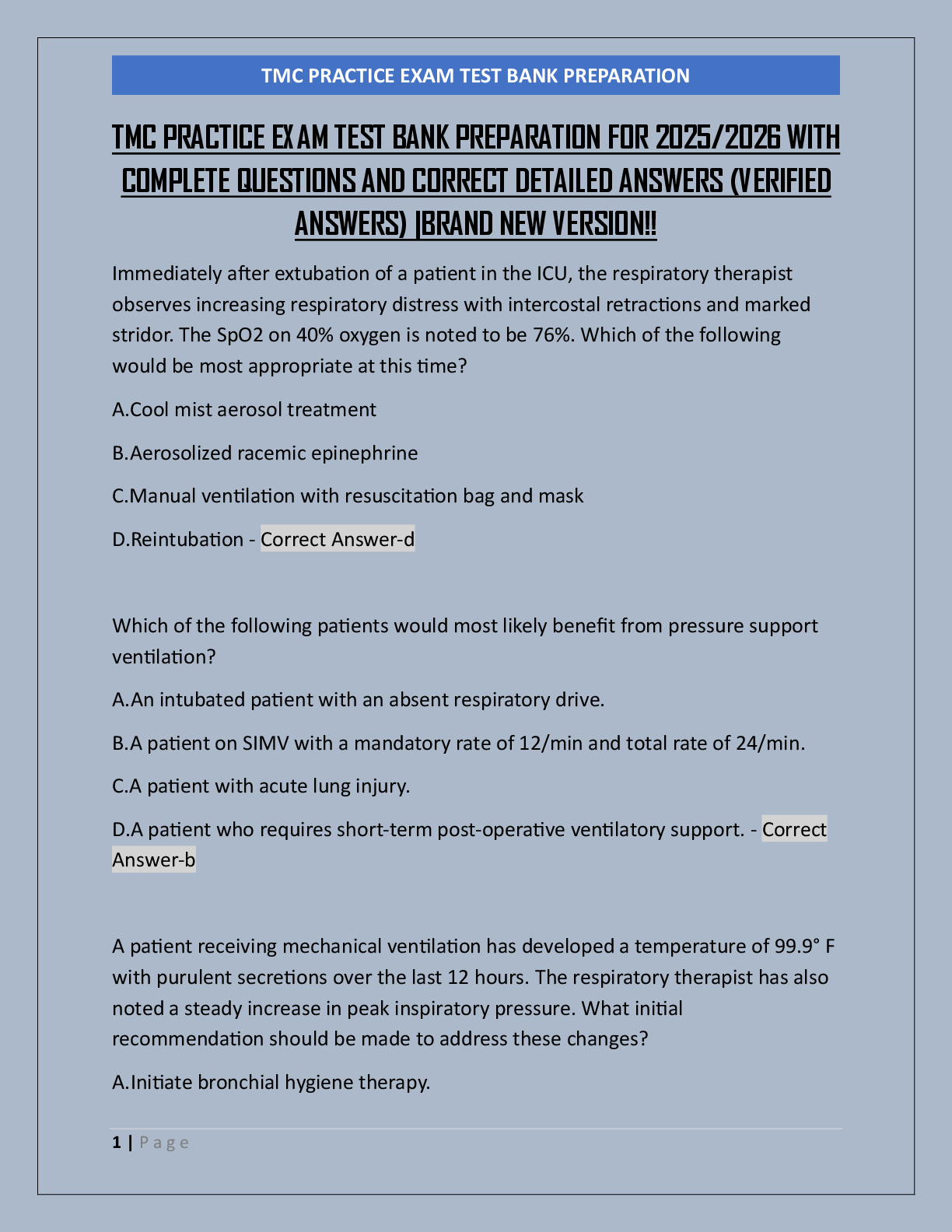
American Heart Association CPR Test Exam Graded A+
Document Content and Description Below
Last updated: 3 years ago
Preview 1 out of 2 pages
Instant download
Buy this Document to get the Full Access Instantly
Provided by Students Who Aced it
We Verify Document Content to Gurantee Accuracy
Reviews( 0 )
Document information
Connected school, study & course
About the document
Uploaded On
Sep 29, 2022
Number of pages
2
Written in
All

Additional information
This document has been written for:
Uploaded
Sep 29, 2022
Downloads
0
Views
88
Topic Tags
Recommended For You
Get more on EXAM »
Emergency Medicine Basic Life Support (BLS) Test Questions Ame...

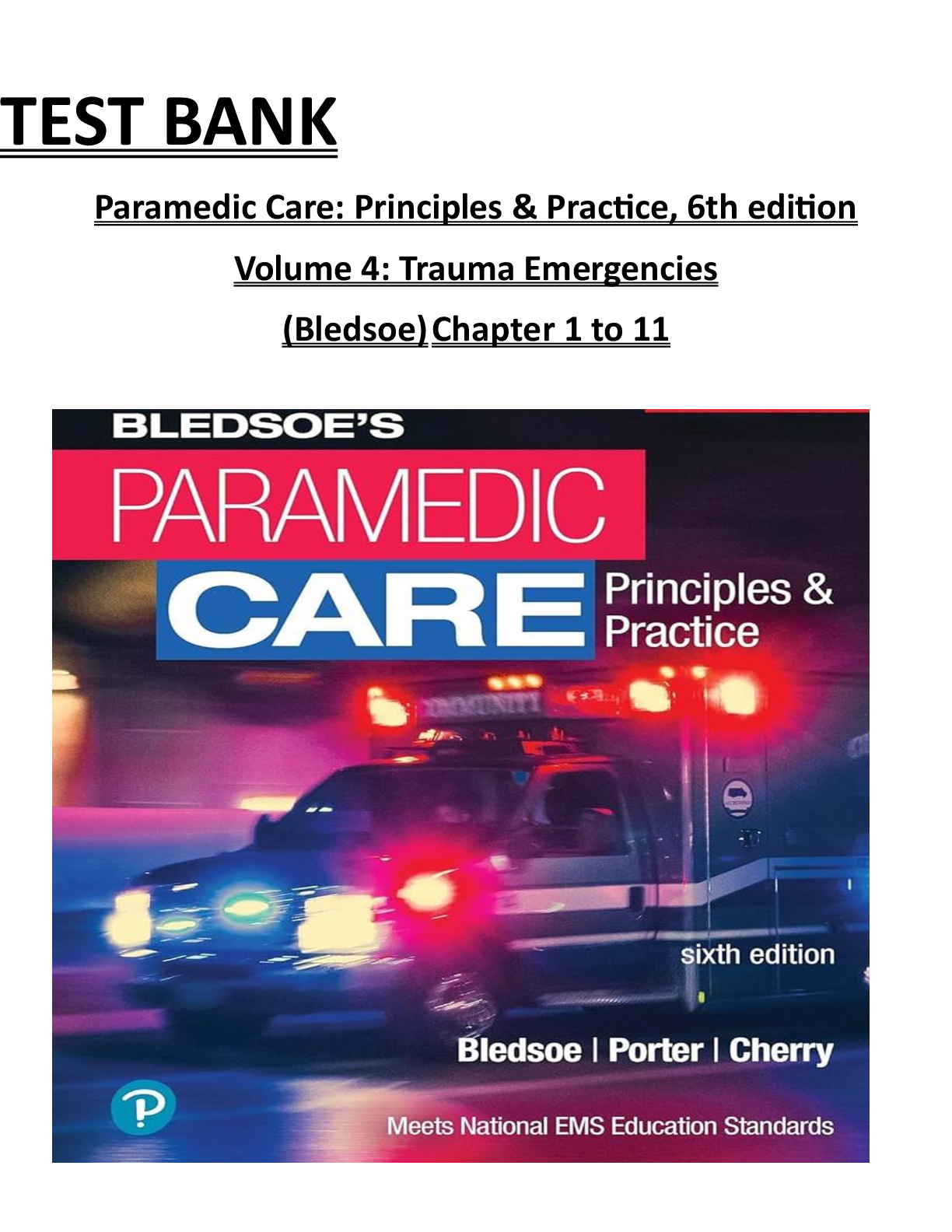
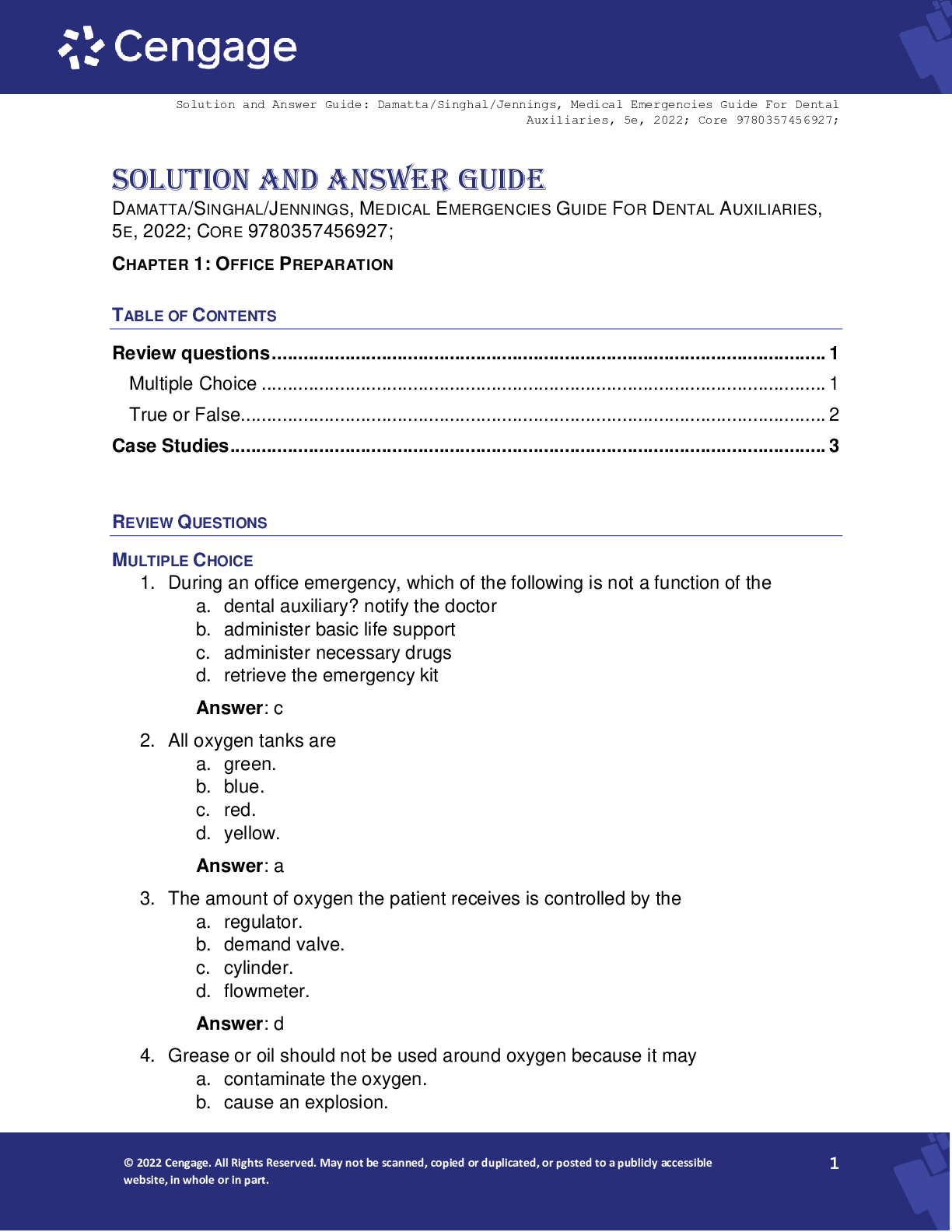
Solution Manual For Medical Emergencies Guide For Dental Auxil...

Solution Manual For Medical Assisting 9th Edition by Michelle...
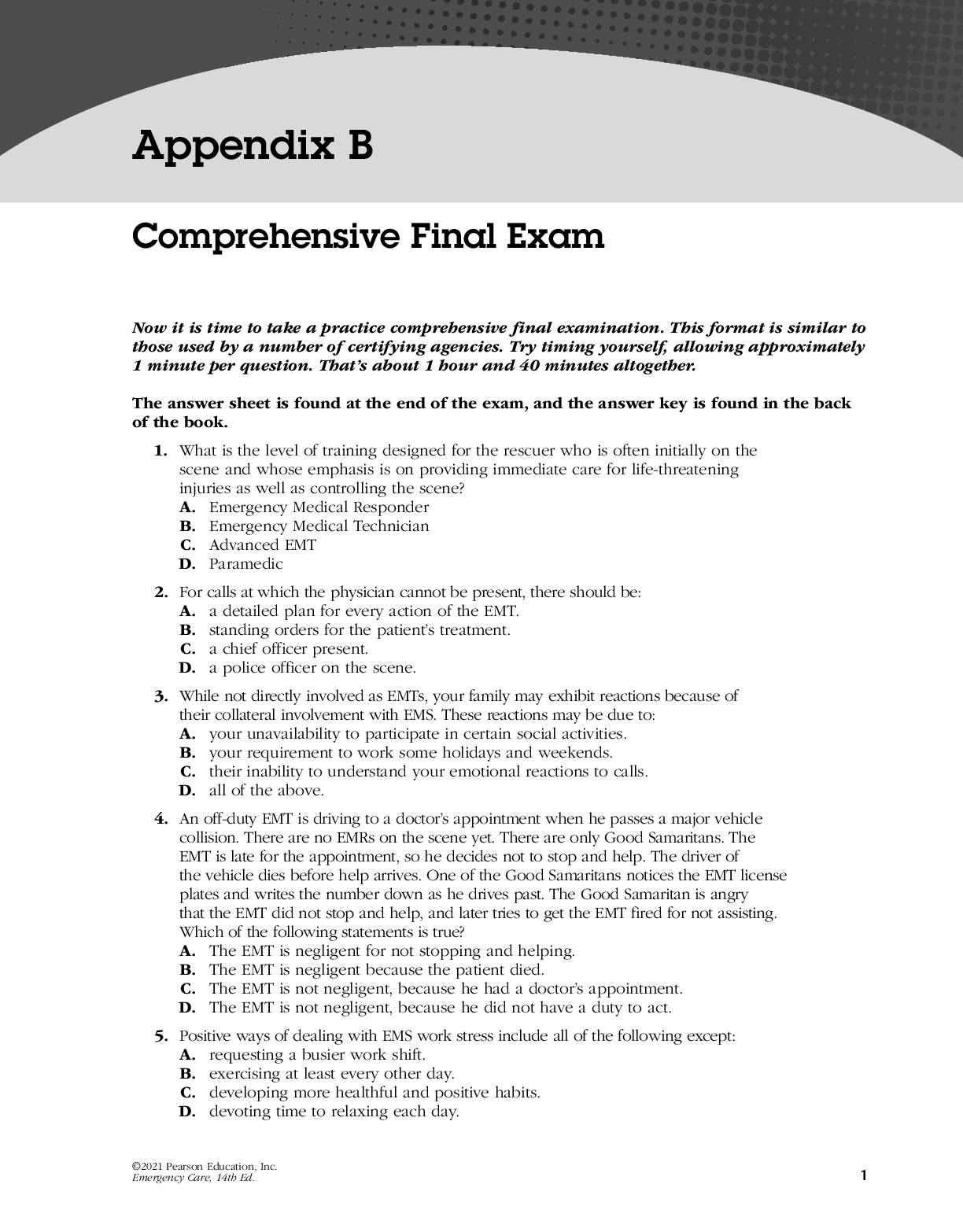
Solution Manual For Emergency Care, 14th Edition by Daniel Lim...
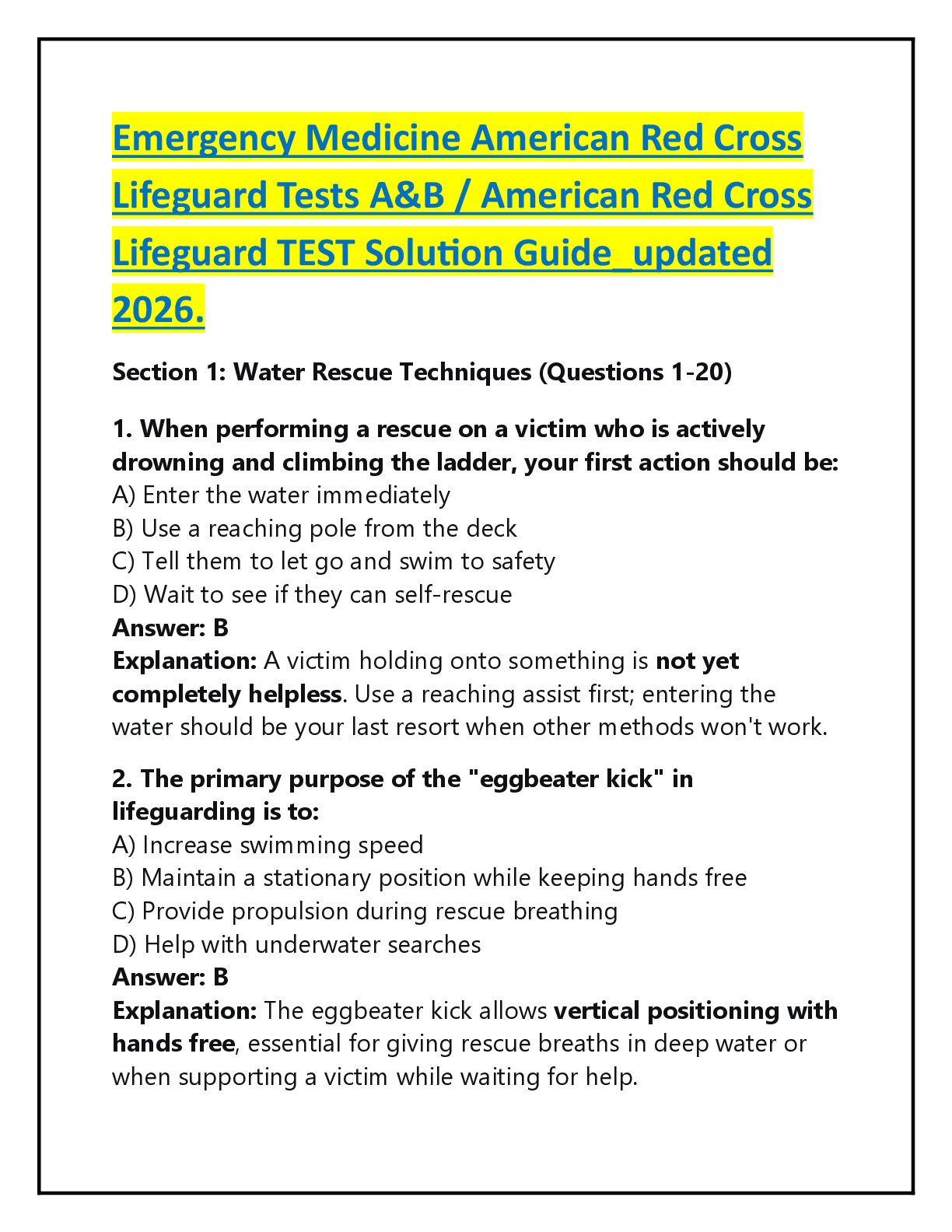
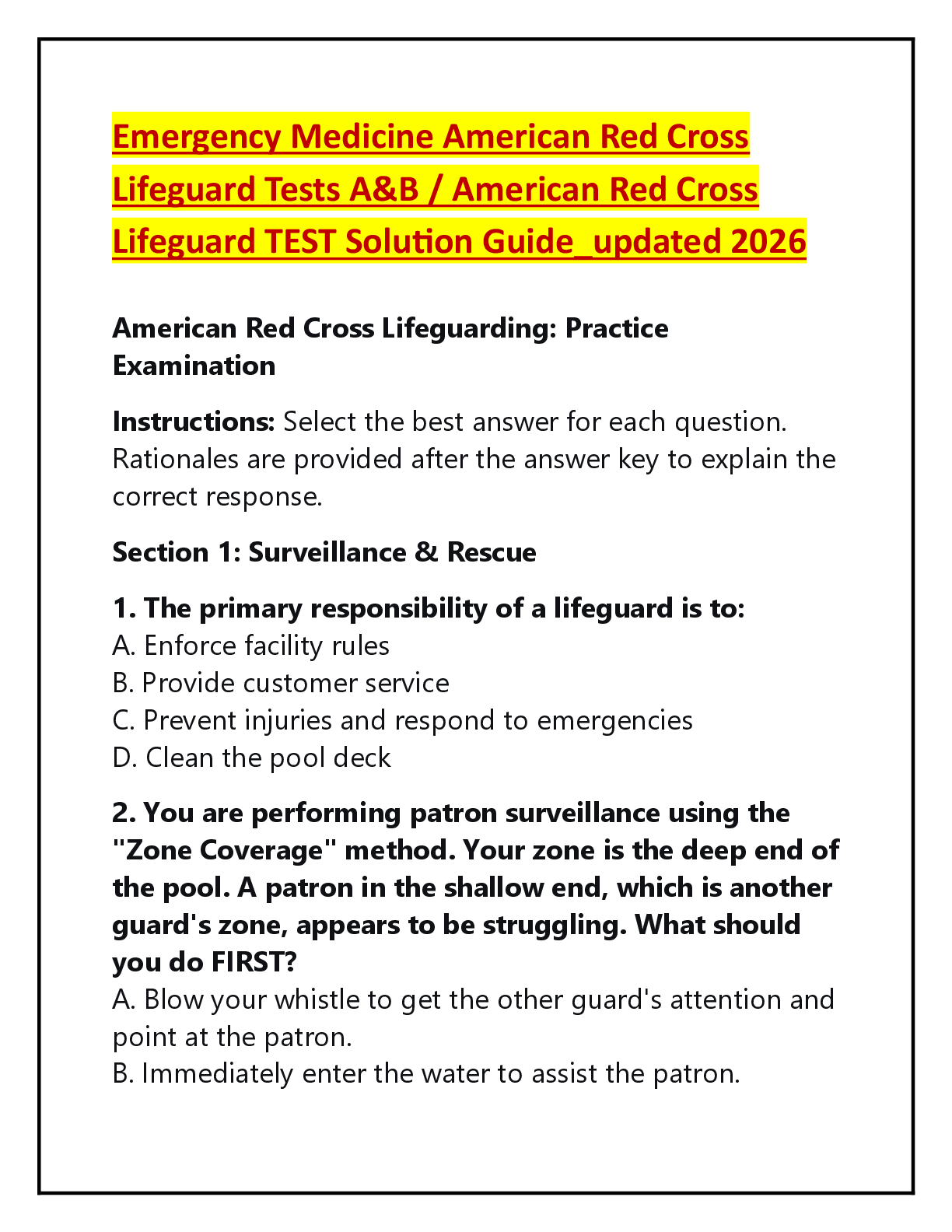
Emergency Medicine American Red Cross Lifeguard Tests A&B / A...