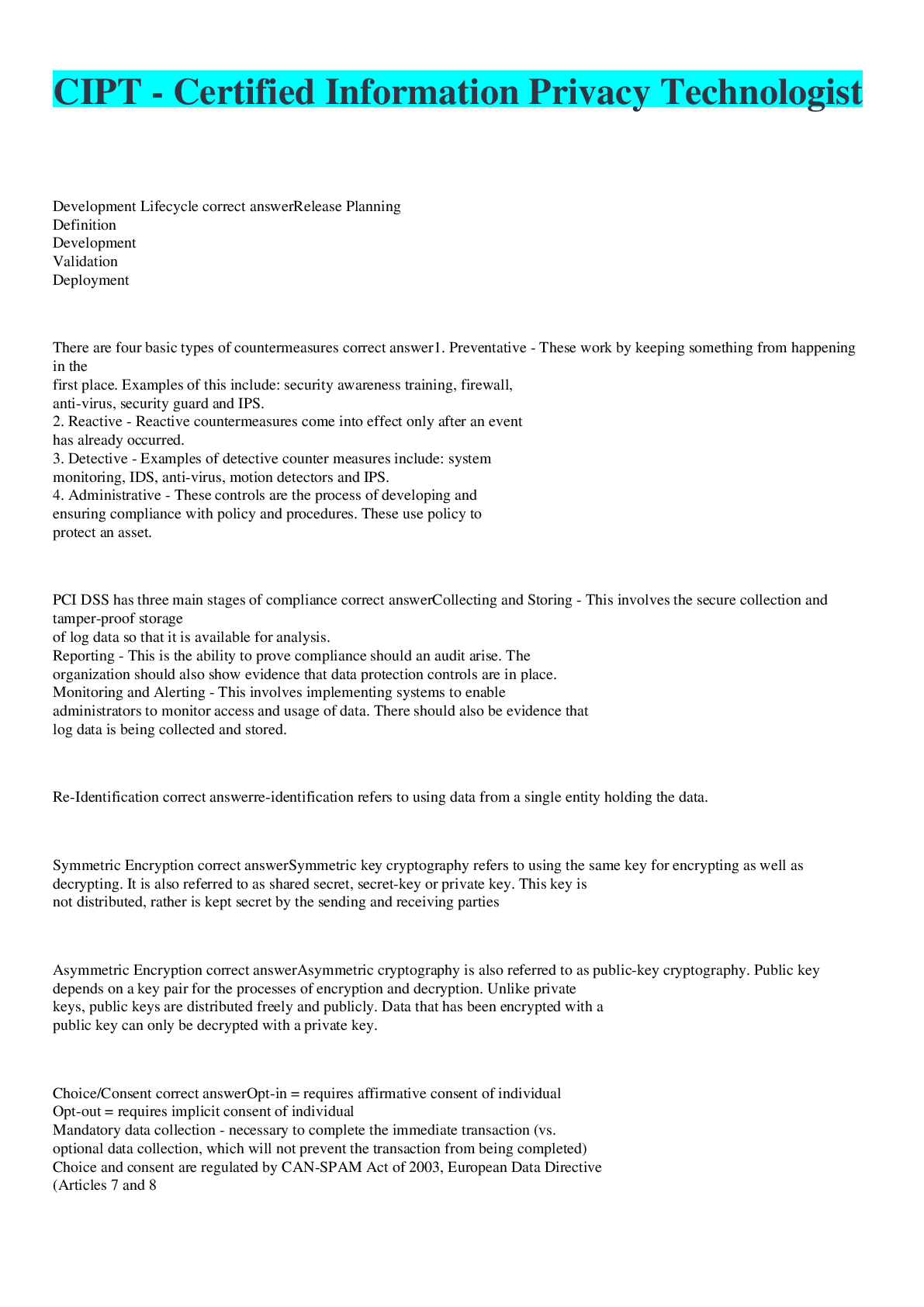
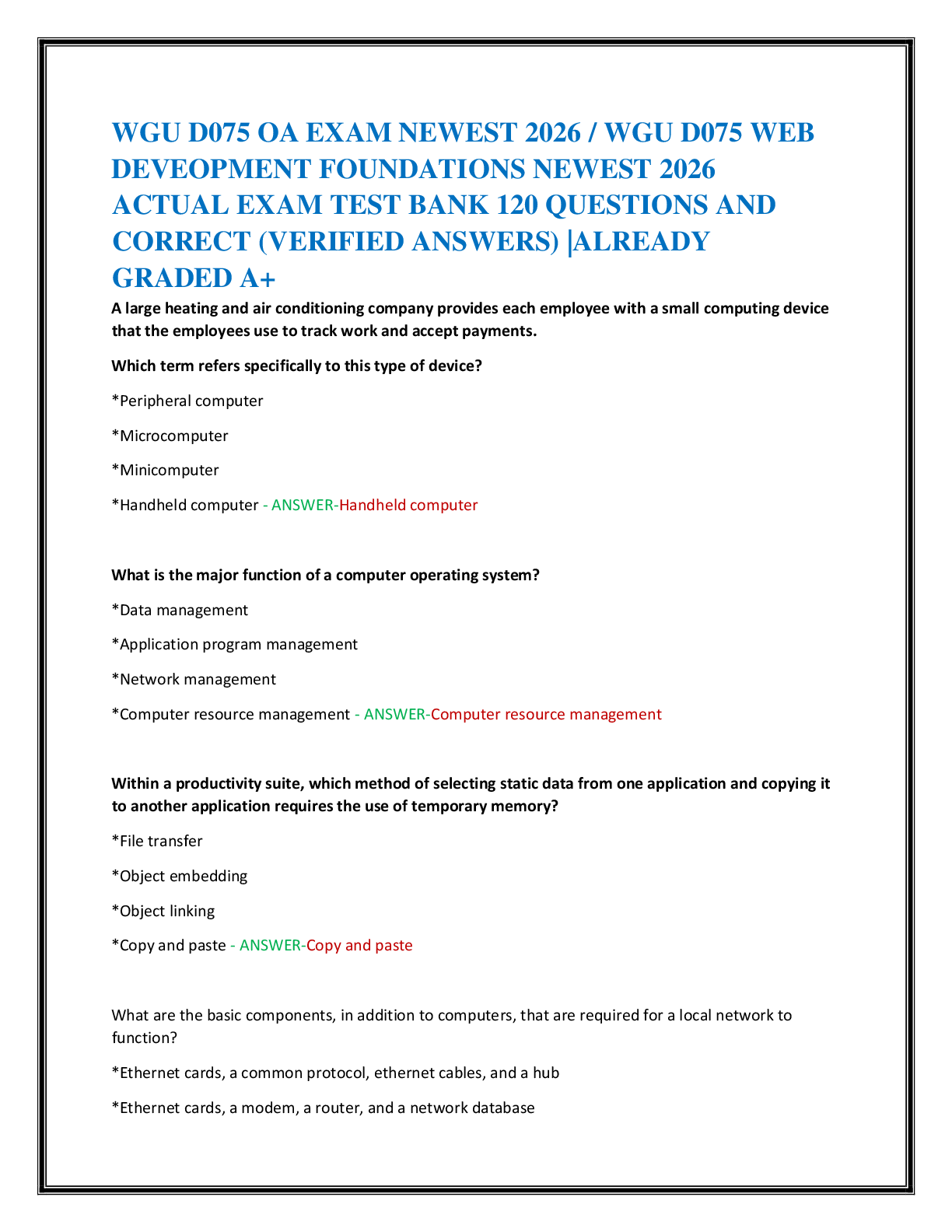
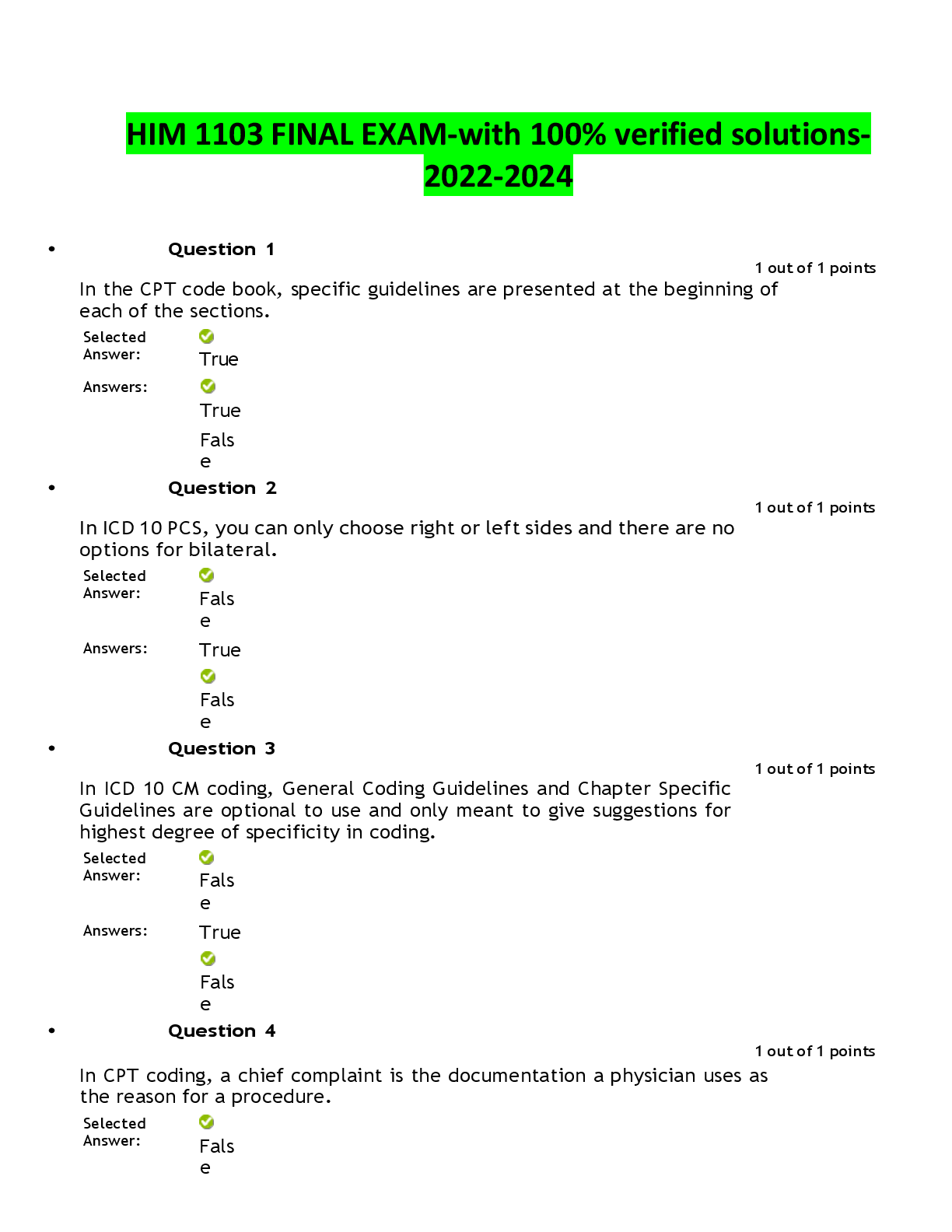
Development Lifecycle correct answerRelease Planning
Definition
Development
Validation
Deployment
There are four basic types of countermeasures correct answer1. Preventative - These work by keeping something f
...
Development Lifecycle correct answerRelease Planning
Definition
Development
Validation
Deployment
There are four basic types of countermeasures correct answer1. Preventative - These work by keeping something from happening in the
first place. Examples of this include: security awareness training, firewall,
anti-virus, security guard and IPS.
2. Reactive - Reactive countermeasures come into effect only after an event
has already occurred.
3. Detective - Examples of detective counter measures include: system
monitoring, IDS, anti-virus, motion detectors and IPS.
4. Administrative - These controls are the process of developing and
ensuring compliance with policy and procedures. These use policy to
protect an asset.
PCI DSS has three main stages of compliance correct answerCollecting and Storing - This involves the secure collection and tamper-proof storage
of log data so that it is available for analysis.
Reporting - This is the ability to prove compliance should an audit arise. The
organization should also show evidence that data protection controls are in place.
Monitoring and Alerting - This involves implementing systems to enable
administrators to monitor access and usage of data. There should also be evidence that
log data is being collected and stored.
Re-Identification correct answerre-identification refers to using data from a single entity holding the data.
Symmetric Encryption correct answerSymmetric key cryptography refers to using the same key for encrypting as well as
decrypting. It is also referred to as shared secret, secret-key or private key. This key is
not distributed, rather is kept secret by the sending and receiving parties
Asymmetric Encryption correct answerAsymmetric cryptography is also referred to as public-key cryptography. Public key
depends on a key pair for the
[Show More]