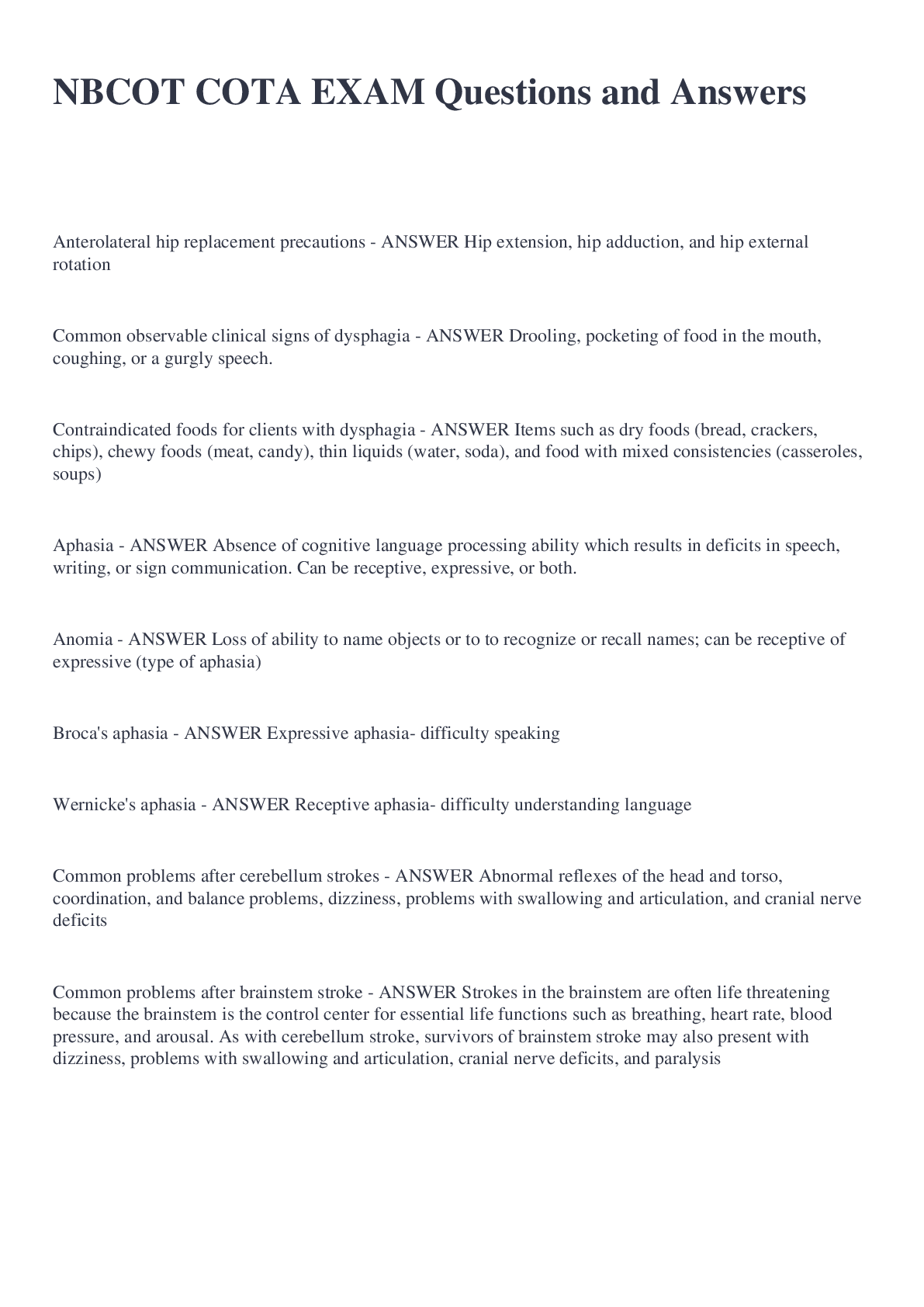
Absolute Contraindications to Exercise Testing - ANSWER • A recent significant change in the resting ECG suggesting significant ischemia, recent MI (within 2 d), or other acute cardiac event
• Unstable angina
• Uncontr
...
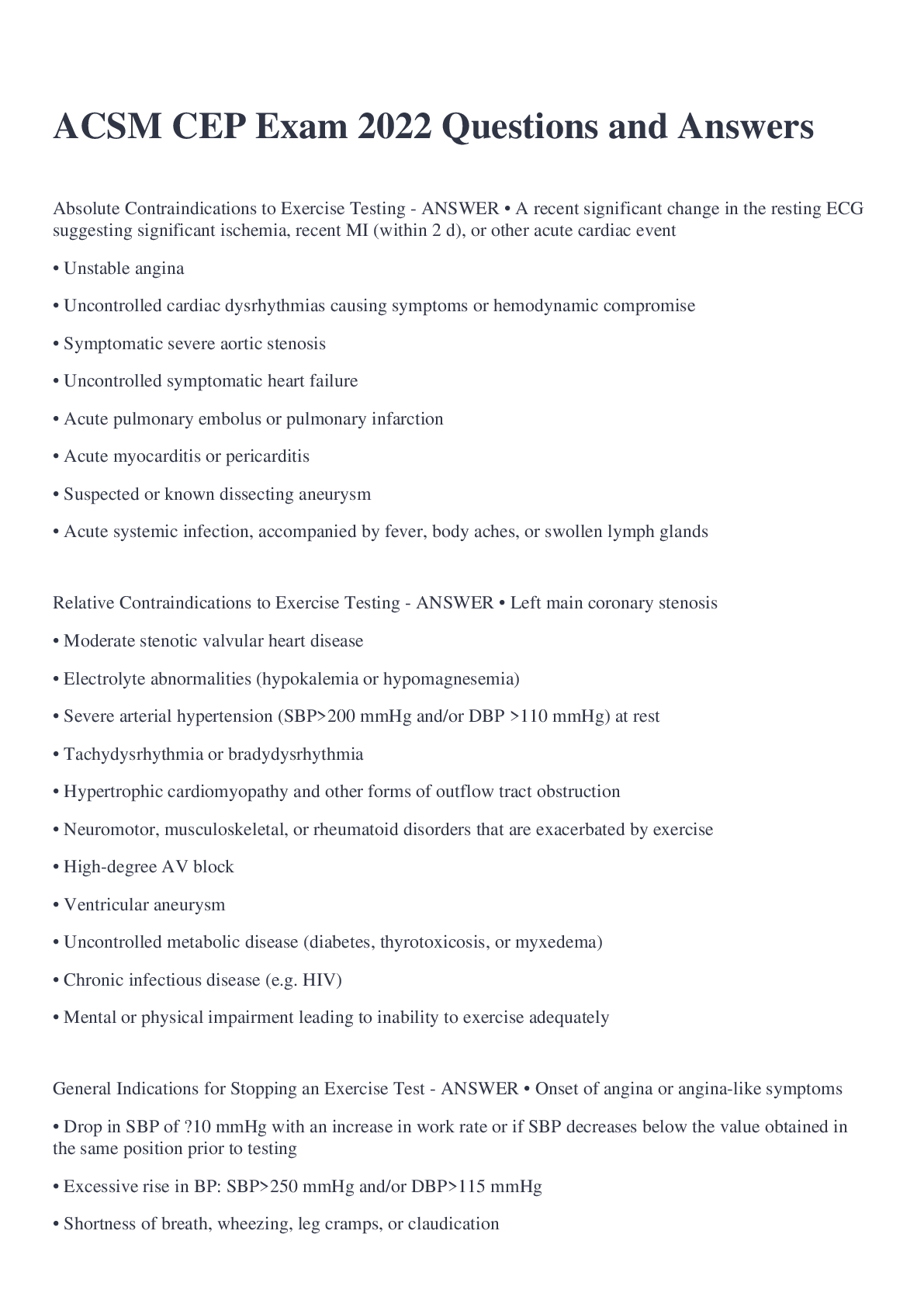
Absolute Contraindications to Exercise Testing - ANSWER • A recent significant change in the resting ECG suggesting significant ischemia, recent MI (within 2 d), or other acute cardiac event
• Unstable angina
• Uncontrolled cardiac dysrhythmias causing symptoms or hemodynamic compromise
• Symptomatic severe aortic stenosis
• Uncontrolled symptomatic heart failure
• Acute pulmonary embolus or pulmonary infarction
• Acute myocarditis or pericarditis
• Suspected or known dissecting aneurysm
• Acute systemic infection, accompanied by fever, body aches, or swollen lymph glands
Relative Contraindications to Exercise Testing - ANSWER • Left main coronary stenosis
• Moderate stenotic valvular heart disease
• Electrolyte abnormalities (hypokalemia or hypomagnesemia)
• Severe arterial hypertension (SBP>200 mmHg and/or DBP >110 mmHg) at rest
• Tachydysrhythmia or bradydysrhythmia
• Hypertrophic cardiomyopathy and other forms of outflow tract obstruction
• Neuromotor, musculoskeletal, or rheumatoid disorders that are exacerbated by exercise
• High-degree AV block
• Ventricular aneurysm
• Uncontrolled metabolic disease (diabetes, thyrotoxicosis, or myxedema)
• Chronic infectious disease (e.g. HIV)
• Mental or physical impairment leading to inability to exercise adequately
General Indications for Stopping an Exercise Test - ANSWER • Onset of angina or angina-like symptoms
• Drop in SBP of ≥10 mmHg with an increase in work rate or if SBP decreases below the value obtained in the same position prior to testing
• Excessive rise in BP: SBP>250 mmHg and/or DBP>115 mmHg
• Shortness of breath, wheezing, leg cramps, or claudication
• Signs of poor perfusion: light-headedness, confusion, ataxia (loss of full control of bodily movements), (pallor) unhealthy pale appearance, cyanosis (bluish skin color), nausea, or cold and clammy skin
• Failure of HR to increase with increased exercise intensity
• Noticeable change in heart rhythm by palpation or auscultation
• Subject requests to stop
• Physical or verbal manifestations of severe fatigue
• Failure of the testing equipment
Absolute Indications for stopping an exercise test - ANSWER • Drop in SBP ≥10 mmHg with an increase in work rate, or if SBP decreases below the value obtained in the same position prior to testing when accompanied by other evidence of ischemia
• Moderately severe angina (defined as 3 on standard scale)
• Increasing nervous system symptoms (e.g. ataxia, dizziness, or near syncope)
• Signs of poor perfusion (cyanosis or pallor)
• Technical difficulties monitoring the ECG or SBP
• Subject's desire to stop
• Sustained ventricular tachycardia
• ST elevation (+1.0 mm) in leads without diagnostic Q waves (other than V1 or aVR)
Relative Indications for stopping an exercise test - ANSWER • Drop in SBP ≥10 mmHg with an increase in work rate, or if SBP below the value obtained in the same position prior to testing
• ST or QRS changes such as excessive ST depression (>2 mm horizontal or down sloping ST-segment depression) or marked axis shift
• Arrhythmias other than sustained V Tach, including multifocal PVCs, triplets of PVCs, SVT, heart block, or bradyarrhythmias
• Fatigue, shortness of breath, wheezing, leg cramps, or claudication
• Development of bundle-branch block or intraventricular conduction delay that cannot be distinguished from V Tach
• Increasing chest pain
• Hypertensive response (SBP>250 mmHg and/or DBP>115 mmHg)
ST segment depression - ANSWER ≥1 mm of horizontal or down sloping ST↓ 60-80 ms beyond the J point suggesting myocardial ischemia
Chronotropic incompetence - ANSWER 1. Peak exercise HR about 20 BPM below the age predicted HRmax or an inability to achieve > 85% of the age predicted HRmax for subjects limited by volitional fatigue.
2. Chronotropic index <.8
Heart Rate Recovery - ANSWER less than or equal to 12 BPM at 1 minute for walking, or less than or equal to 22 BPM at 2 mins for supine position
Sensitivity - ANSWER % of pts. tested with known CVD who demonstrate significant ST segment changes.
Exercise EKG sensitivity usually requires greater than or equal to 70% stenosis
True Positive - ANSWER Horizontal or down sloping ST segment depression of ≥1.0 mm and correctly identifies a patient with CVD
False Negative - ANSWER test shows no or non-diagnostic ECG changes and fails to identify patients with underlying CVD
Specificity - ANSWER % of pts. without CVD who demonstrate non significant ST segment changes
True Negative - ANSWER Correctly identifies an individual without CVD
Causes of False Negative Test Results - ANSWER • Failure to reach an ischemic threshold
• Monitoring an insufficient number of leads to detect ECG changes
• Failure to recognize non-ECG signs and symptoms that may be associated with underlying CVD
• Angiographically significant CVD compensated by collateral circulation
• Musculoskeletal limitations to exercise preceding cardiac abnormalities
• Technical or observer error
Predictive Value - ANSWER A measure of how accurately a test result (positive or negative) correctly identifies the presence or absence of CVD in tested patients.
Absolute Contraindications to Resistance training - ANSWER • Unstable CHD
• Decompensated HF
• Uncontrolled arrhythmias
• Severe pulmonary HTN
• Severe and symptomatic aortic stenosis
• Acute myocarditis, endocarditis, or pericarditis
• Uncontrolled HTN (>180/110 mmHg)
• Aortic dissection
• Marfan syndrome
• High intensity RT (80-100% of 1-RM) in patients with active proliferative retinopathy or moderate or worse non-proliferative diabetic retinopathy
Relative Contraindications to Resistance Training - ANSWER • Major risk factors for CHD
• Diabetes at any age
• Uncontrolled HTN (>160/100 mmHg)
• Low functional capacity (<4 METs)
• Musculoskeletal limitations
• Individuals who have implanted pacemakers or defibrillators
When to monitor EKG for an Exercise Test - ANSWER Before: Continuously, supine position and posture of exercise
During: Continuously; last 15 s of each stage or the last 15 s of each 2 min period (ramp protocols)
After: continuously, immediate postexercise, last 15 s of the 1st minute of recovery and every 2 minutes after
When to monitor HR for an exercise test - ANSWER Before: Continuously; supine position, and posture of exercise
During: Continuously, Last 15 s of each minute
After: Continuously, Last 5 s of each minute
When to monitor BP during an exercise test - ANSWER Before: supine position and posture of exercise
During: Last 45 s of each stage or the last 45 s of each 2 min period (ramp protocols)
After: recorded immediately postexercise and then 2 mins after
Signs/ Symps during an exercise test - ANSWER Monitored continuously and recorded as observed
RPE During an exercise test - ANSWER Before: Explain the scale
During: last 15 s of each stage or every 2 mins with ramp protocols
After: Obtain peak exercise value then don't measure during recovery
Pregnancy Special Considerations - ANSWER 1. Sedentary women should gradually increase PA to recommended levels
2. Severely obese, GDM, HTN see Dr. before exercise
3. No contact sports
4. Terminate Exss for vaginal bleeding, dyspnea before exertion, dizziness, headache, chest pain, muscle weakness, calf pain/swelling, preterm labor, decreased fetal movement, and amniotic fluid leakage
5. Don't exss in a supine position after 16 weeks of pregnancy to avoid venous obstruction.
6. Avoid valsalva
7. Avoid hot and humid weather
8. Metabolic demand increases by about 300 kcal/day
9. Submax weight training allowed
10. Postpartum exss- about 4-6 wks after normal vaginal delivery and about 8-10 weeks after C section
Children Special Considerations - ANSWER 1. Proper instruction provided for strength training.
2. B/c of immature thermoregulatory systems, avoid hot weather and stay hydrated
3. OW and physically inactive kids should gradually increase frequency and time of PA
4. Children with disabilities or disease should have their Ex Rx tailored to them
5. Decrease sedentary activity
Older Adults Special Considerations - ANSWER 1. Intensity and duration should be light at first
2. Progression tailored to tolerance and preference
3. Muscular strength is more important with age
4. Supervise strength training
5. Muscle strengthening activities may need to precede aerobic training
6. Gradually exceed the recommended minimum amounts of PA
7. If chronic conditions preclude activity at the recommended min. amount, activities should be performed as tolerated to avoid being sedentary
8. Exceed min amount of PA to improve chronic conditions
9. Mod. intensity PA should be encouraged for individuals with cognitive decline
10. Structured PA sessions should end with an appropriate cool down
11. Incorporate behavior strategies to enhance participation
12. Regular feedback and positive reinforcement to increase adherence
Low Back Pain Special Considerations - ANSWER 1. Promote spinal stabilization
2. Certain exercises and positions may aggravate symps (walking downhill)
3. Encourage exercises that result in a centralization of symps
4. Encourage flexibility
Arthritis Special Considerations - ANSWER 1. Avoid strenuous exercises during acute flare ups and periods of inflammation
2. Long warm up and cool down
3. Individuals with significant pain and functional limitations should perform as much PA as they can
4. Exss during times of the day where pain is less severe and/ or in conjunction with peak activity of pain meds
5. Appropriate shoes
6. Functional exercises help improve neuromotor control
7. Water exercise temp- 83-88
Cancer Special Considerations - ANSWER 1. Up to 90% of all cancer survivors will experience cancer related fatigue
2. Bone is a common site of metastases in many cancers
3. Cachexia prevalent in pts. with advanced GI cancers
4. Identify when a pt. is in an immune surpressed state --> exercise at home or a medical setting
5. Avoid swimming with catheters
6. Pts. receiving chemo may experience sickness and fatigue
Cerebral Palsy Special Considerations - ANSWER 1. FITT principle is unclear
2. B/c of lack of movement control, energy expenditure is high at low power output
3. If balance is a problem use the bike
4. Fatigue easily because of poor economy of movement
5. Resistance training increases strength without an adverse effect on muscle tone
6. Resistance exercises designed to target weak muscle groups that oppose hypertonic muscle groups improve the strength and normalize the tone
7. Hypertonic muscles should be stretched slowly throughout the workout program
8. Children- inhibit abnormal reflex activity, normalize muscle tone, and develop reactions to increase equilibrium
9.Athletes- sport specific fitness testing to determine fitness areas for improvement
10. Good positioning of the head, trunk, and proximal joints of extremities to control persistent primitive reflexes is preferred to strapping
11. More prone to overuse injuries b/c of their higher incidence of inactivity
Diabetes Special Considerations - ANSWER 1. Hypoglycemia- most serious problem
2. Blood glucose monitoring before and after exercise is important
3. Timing of insulin should be considered
4. PA with oral hypoglycemic agents has not been studied well
5. Adjust carb intake and meds before and after exss
6. People with insulin pumps can disconnect depending on intensity and duration of exss
7. Continuous glucose monitoring can be useful to determine immediate and delayed effects of exercise
8. Exercise with a friend
9. Hyperglycemia with or without ketosis is a concern for individuals with Type 1 who are not in glycemic control
10. Dehydration resulting from polyuria may compromise thermoregulatory response
11. Retinopathy at risk for retinal detachment and hemorrhage associated with vigorous exercise
12. During exss, autonomic neuropathy may cause chronotropic incompetence, attenuated VO2 kinetics and anhydrosis
13. Peripheral neuropathy- foot care
Dyslipidemia Special Considerations - ANSWER Individuals taking lipid lowering meds that have the potential to cause muscle damage (statins and fibric acid) may experience soreness
Fibromyalgia Special Considerations - ANSWER 1. Teach the correct form for exercises to reduce injury
2. Avoid improper form and exercising when excessively fatigued
3. Consider less exercise if symps increase during or after exss
4. Avoid free weights when fatigued or have excessive pain
5. Exercise in a room with temp and humidity control
6. Consider group exercises
7. Consider yoga and tai chi
HIV Special Considerations - ANSWER 1. No contraindications for exercise
2. Supervised exercises for symptomatic people
3. Should report increased general feelings of fatigue or perceived effort during activity, lower GI distress, and shortness of breath
4. Minor feelings of fatigue should not end exercise
HTN Special Considerations - ANSWER 1. Pts. with uncontrolled severe HTN (SBP ≥180 mmHg and/or DBP ≥110 mmHg) should add exercise training to their treatment plan only after first being evaluated by their physician
2. B blockers and diuretics may adversely affect thermoregulatory function
3. B blockers may reduce submax and max exercise capacity
4. Alpha blockers, CA channels blockers, and vasodilators may lead to sudden excessive reductions in postexss BP
5.OW and OB pts should focus on increasing caloric expenditure
6. BP lowering effects of aerobic exercise is immediate
7. Exss intensity should be set ≥10 BPM below the ischemic threshold
Intellectual Disability and Down Syndrome Special Considerations - ANSWER 1. ID-Require more encouragement
2. ID-Motor control problems and poor coordination
3. ID-Short attention span
4. Familiarize and practice before testing
5. Maximize enjoyment and adherence
6. DS- very low levels of aerobic capacity and muscle strength
7. DS- often obese
8. DS- likely to have a low HR max caused by reduced catecholamine response
9. DS- Might have atlantoaxial instability
10. DS- may experience skeletal muscle hypotonia coupled with excessive joint laxity
Kidney Disease Special Considerations - ANSWER 1. Progress to greater exercise volume over time
2. Might not be able to do continuous exercise
3. Resistance- 1 set of 10 reps 70% 1 RM 2x/week
4. Hemodialysis- exss on non dialysis days and not immediately post
-if done during do it during the first half
-Use RPE
-Measure BP in arm without fistula
5. Peritoneal Dialysis:
-May attempt exss with fluid in the abdomen, if it is uncomfy then drain fluid before exss
6. Kidney Transplant:
-During periods of rejection, FITT principle should be reduced but still exss
Metabolic Syndrome Special Considerations - ANSWER 1. Will likely have multiple CVD risk factors
2. Initial exss at moderate intensity
3. To reduce body weight, increase PA levels to 300 min/week
MS Special Considerations - ANSWER 1. In spastic muscles, increase the frequency and time of flexibility exercises
2. Incorporate functional activities
3. USE RPE
4. During acute exacerbation of symps, decrease exss
5. Commonly used disease modifying meds can have transient side effects
6. Systemic fatigue is common but can be improved
7. Heat sensitivity is common
8. HR and BP my be blunted
9. Some pts. may restrict their daily fluid intake
10. Might have trouble understanding testing and training instructions
[Show More]









.png)