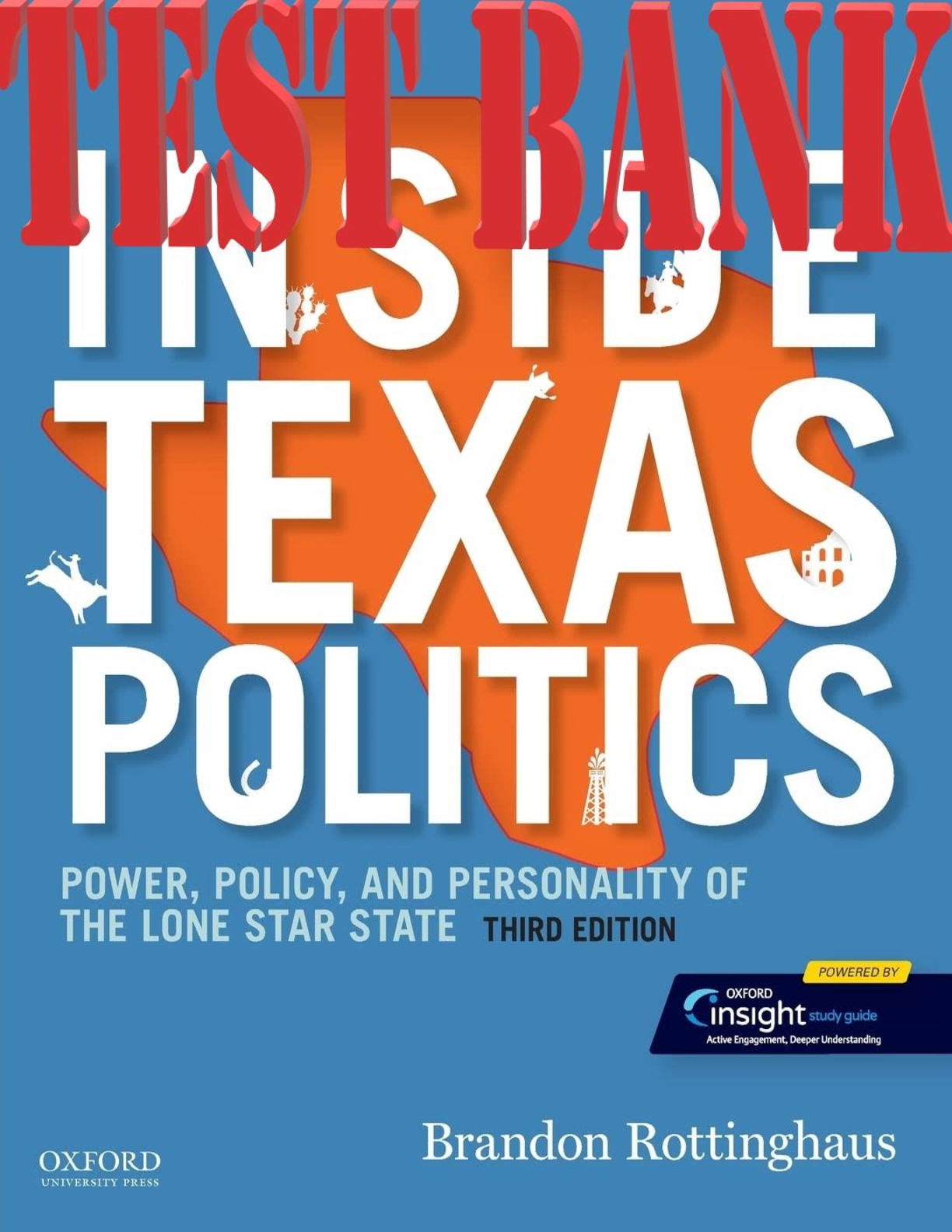
INSIDE TEXAS POLITICS POWER, POLICY AND PERSONALITY OF THE LONE STAR STATE 3RD EDITION BY BRANDON ROTTINGHAUS
History > GCSE MARK SCHEME > GCSE (9–1) History B (Schools History Project) J411/11: The People's Health, c.1250 to present wit (All)
GCSE (9–1) History B (Schools History Project) J411/11: The People's Health, c.1250 to present with The Norman Conquest, 1065-1087 General Certificate of Secondary Education Mark Scheme for Nov ... ember 2020 Oxford Cambridge and RSA Examinations GCSE (9–1) History B (Schools History Project) J411/11: The People's Health, c.1250 to present with The Norman Conquest, 1065-1087 General Certificate of Secondary Education Mark Scheme for November 2020Oxford Cambridge and RSA Examinations OCR (Oxford Cambridge and RSA) is a leading UK awarding body, providing a wide range of qualifications to meet the needs of candidates of all ages and abilities. OCR qualifications include AS/A Levels, Diplomas, GCSEs, Cambridge Nationals, Cambridge Technicals, Functional Skills, Key Skills, Entry Level qualifications, NVQs and vocational qualifications in areas such as IT, business, languages, teaching/training, administration and secretarial skills. It is also responsible for developing new specifications to meet national requirements and the needs of students and teachers. OCR is a not-for-profit organisation; any surplus made is invested back into the establishment to help towards the development of qualifications and support, which keep pace with the changing needs of today’s society. This mark scheme is published as an aid to teachers and students, to indicate the requirements of the examination. It shows the basis on which marks were awarded by examiners. It does not indicate the details of the discussions which took place at an examiners’ meeting before marking commenced. All examiners are instructed that alternative correct answers and unexpected approaches in candidates’ scripts must be given marks that fairly reflect the relevant knowledge and skills demonstrated. Mark schemes should be read in conjunction with the published question papers and the report on the examination. © OCR 2020J411/11 Mark Scheme November 2020 3 Annotations Stamp Annotation Name Description Tick 1 Level 1 Tick 2 Level 2 Tick 3 Level 3 Tick 4 Level 4 Tick 5 Level 5 Tick 6 Level 6 SEEN Noted but no credit given NAQ Not answered question Wavy Line Development / Evidence / Support of valid point BP Blank pageJ411/11 Mark Scheme November 2020 4 Mark Scheme Section A: The People’s Health c. 1250 to present Question 1 – 3 marks a) Give one example of approaches to public health in monasteries during the period 1250-15. b) Name one way in which people in towns dealt with the waste they produced in the period 1500-1750. c) Name one individual whose work led to government action to improve the people’s health in the twentieth century. Guidance Indicative content 1(a) – 1 mark for any answer that offers an historically valid response drawing on knowledge of characteristic features (AO1) For 1(a), likely and valid responses include: supply of fresh water, infirmaries for the sick, rivers used to flush waste from latrines For 1(b), likely valid responses include, collected by scavengers, dunghills, jakes over rivers, cesspits, For 1(c) likely valid responses include: Rowntree, Booth, Beveridge, Niven, Bevan Any other historically valid response is acceptable and should be credited. 1(b) – 1 mark for any answer that offers an historically valid response drawing on knowledge of characteristic features (AO1) 1(c) – 1 mark for any answer that offers an historically valid response drawing on knowledge of characteristic features (AO1)J411/11 Mark Scheme November 2020 5 Question 2 – 9 marks Write a clear and organised summary that analyses responses to the HIV/AIDS epidemic since 1980. Support your summary with examples. Levels AO1 Demonstrate knowledge and understanding of the key features and characteristics of the periods studied. Maximum 6 marks AO2 Explain and analyse historical events and periods studied using second-order historical concepts. Maximum 3 marks Notes and guidance specific to the question set Level 3 (7–9 marks) Demonstrates a well-selected range of valid knowledge of characteristic features that are fully relevant to the question, in ways that show secure understanding of them (AO1). The way the summary is organised shows sustained logical coherence, demonstrating clear use of at least one second order concept in finding connections and providing a logical chain of reasoning to summarise the historical situation in the question (AO2). Answers should show connections in the situation defined in the question and use these to organise the answer logically. Answers could consider aspects of one or more of the following: AIDS - growing awareness, media response, popular reaction, Terrence Higgins Trust, Issues over blood donation, growing alarm - vilification of gay people and drug addicts ‘gay plague’ ‘God’s punishment’ fear – government actions and acceptance, adverts, blood screening, TV programmes, myth busting, Princess Di’s actions, safe sex advice, medical research and anti-retroviral drugs and PrEP, complacency. Use of conceptual understanding/ second order concepts to organise the response might in this case involve organisation by: cause and consequence, e.g. media, prejudice, religious beliefs, lack of understanding change e.g. recognition that responses changed with greater scientific understanding and media/ celebrity reactions diversity, e.g. gay community’s response, heterosexual response, attempts to protect drug users Explanations are most likely to show understanding of these second order concepts but reward appropriate understanding of any other second order concept. Please note that answers do not need to name the second order concepts being used to organise their answer, but the concepts do need to be apparent from the connections and chains of reasoning in the summary in order to meet the AO2 descriptors (see levels descriptors). No reward can be given for wider knowledge of the period that is unrelated to the topic in the question. Level 2 (4–6 marks) Demonstrates a range of knowledge of characteristic features that are relevant to the question, in ways that show understanding of them (AO1). The way the summary is organised shows some logical coherence, demonstrating use of at least one second order concept in finding connections and providing a logical chain of reasoning to summarise the historical situation in the question (AO2). Level 1 (1–3 marks) Demonstrates some knowledge of characteristic features with some relevance to the question, in ways that show some limited understanding of them (AO1). The summary shows a very basic logical coherence, demonstrating limited use of at least one second order concept in attempting to find connections and to provide a logical chain of reasoning to summarise the historical situation in the question (AO2). 0 marks No response or no response worthy of credit. Question 2–9 marks Write a clear and organised summary that analyses responses to the HIV/AIDS epidemic since 1980. Support your summary with examples. Guidance and indicative content Level 3 (7–9 Answers at L3 will typically be organised around a second order concept such as causes/ consequences, change/continuity, diversity. Answers will be supported with two or more valid examples e.g.J411/11 Mark Scheme November 2020 6 marks) [Change] People’s responses to AIDS changed over time. To begin with, in the early 1980s, there was lots of ignorance about how the disease was spread and people overreacted. For example, some Fire Service staff stopped giving mouth-to-mouth resuscitation out of fear of infection. But by the late 1980s there was more understanding and more helpful responses. For example, charity groups provided clean needles to drug addicts to reduce transmission. The government also started screening all blood donations so blood transfusions were safe. [Causation/consequence] In 1996 scientists developed drugs called ‘antiretrovirals’ that delayed the onset of AIDS in people infected with HIV. Although this was good it had the unexpected consequences. Firstly, it has led to complacency because the government relaxed its campaigns about AIDS and HIV, and many people believe these antiretrovirals are a ‘cure’ for AIDS. This has meant that cases of HIV infection have actually risen in recent years. Nutshell: Summary based on second order concept(s) with two or more valid supporting examples Other valid areas might include: Causation – reasons why people over-reacted or took incorrect action (media, prejudice, religion); Causation – why responses improved, e.g. Eastenders storyline, Princess Diana, government public information campaign; diversity in response, e.g. helpful responses, harmful responses, responses from Church leaders, gay community, etc. Level 2 (4–6 marks) Answers at L2 will typically be organised around a second order concept, supported with a valid example e.g. [Causation] Responses to AIDS improved after Princess Diana was photographed visiting an AIDS clinic and shaking hands with someone who was suffering from AIDS. This reassured people that AIDS could not be passed on by simple contact and it meant that people’s prejudices towards AIDS victims started to fade. Nutshell: Summary based on a second order concept with one valid supporting example Level 1 (1–3 marks) Answers at L1 will typically list or describe relevant events or developments with no clear organisation around a second order concept e.g. The government organised an AIDS prevention campaign. It sent a leaflet called ‘Don’t die of ignorance’ to every home in Britain and ran advertisements on television on how to avoid contracting AIDS. OR To begin with there was lots of ignorance and prejudice against gay people. Nutshell: List of events / developments with no clear organising concept. 0 marksJ411/11 Mark Scheme November 2020 7 Question 3 – 10 marks Why were there attempts to improve public health in towns in the nineteenth century (1800-1900)? Support your answer with examples? Levels AO1 Demonstrate knowledge and understanding of the key features and characteristics of the periods studied. Maximum 5 marks AO2 Explain and analyse historical events and periods studied using second-order historical concepts. Maximum 5 marks Notes and guidance specific to the question set Level 5 (9–10 marks) Demonstrates strong knowledge of key features and characteristics of the period in ways that show secure understanding of them (AO1). Uses these to show sophisticated understanding of one or more second order concepts in a fully sustained and very well supported explanation (AO2). Explanations could consider- urbanisation, growing population and so pollution, epidemics/killer diseases, Impact on richer areas, failure of laissez faire, pressure from reformers, epidemiology/charting epidemics, advances in scientific understanding Reward other historically valid points Explanations are most likely to show understanding of the second order concepts of causation / consequence but reward appropriate understanding of any other second order concept. Answers which simply describe some features of nineteenth century Britain cannot reach beyond Level 1 Level 4 (7–8 marks) Demonstrates sound knowledge of key features and characteristics of the period in ways that show secure understanding of them (AO1). Uses these to show strong understanding of one or more second order concepts in a sustained and well-supported explanation (AO2). Level 3 (5–6 marks) Demonstrates sound knowledge of key features and characteristics of period in ways that show some understanding of them (AO1). Uses these to show sound understanding of one or more second order concepts in a generally coherent and organised explanation (AO2). Level 2 (3–4 marks) Demonstrates some knowledge of features and characteristics of the period in ways that show some understanding of them (AO1). Uses these to show some understanding of one or more second order concepts in a loosely organised explanation (AO2). Level 1 (1–2 marks) Demonstrates some knowledge of features and characteristics of the period (AO1). Uses these to show some basic understanding of one or more second order concepts, although the overall response may lack structure and coherence (AO2). 0 marks No response or no response worthy of credit. Question 3–10 marks Question 3–10 marks Why were there attempts to improve public health in towns in the nineteenth century (1800-1900)? Support your answer with examples. Guidance and indicative content Level 5 (9-10 marks) Level 5 answers will typically identify at least two reasons why there were attempts to improve public health in towns in the nineteenth century and explain them fully e.g.J411/11 Mark Scheme November 2020 8 One reason was because of the action of individuals like Edwin Chadwick. In 1842, Chadwick wrote a report for the Poor law Commission. It was based on detailed evidence from doctors and contained shocking details of the public health crisis. It recommended that towns should be forced to provide clean water and sewerage systems. His report was very influential and many politicians supported Chadwick. This led to the passing of the 1848 Public Health Act. Another reason was because of ‘The Great Stink’ in 1858 when, during a hot summer, the River Thames dried up so much that the smell of sewage from the river became unbearable. It became impossible for MPs to continue with their debates and they decided to take action. The government ordered Joseph Bazalgette to build 1300 miles of new sewers across London. Nutshell: Two or more reasons identified and explained. Level 4 (7-8 marks) Level 4 answers will typically identify at least 1 reason why there were attempts to improve public health in towns in the nineteenth century and explain it fully e.g. There were attempts because of the action of individuals like Edwin Chadwick. In 1842, Chadwick wrote a report for the Poor law Commission. It was based on detailed evidence from doctors and contained shocking details of the public health crisis. It recommended that towns should be forced to provide clean water and sewerage systems. His report was very influential and many politicians supported Chadwick. This led to the passing of the 1848 Public Health Act. Nutshell: One reason identified and explained. Level 3 (5-6 marks) Level 3 answers will typically identify at least one valid, specific reason e.g. • There were attempts to improve public health because in 1861 Louis Pasteur had proven than germs were the cause of disease. • One reason was the action of individuals like Benjamin Disraeli who pushed through the 1875 Public Health Act. • One reason was that something needed to be done in response to cholera epidemics. Nutshell: Identifies one or more valid reason(s) but no supporting evidence NOTE: 5 marks for one reason identified; 6 marks for two or more Level 2 (3-4 marks) Level 2 answers will typically contain correct descriptions of poor conditions OR descriptions of public health improvements in towns, without linking these to the question, e.g. • The 1875 Public Health Act said that all local authorities had to appoint a medical officer and a sanitary inspector. They had to take responsibility for sewers and water supplies. • They made attempts because conditions were terrible. Many people lived in back-to-back housing with poor ventilation. There were killer diseases like TB and Typhoid. Nutshell: Describes conditions in towns or public health improvements Level 1 (1–2 marks) Level 1 answers will typically contain general points, or generalised/ unsupported assertions e.g. • They had to make attempts because the conditions in towns were really bad. • There were two public health acts during this period. • Individuals played a big role. Nutshell: Assertion(s) 0 marksJ411/11 Mark Scheme November 2020 9 Question 4* – 18 marks ‘Little was done to improve public health in medieval Britain (1250-1500).’ How far do you agree with this statement? Give reasons for your answer Levels AO1 Demonstrate knowledge and understanding of the key features and characteristics of the periods studied. Maximum 6 marks AO2 Explain and analyse historical events and periods studied using second-order historical concepts. Maximum 12 marks Notes and guidance specific to the question set Level 6 (16–18 marks) Demonstrates strong knowledge of key features and characteristics of the period in ways that show very secure and thorough understanding of them (AO1). Shows sophisticated understanding of appropriate second order concepts in setting out a sustained, consistently focused and convincing explanation and reaching a very well-supported judgment on the issue in the question (AO2). There is a well-developed and sustained line of reasoning which is coherent, relevant and logically structured. Answers may be awarded some marks at Level 1 if they demonstrate knowledge of public health in the MA. It is possible to reach the highest marks either by agreeing or disagreeing or anywhere between, providing the response matches the level description. BUT to achieve the two highest levels, answers must consider both sides of the argument before reaching a conclusion Answers are most likely to show understanding of the second order concepts of continuity and change and diversity but reward appropriate understanding of any other second order concept. Grounds for agreeing include: Little understanding of what caused disease so any measures were often futile. Reliance on ancient ideas or religious explanations. Unregulated trades /work processes (fulling mills/ tanners etc. causing pollution of streams) Unplanned urbanization leading to more waste and pollution. Housing issues, weak enforcement of regulations Reasons for disagreeing Some positive actions, church actions, butchers moved to outskirts of towns, dung heaps moved out, checks from guild halls on quality of meat etc. Public shaming for polluting waterways in Norwich, permission to raise money from wealthier citizens to pave roads in Shrewsbury, wardens appointed etc. Reward other historically valid points Level 5 (13–15 marks) Demonstrates strong knowledge of key features and characteristics of the period in ways that show secure understanding of them (AO1). Shows very strong understanding of appropriate second order concepts in setting out a sustained and convincing explanation and reaching a well-supported judgment on the issue in the question (AO2). There is a well-developed line of reasoning which is coherent, relevant and logically structured. Level 4 (10–12 marks) Demonstrates sound knowledge of key features and characteristics of the period in ways that show secure understanding of them (AO1).Shows strong understanding of appropriate second order concepts in setting out a sustained and generally convincing explanation to reach a supported judgment on the issue in the question (AO2). There is a developed line of reasoning which is clear, relevant and logically structured. Level 3 (7–9 marks) Demonstrates sound knowledge of key features and characteristics of period in ways that show some understanding of them (AO1). Shows sound understanding of appropriate second order concepts in making a reasonably sustained attempt to explain ideas and reach a supported judgment on the issue in the question (AO2). There is a line of reasoning presented which is mostly relevant and which has some structure. Level 2 (4–6 marks) Demonstrates some knowledge of features and characteristics of the period in ways that show some understanding of them (AO1). Shows some understanding of appropriate second order concepts managing in a limited way to explain ideas and reach a loosely supported judgment about the issue in the question (AO2). There is a line of reasoning which has some relevance and which is presented with limited structure. Level 1 (1–3 marks) Demonstrates some knowledge of features and characteristics of the period (AO1). Shows some basic understanding of appropriate second order concept(s) but any attempt to explain ideas and reach a judgment on the issue in the question is unclear or lacks historical validity (AO2). The information is communicated in a basic/unstructured way. 0 marks No response or no response worthy of credit.J411/11 Mark Scheme November 2020 11 Question 4* – 18 marks ‘Little was done to improve public health in medieval Britain (1250-1500).’ How far do you agree with this statement? Give reasons for your answer. Guidance and indicative content Level 6 (16-18 marks) Level 6 answers will typically set out a balanced argument with each side of the argument explicitly supported by at least two valid examples (or three on one side and two on the other). For 18 marks, candidates must present a valid clinching argument e.g. There is lots of evidence to support this statement. For example, there was a lack of regulation surrounding waste, which was a real problem. Many toilets had no lining and excrement leaked into other houses’ cellars and some gongfermers simply emptied waste into the stream so disease was common. In addition, when there was a major outbreak of plague in 1349, the only action taken by King Edward III was writing a letter to the Mayor of London ordering him to clean the streets. This was not effective in preventing the spread of plague because it was based on the incorrect belief that the Plague was caused by miasma. On the other hand, the statement is not completely true because efforts were made to keen towns clean. For example, most towns fined householders if they left rubbish on the street for more than four days, and they employed rakers to remove it. Also, there are many example of town authorities making public health improvements by 1500. For example, in London, in 1488, the butchers’ guild built an expensive underground passage to carry waste from the shambles (where animals were slaughtered) to the Thames, which helped to keep waste off the streets. On the whole I do agree with the statement. Even though there were some improvements by 1500, these were only the end of the period and many were only superficial changes and were not implemented across the whole country. The huge problems of safe water and waste disposal that affected the majority of the population were not improved during this period. Nutshell: Balanced argument, two valid supporting examples each side (or three on one side and one on the other). Clinching argument = 18 marks Level 5 (13-15 marks) Level 5 answers will typically set out a balanced argument, explicitly supported by at least three valid examples (i.e. two on one side and one on the other), e.g. There is lots of evidence to support this statement. For example, there was a lack of regulation surrounding waste, which was a real problem. Many toilets had no lining and excrement leaked into other houses’ cellars and some gongfermers simply emptied waste into the stream so disease was common. In addition, when there was a major outbreak of plague in 1349, the only action taken by King Edward III was writing a letter to the Mayor of London ordering him to clean the streets. This was not effective in preventing the spread of plague because it was based on the incorrect belief that the Plague was caused by miasma. On the other hand, the statement is not completely true because efforts were made to keen towns clean. For example, most towns fined householders if they left rubbish on the street for more than four days, and they employed rakers to remove it. Nutshell: Balanced argument supported by three valid supporting examples (i.e. two on one side and one on the other) Level 4 (10-12 marks) Level 4 answers will typically set out a one-sided argument, explicitly supported by two valid examples, e.g. There is lots of evidence to support this statement. For example, there was a lack of regulation surrounding waste, which was a real problem. Many toilets had no lining and excrement leaked into other houses’ cellars and some gongfermers simply emptied waste into the stream so disease was common. In addition, when there was a major outbreak of plague in 1349, the only action taken by King Edward III was writing a letter to the Mayor of London ordering him to clean the streets. This was not effective in preventing the spread of plague because it was based on the incorrect belief that the Plague was caused by miasma. Nutshell: One sided argument, supported by two examples Alternatively, Level 4 answers will typically set out a balanced argument, with each side explicitly supported by one valid example, e.g.J411/11 Mark Scheme November 2020 12 There is lots of evidence to support this statement. For example, there was a lack of regulation surrounding waste, which was a real problem. Many toilets had no lining and excrement leaked into other houses’ cellars and some gongfermers simply emptied waste into the stream so disease was common. On the other hand, the statement is not completely true because efforts were made to keen towns clean. For example, most towns fined householders if they left rubbish on the street for more than four days, and they employed rakers to remove it.. Nutshell: Balanced argument, supported by one example on each side Level 3 (7-9 marks) Level 3 answers will typically set out a one-sided argument, explicitly supported by one valid example from that period, e.g. I agree. For example, there was a lack of regulation surrounding waste, which was a real problem. Many toilets had no lining and excrement leaked into other houses’ cellars and some gongfermers simply emptied waste into the stream so disease was common. Nutshell: One sided argument, supported by one example Level 2 (4-6 marks) Level 2 answers will typically identify valid reason(s) to support and/or challenge the statement but without full explanation or supporting evidence, e.g. Yes, I agree because there were problems with waste infecting the water supply throughout the period and little was done about this. Nutshell: Identification of reason(s) to support/challenge without full explanation Alternatively, Level 2 answers will typically describe public health conditions/improvements/ relevant events without linking these to the question, e.g. • Conditions in medieval towns were bad. At the end of a market day, the streets were full of waste from food and animals. • People threw waste out of windows into open gutters. Nutshell: Description of public health conditions/improvements/ related events without linking this to the question or without full explanation. Level 1 (1-3 marks) Level 1 answers will typically make general and unsupported assertions eg Yes, disease was really common in this period because of poor public health. No, some attempts were made to clean up towns by 1500. Nutshell General/ unsupported assertion(s) 0 marksJ411/11 Mark Scheme November 2020 13 Question 5*– 18 marks How far do you agree that the problems of public health were the same in both the Early Modern Period (1500-1750) and in the twentieth century (1900-2000)? Give reasons for your answer. Levels AO1 Demonstrate knowledge and understanding of the key features and characteristics of the periods studied. Maximum 6 marks AO2 Explain and analyse historical events and periods studied using second-order historical concepts. Maximum 12 marks Notes and guidance specific to the question set Level 6 (16–18 marks) Demonstrates strong knowledge of key features and characteristics of the period in ways that show very secure and thorough understanding of them (AO1). Shows sophisticated understanding of appropriate second order concepts in setting out a sustained, consistently focused and convincing explanation and reaching a very well-supported judgment on the issue in the question (AO2). There is a well-developed and sustained line of reasoning which is coherent, relevant and logically structured. Answers may be awarded some marks at Level 1 if they demonstrate any knowledge of public health in the relevant time periods It is possible to reach the highest marks either by agreeing or disagreeing or anywhere between, providing the response matches the level description. BUT, to achieve the two highest levels, answers must consider both sides of the argument before reaching a conclusion. Answers are most likely to show understanding of the second order concept of change and continuity, but reward appropriate understanding of any other second order concept. Grounds for agreeing include: Epidemics and inability to explain them. Great Plague and Spanish Flu/ AIDS. Urbanisation caused more PH issues in both periods e.g. pollution and housing, e.g.s of reluctance to regulate in both periods. Substance abuse e.g. alcohol/ drugs caused problems in both periods. Still some resistance to PH measures on religious grounds or distrust of science (e.g. MMR) Grounds for disagreeing include: scientific/ technological developments helped solve many problems in 20thC. Communication of PH messages – press /TV/ internet in 20thC. Growth of democracy and pressure for reform in 20th C. Role of increasing wealth enabling research and building etc…Move away from laissez faire towards welfare state which prevented many PH problems in 20th (candidates might draw distinctions between beginning and end of 20thC) Level 5 (13–15 marks) Demonstrates strong knowledge of key features and characteristics of the period in ways that show secure understanding of them (AO1). Shows very strong understanding of appropriate second order concepts in setting out a sustained and convincing explanation and reaching a well-supported judgment on the issue in the question (AO2). There is a well-developed line of reasoning which is coherent, relevant and logically structured. Level 4 (10–12 marks) Demonstrates sound knowledge of key features and characteristics of the period in ways that show secure understanding of them (AO1).Shows strong understanding of appropriate second order concepts in setting out a sustained and generally convincing explanation to reach a supported judgment on the issue in the question (AO2). There is a developed line of reasoning which is clear, relevant and logically structured. Level 3 (7–9 marks) Demonstrates sound knowledge of key features and characteristics of period in ways that show some understanding of them (AO1). Shows sound understanding of appropriate second order concepts in making a reasonably sustained attempt to explain ideas and reach a supported judgment on the issue in the question (AO2). There is a line of reasoning presented which is mostly relevant and which has some structure. Level 2 (4–6 marks) Demonstrates some knowledge of features and characteristics of the period in ways that show some understanding of them (AO1). Shows some understanding of appropriate second order concepts managing in a limited way to explain ideas and reach a loosely supported judgment about the issue in the question (AO2). There is a line of reasoning which has some relevance and which is presented with limited structure. Level 1 (1–3 marks) Demonstrates some knowledge of features and characteristics of the period (AO1). Shows some basic understanding of appropriate second order concept(s) but any attempt to explain ideas and reach a judgment on the issue in the question is unclear or lacks historical validity (AO2). The information is communicated in a basic/unstructured way. 0 marks No response or no response worthy of credit.J411/11 Mark Scheme November 2020 14 Question 5* – 18 marks How far do you agree that the problems of public health were the same in both the Early Modern Period (1500-1750) and in the twentieth century (1900-2000)? Give reasons for your answer. Guidance and indicative content Level 6 (16-18 marks) Level 6 answers will typically set out a balanced argument which covers both change and continuity across both periods. Arguments will be explicitly supported by at least 4 valid examples (at least one from each period). For 18 marks, candidates must present a valid clinching argument e.g. In some ways, there were public health problems that continued throughout both periods. One example would be problems caused by pollution. In the Early Modern period, coal mines began to produce more coal. When the price of coal dropped, more people began to burn it on their fires. The dust, soot and smoke caused respiratory diseases. This problem had not disappeared by the twentieth century. In 1950, Britain consumed around 200 million tons of coal each year. Big cities like Manchester and London were often filled a ‘smog’ that lasted for days. In 1952, a smog killed about 12,000 Londoners. On the other hand, public health problems caused by food had changed across these two periods. In the Early Modern period, although famine was rare, hunger was common, and this weakened people’s resistance. When bad weather ruined the harvest, the price of grain would go up and labouring families struggled to buy bread. However, by the twentieth century, problems with food had led to different problems. For example, the invention of the microwave led to an increase in people eating convenience and processed food. This can lead to malnutrition and even rickets disease because of a lack of Vitamin D. On the whole, I don’t agree with the statement. The problems linked to food are of a completely different nature to the problems of the Early Modern period because so many more people were affected by hunger, which was a much worse problem than convenience food. In addition, even though pollution caused problems in both periods, the problem was addressed relatively quickly with the Clean Air Act, which means the issues was much shorter lived in the twentieth century. Nutshell: Change and continuity both covered; two valid supporting examples from each period OR three from one period and one on the other. Clinching argument = 18 marks NOTE 1: Allow answers which explain how Early Modern problems were ‘solved’ by / in 20th Century (i.e. that do not cover remaining 20th C problems) NOTE 2: Allow answers which assert that changes occurred in the 19th Century and therefore solved problems by 20th Century (e.g. 1875 Public Health Act) Level 5 (13-15 marks) Level 5 answers will typically set out a balanced argument which covers both change and continuity across both periods. Arguments will be explicitly supported by at least 3 valid examples (at least one from each period)., e.g. In some ways, there were public health problems that continued throughout both periods. One example would be problems caused by pollution. In the Early Modern period, coal mines began to produce more coal. When the price of coal dropped in the seventeenth century, more people began to burn it on their fires. The dust, soot and smoke caused respiratory diseases. This problem had not disappeared by the twentieth century. In 1950, Britain consumed around 200 million tons of coal each year. Big cities like Manchester and London were often filled a ‘smog’ that lasted for days. In 1952, a smog killed about 12,000 Londoners. On the other hand, public health problems caused by food had changed across these two periods. In the Early Modern period, although famine was rare, hunger was common, and this weakened people’s resistance. When bad weather ruined the harvest, the price of grain would go up and labouring families struggled to buy bread. However, this had all changed by the twentieth century and this problem was solved. Nutshell: Change and continuity both covered; three valid supporting examples (i.e. two from one period and one from the other) Level 4 (10-12 marks) Level 4 answers will typically set out a one-sided argument which covers either change OR continuity across both periods. Arguments will be explicitly supported by at least 2 valid examples (at least one from each period), e.g. In some ways, there were public health problems that continued throughout both periods. One example would be problems caused by pollution. In the Early Modern period, coal mines began to produce more coal. When the price of coal dropped in the seventeenth century, more people began to burn it on their fires. The dust, soot andJ411/11 Mark Scheme November 2020 15 smoke caused respiratory diseases. This problem had not disappeared by the twentieth century. In 1950, Britain consumed around 200 million tons of coal each year. Big cities like Manchester and London were often filled a ‘smog’ that lasted for days. In 1952, a smog killed about 12,000 Londoners. Nutshell: Change OR continuity covered; two valid supporting examples (i.e. two from one period and one from the other) Alternatively, Level 4 answers will typically describe public health problems in one period only, supported by two valid examples from that period. They will assert change/ continuity without a specific and valid example from the other period. e.g. In some ways, there were public health problems that continued throughout both periods. One example would be problems caused by pollution. In the Early Modern period, coal mines began to produce more coal. When the price of coal dropped in the seventeenth century, more people began to burn it on their fires. The dust, soot and smoke caused respiratory diseases. This problem had not disappeared by the twentieth century as there is still pollution today. On the other hand, public health problems caused by food had changed across these two periods. In the Early Modern period, although famine was rare, hunger was common, and this weakened people’s resistance. However, this had all changed by the twentieth century and this problem was solved. Nutshell: Public health problems in one period explained, supported by two valid examples from that period. Change/ continuity asserted. Level 3 (7-9 marks) Level 3 answers will typically describe public health problems in one period only, supported by one valid example from that period. They will assert change or continuity without a valid example from the other period, e.g. In some ways, there were public health problems that continued throughout both periods. One example would be problems caused by pollution. In the Early Modern period, coal mines began to produce more coal. When the price of coal dropped in the seventeenth century, more people began to burn it on their fires. The dust, soot and smoke caused respiratory diseases. This problem had not disappeared by the twentieth century as there is still pollution today. Nutshell: Public health problems in one period explained, supported by one valid example from that period. Change/ continuity asserted. Level 2 (4-6 marks) Level 2 answers will typically identify valid change(s)/ continuity(ies) without full explanation or supporting evidence, e.g. • Yes, I agree because there was pollution in both periods. • No, I don’t agree. In the Early Modern period problems were more linked to sanitation but by the twentieth century they were more linked to inactivity. • Yes, in both periods there were public health problems linked to epidemics like the Plague and Spanish Flu. • No, in the Early Modern period governments did little to help with public health but during the twentieth century the welfare state was set up. Nutshell: Identification of change(s)/ continuity(ies) without full explanation or supporting evidence Alternatively, Level 2 answers will typically describe public health problems in one or both periods without addressing the question of change / continuity, e.g. In the Early Modern period there were regular outbreaks of plague. Nobody knew how this was spread but Henry VIII introduced the policy of isolation in 1518. In the worst outbreaks the death rate could be up to a third of the population. In the twentieth century there was the Spanish Flu. This began in the trenches and soldiers on leave brought it back to Britain. It killed over 200,000 people in Britain. Nutshell: Description of public health problems in one/both periods without explicit comparison. Level 1 (1-3 marks) Level 1 answers will typically make general and unsupported assertions eg No, there were problems that were the same in both periods like bad housing. Nutshell General/ unsupported assertion(s) 0 marksJ411/11 Mark Scheme November 2020 16 Section B: The Norman Conquest, 1065–1087 Question 6a – 3 marks In Interpretation A, the film makers argue that Norman rule was harsh. Identify and explain one way in which they do this. Notes and guidance specific to the question set Points marking (AO4): 1+1+1. 1 mark for identification of a relevant and appropriate way in which the illustrator portrays wealth and comfort + 1 mark for a basic explanation of this + 1 mark for development of this explanation. Reminder – This question does not seek evaluation of the given interpretation, just selection of relevant material and analysis of this is relation to the issue in the question. The explanation of how the film makers argue that Norman rule was harsh may analyse the interpretation or aspects of the interpretation by using the candidate’s knowledge of the historical situation portrayed and / or to the method or approach used by the film makers. Knowledge and understanding of historical context must be intrinsically linked to the analysis of the interpretation in order to be credited. Marks must not be awarded for the demonstration of knowledge or understanding in isolation. The following answers are indicative. Other appropriates ways and appropriate and accurate explanation should also be credited: • The film makers have drawn William to look threatening. (1) For example, he has glaring eyes and holds a sword above his head. (1) This makes it seem like he is cruel and sinister. (1). • The film makers have chosen to show William from the ground. (1). This makes it look like he is towering over the viewer (1). This portrays William as an intimidating leader (1). • The film makers show this through the language that William uses (1) For example, he says, ‘Now I know everything!’ (1) This makes it seem as though he ordered the Book just in order to dominate the people (1).J411/11 Mark Scheme November 2020 17 Question 6b – 5 marks If you were asked to do further research on one aspect of Interpretation A, what would you choose to investigate? Explain how this would help us to analyse and understand how the Normans ruled England to 1087. Levels AO1 Demonstrate knowledge and understanding of the key features and characteristics of the periods studied. Maximum 2 marks AO2 Explain and analyse historical events and periods studied using second-order historical concepts. Maximum 3 marks Please note that that while the weightings of AO1 to AO2 are equal in levels 1 and 2, AO2 carries greater weight in level 3. Notes and guidance specific to the question set Level 3 (5 marks) The response shows knowledge and understanding of relevant key features and characteristics (AO1). It uses a strong understanding of second order historical concept(s) to explain clearly how further research on the chosen aspect would improve our understanding of the event or situation (AO2). Answers may choose to put forward lines of investigation by framing specific enquiry questions but it is possible to achieve full marks without doing this. Suggested lines of enquiry / areas for research may be into matters of specific detail or into broader themes but must involve use of second order concepts rather than mere discovery of new information if AO2 marks are to be awarded. Examples of areas for further research include: Impact of Conquest on English society (consequence and change); whether the nature of Norman rule changed across the period (change and continuity); whether Norman rule was the same in different areas of the country (diversity); reasons for the creation of the Domesday Book (causation); the impact the Book had on land ownership and tax collection under William (change/continuity, consequence, significance). Level 2 (3–4 marks) The response shows knowledge and understanding of relevant key features and characteristics (AO1). It uses a general understanding of second order historical concept(s) to explain how further research on the chosen aspect would improve our understanding of the event or situation (AO2). Level 1 (1–2 mark) The response shows knowledge of features and characteristics (AO1). It shows a basic understanding of second order historical concept(s) and attempts to link these to explanation of how further research on the chosen aspect would improve our understanding of the event or situation (AO2). 0 marks No response or no response worthy of credit.J411/11 Mark Scheme November 2020 18 Question 6b – 5 marks If you were asked to do further research on one aspect of Interpretation A, what would you choose to investigate? Explain how this would help us to analyse and understand how the Normans ruled England to 1087. Guidance and indicative content Level 3 (5 marks) Answers at L3 will typically explicitly identify an impression given in Interpretation A and suggest a valid line of enquiry based on a second order concept into this area. They will explain how this enquiry would increase understanding of how the Normans ruled England to 1087, e.g. [Causation] Interpretation A suggests that William ordered the Domesday book just to increase his personal control over England. I would investigate whether were other reasons for ordering it as well. This would help us to understand whether the survey helped William in other areas, such as gathering more tax from the Saxons, or establishing the Normans’ right to rule. [Change] Interpretation A suggests that William was a harsh and powerful king in England. I would investigate whether this was the case from the outset in 1066, or whether William’s rule over England became more harsh over time. This would help us to understand whether the Normans were pushed into harsh rule through things like the English rebellions or whether that was always their approach. Nutshell: Valid line of enquiry based on second order concept to compare to an impression given by Interpretation A. Indication of how this would improve understanding of how the Normans ruled England. Level 2 (3-4 marks) Answers at L2 will typically identify one or more valid lines of enquiry based on a second order concept. [Consequence] I would investigate what impact the Domesday Survey had on things like gathering taxation and how people regarded their Norman lords. This would allow us to see whether the Domesday Book helped William increase his control over England. (4) [Change/ Consequence] I would look at whether there had been a big change in land ownership since the Norman Conquest. This would help us to understand the impact that the Conquest had on the Anglo Saxon ruling elite. (4) [Diversity] I would investigate whether William’s rule was harsh everywhere in England or whether he treated different areas of the country differently. (3) Nutshell: Valid line of enquiry based on second order concept NB: Max 3 marks if there is no indication of how the enquiry would increase understanding of how the Normans ruled England to 1087. Level 1 (1–2 marks) Answers at L1 will identify details from Interpretation A and suggest further investigation into them (1-2 marks), e.g. I would like to know how long it took to collect all the information for the Domesday Book and what kinds of questions were asked. Alternatively, answers at L1 will identify details from Interpretation A and ask if they are accurate (1 mark), e.g. Interpretation A shows William as bit of a villain and I would like to know if that was true. Nutshell: Find out more about people / events / objects in Interpretation A – not based on second-order conceptJ411/11 Mark Scheme November 2020 19 Question 7–12 marks Interpretations B and C both describe how the Normans established their rule between 1066 and 1071. How far do they differ and what might explain any differences? Levels AO4 Analyse, evaluate and make substantiated judgements about interpretations (including how and why interpretations may differ) in the context of historical events studied. Maximum 12 marks Notes and guidance specific to the question set Level 4 (10–12 marks) Analyses the interpretations and identifies some features appropriate to the task. Offers a very detailed analysis of similarities and/or differences between the interpretations and gives a convincing and valid explanation of reasons why they may differ. There is a convincing and well-substantiated judgment of how far they differ, in terms of detail or in overall message, style or purpose (AO4). Answers could consider: • (L1) Comparison provenance and source type alone, eg B is from 1080, C from 2011; C was written by a historian; B is from a Norman knight. • (L1) Undeveloped reasons for differences based on simplistic provenance, eg B was written by a Norman knight but C was written by a modern historian who has done lots of research and isn’t biased. • (L2) Individual points of similarity/difference in content: B says English people negotiated but C says they fought; B says William gave the English gifts but C does not mention this. • (L3) Differences in the overall message about/portrayal of the English response to Norman rule OR the behaviour of the conquerors: B represents the English as accommodating to the Normans and makes it seem as if there was a peaceful transition with little resistance (‘everyone laid down his arms … people flocked to submit or negotiate’). However, C depicts the English as fiercely opposing the Norman rule and argues it only occurred after violence and suppression (‘…how long and hard the English people fought to deny William his prize). OR B portrays the Normans as merciful and generous (he had ‘pity in his heart’ and ‘ordered compassion’) but C depicts them ‘brutal and violent’. • (L4) Comparison as L3, plus developed reasons for differences – purpose of Poitiers in Interpretation B: Poitiers was writing a biography of William during the king’s lifetime. He was trying to record the Conquest in a positive light for history and show William as a legitimate leader. He was therefore more likely to argue that the English submitted to William in the face of his generosity and/or rightful authority. • NB – max 10 marks for responses which deal with Poitiers’ position as a Norman knight as a reason for his portrayal of the Conquest (as opposed to explicitly explaining his purpose in writing William’s biography). Level 3 (7–9 marks) Analyses the interpretations and identifies some features appropriate to the task. Offers a detailed analysis of similarities and/or differences between the interpretations and gives a valid explanation of reasons why they may differ. There is a generally valid and clear judgment about how far they differ, in terms of detail or in overall message, style or purpose (AO4). Level 2 (4–6 marks) Analyses the interpretations and identifies some features appropriate to the task. Offers some valid analysis of differences and/or similarities between the interpretations and gives a reasonable explanation of at least one reason why they may differ, and a basic judgement about how far they differ, in terms of detail or in overall message, style or purpose (AO4). Level 1 (1–3 marks) Analyses the interpretations and identifies some features appropriate to the task. Identifies some differences and/or similarities between the interpretations and makes a limited attempt to explain why they may differ. There is either no attempt to assess how far they differ, or there is an assertion about this but it is completely unsupported (AO4). 0 marks No response or no response worthy of credit.J411/11 Mark Scheme November 2020 20 Marks for relevant knowledge and understanding should be awarded for the clarity and confidence with which candidates discuss features, events or issues mentioned or implied in the interpretations. Candidates who introduce extra relevant knowledge or show understanding of related historical issues can be rewarded for this, but it is not a target of the question. No reward can be given for wider knowledge of the period that is unrelated to the topic in the question.J411/11 Mark Scheme November 2020 21 Question 7–12 marks Interpretations B and C both describe how the Normans established their rule between 1066 and 1071. How far do they differ and what might explain any differences? Guidance and indicative content Level 4 (10- 12 marks) Answers at L3 will typically compare the overall portrayal of the impact of the English response to Norman rule or the behaviour of the conquerors. They will support this with relevant reference to the content of the interpretations. They will use the purpose of one or both of the interpretations to explain reasons for different portrayals, e.g. As L3, plus: I think the reason B is so positive is that Poitiers was writing a biography of William during the king’s lifetime. He was trying to record the Conquest in a positive light for history and show William as a legitimate leader. He was therefore more likely to argue that the English submitted to William in the face of his generosity and/or rightful authority. [12 marks] OR I think the reason C emphasises the extent of English resistance is that this is an original view (a ‘radical retelling’) and has been selected for the back of the book in order to make it seem more controversial and highlight fresh arguments. [12 marks] NOTE 1: Max 10 marks for responses which explain the impact that Poitiers’ position as a Norman knight had on his portrayal (as opposed to explicitly explaining his purpose in writing William’s biography). e.g. B is so positive because Poitiers was a Norman knight and a close ally of William the Conqueror. Therefore he is unlikely to draw attention to the fact that there was so much resistance against his rule. NOTE 2: Award 11-12 marks for candidates who use the purpose of at least one interpretation to explain difference in portrayals. Do NOT allow undeveloped comments about provenance at this level, e.g. C is positive because it’s trying to advertise the book and sell more copies so talks about violence. Nutshell: Valid comparison of portrayals in B and C, with support. Difference explained with specific purpose of B or C Level 3 (7-9 marks) Answers at L3 will typically compare the overall portrayal of the impact of the English response to Norman rule or the behaviour of the conquerors. They will support this with relevant reference to the content of the interpretations. Answers at this level may attempt to explain differences using undeveloped comments about provenance, e.g. Interpretation B represents the English as accommodating to the Normans and makes it seem as if there was a peaceful transition with little resistance (‘everyone laid down his arms … people flocked to submit or negotiate’). However, C depicts the English as fiercely opposing the Norman rule and argues it only occurred after violence and suppression (‘…how long and hard the English people fought to deny William his prize). OR B portrays the Normans as merciful and generous (he had ‘pity in his heart’ and ‘ordered compassion’) but C depicts the Normans as ‘brutal’. It emphasises their use of force with their ‘violent takeover by an army of occupation’. Nutshell: Valid comparison of portrayals in B and C with support from one or both interpretations. NOTE: Answers with support from only one interpretation award 7 marks Level 2 (4-6 marks) Answers at L2 will typically use the content of the interpretations to compare individual points of similarity and/or difference e.g. • B says English people negotiated but C says they fought. • B says William gave the English gifts but C does not mention this.J411/11 Mark Scheme November 2020 22 Nutshell: Selects individual points of similarity or difference Answers at L2 will typically make a valid comparison of the overall portrayal of the impact of the English response to Norman rule or the behaviour of the conquerors but fail to develop this with relevant support, e.g. Interpretation B suggests that the Conquest was a peaceful transition but C gives the impression the English put up lots of resistance. Nutshell: Valid comparison of portrayals with no support Alternatively, L2 answers will use the purpose of one interpretation to explain its portrayal of the impact of the English response to Norman rule or the behaviour of the conquerors but fail to compare to the other interpretation, e.g. I think the reason B is so positive about the peaceful nature of the Conquest is that Poitiers was writing a biography of William during the king’s lifetime. He was trying to record the Conquest in a positive light for history and show William as a legitimate leader. Nutshell: Purpose of one interpretation used to explain its portrayal – no comparison. Level 1 (1–3 marks) Answers at L1 will typically make simplistic comments about provenance e.g. They are different because B is from a Norman knight who would side with William whereas C is by a modern historian who has done lots of research. Nutshell: Comparison of simplistic provenance Alternatively, answers will explain or paraphrase details from/ portrayal in one/ both interpretations with no valid comparison between them e.g. B argues that the Conquest was done peacefully. It says people flocked to submit to him. In C, it says the Conquest was really significant and that it was a violent takeover. Nutshell: Summary / Portrayal from one/both interpretations with no valid comparison 0 marksJ411/11 Mark Scheme November 2020 23 Question 8*–20 marks In the publicity material for his book, The Anglo-Saxon Age: The Birth of England, published in 2015, historian Martin Wall argued that ‘our notions of these times as barbaric and backward’ were incorrect. How far do you agree with this view of late Anglo-Saxon England? Levels AO1 Demonstrate knowledge and understanding of the key features and characteristics of the periods studied. Maximum 5 marks AO2 Explain and analyse historical events and periods studied using second-order historical concepts. Maximum 5 marks AO4 Analyse, evaluate and make substantiated judgements about interpretations in the context of historical events studied. Maximum 10 marks Notes and guidance specific to the question set Level 5 (17–20 marks) Demonstrates strong knowledge of key features and characteristics of the period in ways that show secure understanding of them (AO1). Shows sophisticated understanding of appropriate second order concepts in setting out a sustained, consistently focused and convincing explanation (AO2). Understands and addresses the issue in the question and understands how this is shown in the interpretation e.g. identifying key words, etc. Sets out a sustained, consistently focused and convincing evaluation reaching a wellsubstantiated judgment about the interpretation (AO4). There is a well-developed and sustained line of reasoning which is coherent, relevant and logically structured. Answers may be awarded some marks at Level 1 if they demonstrate any knowledge of the character of late Anglo-Saxon England. It is possible to reach the highest marks either by agreeing or disagreeing or anywhere between, providing the response matches the Level description. To reach Levels 4 and 5, this must involve considering both reasons to agree and to disagree with the interpretation. Answers are most likely to show understanding of the second order concepts of similarity and difference (diversity of Anglo-Saxon England); and change (changes in later years of Anglo-Saxons) but reward appropriate understanding of any other second order concept. Grounds for agreeing include: Ceorls made up the bulk of the population and were free; ceorls took part in local decision-making and trials in local courts; some people have seen ceorls as the backbone of a freedom-loving, early form of democracy; women had the legal right to own land and property; there were laws that set out fines for any sexual harassment of women; in ‘double-monasteries’ the women were in charge; women had the legal right to leave a husband who committed adultery; splendor of late Anglo–Saxon art, books and buildings; coinage and trade; kings had strong, central control; efficient taxation. Grounds for disagreeing include: Limited nature of Anglo-Saxon architecture; society was hierarchical/ unequal; slavery – thralls were the property of a master; by 1065, ceorls were far less independent Level 4 (13–16 marks) Demonstrates sound knowledge of key features and characteristics of the period in ways that show secure understanding of them (AO1). Shows strong understanding of appropriate second order concepts in setting out a sustained and generally convincing explanation (AO2). Understands and addresses the issue in the question and understands how this is shown in the interpretation e.g. identifying key words, etc. Sets out a sustained and generally convincing evaluation reaching a substantiated judgment about the interpretation (AO4). There is a well-developed line of reasoning which is clear, relevant and logically structured. Level 3 (9–12 marks) Demonstrates sound knowledge of key features and characteristics of period in ways that show some understanding of them (AO1). Shows sound understanding of appropriate second order concepts in making a reasonably sustained attempt to explain ideas (AO2). Understands and addresses the issue in the question and understands how this is shown in the interpretation e.g. identifying key words, etc. Sets out a partial evaluation with some explanation of ideas reaching a supported judgment about the interpretation (AO4). There is a line of reasoning presented which is mostly relevant and which has some structure. Level 2 (5–8 marks) Demonstrates some knowledge of features and characteristics of the period in ways that show some understanding of them (AO1). Shows some understanding of appropriate second order concepts managing in a limited way to explain ideas (AO2). Understands and addresses the issue in the question and understands how this is shown in the interpretation e.g. identifying key words, etc. Attempts a basic evaluation with some limited explanation of ideas and a loosely supported judgment about the interpretation (AO4). There is a line of reasoning which has some relevance and which is presented with limited structure. Level 1 (1–4 marks)J411/11 Mark Scheme November 2020 24 Demonstrates some knowledge of features and characteristics of the period (AO1). Shows some basic understanding of appropriate second order concept(s) involved in the issue (AO2). Understands and addresses the issue in the question and understands how this is shown in the interpretation e.g. identifying key words, etc. (AO4) There is either no attempt to evaluate and reach a judgment about the interpretation, or there is an assertion about the interpretation but this lacks any support or historical validity. The information is communicated in a basic/unstructured way. than they had once been and were becoming more tightly bound to serve the thegn; only five per cent of all the land in England was owned by women in 1066 and almost all these women were related to the earls; ‘Double-monasteries’ had more or less ended by 1000; cases of divorce were very rare. 0 marks No response or no response worthy of credit.J411/11 Mark Scheme November 2020 25 Question 8*–20 marks In the publicity material for his book, The Anglo-Saxon Age: The Birth of England, published in 2015, historian Martin Wall argued that ‘our notions of these times as barbaric and backward’ were incorrect. How far do you agree with this view of late Anglo-Saxon England? Guidance and indicative content Level 5 (17-20 marks) Level 5 answers will typically set out a balanced argument explicitly supported by at least 4 valid examples. For 20 marks, candidates must present a valid clinching argument e.g. There is a lot evidence to support the interpretation. For example, the Anglo Saxons had a very efficient system of government, coinage and taxation. Kings had strong, central control using a system of shires and burhs. Kings supported trade by setting up royal mints that produced coins whose value was trusted. Invading Vikings and Normans maintained these systems, suggesting the Anglo Saxons were efficient and organised. In addition to this, some people have argued that the position of women was quite advanced for the time. They had the legal right to own land and property, or divorce a husband in the case of adultery. There were even laws that set out fines for any sexual harassment of women. So some people have argued women had greater equality and freedom in this period. However, there is also lots of evidence to challenge this interpretation. Anglo Saxon society was certainly unequal. Between 10 and 30 percent of the population were thralls, or slaves. These people were the property of their master and could be branded and beaten, which could be classed as barbaric. In addition to this, only five per cent of all the land in England was actually owned by women in 1066 and almost all these women were related to the earls who were the richest people in society, showing that society was not as equal as is often argued. Overall I think the interpretation is too simplistic to cover everything. In terms of government and organisation, the Saxons were certainly not backward. However, to suggest that there was some early form of democracy would be going too far given the gross inequalities that existed in practice (as opposed to just theory). Nutshell: Balanced argument; two valid supporting examples each side OR three on one side and one on the other. Clinching argument = 20 marks Level 4 (13-16 marks) Level 4 answers will typically construct a balanced or one-sided answer explicitly supported by at least three valid examples e.g. In some ways I agree with this. For example, the position of women was quite advanced for the time. They had the legal right to own land and property, or divorce a husband in the case of adultery. There were even laws that set out fines for any sexual harassment of women. So some people have argued women had greater equality and freedom in this period. However, there is also lots of evidence to challenge this interpretation. Anglo Saxon society was certainly unequal. Between 10 and 30 percent of the population were thralls, or slaves. These people were the property of their master and could be branded and beaten, which could be classed as barbaric. In addition to this, only five per cent of all the land in England was actually owned by women in 1066 and almost all these women were related to the earls who were the richest people in society, showing that society was not as equal as is often argued. Nutshell: Balanced or one-sided argument; three explained points of support Level 3 (9-12 marks) Level 3 answers will typically construct a one-sided answer explicitly supported by two valid examples e.g. I agree with this. For example, the position of women was quite advanced for the time. They had the legal right to own land and property, or divorce a husband in the case of adultery. There were even laws that set out fines for any sexual harassment of women. So some people have argued women had greater equality and freedom in this period. Also, ceorls made up the bulk of the population. These people were free and even took part in local decision-making and trials in local courts. This is not backward; some people have even seen this as a very early form of democracy with such ordinary people being involved at this level. Nutshell: One sided argument, two explained points of support Alternatively, Level 3 answers will construct a balanced argument with each side explicitly supported by one example, e.g. In some ways I agree with this. For example, the position of women was quite advanced for the time. They had the legal right to own land and property, or divorce a husband in the case of adultery. There were even laws that set out fines for any sexual harassment of women. So some people have argued women had greaterJ411/11 Mark Scheme November 2020 26 equality and freedom in this period. However, there is also lots of evidence to challenge this interpretation. Anglo Saxon society was certainly unequal. Between 10 and 30 percent of the population were thralls, or slaves. These people were the property of their master and could be branded and beaten, which could be classed as barbaric. Nutshell: Balanced argument; one explained point on each side Level 2 (5-8 marks) Level 2 answers will typically construct a one-sided argument explicitly supported by one valid example, e.g. In some ways I agree with this. For example, the position of women was quite advanced for the time. They had the legal right to own land and property, or divorce a husband in the case of adultery. There were even laws that set out fines for any sexual harassment of women. So some people have argued women had greater equality and freedom in this period. Nutshell: One sided argument; one explained point of support Level 1 (1-4 marks) Level 1 answers will typically identify valid reason(s) to support and/or challenge the interpretation but without full explanation or supporting evidence, e.g. Yes, I agree because the Anglo Saxons had a flourishing culture with literature like Beowulf. No, I don’t agree because they had slavery which was barbaric. Nutshell: Identification of reason(s) to support/challenge without full explanation Alternatively, Level 1 answers will typically describe Anglo Saxon government/society/culture Anglo Saxon society consisted of earls, thegns, ceorls and thralls. They were Christians who worshipped around large stone crosses. Nutshell: Description of Anglo Saxons without linking this to the question Alternatively, Level 1 answers will make general, unsupported assertions e.g. Yes, I agree because they had decent architecture. Nutshell: general, unsupported assertions. 0 marksJ411/11 Mark Scheme November 2020 27 Question 9*–20 marks In his book, The Battle of Hastings 1066, published in 2003, historian M.K. Lawson argued that William was able win the Battle of Hastings because of ‘considerable luck.’ How far do you agree with this view William’s victory in 1066? Levels AO1 Demonstrate knowledge and understanding of the key features and characteristics of the periods studied. Maximum 5 marks AO2 Explain and analyse historical events and periods studied using second-order historical concepts. Maximum 5 marks AO4 Analyse, evaluate and make substantiated judgements about interpretations in the context of historical events studied. Maximum 10 marks Notes and guidance specific to the question set Level 5 (17–20 marks) Demonstrates strong knowledge of key features and characteristics of the period in ways that show secure understanding of them (AO1). Shows sophisticated understanding of appropriate second order concepts in setting out a sustained, consistently focused and convincing explanation (AO2). Understands and addresses the issue in the question and understands how this is shown in the interpretation e.g. identifying key words, etc. Sets out a sustained, consistently focused and convincing evaluation reaching a well-substantiated judgment about the interpretation (AO4). There is a well-developed and sustained line of reasoning which is coherent, relevant and logically structured. Answers may be awarded some marks at Level 1 if they demonstrate any knowledge of how William of Normandy became King of England in 1066. It is possible to reach the highest marks either by agreeing or disagreeing or anywhere between, providing the response matches the Level description. To reach Levels 4 and 5, this must involve considering both the role of luck and other reasons for William’s victory. Answers are most likely to show understanding of causation (reasons for William’s victory) and consequence (impact of these reasons) but reward appropriate understanding of any other second order concept. Grounds for agreeing include: William was able to invade England in 1066 because he was not under attack in Normandy – if there had been attacks he could not have invaded England; lucky that Edward had no children; when William landed in England, Harold’s army was still in the North of England; it was only the weather which delayed William – had he set off in August, Harold would have fought him with a full army; William’s army was delayed in France because of the bad weather. On 12 September, he attempted to set off regardless, and many of his ships were wrecked at sea. He only narrowly avoided a complete disaster; Harold’s troops were depleted at the Battle of Hastings because he had had to fight off Tostig and Hardrada at Stamford Bridge before fighting William. Grounds for disagreeing include: Harold made mistakes, eg he chose not to wait longer in London to collect more troops to fight William. Instead, he hurried to Hastings with a smaller army; more than once, Harold’s soldiers chased Norman troops down the hill at Hastings. They left their safe place on the hill and got Level 4 (13–16 marks) Demonstrates sound knowledge of key features and characteristics of the period in ways that show secure understanding of them (AO1). Shows strong understanding of appropriate second order concepts in setting out a sustained and generally convincing explanation (AO2). Understands and addresses the issue in the question and understands how this is shown in the interpretation e.g. identifying key words, etc. Sets out a sustained and generally convincing evaluation reaching a substantiated judgment about the interpretation (AO4). There is a well-developed line of reasoning which is clear, relevant and logically structured. Level 3 (9–12 marks) Demonstrates sound knowledge of key features and characteristics of period in ways that show some understanding of them (AO1). Shows sound understanding of appropriate second order concepts in making a reasonably sustained attempt to explain ideas (AO2). Understands and addresses the issue in the question and understands how this is shown in the interpretation e.g. identifying key words, etc. Sets out a partial evaluation with some explanation of ideas reaching a supported judgment about the interpretation (AO4). There is a line of reasoning presented which is mostly relevant and which has some structure. Level 2 (5–8 marks) Demonstrates some knowledge of features and characteristics of the period in ways that show some understanding of them (AO1). Shows some understanding of appropriate second order concepts managing in a limited way to explain ideas (AO2). Understands and addresses the issue in the question and understands how this is shown in the interpretation e.g. identifying key words, etc. Attempts a basic evaluation with some limited explanation of ideas and a loosely supported judgment about the interpretation (AO4). There is a line of reasoning which has some relevance and which is presented with limited structure.J411/11 Mark Scheme November 2020 28 Level 1 (1–4 marks) Demonstrates some knowledge of features and characteristics of the period (AO1). Shows some basic understanding of appropriate second order concept(s) involved in the issue (AO2). Understands and addresses the issue in the question and understands how this is shown in the interpretation e.g. identifying key words, etc. (AO4) There is either no attempt to evaluate and reach a judgment about the interpretation, or there is an assertion about the interpretation but this lacks any support or historical validity. The information is communicated in a basic/unstructured way. cut down. William and the Normans had key advantages and skills that weren’t down to luck, eg The feudal system meant William had men (vassals) he could call upon to fight for him; William skilfully negotiated with the King of France who helped him crush rebellions in Normandy. By 1065 Normandy was more stable than other areas of France. Peace in northern France enabled other lords to join him in invasion – they didn’t have to worry about their lands during invasion; William proved to be a good tactician and a fearless soldier. He fought off both Anjou and Brittany to dominate Northern France. His successes raised his reputation as a successful leader so he could raise support for the invasion of England; William grew up with men who had mastered fighting on horseback. The Anglo-Saxons only fought on foot; it may have been William’s brutal tactics of pillaging and raiding the south of England which forced Harold to hurry to Hastings before his army was ready; William carefully planned his invasion of England. He built ships and moved supplies to the coast. He negotiated the support of the Pope. This gained him the support of other powerful men; The Norman castles were built for defence and control. They could be built at speed – imperative in the invasion; some historians argue that (the subsequent times at least), it was a deliberate tactic of William’s to entice the Anglo-Saxons off the hill by pretending to retreat; William had the support of the Pope, who would later support his invasion of England. 0 marks No response or no response worthy of credit.J411/11 Mark Scheme November 2020 29 Question 9*–20 marks In his book, The Battle of Hastings 1066, published in 2003, historian M.K. Lawson argued that William was able win the Battle of Hastings because of ‘considerable luck.’ How far do you agree with this view William’s victory in 1066? Guidance and indicative content Level 5 (17-20 marks) Level 5 answers will typically set out a balanced argument explicitly supported by at least 4 valid examples. For 20 marks, candidates must present a valid clinching argument e.g. There is a lot evidence to support the interpretation. For example, when William landed in England, Harold’s army was still in the North of England fighting Harald Hardrada. William had intended to set off in August but was delayed by bad weather – had he set off when he had intended to, Harold would have fought him with a full army. As it was, Harold had to rush down to meet William with a depleted army after Stamford Bridge. So it was lucky for William that the weather delayed him. Also, William was lucky to have actually landed in England to face Harold at all. On 12 September 1066, he attempted to set off despite the poor conditions, and many of his ships were wrecked at sea. He only narrowly avoided a complete disaster which was very lucky. However, there is also lots of evidence to challenge this interpretation. One of the main reasons that William was able to win the battle was because of his excellent preparations. William carefully planned his invasion of England. He built ships and moved supplies to the coast. He negotiated the support of the Pope. This gained him the support of other powerful men and he was able to assemble a large army to fight Harold. Also, William proved to be a good tactician during the battle. For example, he exploited the situation where some of Harold’s troops broke ranks to chase fleeing Norman knights. This repeated feigned retreat broke down Harold’s shield wall. Overall I think that luck was definitely a factor but that it required a skillful leader like William to be able to exploit the situation at Hastings. If he had been less well prepared or not used clever tactics, Harold’s depleted forces would not really have mattered. All Harold had to do was not die and return to fight William another time. But it was William’s skill that led to the fight ended on that day in his favour. Nutshell: Balanced argument; two valid supporting examples each side OR three on one side and one on the other. Clinching argument = 20 marks Level 4 (13-16 marks) Level 4 answers will typically construct a balanced or one-sided answer explicitly supported by at least three valid examples e.g. There is a lot evidence to support the interpretation. For example, when William landed in England, Harold’s army was still in the North of England fighting Harald Hardrada. William had intended to set off in August but was delayed by bad weather – had he set off when he had intended to, Harold would have fought him with a full army. As it was, Harold had to rush down to meet William with a depleted army after Stamford Bridge. So it was lucky for William that the weather delayed him. However, there is also lots of evidence to challenge this interpretation. One of the main reasons that William was able to win the battle was because of his excellent preparations. William carefully planned his invasion of England. He built ships and moved supplies to the coast. He negotiated the support of the Pope. This gained him the support of other powerful men and he was able to assemble a large army to fight Harold. Also, William proved to be a good tactician during the battle. For example, he exploited the situation where some of Harold’s troops broke ranks to chase fleeing Norman knights. This repeated feigned retreat broke down Harold’s shield wall. Nutshell: Balanced or one-sided argument; three explained points of support Level 3 (9-12 marks) Level 3 answers will typically construct a one-sided answer explicitly supported by two valid examples e.g. There is a lot evidence to support the interpretation. For example, when William landed in England, Harold’s army was still in the North of England fighting Harald Hardrada. William had intended to set off in August but was delayed by bad weather – had he set off when he had intended to, Harold would have fought him with a full army. As it was, Harold had to rush down to meet William with a depleted army after Stamford Bridge. So it was lucky for William that the weather delayed him. Also, William was lucky to have actually landed in England to face Harold at all. On 12 September 1066, he attempted to set off despite the poor conditions, and many of his ships were wrecked at sea. He only narrowly avoided a complete disaster which was very lucky.J411/11 Mark Scheme November 2020 30 Nutshell: One sided argument, two explained points of support Alternatively, Level 3 answers will construct a balanced argument with each side explicitly supported by one example, e.g. There is a lot evidence to support the interpretation. For example, when William landed in England, Harold’s army was still in the North of England fighting Harald Hardrada. William had intended to set off in August but was delayed by bad weather – had he set off when he had intended to, Harold would have fought him with a full army. As it was, Harold had to rush down to meet William with a depleted army after Stamford Bridge. So it was lucky for William that the weather delayed him. However, there is also lots of evidence to challenge this interpretation. One of the main reasons that William was able to win the battle was because of his excellent preparations. William carefully planned his invasion of England. He built ships and moved supplies to the coast. He negotiated the support of the Pope. This gained him the support of other powerful men and he was able to assemble a large army to fight Harold. Nutshell: Balanced argument; one explained point on each side Level 2 (5-8 marks) Level 2 answers will typically construct a one-sided argument explicitly supported by one valid example, e.g. There is a lot evidence to support the interpretation. For example, when William landed in England, Harold’s army was still in the North of England fighting Harald Hardrada. William had intended to set off in August but was delayed by bad weather – had he set off when he had intended to, Harold would have fought him with a full army. As it was, Harold had to rush down to meet William with a depleted army after Stamford Bridge. So it was lucky for William that the weather delayed him. Nutshell: One sided argument; one explained point of support Level 1 (1-4 marks) Level 1 answers will typically identify valid reason(s) to support and/or challenge the interpretation but without full explanation or supporting evidence, e.g. Yes, I agree because it was lucky for William that Harold had to fight him without a fully army. No, I don’t agree because it was more to do with clever Norman tactics like the feigned flight. Nutshell: Identification of reason(s) to support/challenge without full explanation Alternatively, Level 1 answers will typically describe the Battle/ invasion / related events of 1066 During the battle, the Anglo Saxons were fighting on foot at the top of Senlac Hill behind their shield wall. The Norman forces included cavalry and archers. We’re not sure if Harold was killed by an arrow to the eye or if he was hacked to pieces by Norman knights. Nutshell: Description of the battle or related events without linking this to the question Alternatively, Level 1 answers will make general, unsupported assertions e.g. No there were a range of other factors involved like William fought well. Nutshell: general, unsupported assertions. 0 marksOCR (Oxford Cambridge and RSA Examinations) The Triangle Building Shaftesbury Road Cambridge CB2 8EA [Show More]
Last updated: 3 years ago
Preview 1 out of 30 pages

Buy this document to get the full access instantly
Instant Download Access after purchase
Buy NowInstant download
We Accept:

Can't find what you want? Try our AI powered Search
Connected school, study & course
About the document
Uploaded On
Oct 07, 2022
Number of pages
30
Written in
All
This document has been written for:
Uploaded
Oct 07, 2022
Downloads
0
Views
66
Scholarfriends.com Online Platform by Browsegrades Inc. 651N South Broad St, Middletown DE. United States.
We're available through e-mail, Twitter, Facebook, and live chat.
FAQ
Questions? Leave a message!
Copyright © Scholarfriends · High quality services·







.png)
.png)
.png)
.png)
.png)

