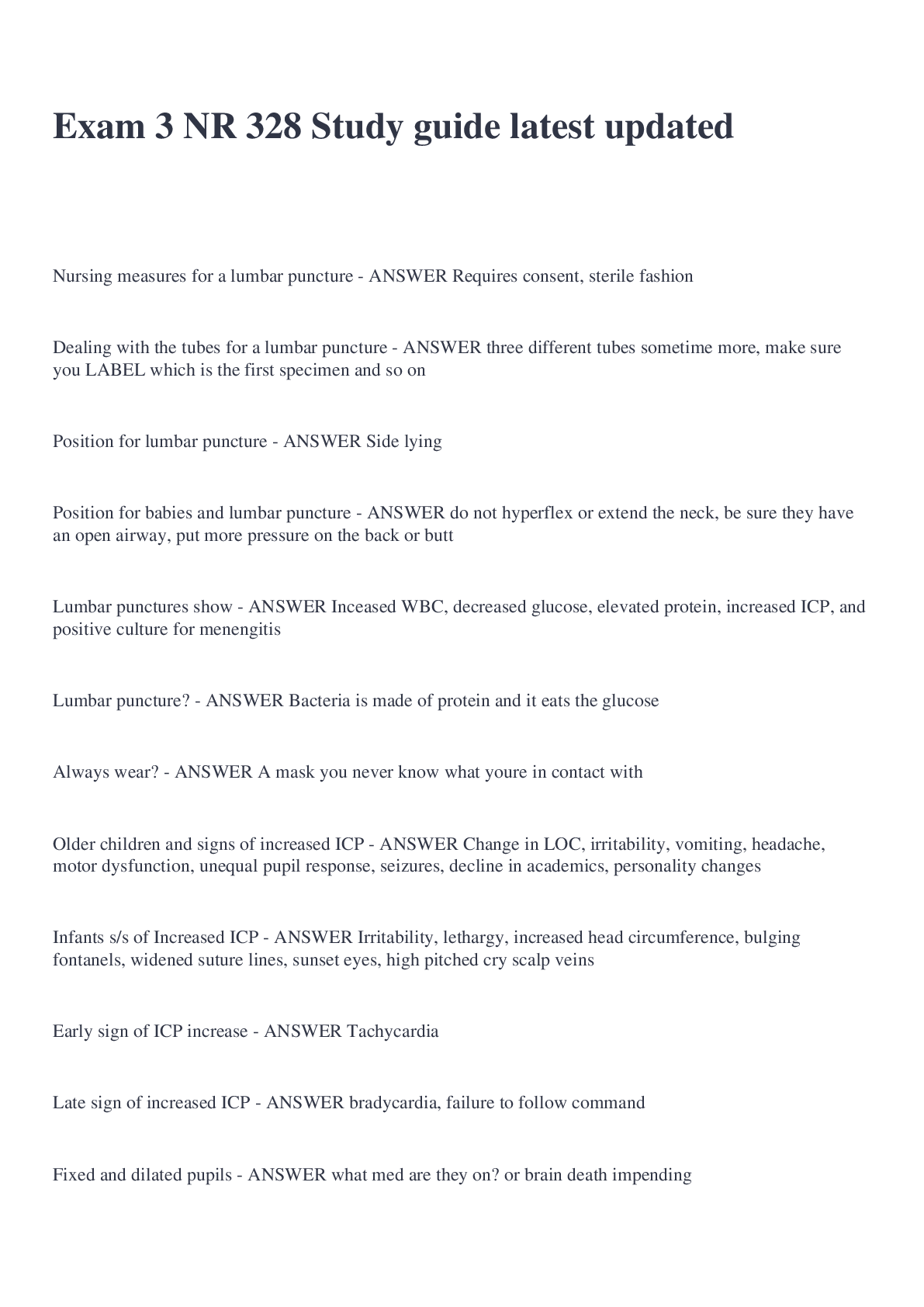
Nursing measures for a lumbar puncture
Requires consent, sterile fashion
Dealing with the tubes for a lumbar puncture
three different tubes sometime more, make sure you LABEL which is the first specimen and so o
...
Nursing measures for a lumbar puncture
Requires consent, sterile fashion
Dealing with the tubes for a lumbar puncture
three different tubes sometime more, make sure you LABEL which is the first specimen and so on
Position for lumbar puncture
Side lying
Position for babies and lumbar puncture
do not hyperflex or extend the neck, be sure they have an open airway, put more pressure on the back or butt
Lumbar punctures show
Inceased WBC, decreased glucose, elevated protein, increased ICP, and positive culture for menengitis
Lumbar puncture?
Bacteria is made of protein and it eats the glucose
Always wear?
A mask you never know what youre in contact with
Older children and signs of increased ICP
Change in LOC, irritability, vomiting, headache, motor dysfunction, unequal pupil response, seizures, decline in academics, personality changes
Infants s/s of Increased ICP
Irritability, lethargy, increased head circumference, bulging fontanels, widened suture lines, sunset eyes, high pitched cry scalp veins
Early sign of ICP increase
Tachycardia
Late sign of increased ICP
bradycardia, failure to follow command
Fixed and dilated pupils
what med are they on? or brain death impending
cushing reflex
when the pulse pressures are widened (ex: 200/68)
What is an early most important indicator of change in neuro status?
LOC
Parent can detect change
Mom states baby has blank stair and doesnt get excited over favorite toy exc
Priorities with MVA
A= airway c-spine mobilization
B=breathing
C= circulation
D= disability
E= environment/exposure
F= full set of vitals , five interventions, family presence
G- Give comfort measure
H- head to toe exam
I Inspect
Circulation
carotid artery, 2 ivs, any bleeding
Disability
LOC and pupils
Enviorment/exposure
warm the room up expose them
Five interventions
EKG, pulse ox, foley, blood work, NG tube or oral gastric
NOTHING IN NOSE TILL CT COMES BACK
Inspect
look at back
Brudzinski sign
When the child lies down and you bring the head up and the legs rise up due to menginal irritation
Kernig sign
when the kid lays down and you flex the knee at 90* and straightening causes pain due to menginal irritation
Care for child with infectious meningitis
Wear a mask, gown, gloves for the first 24 hours once antibiotics is started, Droplet precautions, keep the lights dim, keep the noise level down, measure head circumference, implement seizure precautions, Head of bed slightly elevated with client on side if prescribed, Monitor I/Os Monitor hydration status and IV therapy carefully fluid retention is common
Viral meningitis
treat the symptoms, frequently caused by immunizations
Activities that increase ICP
Suctioning, coughing, straining and turning
Reye syndrome
Caused from a viral illness and giving aspirin
Reye syndrome Dx
Liver biopsy
Reye syndrome care
Monitor for S/s of increased ICP, I/Os assess coagulation factor (PT, PTT) monitor for bleeding
Nursing care for a seizure
Maintain airway turn client on side, do not restrain client, protect head, if in chair lower to floor, may need a helmet, time the seizure, do they breath how long is it,
What are seizure precautions
Reduce enviormental stimuli, pad side rails, suction equitment, oxygen ready,
Child has a seizure at home how do we administer meds
rectally inject the med into the rectum and be sure to squeeze the butt checks as best as possible
If meds do not work?
Ketogenic diet (very fatty diet), vagus nerve simulator( children >12) or surgery (very last resort)
Meds for tonic clonic seizures
phenytoin (dilantin) carbamazepine (Tegratol), phenobabital (luminal) and fosphenytoin (Cerebyx)
Meds for absence seizure
ethosuxmide *Zarontin), valproic acid (depakene)
Do not take phenobabital with?
milk take on empty stomach
Tonic seizure
eyes roll upwards, lose consciousness, stiffen, tonic contractions of body. See apnea, may see cyanosis
Clonic seizures
jerking movement, with contraction and relaxation of extremities. May last from seconds to > 30 min.
Status epilepticus
series of seizures not allowing time to regain consciousness in between, or a single seizure lasting > 30 min. Can lead to death.
Absence
Brief loss of consciousness, with minimal or
[Show More]