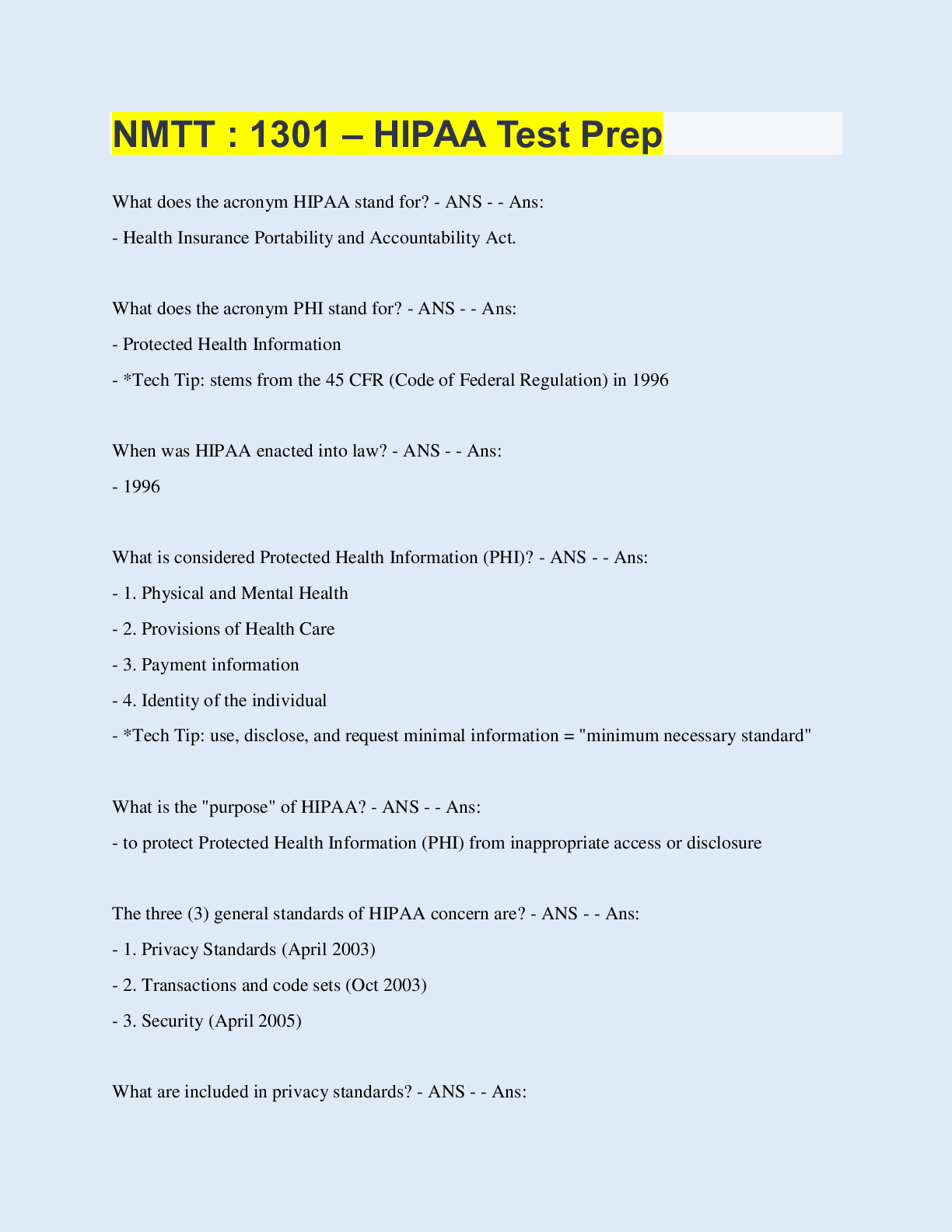
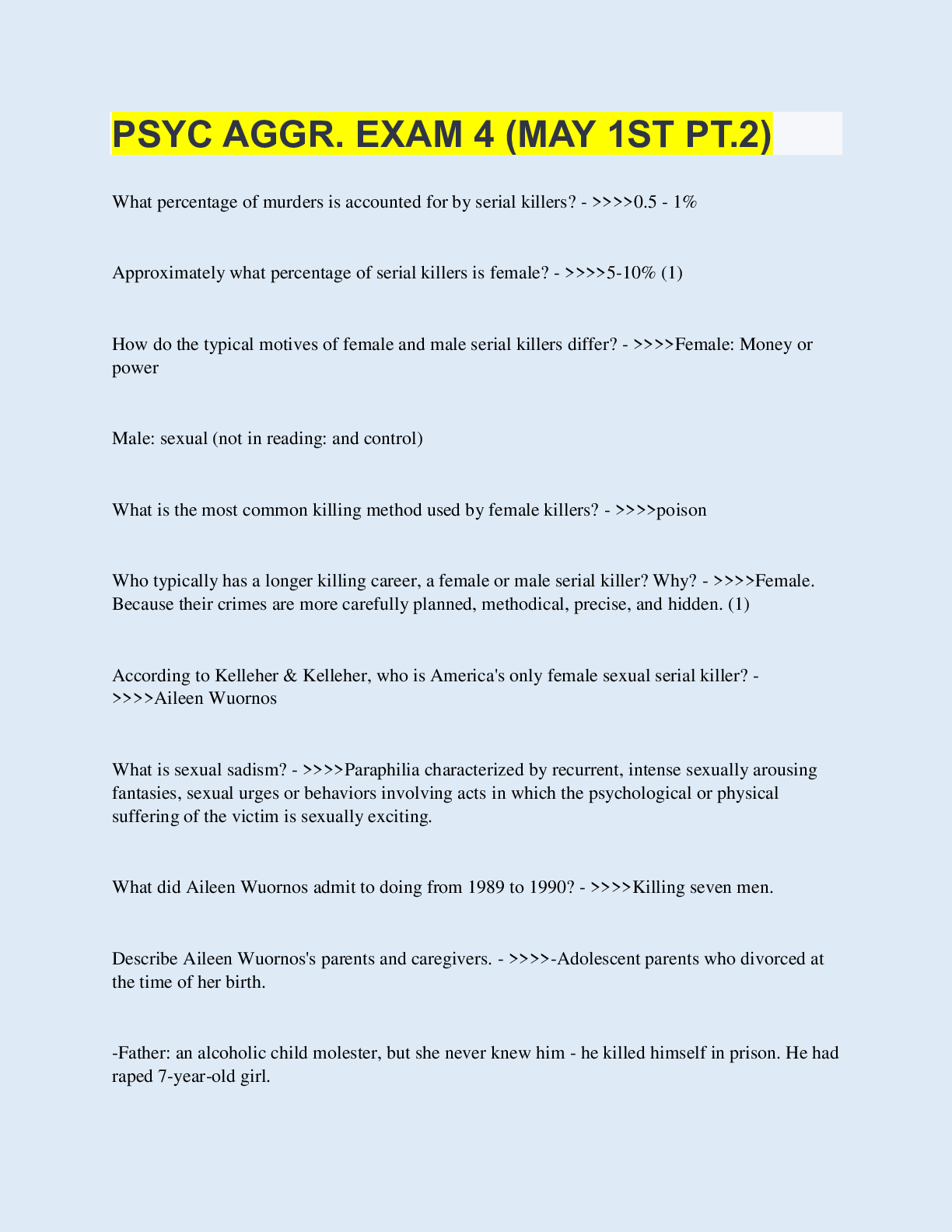
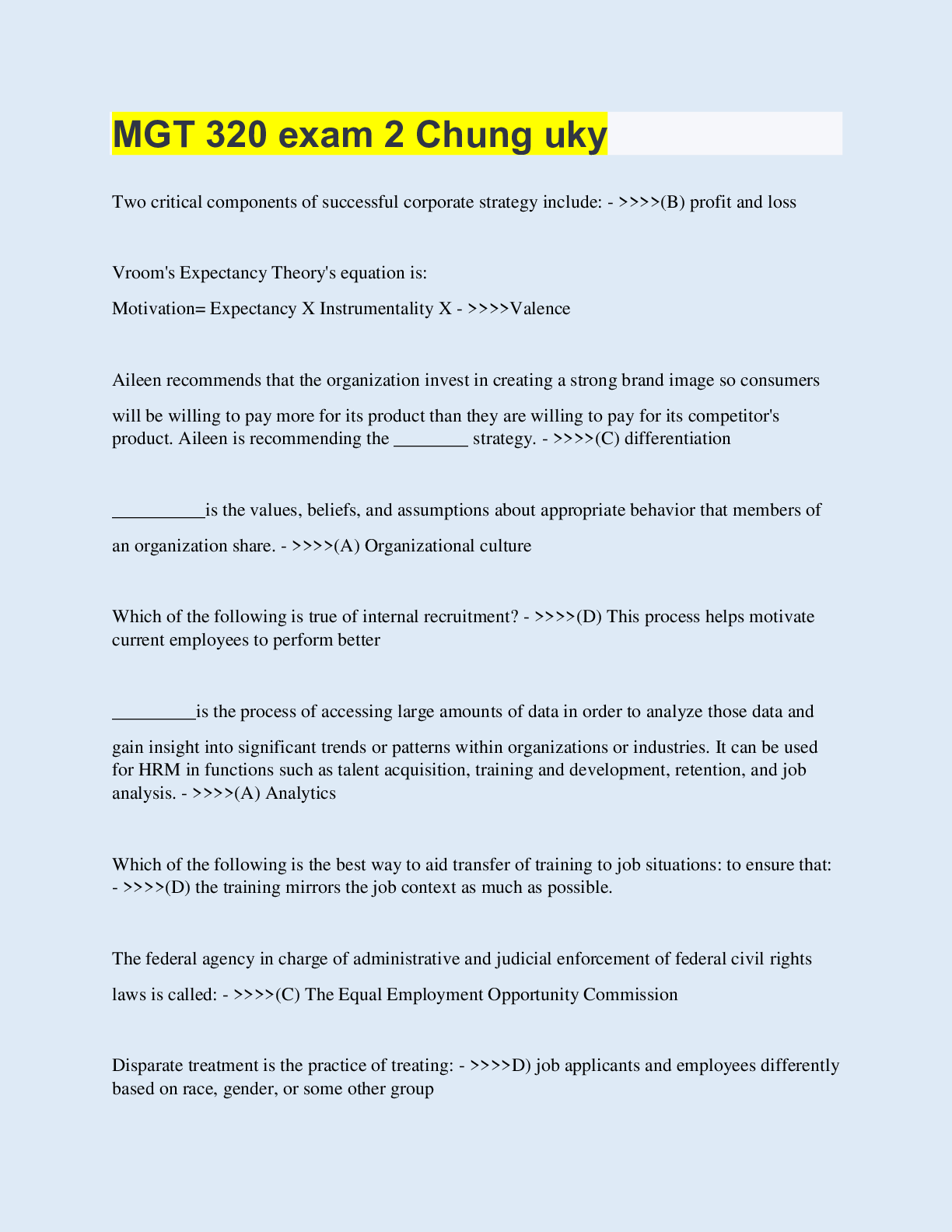
1. Conglomerate Corporation owns a little more than half the stock of Giant Company.
Conglomerate's stock, in turn, is public, available on the public stock exchange, as is the
remainder of the stock in Giant Company.
...
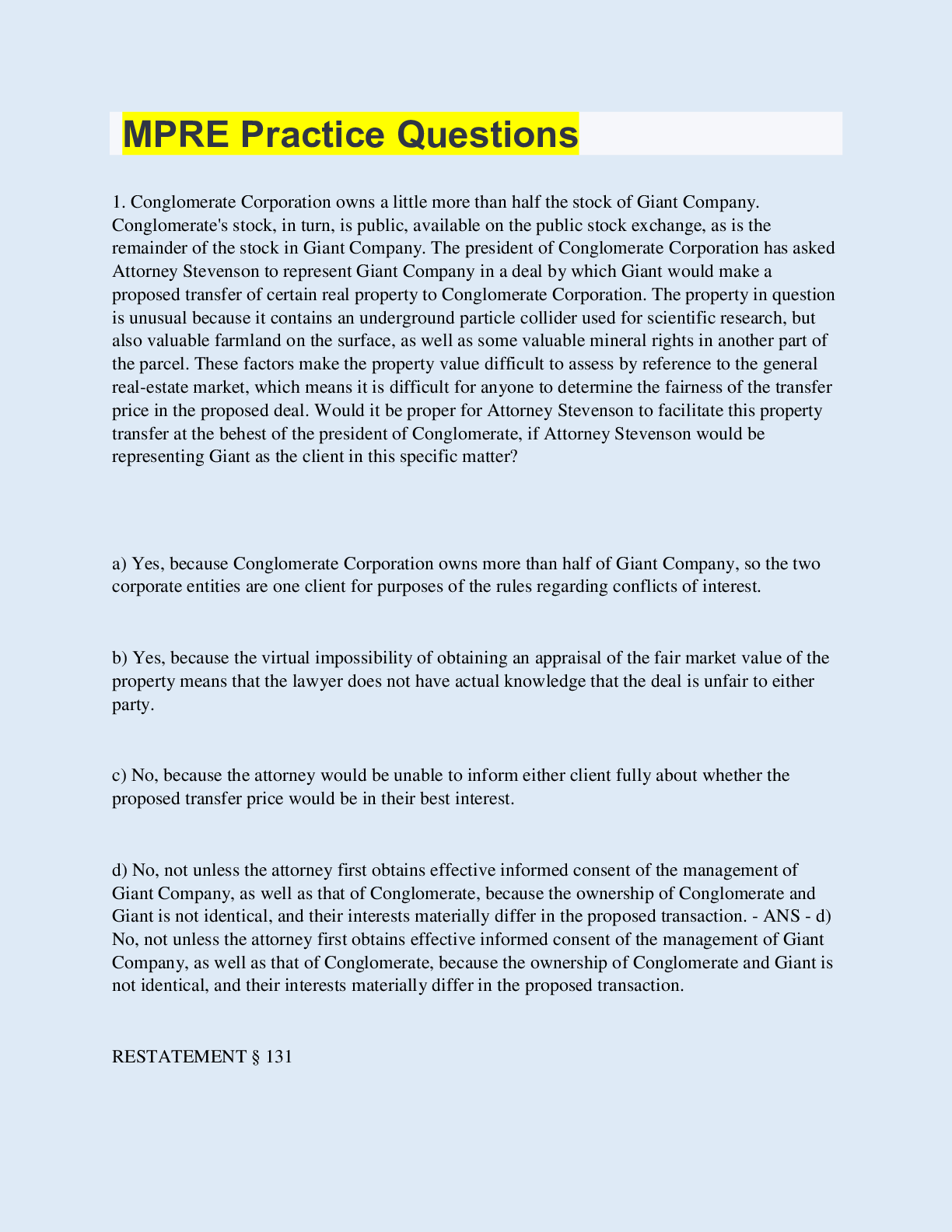
1. Conglomerate Corporation owns a little more than half the stock of Giant Company.
Conglomerate's stock, in turn, is public, available on the public stock exchange, as is the
remainder of the stock in Giant Company. The president of Conglomerate Corporation has asked
Attorney Stevenson to represent Giant Company in a deal by which Giant would make a
proposed transfer of certain real property to Conglomerate Corporation. The property in question
is unusual because it contains an underground particle collider used for scientific research, but
also valuable farmland on the surface, as well as some valuable mineral rights in another part of
the parcel. These factors make the property value difficult to assess by reference to the general
real-estate market, which means it is difficult for anyone to determine the fairness of the transfer
price in the proposed deal. Would it be proper for Attorney Stevenson to facilitate this property
transfer at the behest of the president of Conglomerate, if Attorney Stevenson would be
representing Giant as the client in this specific matter?
a) Yes, because Conglomerate Corporation owns more than half of Giant Company, so the two
corporate entities are one client for purposes of the rules regarding conflicts of interest.
b) Yes, because the virtual impossibility of obtaining an appraisal of the fair market value of the
property means that the lawyer does not have actual knowledge that the deal is unfair to either
party.
c) No, because the attorney would be unable to inform either client fully about whether the
proposed transfer price would be in their best interest.
d) No, not unless the attorney first obtains effective informed consent of the management of
Giant Company, as well as that of Conglomerate, because the ownership of Conglomerate and
Giant is not identical, and their interests materially differ in the proposed transaction. - ANS - d)
No, not unless the attorney first obtains effective informed consent of the management of Giant
Company, as well as that of Conglomerate, because the ownership of Conglomerate and Giant is
not identical, and their interests materially differ in the proposed transaction.
[Show More]


.png)

.png)
.png)
.png)