Question 1.
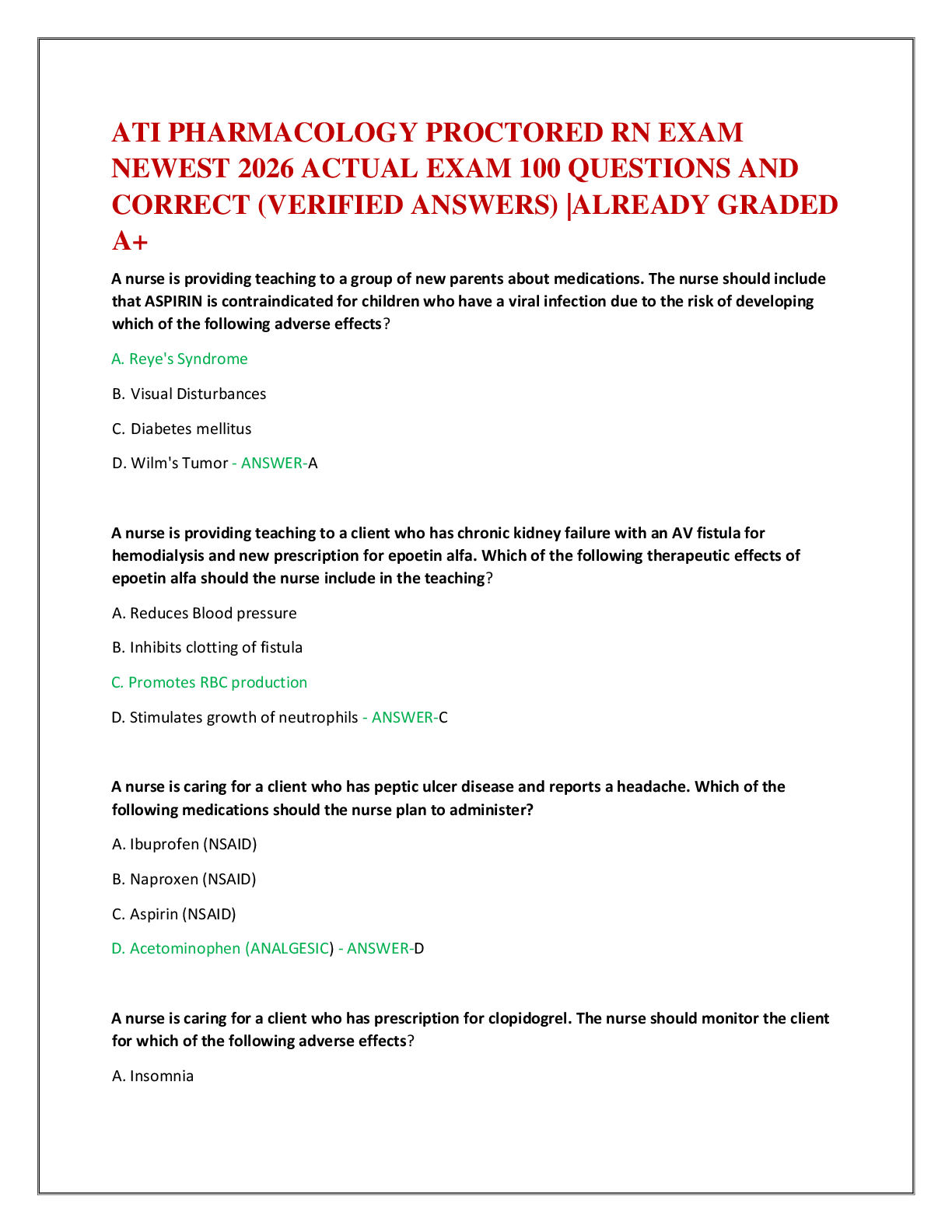
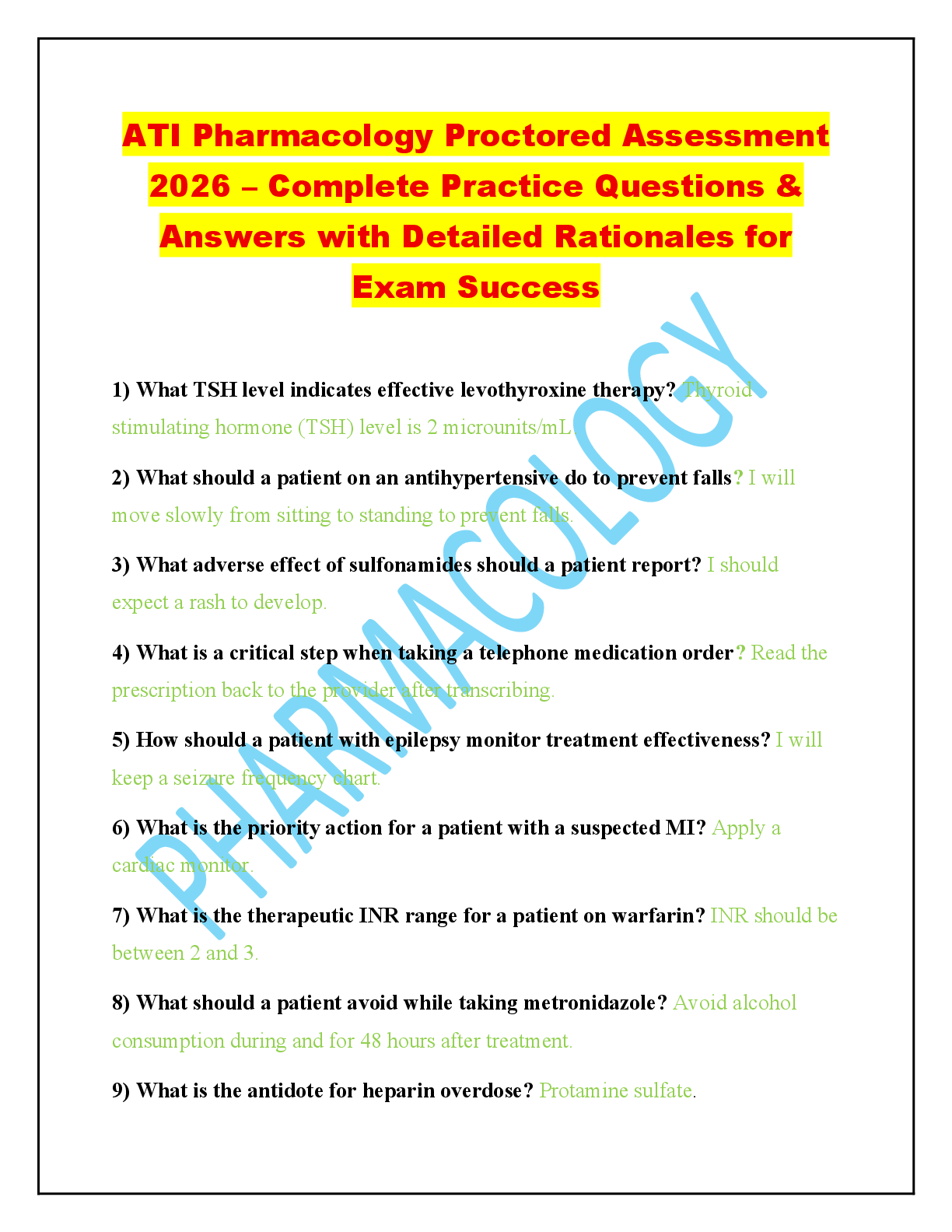
A patient newly diagnosed with hypothyroidism is prescribed Levothyroxine (Synthroid) 0.25 mg PO daily. After 6 weeks of treatment the nurse determines that the medication was effective if the:
Question 2
...
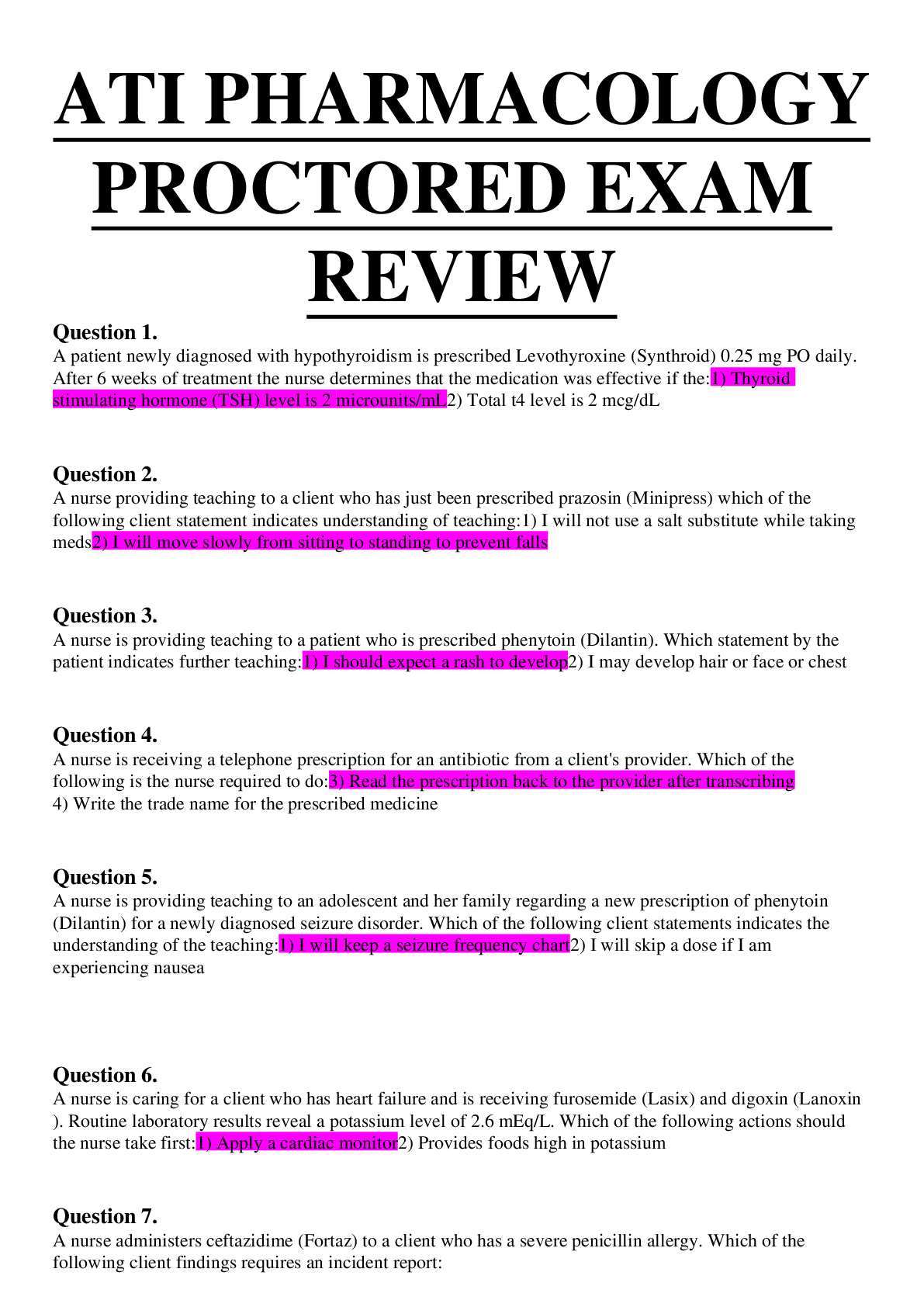
Question 1.
A patient newly diagnosed with hypothyroidism is prescribed Levothyroxine (Synthroid) 0.25 mg PO daily. After 6 weeks of treatment the nurse determines that the medication was effective if the:
Question 2.
A nurse providing teaching to a client who has just been prescribed prazosin (Minipress) which of the following client statement indicates understanding of teaching:
Question 3.
A nurse is providing teaching to a patient who is prescribed phenytoin (Dilantin). Which statement by the patient indicates further teaching:
Question 4.
A nurse is receiving a telephone prescription for an antibiotic from a client's provider. Which of the following is the nurse required to do:
Question 5.
A nurse is providing teaching to an adolescent and her family regarding a new prescription of phenytoin (Dilantin) for a newly diagnosed seizure disorder. Which of the following client statements indicates the understanding of the teaching:
Question 6.
A nurse is caring for a client who has heart failure and is receiving furosemide (Lasix) and digoxin (Lanoxin). Routine laboratory results reveal a potassium level of 2.6 mEq/L. Which of the following actions should the nurse take first:
Question 7.
A nurse administers ceftazidime (Fortaz) to a client who has a severe penicillin allergy. Which of the following client findings requires an incident report:
Question 8.
A nurse is providing teaching to a female client who has been newly diagnosed with a seizure disorder and has begun phenytoin (Dilantin). The nurse should tell the client that phenytoin can decrease the effectiveness of which of the following:
Question 9.
A nurse providing teaching to a client who is diagnosed with migrane headaches. The client is prescribed ergotamine (Ergostat) sublingual (SL). Which of the following should the nurse include in her instructions:
Question 10.
A nurse is reviewing a client's daily laboratory findings before administering 0.125 mg of digoxin (Lanoxin). The client's serum digoxin level is 0.7 ng/mL. Which of the following actions should the nurse take:
Question 11.
A nurse is planning to provide medication education for a client who will begin a course of therapy with metronidazole (Flagyl). Which of the following should the nurse instruct the client to avoid during the course of therapy:
Question 12.
A nurse is teaching a client who has heart failure about a new prescription for captopril (Capoten). Which of the following statements by the client indicates a need for further teaching:
Question 13.
A client is experiencing acute angle closure glaucoma and IV mannitol (Osmitrol) 25% is prescribed. Which of the following client findings should the nurse recognize as being the best indication that the medication is achieving it's therapeutic effect:
Question 14.
A nurse is educating a client who has a new prescription for simvastatin (Zacor). Which of the following instructions should the nurse include in the teaching plan: (Select all that apply):
Question 15.
A client taking IV heparin and oral warfarin (coumadin) for deep thrombosis. The client aPTT is 4x the normal value and his INR is 2. Which of the following actions should the nurse plan to take:
Question 16.
The nurse is caring for a client who is in labor. The client is receiving oxytocin (pitocin) by continuous IV infusion, piggy backed into a maintenance IV solution. The external FHR monitor indicates late decelerations. Which of the following actions should the nurse take first:
Question 17.
A nurse is providing teaching to a client taking bupropion (Zyban) as an aid to quit smoking. For which of the following side effects should the nurse assess the client:
Question 18.
A nurse is teaching a client about the use of resedronate (Actonel) to treat osteoporasis. Which of the following client statements indicates a need for further teaching:
Question 19.
A nurse is caring for a client who is receiving haloperidol (Haldol). For which of the following adverse effects should the nurse be observing:
Question 20.
A nurse is caring for a client who is receiving oprelvekin (Interleukin ll). which should the nurse document to indicate the effectiveness of the therapy:
Question 21.
A nurse is administering baclofen (Lioresal) for a client with a spinal cord injury. Which of the following should the nurse document as a therapeutic outcome:
Question 22.
A nurse is assessing a client who is receiving epoetin alfa (Procit) to treat anemia. For which should the nurse monitor related to this medication:
Question 23.
A nurse is planning teaching for a client who has depression and is to start a new prescription for tranylcypromine (Parnate). Which should be included in teaching:
Question 24.
Provide teaching new prescription: exenatide (Byetta) for Type 2 Diabetes. What should the nurse monitor and report:
Question 25.
A nurse is reveiwing lab results, for a patient who has chronic asthma and is taking prednisone (Deltasome) every other day. Which of the following lab values should the nurse report to the doctor:
Question 26.
A nurse is caring for a client receiving zidovudine (Retrovir) for which of the following lab results should the nurse prepare to monitor:
Question 27.
A client informs the nurse at the primary care providers office that he received a prescription for timolol (timoptic) to treat glaucoma. Which of the following in the client's history should concern you:
Question 28.
A mom of a newborn asks the nurse when her newborn should receive his 1st diptheria, tetanus, and pertusis vaccine (DTAP). Which of the following should the nurse say:
Question 29.
A nurse is preparing to administer warfarin (coumadin) to a client diagnosed with atrial fibrillation. Which action should the nurse take before administering warfarin:
Question 30.
A nurse caring for a client diagnosed with sickle cell anemia who is taking hydroxyurea (Droxia). Which findings should the nurse report- select all that apply:
Question 31.
A nurse assesses a patient with chronic back pain who is receving 650 mg acetaminophen (Tylenol) every 4 hours for pain. PCP has prescribed oxycodone/acetaminophen (Percocet) every 4 to 6 hours PRN for breakthrough pain. Which action should the nurse take:
[Show More]