ServSafe 7th Edition Exam
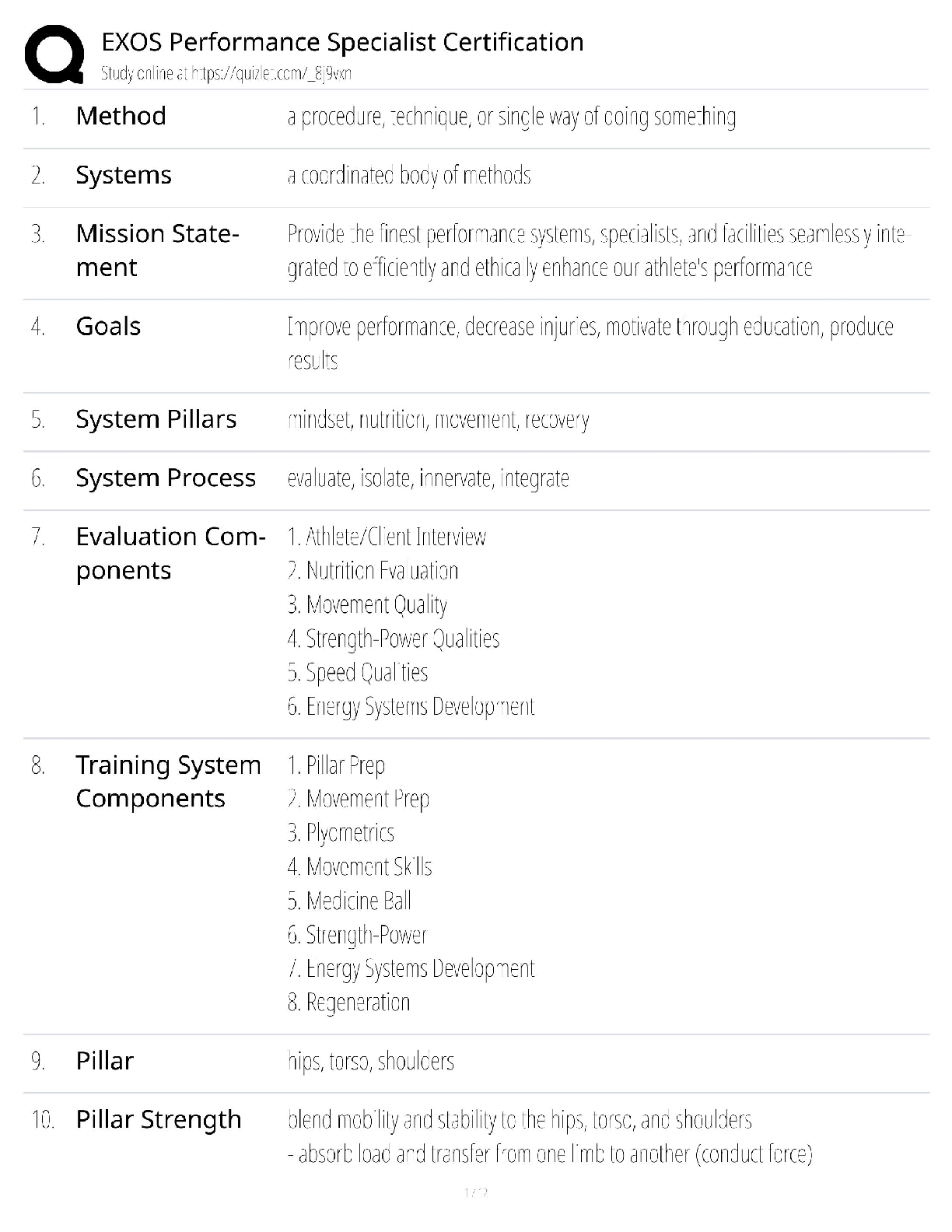
List the groups that are included in the high risk population for contracting a foodborne illness? - ANSWER - Elderly people
- Preschool-age children
- People w/ compromised immune systems
...
ServSafe 7th Edition Exam
List the groups that are included in the high risk population for contracting a foodborne illness? - ANSWER - Elderly people
- Preschool-age children
- People w/ compromised immune systems (patients in hospitals, taking certain medications, under-going cancer treatments, organ transplant recipients)
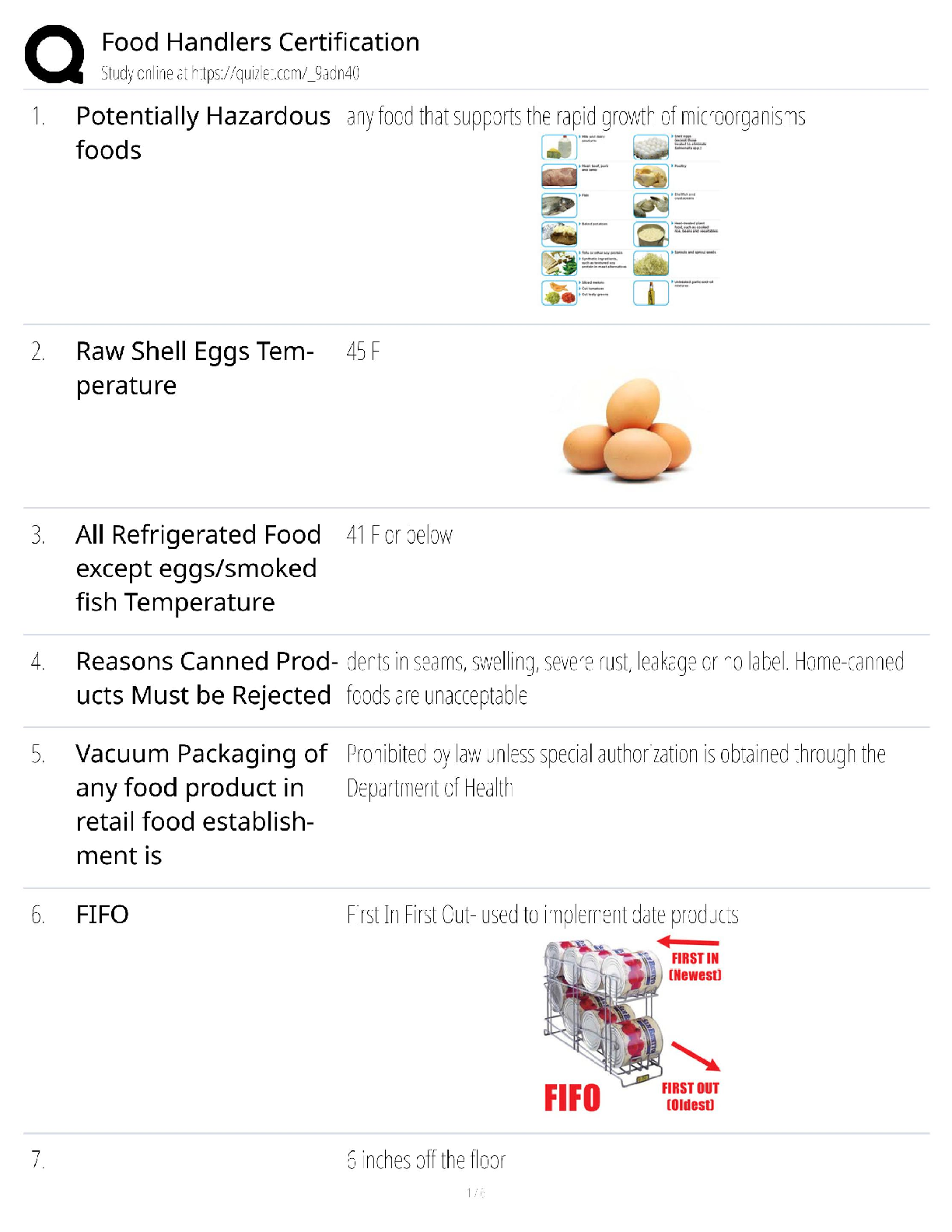
List the 13 potentially hazardous foods as discussed in the text. - ANSWER - Milk & dairy products
- Shell eggs
- Meat: beef, pork & lamb
- Poultry
- Fish
- Shellfish & crustaceans
- Baked potatoes
- Heat-treated plant food (cooked rice, beans & vegetables)
- Soy proteins
- Sprouts & sprout seeds
- Sliced melons, tomatoes & leafy greens
- Untreated garlic & oil mixtures
Define and give an example of a biological contaminant? - ANSWER An illness causing microorganisms that cause food borne illness. They include: viruses, parasites, fungi, mushroom, sea-food toxins & bacteria
What Acronym reminds us of what is needed for the growth of micro-organisms and what does each letter stand for? - ANSWER FATTOM
(Food, acidity, temperature, time, oxygen & moisture)
Define the requirements for the designation "food-borne infection" - ANSWER A person eats food containing pathogens, which then grow in the intestines and cause illness.
Which microorganisms are likely to be found in raw oysters? - ANSWER Vibrio Vulnificus
What are the requirements that are needed for bacteria to grow and reproduce? - ANSWER FATTOM
List 6 items that could lead to the contamination of food? - ANSWER 1. Purchasing food from unsafe sources
2. Failing to cook food adequately
3. Holding food at improper temperatures
4. Using contaminated equipment
5. Poor Personal Hygiene
6. Storing cleaning chemicals near food in the dry-storage area
Several customers were diagnosed with scombroid poisoning after eating mackerel at a local seafood restaurant. What could have caused this and how could it have been prevented? - ANSWER By purchasing the mackerel from a reputable supplier who practices strict time temperature control
An employee is preparing sandwiches in a deli. List some ways he/she might contaminate food? - ANSWER - Not sanitizing equipment
- Not practicing personal hygiene
- Not following safety standards
While chopping vegetables, a food handler cuts her finger. What should she do? - ANSWER She should wash her hands, cover the cut with a clean bandage or a finger cot, put a single-use glove over it and return to work.
List the 5 proper procedures for washing hands in the correct order. - ANSWER 1. Wet hands & arms
2. Apply soap
3. Scrub hands and arms vigorously for 10-15 seconds
4. Rinse hands & arms thoroughly
5. Dry hands and arms with a single-use paper towel or a hand dryer
An employee at a fine-dining Italian restaurant comes to work with a sore throat and fever but still desires to work. What should the manager have him do? - ANSWER Restrict the food handler from the working with exposed food, utensils, and equipment (host or hostess)
Exclude the food handler from the operation if you primarily serve a high-risk population
The food handler can return to the operation and/or work with or around food where he or she has a written release from a medical practitioner
Make a list of employee behaviors that pose a hazard to the safety of food? - ANSWER - Scratching the scalp
- Running fingers through the hair
- Wiping or touching the nose
- Rubbing an ear
- Touching a pimple or an infected wound/boil
- Wearing and touching a dirty uniform
- Wearing an apron to the restroom
- Coughing or sneezing into the hand
- Spitting in the operation
List different ways in which the temperature of food items can be checked. - ANSWER - Bimetallic stemmed thermometers
- Thermocouples
- Thermistors
What conditions indicate that a shipment of whole chicken is unacceptable? - ANSWER - purple or green discoloration around the neck
- stickiness under wings and around joints
- abnormal or unpleasant odor
What are the requirements for food items to be considered properly stored in a dry-storage area? - ANSWER - Out of sunlight
- 6in off the ground
- 50 - 70 degrees
- 50% - 60% humidity
What does the acronym (FIFO) stand for, and why should employees follow it? - ANSWER First-in, First-out.
Employees should follow it because it maintains quality and limits the growth of pathogens
Order of Storage - ANSWER Ready-to-eat food
Seafood
Whole cuts of beef and pork
Ground meat and ground fish
Whole and ground poultry
What are the proper methods for thawing food? - ANSWER In fridge @ < 41
- Apart of the cooking process
- Under < 70 degree water
- Microwave (if used immediately after)
List the steps, in order, for cooling potentially hazardous food. - ANSWER - Ice water bath
- Blast chiller
- Ice paddle
- Ice or cold water as ingredient
When reheating leftover foods for hot-holding, they should be reheated to at least: - ANSWER 165 within 2 hours
What are the requirements for potentially hazardous food cooked in a microwave oven? - ANSWER - cover the food
- rotate or stir half way through
- let stand for 2 mins after cooking
- check temp in multiple places
- cook foods to at least 165 in the microwave
List the ways in which plates, serving utensils, glassware, cups & silverware can become contaminated: - ANSWER - Touching the food-contact areas of dishes or glassware
-Stacking glasses when carrying them
-Holding flatware by food-contact surfaces
List ways in which foods can be held improperly for service. - ANSWER - Holding food without temperature control ( not above 135 )
- Corrective actions not taken
- No sneeze guards
What hazard is associated with allowing customers to reuse plates or silverware for refills at a self-service bar? - ANSWER Cross-contamination
A pan of lasagna is hot held at 125°F (52°C) for less than two hours. List the options available to you as a manager. - ANSWER Reheat to 165 within 2 hours
List the five most common risk factors for foodborne illness that have been identified by the Centers for Disease Control and Prevention's (CDC)? - ANSWER - Holding TCS foods at the wrong temperatures
- Cooking foods to the wrong temperatures
- Using contaminated utensils and equipment
[Show More]


![Preview of FDSC 1133 Exam 1 [Food Science Fundamentals] 140 Questions & 100% Verified Answers Grade A](https://browseimages.nyc3.digitaloceanspaces.com/paper-images/2026/04/01/znnLS2iB2026-04-01-01-4869cc4f56594bb.png)