Health Care  >  EXAMs  >  WGU Forensics and Network Intrusion - C702 (All)

WGU Forensics and Network Intrusion - C702

Document Content and Description Below

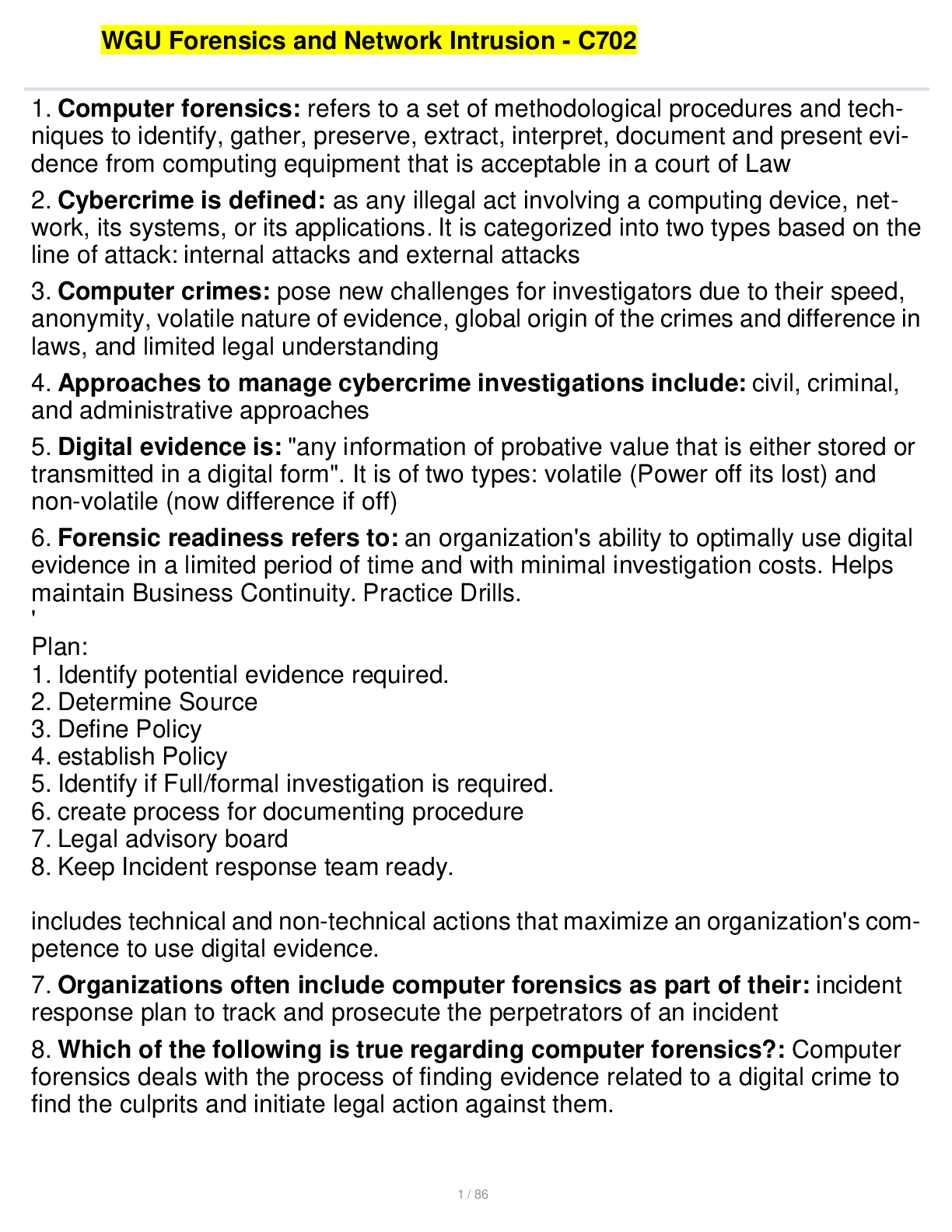
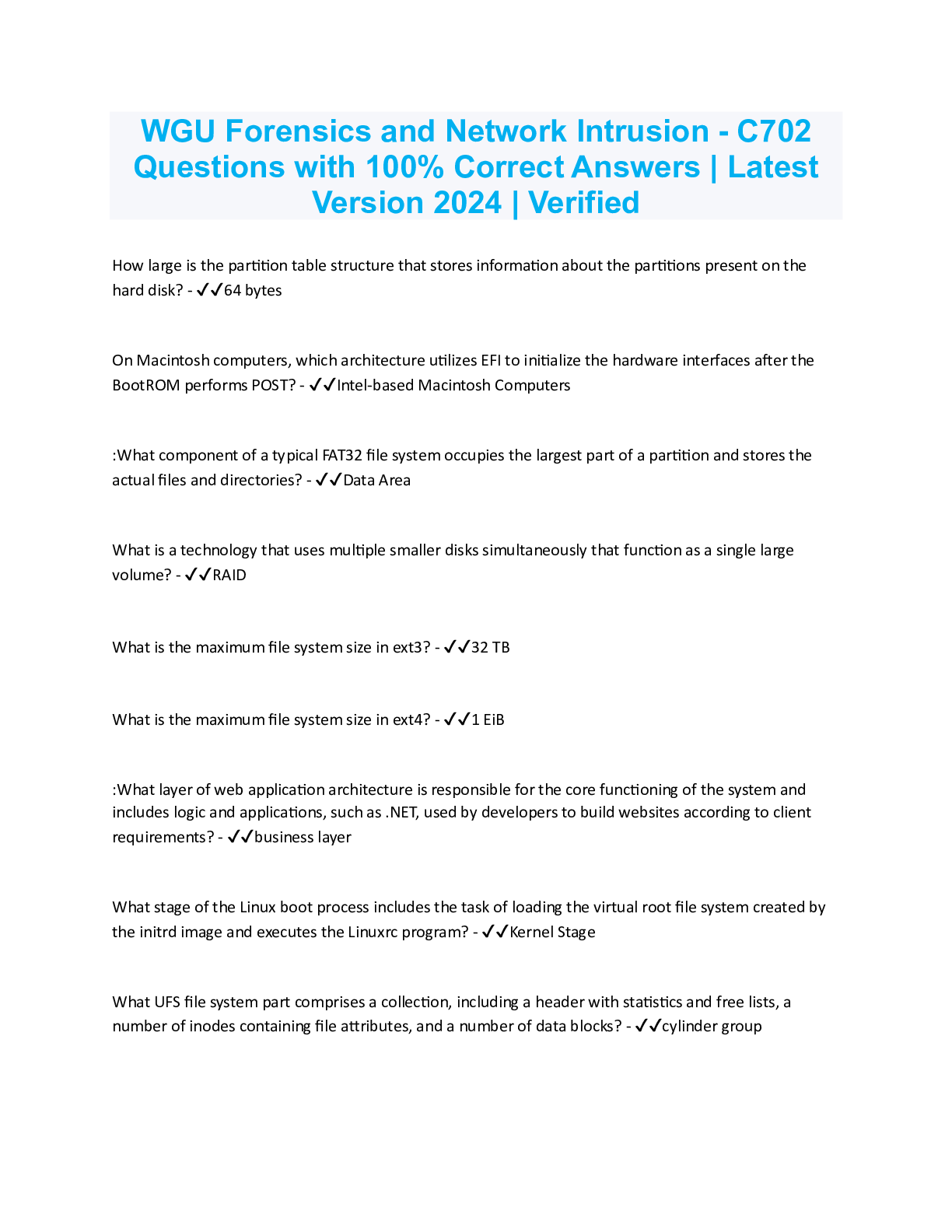
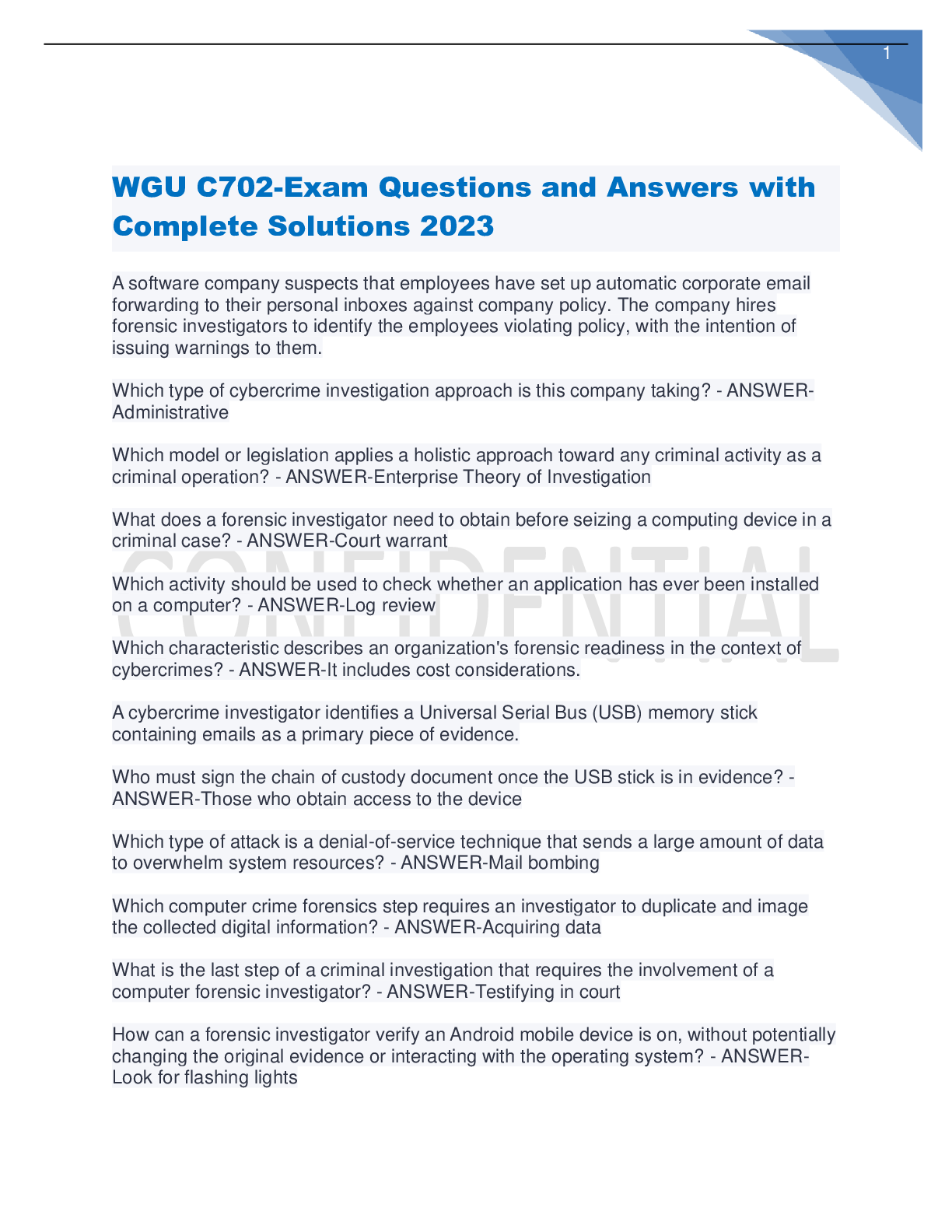
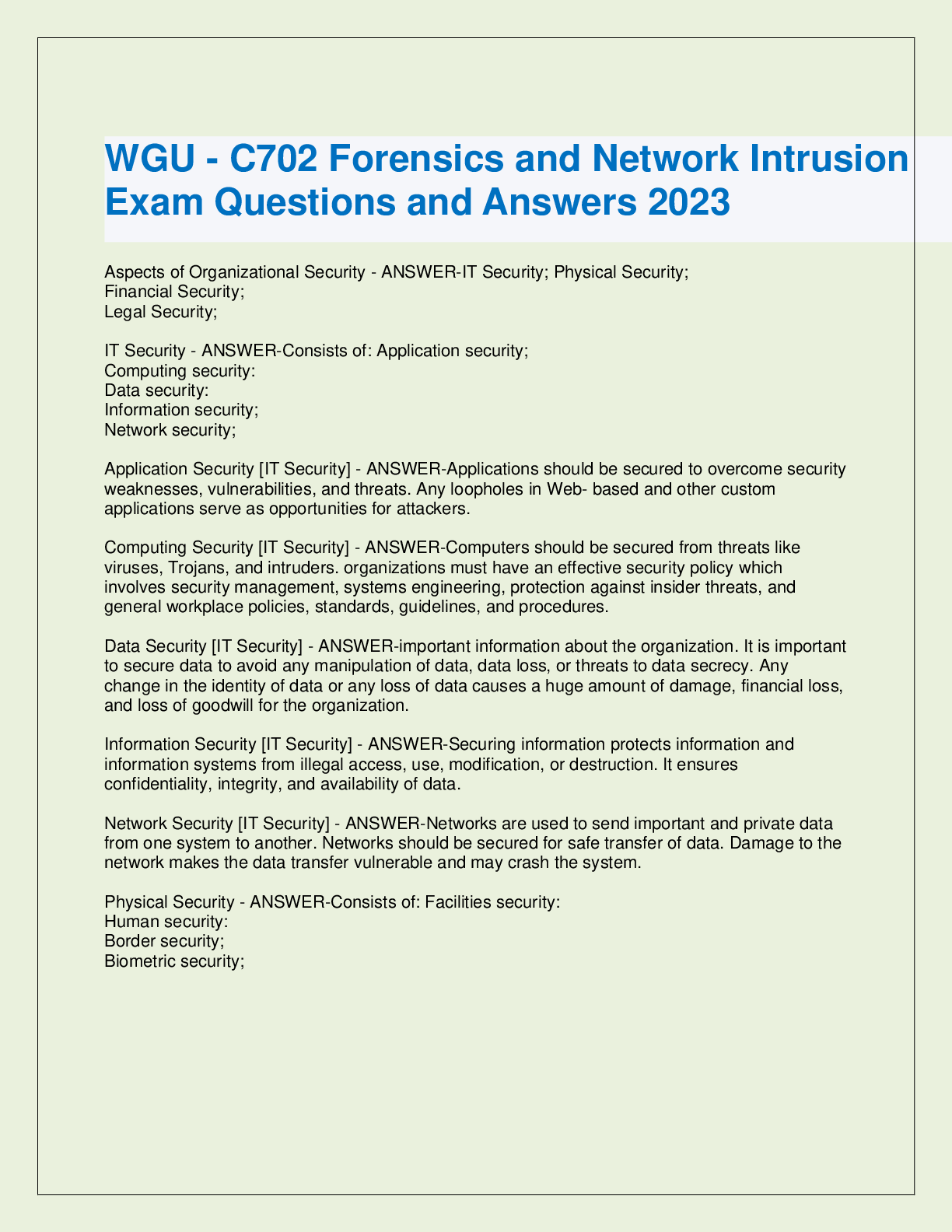
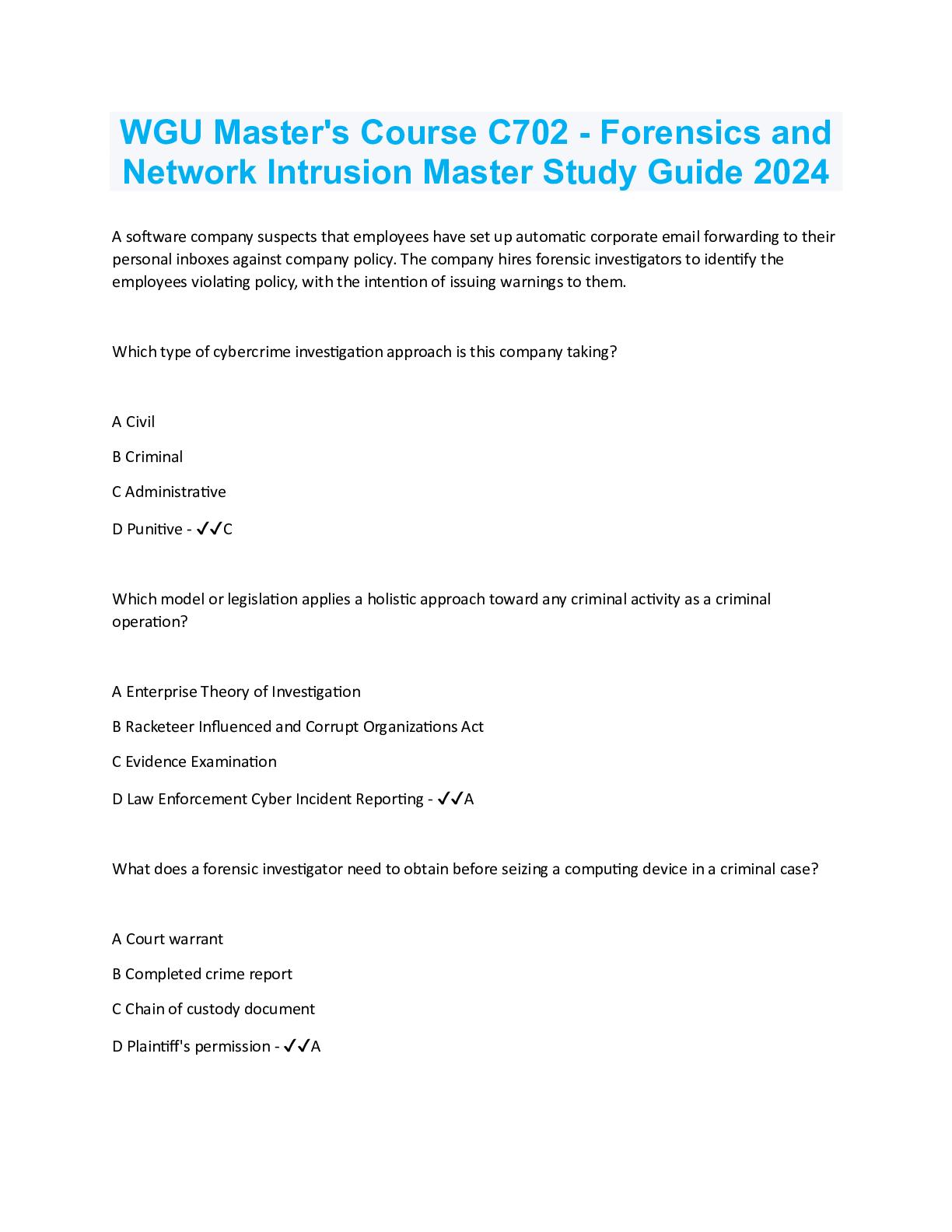
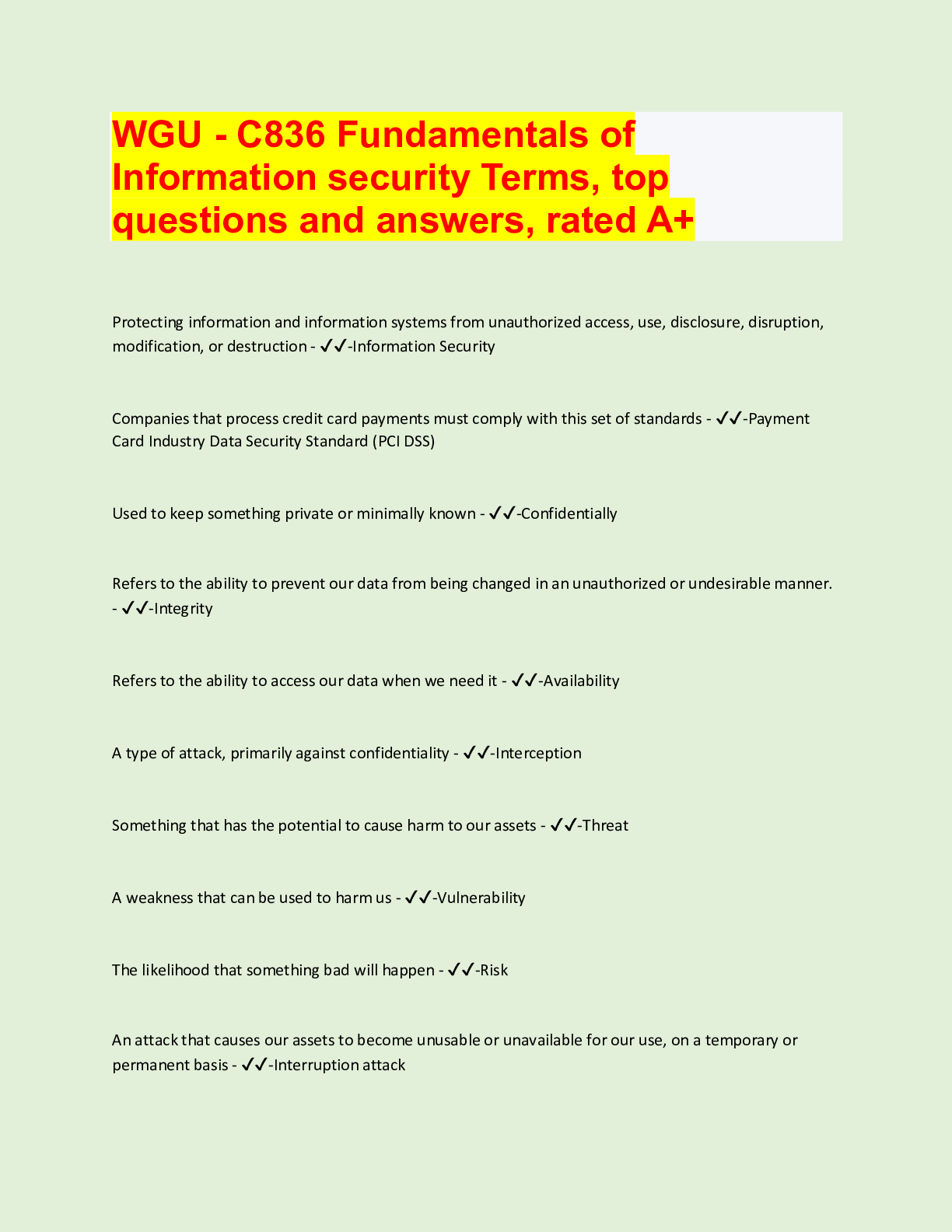
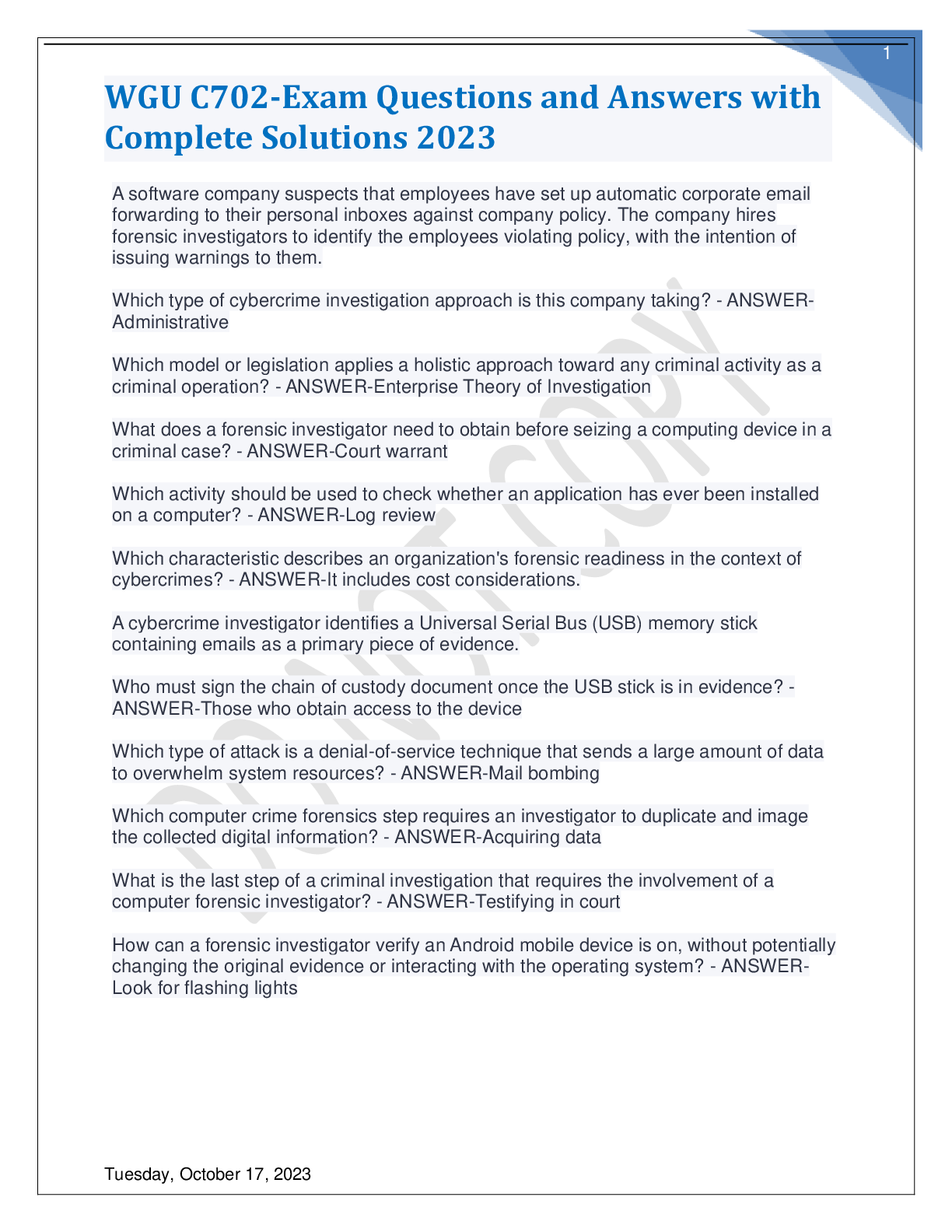
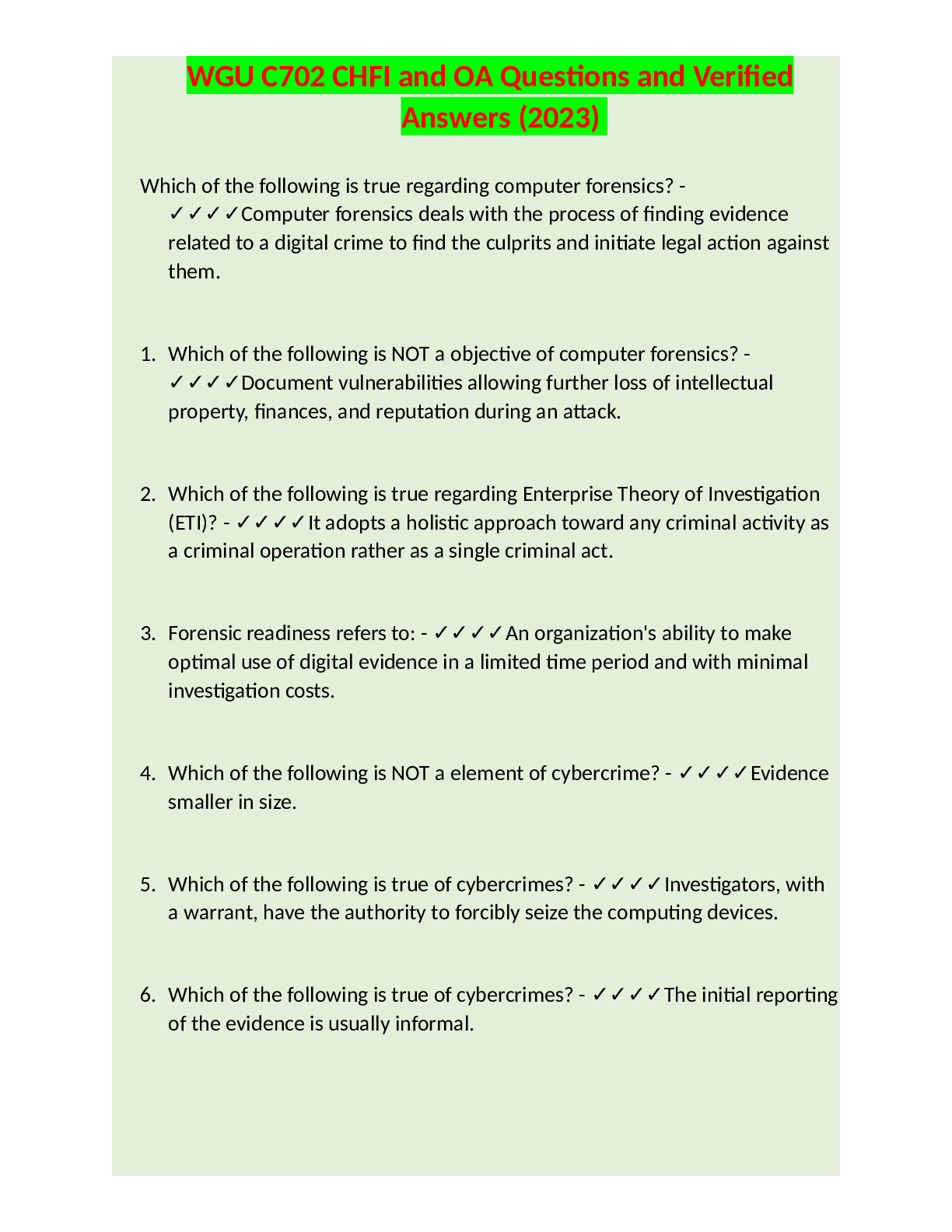
1. Computer forensics: refers to a set of methodological procedures and tech- niques to identify, gather, preserve, extract, interpret, document and present evi- dence from computing equipment that is ... acceptable in a court of Law 2. Cybercrime is defined: as any illegal act involving a computing device, net- work, its systems, or its applications. It is categorized into two types based on the line of attack: internal attacks and external attacks 3. Computer crimes: pose new challenges for investigators due to their speed, anonymity, volatile nature of evidence, global origin of the crimes and difference in laws, and limited legal understanding 4. Approaches to manage cybercrime investigations include: civil, criminal, and administrative approaches 5. Digital evidence is: "any information of probative value that is either stored or transmitted in a digital form". It is of two types: volatile (Power off its lost) and non-volatile (now difference if off) 6. Forensic readiness refers to: an organization's ability to optimally use digital evidence in a limited period of time and with minimal investigation costs. Helps maintain Business Continuity. Practice Drills. ' Plan: 1. Identify potential evidence required. 2. Determine Source 3. Define Policy 4. establish Policy 5. Identify if Full/formal investigation is required. 6. create process for documenting procedure 7. Legal advisory board 8. Keep Incident response team ready. includes technical and non-technical actions that maximize an organization's com- petence to use digital evidence. 7. Organizations often include computer forensics as part of their: incident response plan to track and prosecute the perpetrators of an incident 8. Which of the following is true regarding computer forensics?: Computer forensics deals with the process of finding evidence related to a digital crime to find the culprits and initiate legal action against them. 9. Which of the following is not an objective of computer forensics?: Doc- ument vulnerabilities allowing further loss of intellectual property, finances, and reputation during an attack. 10. What is not an impact of cybercrime?: Huge financial gain 11. Which of the following is true of cybercrimes?: Investigators, with a warrant, have the authority to forcibly seize the computing devices. 12. Which of the following is true of civil crimes?: The initial reporting of the evidence is generally informal. 13. Which of the following is a user-created source of potential evidence?: - Address book 14. Which of the following is a computer-created source of potential evi- dence?: Steganography 15. Under which of the following conditions will duplicate evidence not suf- fice?: When original evidence [Show More]

Last updated: 3 years ago

Preview 1 out of 86 pages

Buy Now

Instant download

We Accept:

Payment methods accepted on Scholarfriends (We Accept)
Preview image of WGU Forensics and Network Intrusion - C702 document

Buy this document to get the full access instantly

Instant Download Access after purchase

Buy Now

Instant download

We Accept:

Payment methods accepted on Scholarfriends (We Accept)

Reviews( 0 )

$11.00

Buy Now

We Accept:

Payment methods accepted on Scholarfriends (We Accept)

Instant download

Can't find what you want? Try our AI powered Search

41
0

Document information


Connected school, study & course


About the document


Uploaded On

Oct 14, 2022

Number of pages

86

Written in

All

Seller


Profile illustration for markstudys
markstudys

Member since 3 years

29 Documents Sold

Reviews Received
1
0
2
0
3
Additional information

This document has been written for:

Uploaded

Oct 14, 2022

Downloads

 0

Views

 41

Document Keyword Tags

Recommended For You

Get more on EXAMs »

$11.00
What is Scholarfriends

Scholarfriends.com Online Platform by Browsegrades Inc. 651N South Broad St, Middletown DE. United States.

We are here to help

We're available through e-mail, Twitter, Facebook, and live chat.
 FAQ
 Questions? Leave a message!

Follow us on
 Twitter

Copyright © Scholarfriends · High quality services·