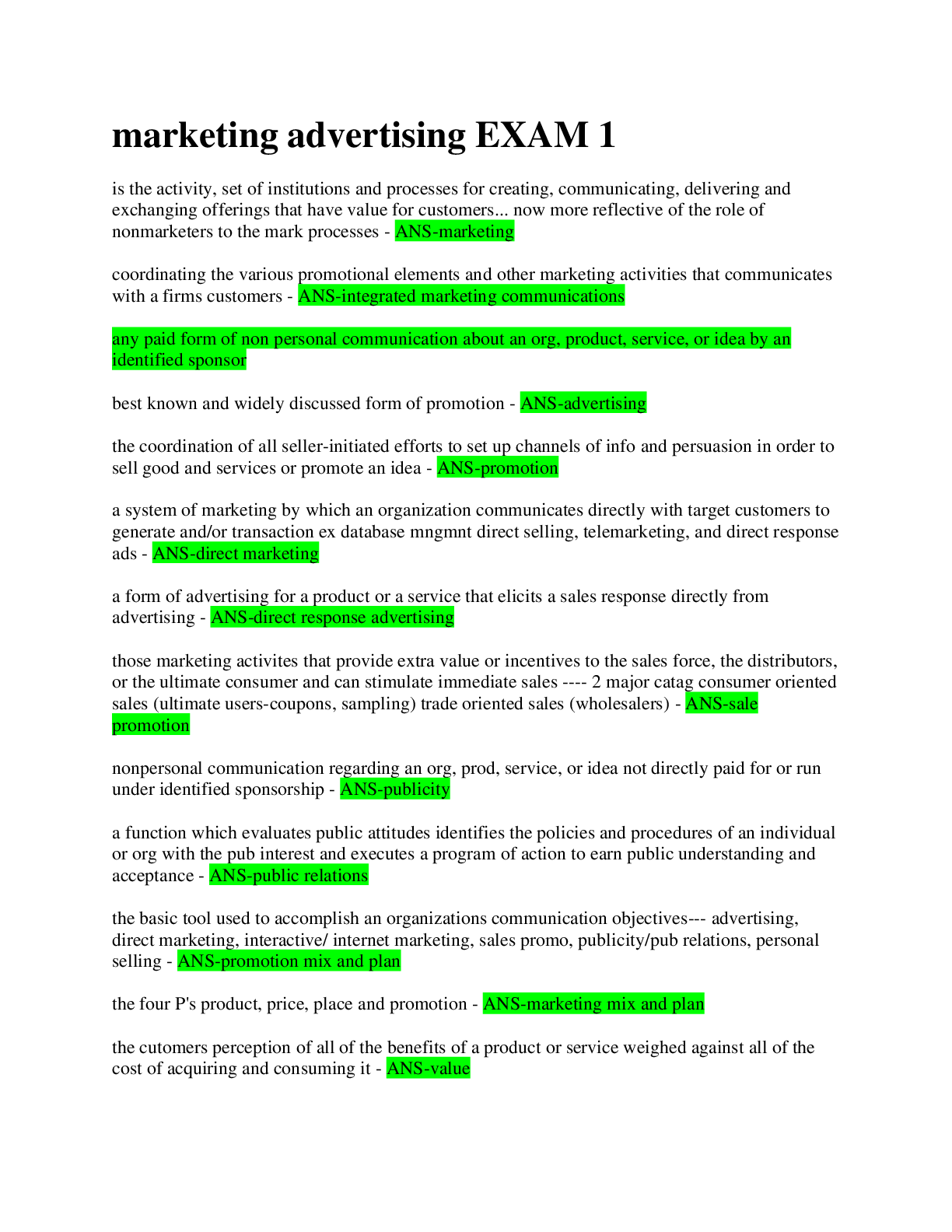
Explain the four functions of management
ANS - Planning - forming goals and strategies to achieve goals
Organizing - delegating tasks, assignments, and roles to achieve goals
Leading - motivating people to achieve goa
...
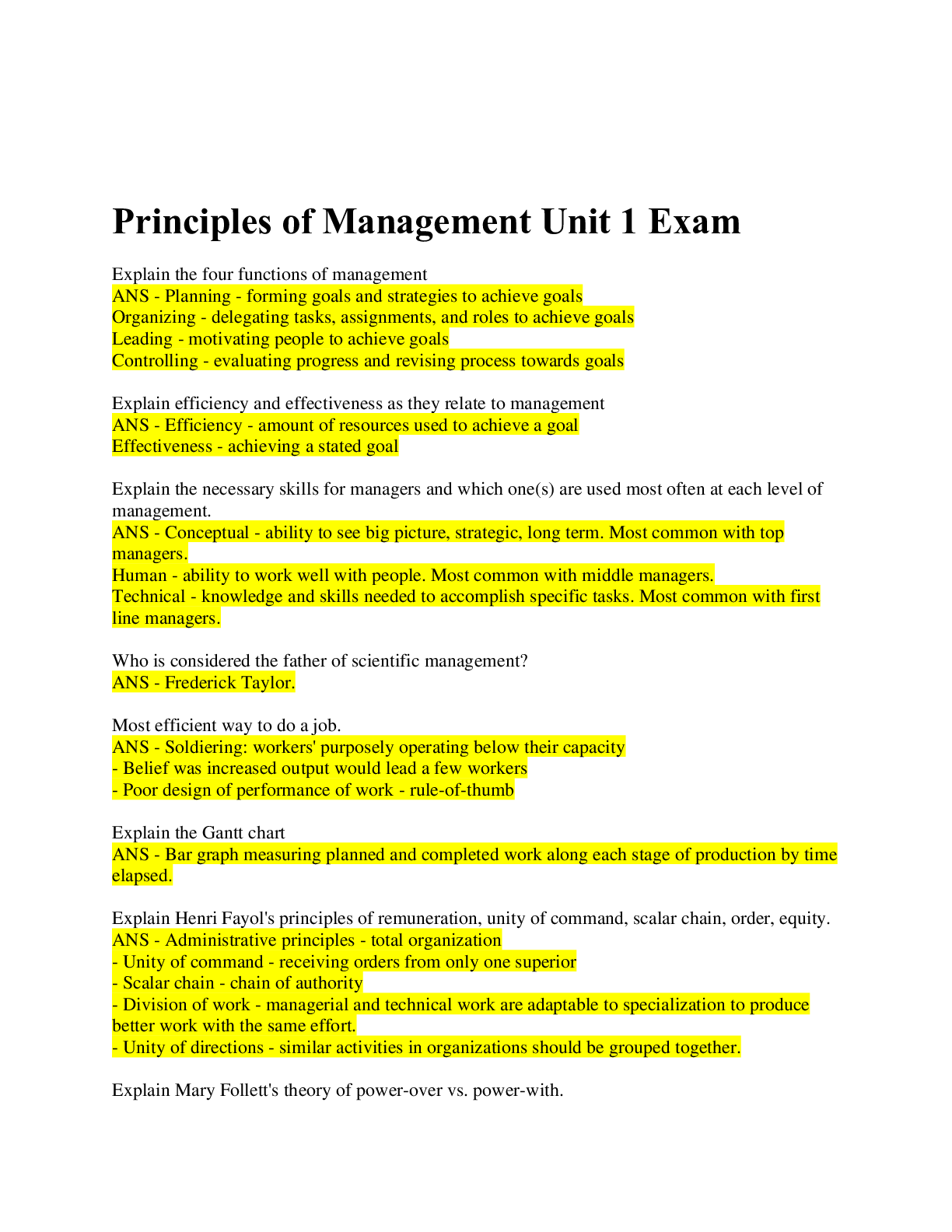
Explain the four functions of management
ANS - Planning - forming goals and strategies to achieve goals
Organizing - delegating tasks, assignments, and roles to achieve goals
Leading - motivating people to achieve goals
Controlling - evaluating progress and revising process towards goals
Explain efficiency and effectiveness as they relate to management
ANS - Efficiency - amount of resources used to achieve a goal
Effectiveness - achieving a stated goal
Explain the necessary skills for managers and which one(s) are used most often at each level of management.
ANS - Conceptual - ability to see big picture, strategic, long term. Most common with top managers.
Human - ability to work well with people. Most common with middle managers.
Technical - knowledge and skills needed to accomplish specific tasks. Most common with first line managers.
Who is considered the father of scientific management?
ANS - Frederick Taylor.
Most efficient way to do a job.
ANS - Soldiering: workers' purposely operating below their capacity
- Belief was increased output would lead a few workers
- Poor design of performance of work - rule-of-thumb
Explain the Gantt chart
ANS - Bar graph measuring planned and completed work along each stage of production by time elapsed.
Explain Henri Fayol's principles of remuneration, unity of command, scalar chain, order, equity.
ANS - Administrative principles - total organization
- Unity of command - receiving orders from only one superior
- Scalar chain - chain of authority
- Division of work - managerial and technical work are adaptable to specialization to produce better work with the same effort.
- Unity of directions - similar activities in organizations should be grouped together.
Explain Mary Follett's theory of power-over vs. power-with.
[Show More]

















.png)