Communication > QUESTIONS & ANSWERS > CLC 107 Exam Help (All)
CLC 107 Exam Help
Document Content and Description Below
Last updated: 3 years ago
Preview 1 out of 2 pages
Instant download

Buy this Document to get the Full Access Instantly
Provided by Students Who Aced it
We Verify Document Content to Gurantee Accuracy
Reviews( 0 )
Document information
Connected school, study & course
About the document
Uploaded On
Oct 18, 2022
Number of pages
2
Written in
All

Additional information
This document has been written for:
Uploaded
Oct 18, 2022
Downloads
0
Views
146
Topic Tags
Recommended For You
Get more on QUESTIONS & ANSWERS »
ANSWERED CLC 107 OPSEC Contract Requirements Exam (2 versions)...

CLC 107 OPSEC Contract Requirements DAU Exam Graded A+ 2022/20...
Test Bank for Communication Principles for a Lifetime 8th Edit...

Test Bank for Choices & Connections An Introduction to Communi...

Test Bank for Organizational Communication 8th Edition By Eric...
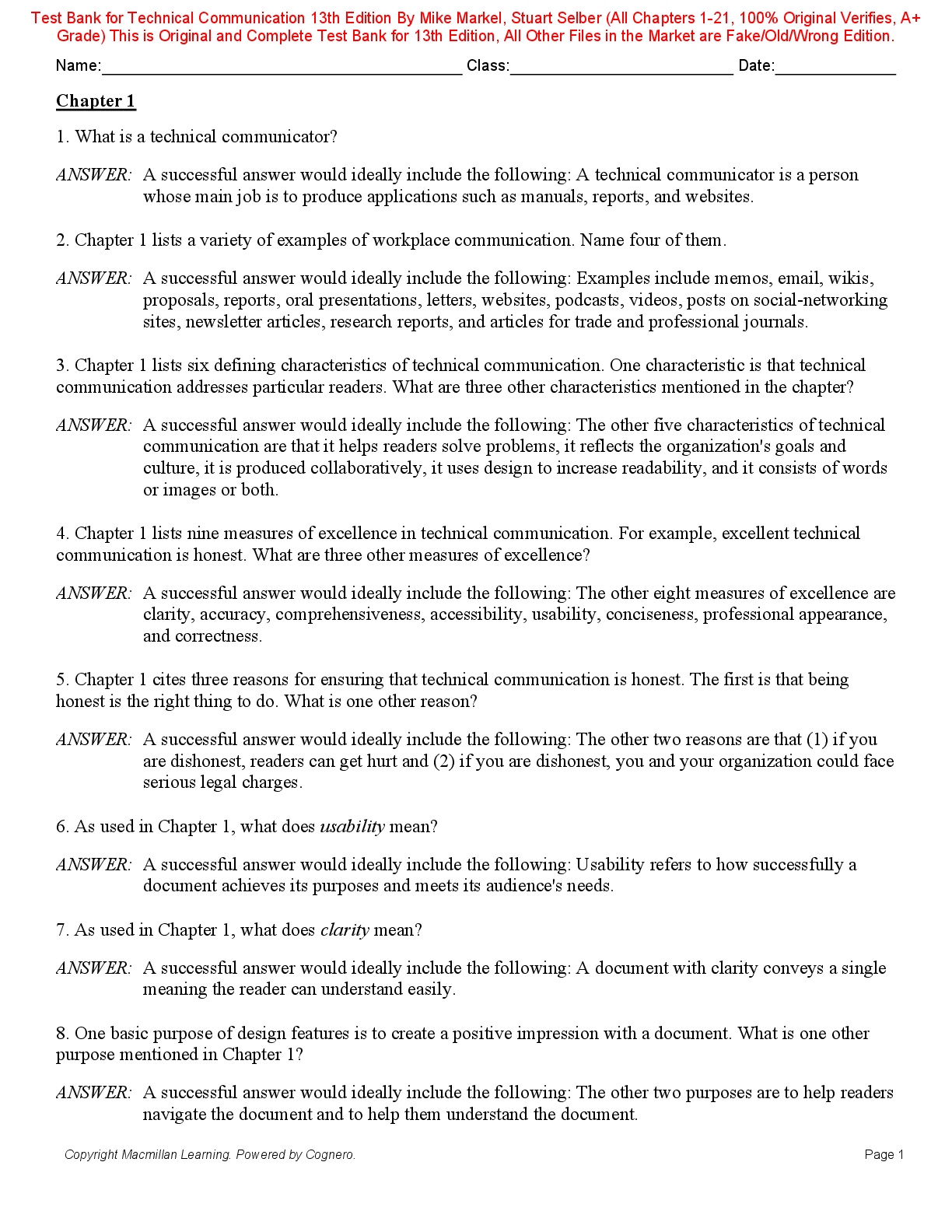
Technical Communication, 13e Mike Markel, Stuart Selber (Test...

Let's Communicate, 1e by Douglas Fraleigh, Joseph Tuman, Kathe...

Reflect & Relate, An Introduction to Interpersonal Communicati...

Real Communication, 5e Dan O'Hair, Mary Wiemann, Dorothy Mulli...

Interpersonal Communication, 2e Denise Solomon, Jennifer Theis...

Exploring Communication Theory Making Sense of Us, 2e Kory Flo...

Interpersonal Communication and You, 5e Steven McCornack (Test...
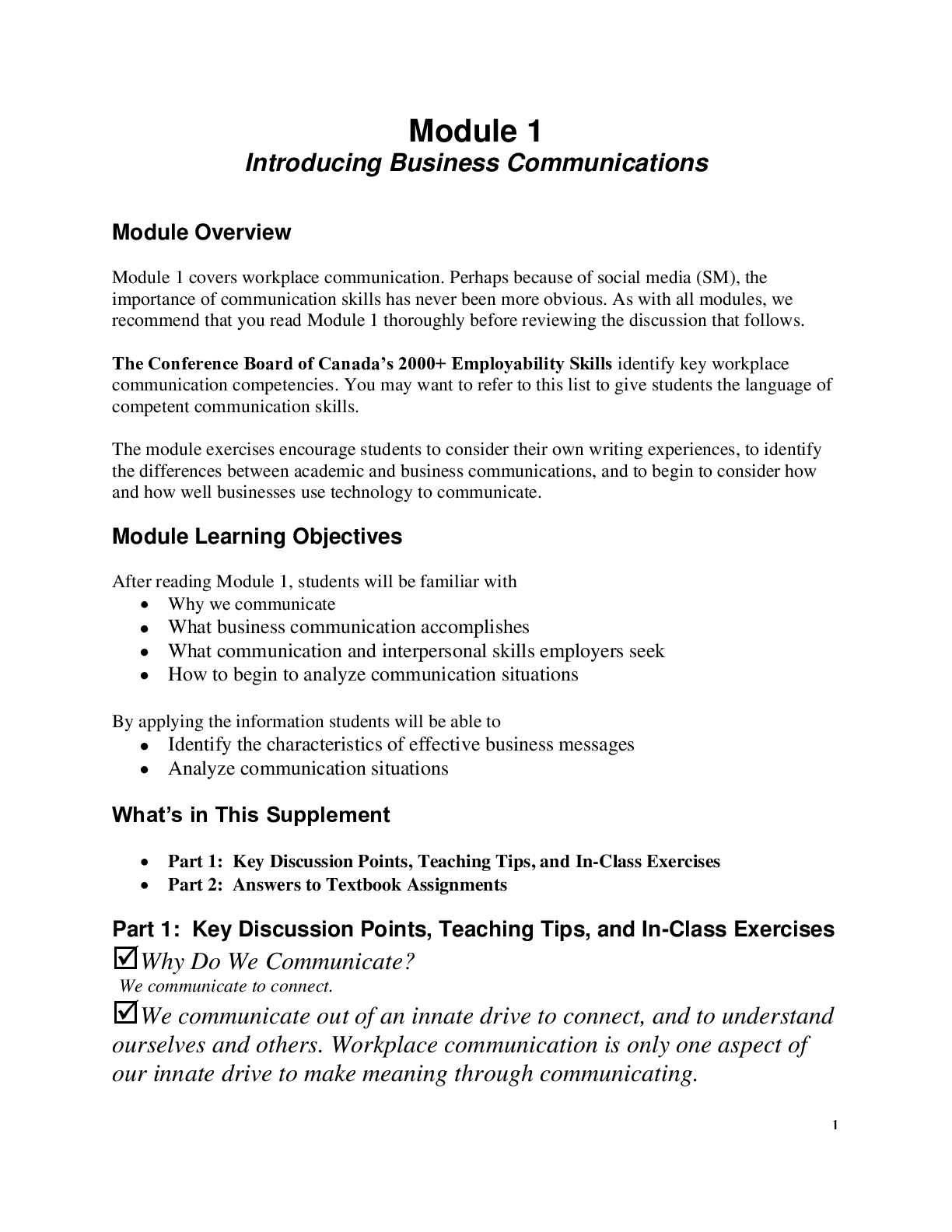
Business Communication, Building Critical Skills, 6th Canadian...

Test Bank for Communication in a Civil Society 1st Edition by...

Communication Embracing Difference, 4e Daniel Dunn , Lisa Good...