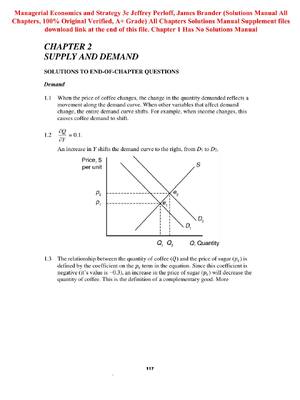
Introduction 1.1 Opinions, Products 1.2 Roadmap to the Book 1.3 Terminology 1.4 Notation 1.5 Cryptographically Protected Sessions 1.6 Active and Passive Attacks 1.7 Legal Issues 1.7.1 Patents 1.7.2 Government Regulations
...
Introduction 1.1 Opinions, Products 1.2 Roadmap to the Book 1.3 Terminology 1.4 Notation 1.5 Cryptographically Protected Sessions 1.6 Active and Passive Attacks 1.7 Legal Issues 1.7.1 Patents 1.7.2 Government Regulations 1.8 Some Network Basics 1.8.1 Network Layers 1.8.2 TCP and UDP Ports 1.8.3 DNS (Domain Name System) 1.8.4 HTTP and URLs 1.8.5 Web Cookies 1.9 Names for Humans 1.10 Authentication and Authorization 1.10.1 ACL (Access Control List) 1.10.2 Central Administration/Capabilities 1.10.3 Groups 1.10.4 Cross-Organizational and Nested Groups 1.10.5 Roles 1.11 Malware: Viruses, Worms, Trojan Horses 1.11.1 Where Does Malware Come From? 1.11.2 Virus Checkers 1.12 Security Gateway 1.12.1 Firewall 1.12.2 Application-Level Gateway/Proxy 1.12.3 Secure Tunnels 1.12.4 Why Firewalls Don’t Work 1.13 Denial-of-Service (DoS) Attacks 1.14 NAT (Network Address Translation) 1.14.1 Summary Chapter 2 Introduction to Cryptography 2.1 Introduction 2.1.1 The Fundamental Tenet of Cryptography 2.1.2 Keys 2.1.3 Computational Difficulty 2.1.4 To Publish or Not to Publish 2.1.5 Earliest Encryption 2.1.6 One-Time Pad (OTP) 2.2 Secret Key Cryptography 2.2.1 Transmitting Over an Insecure Channel 2.2.2 Secure Storage on Insecure Media 2.2.3 Authentication 2.2.4 Integrity Check 2.3 Public Key Cryptography 2.3.1 Transmitting Over an Insecure Channel 2.3.2 Secure Storage on Insecure Media 2.3.3 Authentication 2.3.4 Digital Signatures 2.4 Hash Algorithms 2.4.1 Password Hashing 2.4.2 Message Integrity 2.4.3 Message Fingerprint 2.4.4 Efficient Digital Signatures 2.5 Breaking an Encryption Scheme 2.5.1 Ciphertext Only 2.5.2 Known Plaintext 2.5.3 Chosen Plaintext 2.5.4 Chosen Ciphertext 2.5.5 Side-Channel Attacks 2.6 Random Numbers 2.6.1 Gathering Entropy 2.6.2 Generating Random Seeds 2.6.3 Calculating a Pseudorandom Stream from the Seed 2.6.4 Periodic Reseeding 2.6.5 Types of Random Numbers 2.6.6 Noteworthy Mistakes 2.7 Numbers 2.7.1 Finite Fields 2.7.2 Exponentiation 2.7.3 Avoiding a Side-Channel Attack 2.7.4 Types of Elements used in Cryptography 2.7.5 Euclidean Algorithm 2.7.6 Chinese Remainder Theorem 2.8 Homework Chapter 3 Secret Key Cryptography 3.1 Introduction 3.2 Generic Block Cipher Issues 3.2.1 Blocksize, Keysize 3.2.2 Completely General Mapping 3.2.3 Looking Random 3.3 Constructing a Practical Block Cipher 3.3.1 Per-Round Keys 3.3.2 S-boxes and Bit Shuffles 3.3.3 Feistel Ciphers 3.4 Choosing Constants 3.5 Data Encryption Standard (DES) 3.5.1 DES Overview 3.5.2 The Mangler Function 3.5.3 Undesirable Symmetries 3.5.4 What’s So Special About DES? 3.6 3DES (Multiple Encryption DES) 3.6.1 How Many Encryptions? 3.6.1.1 Encrypting Twice with the Same Key 3.6.1.2 Encrypting Twice with Two Keys 3.6.1.3 Triple Encryption with Only Two Keys 3.6.2 Why EDE Rather Than EEE? 3.7 Advanced Encryption Standard (AES) 3.7.1 Origins of AES 3.7.2 Broad Overview 3.7.3 AES Overview 3.7.4 Key Expansion 3.7.5 Inverse Rounds 3.7.6 Software Implementations of AES 3.8 RC4 3.9 Homework Chapter 4 Modes of Operation 4.1 Introduction 4.2 Encrypting a Large Message 4.2.1 ECB (Electronic Code Book) 4.2.2 CBC (Cipher Block Chaining) 4.2.2.1 Randomized ECB 4.2.2.2 CBC 4.2.2.3 CBC Threat—Modifying Ciphertext Blocks 4.2.3 CTR (Counter Mode) 4.2.3.1 Choosing IVs for CTR Mode 4.2.4 XEX (XOR Encrypt XOR) 4.2.5 XTS (XEX with Ciphertext Stealing) 4.3 Generating MACs 4.3.1 CBC-MAC 4.3.1.1 CBC Forgery Attack 4.3.2 CMAC 4.3.3 GMAC 4.3.3.1 GHASH 4.3.3.2 Transforming GHASH into GMAC 4.4 Ensuring Privacy and Integrity Together 4.4.1 CCM (Counter with CBC-MAC) 4.4.2 GCM (Galois/Counter Mode) 4.5 Performance Issues 4.6 Homework Chapter 5 Cryptographic Hashes 5.1 Introduction 5.2 The Birthday Problem 5.3 A Brief History of Hash Functions 5.4 Nifty Things to Do with a Hash 5.4.1 Digital Signatures 5.4.2 Password Database 5.4.3 Secure Shorthand of Larger Piece of Data 5.4.4 Hash Chains 5.4.5 Blockchain 5.4.6 Puzzles 5.4.7 Bit Commitment 5.4.8 Hash Trees 5.4.9 Authentication 5.4.10 Computing a MAC with a Hash 5.4.11 HMAC 5.4.12 Encryption with a Secret and a Hash Algorithm 5.5 Creating a Hash Using a Block Cipher 5.6 Construction of Hash Functions 5.6.1 Construction of MD4, MD5, SHA-1 and SHA-2 5.6.2 Construction of SHA-3 5.7 Padding 5.7.1 MD4, MD5, SHA-1, and SHA2-256 Message Padding 5.7.2 SHA-3 Padding Rule 5.8 The Internal Encryption Algorithms 5.8.1 SHA-1 Internal Encryption Algorithm 5.8.2 SHA-2 Internal Encryption Algorithm 5.9 SHA-3 f Function (Also Known as KECCAK-f) 5.10 Homework Chapter 6 First-Generation Public Key Algorithms 6.1 Introduction 6.2 Modular Arithmetic 6.2.1 Modular Addition 6.2.2 Modular Multiplication 6.2.3 Modular Exponentiation 6.2.4 Fermat’s Theorem and Euler’s Theorem 6.3 RSA 6.3.1 RSA Algorithm 6.3.2 Why Does RSA Work? 6.3.3 Why Is RSA Secure? 6.3.4 How Efficient Are the RSA Operations? 6.3.4.1 Exponentiating with Big Numbers 6.3.4.2 Generating RSA Keys 6.3.4.3 Why a Non-Prime Has Multiple Square Roots of One 6.3.4.4 Having a Small Constant e 6.3.4.5 Optimizing RSA Private Key Operations 6.3.5 Arcane RSA Threats 6.3.5.1 Smooth Numbers 6.3.5.2 The Cube Root Problem 6.3.6 Public-Key Cryptography Standard (PKCS) 6.3.6.1 Encryption 6.3.6.2 The Million-Message Attack 6.3.6.3 Signing 6.4 Diffie-Hellman 6.4.1 MITM (Meddler-in-the-Middle) Attack 6.4.2 Defenses Against MITM Attack 6.4.3 Safe Primes and the Small-Subgroup Attack 6.4.4 ElGamal Signatures 6.5 Digital Signature Algorithm (DSA) 6.5.1 The DSA Algorithm 6.5.2 Why Is This Secure? 6.5.3 Per-Message Secret Number 6.6 How Secure Are RSA and Diffie-Hellman? 6.7 Elliptic Curve Cryptography (ECC) 6.7.1 Elliptic Curve Diffie-Hellman (ECDH) 6.7.2 Elliptic Curve Digital Signature Algorithm (ECDSA) 6.8 Homework Chapter 7 Quantum Computing 7.1 What Is a Quantum Computer? 7.1.1 A Preview of the Conclusions 7.1.2 First, What Is a Classical Computer? 7.1.3 Qubits and Superposition 7.1.3.1 Example of a Qubit 7.1.3.2 Multi-Qubit States and Entanglement 7.1.4 States and Gates as Vectors and Matrices 7.1.5 Becoming Superposed and Entangled 7.1.6 Linearity 7.1.6.1 No Cloning Theorem 7.1.7 Operating on Entangled Qubits 7.1.8 Unitarity 7.1.9 Doing Irreversible Operations by Measurement 7.1.10 Making Irreversible Classical Operations Reversible 7.1.11 Universal Gate Sets 7.2 Grover’s Algorithm 7.2.1 Geometric Description 7.2.2 How to Negate the Amplitude of |k⟩ 7.2.3 How to Reflect All the Amplitudes Across the Mean 7.2.4 Parallelizing Grover’s Algorithm 7.3 Shor’s Algorithm 7.3.1 Why Exponentiation mod n Is a Periodic Function 7.3.2 How Finding the Period of ax mod n Lets You Factor n 7.3.3 Overview of Shor’s Algorithm 7.3.4 Converting to the Frequency Graph—Introduction 7.3.5 The Mechanics of Converting to the Frequency Graph 7.3.6 Calculating the Period 7.3.7 Quantum Fourier Transform 7.4 Quantum Key Distribution (QKD) 7.4.1 Why It’s Sometimes Called Quantum Encryption 7.4.2 Is Quantum Key Distribution Important? 7.5 How Hard Are Quantum Computers to Build? 7.6 Quantum Error Correction 7.7 Homework Chapter 8 Post-Quantum Cryptography 8.1 Signature and/or Encryption Schemes 8.1.1 NIST Criteria for Security Levels 8.1.2 Authentication 8.1.3 Defense Against Dishonest Ciphertext 8.2 Hash-based Signatures 8.2.1 Simplest Scheme – Signing a Single Bit 8.2.2 Signing an Arbitrary-sized Message 8.2.3 Signing Lots of Messages 8.2.4 Deterministic Tree Generation 8.2.5 Short Hashes 8.2.6 Hash Chains 8.2.7 Standardized Schemes 8.2.7.1 Stateless Schemes 8.3 Lattice-Based Cryptography 8.3.1 A Lattice Problem 8.3.2 Optimization: Matrices with Structure 8.3.3 NTRU-Encryption Family of Lattice Encryption Schemes 8.3.3.1 Bob Computes a (Public, Private) Key Pair 8.3.3.2 How Bob Decrypts to Find m 8.3.3.3 How Does this Relate to Lattices? 8.3.4 Lattice-Based Signatures 8.3.4.1 Basic Idea 8.3.4.2 Insecure Scheme 8.3.4.3 Fixing the Scheme 8.3.5 Learning with Errors (LWE) 8.3.5.1 LWE Optimizations 8.3.5.2 LWE-based NIST Submissions 8.4 Code-based Schemes 8.4.1 Non-cryptographic Error-correcting Codes 8.4.1.1 Invention Step 8.4.1.2 Codeword Creation Step 8.4.1.3 Misfortune Step 8.4.1.4 Diagnosis Step 8.4.2 The Parity-Check Matrix 8.4.3 Cryptographic Public Key Code-based Scheme 8.4.3.1 Neiderreiter Optimization 8.4.3.2 Generating a Public Key Pair 8.4.3.3 Using Circulant Matrices 8.5 Multivariate Cryptography 8.5.1 Solving Linear Equations 8.5.2 Quadratic Polynomials 8.5.3 Polynomial Systems 8.5.4 Multivariate Signature Systems 8.5.4.1 Multivariate Public Key Signatures 8.6 Homework Chapter 9 Authentication of People 9.1 Password-based Authentication 9.1.1 Challenge-Response Based on Password 9.1.2 Verifying Passwords 9.2 Address-based Authentication 9.2.1 Network Address Impersonation 9.3 Biometrics 9.4 Cryptographic Authentication Protocols 9.5 Who Is Being Authenticated? 9.6 Passwords as Cryptographic Keys 9.7 On-Line Password Guessing 9.8 Off-Line Password Guessing 9.9 Using the Same Password in Multiple Places 9.10 Requiring Frequent Password Changes 9.11 Tricking Users into Divulging Passwords 9.12 Lamport’s Hash 9.13 Password Managers 9.14 Web Cookies 9.15 Identity Providers (IDPs) 9.16 Authentication Tokens 9.16.1 Disconnected Tokens 9.16.2 Public Key Tokens 9.17 Strong Password Protocols 9.17.1 Subtle Details 9.17.2 Augmented Strong Password Protocols 9.17.3 SRP (Secure Remote Password) 9.18 Credentials Download Protocols 9.19 Homework Chapter 10 Trusted Intermediaries 10.1 Introduction 10.2 Functional Comparison 10.3 Kerberos 10.3.1 KDC Introduces Alice to Bob 10.3.2 Alice Contacts Bob 10.3.3 Ticket Granting Ticket (TGT) 10.3.4 Interrealm Authentication 10.3.5 Making Password-Guessing Attacks Difficult 10.3.6 Double TGT Protocol 10.3.7 Authorization Information 10.3.8 Delegation 10.4 PKI 10.4.1 Some Terminology 10.4.2 Names in Certificates 10.5 Website Gets a DNS Name and Certificate 10.6 PKI Trust Models 10.6.1 Monopoly Model 10.6.2 Monopoly plus Registration Authorities (RAs) 10.6.3 Delegated CAs 10.6.4 Oligarchy 10.6.5 Anarchy Model 10.6.6 Name Constraints 10.6.7 Top-Down with Name Constraints 10.6.8 Multiple CAs for Any Namespace Node 10.6.9 Bottom-Up with Name Constraints 10.6.9.1 Functionality of Up-Links 10.6.9.2 Functionality of Cross-Links 10.6.10 Name Constraints in PKIX Certificates 10.7 Building Certificate Chains 10.8 Revocation 10.8.1 CRL (Certificate Revocation list 10.8.2 Online Certificate Status Protocol (OCSP) 10.8.3 Good-Lists vs. Bad-Lists 10.9 Other Information in a PKIX Certificate 10.10 Issues with Expired Certificates 10.11 DNSSEC (DNS Security Extensions) 10.12 Homework Chapter 11 Communication Session Establishment 11.1 One-way Authentication of Alice 11.1.1 Timestamps vs. Challenges 11.1.2 One-Way Authentication of Alice using a Public Key 11.2 Mutual Authentication 11.2.1 Reflection Attack 11.2.2 Timestamps for Mutual Authentication 11.3 Integrity/Encryption for Data 11.3.1 Session Key Based on Shared Secret Credentials 11.3.2 Session Key Based on Public Key Credentials 11.3.3 Session Key Based on One-Party Public Keys 11.4 Nonce Types 11.5 Intentional MITM 11.6 Detecting MITM 11.7 What Layer? 11.8 Perfect Forward Secrecy 11.9 Preventing Forged Source Addresses 11.9.1 Allowing Bob to Be Stateless in TCP 11.9.2 Allowing Bob to Be Stateless in IPsec 11.10 Endpoint Identifier Hiding 11.11 Live Partner Reassurance 11.12 Arranging for Parallel Computation 11.13 Session Resumption/Multiple Sessions 11.14 Plausible Deniability 11.15 Negotiating Crypto Parameters 11.15.1 Suites vs. à la Carte 11.15.2 Downgrade Attack 11.16 Homework Chapter 12 IPsec 12.1 IPsec Security Associations 12.1.1 Security Association Database 12.1.2 Security Policy Database 12.1.3 IKE-SAs and Child-SAs 12.2 IKE (Internet Key Exchange Protocol) 12.3 Creating a Child-SA 12.4 AH and ESP 12.4.1 ESP Integrity Protection 12.4.2 Why Protect the IP Header? 12.4.3 Tunnel, Transport Mode 12.4.4 IPv4 Header 12.4.5 IPv6 Header 12.5 AH (Authentication Header) 12.6 ESP (Encapsulating Security Payload) 12.7 Comparison of Encodings 12.8 Homework Chapter 13 SSL/TLS and SSH 13.1 Using TCP 13.2 StartTLS 13.3 Functions in the TLS Handshake 13.4 TLS 1.2 (and Earlier) Basic Protocol 13.5 TLS 1.3 13.6 Session Resumption 13.7 PKI as Deployed by TLS 13.8 SSH (Secure Shell) 13.8.1 SSH Authentication 13.8.2 SSH Port Forwarding 13.9 Homework Chapter 14 Electronic Mail Security 14.1 Distribution Lists 14.2 Store and Forward 14.3 Disguising Binary as Text 14.4 HTML-Formatted Email 14.5 Attachments 14.6 Non-cryptographic Security Features 14.6.1 Spam Defenses 14.7 Malicious Links in Email 14.8 Data Loss Prevention (DLP) 14.9 Knowing Bob’s Email Address 14.10 Self-Destruct, Do-Not-Forward, 14.11 Preventing Spoofing of From Field 14.12 In-Flight Encryption 14.13 End-to-End Signed and Encrypted Email 14.14 Encryption by a Server 14.15 Message Integrity 14.16 Non-Repudiation 14.17 Plausible Deniability 14.18 Message Flow Confidentiality 14.19 Anonymity 14.20 Homework Chapter 15 Electronic Money 15.1 ECASH 15.2 Offline eCash 15.2.1 Practical Attacks 15.3 Bitcoin 15.3.1 Transactions 15.3.2 Bitcoin Addresses 15.3.3 Blockchain 15.3.4 The Ledger 15.3.5 Mining 15.3.6 Blockchain Forks 15.3.7 Why Is Bitcoin So Energy-Intensive? 15.3.8 Integrity Checks: Proof of Work vs. Digital Signatures 15.3.9 Concerns 15.4 Wallets for Electronic Currency 15.5 Homework Chapter 16 Cryptographic Tricks 16.1 Secret Sharing 16.2 Blind Signature 16.3 Blind Decryption 16.4 Zero-Knowledge Proofs 16.4.1 Graph Isomorphism ZKP 16.4.2 Proving Knowledge of a Square Root 16.4.3 Noninteractive ZKP 16.5 Group Signatures 16.5.1 Trivial Group Signature Schemes 16.5.1.1 Single Shared Key 16.5.1.2 Group Membership Certificate 16.5.1.3 Multiple Group Membership Certificates 16.5.1.4 Blindly Signed Multiple Group Membership Certificates 16.5.2 Ring Signatures 16.5.3 DAA (Direct Anonymous Attestation) 16.5.4 EPID (Enhanced Privacy ID) 16.6 Circuit Model 16.7 Secure Multiparty Computation (MPC) 16.8 Fully Homomorphic Encryption (FHE) 16.8.1 Bootstrapping 16.8.2 Easy-to-Understand Scheme 16.9 Homework Chapter 17 Folklore 17.1 Misconceptions 17.2 Perfect Forward Secrecy 17.3 Change Encryption Keys Periodically 17.4 Don’t Encrypt without Integrity Protection 17.5 Multiplexing Flows over One Secure Session 17.5.1 The Splicing Attack 17.5.2 Service Classes 17.5.3 Different Cryptographic Algorithms 17.6 Using Different Secret Keys 17.6.1 For Initiator and Responder in Handshake 17.6.2 For Encryption and Integrity 17.6.3 In Each Direction of a Secure Session 17.7 Using Different Public Keys 17.7.1 Use Different Keys for Different Purposes 17.7.2 Different Keys for Signing and Encryption 17.8 Establishing Session Keys 17.8.1 Have Both Sides Contribute to the Master Key 17.8.2 Don’t Let One Side Determine the Key 17.9 Hash in a Constant When Hashing a Password 17.10 HMAC Rather than Simple Keyed Hash 17.11 Key Derivation 17.12 Use of Nonces in Protocols 17.13 Creating an Unpredictable Nonce 17.14 Compression 17.15 Minimal vs. Redundant Designs 17.16 Overestimate the Size of Key 17.17 Hardware Random Number Generators 17.18 Put Checksums at the End of Data 17.19 Forward Compatibility 17.19.1 Options 17.19.2 Version Numbers 17.19.2.1 Version Number Field Must Not Move 17.19.2.2 Negotiating Highest Version Supported 17.19.2.3 Minor Version Number Field Glossary Math M.1 Introduction M.2 Some definitions and notation M.3 Arithmetic M.4 Abstract Algebra M.5 Modular Arithmetic M.5.1 How Do Computers Do Arithmetic? M.5.2 Computing Inverses in Modular Arithmetic M.5.2.1 The Euclidean Algorithm M.5.2.2 The Chinese Remainder Theorem M.5.3 How Fast Can We Do Arithmetic? M.6 Groups M.7 Fields M.7.1 Polynomials M.7.2 Finite Fields M.7.2.1 What Sizes Can Finite Fields Be? M.7.2.2 Representing a Field M.8 Mathematics of Rijndael M.8.1 A Rijndael Round M.9 Elliptic Curve Cryptography M.10 Rings M.11 Linear Transformations M.12 Matrix Arithmetic M.12.1 Permutations M.12.2 Matrix Inverses M.12.2.1 Gaussian Elimination M.13 Determinants M.13.1 Properties of Determinants M.13.1.1 Adjugate of a Matrix M.13.2 Proof: Determinant of Product is Product of Determinants M.14 Homework Show Less
[Show More]
















, 2e by Stephen Lovett.png)
.png)