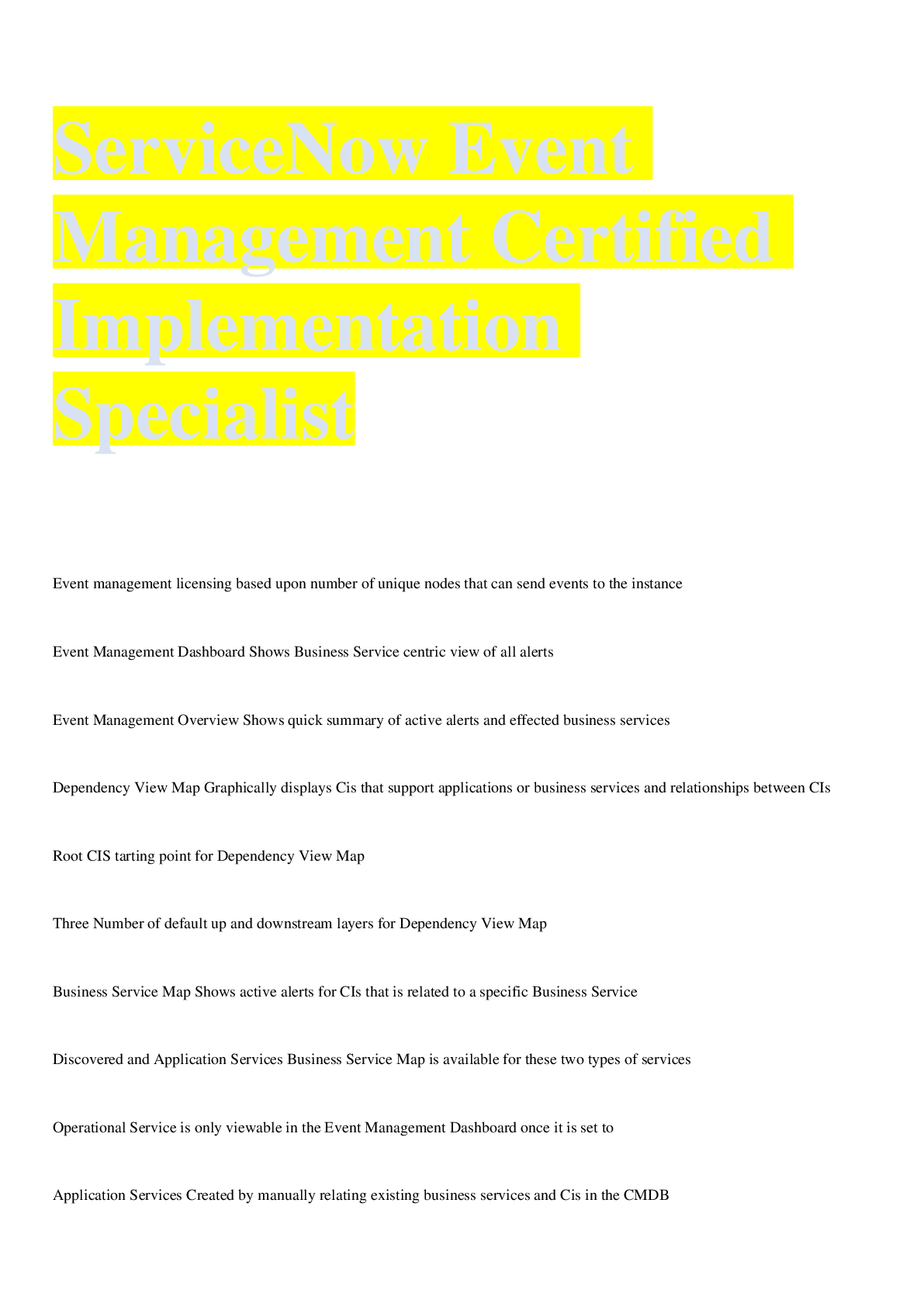
NP235 MedSurg questions well solved
Document Content and Description Below
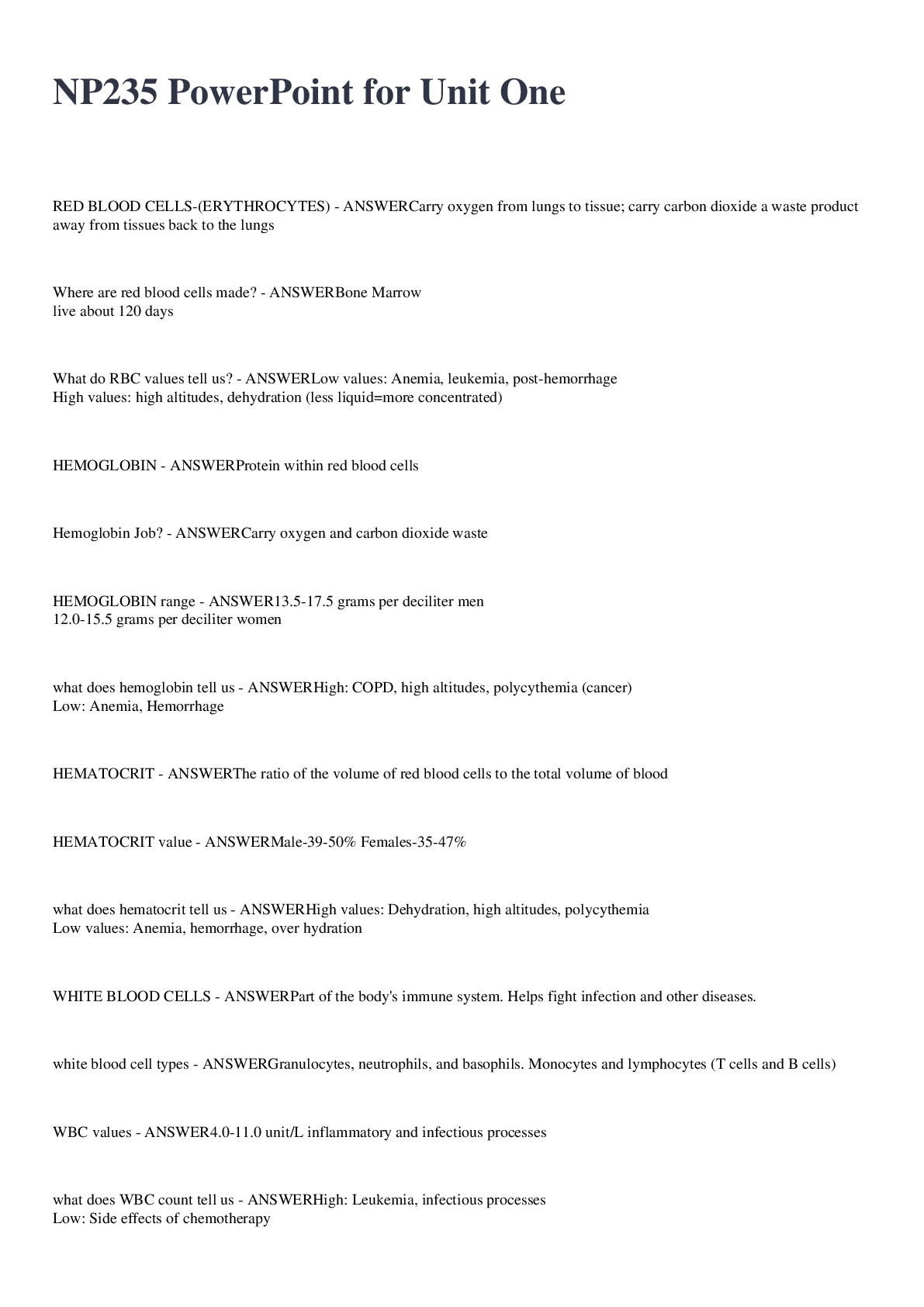
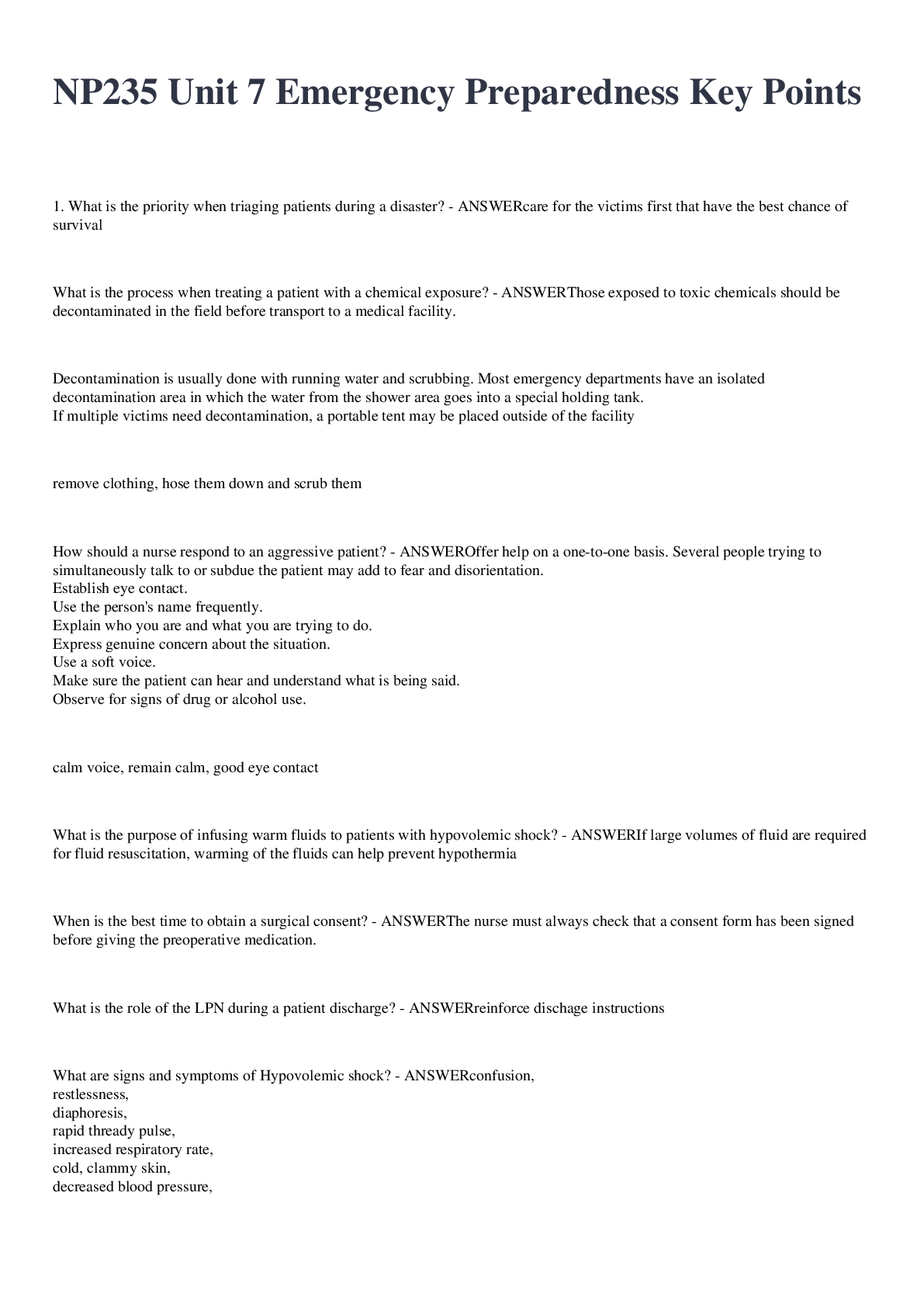
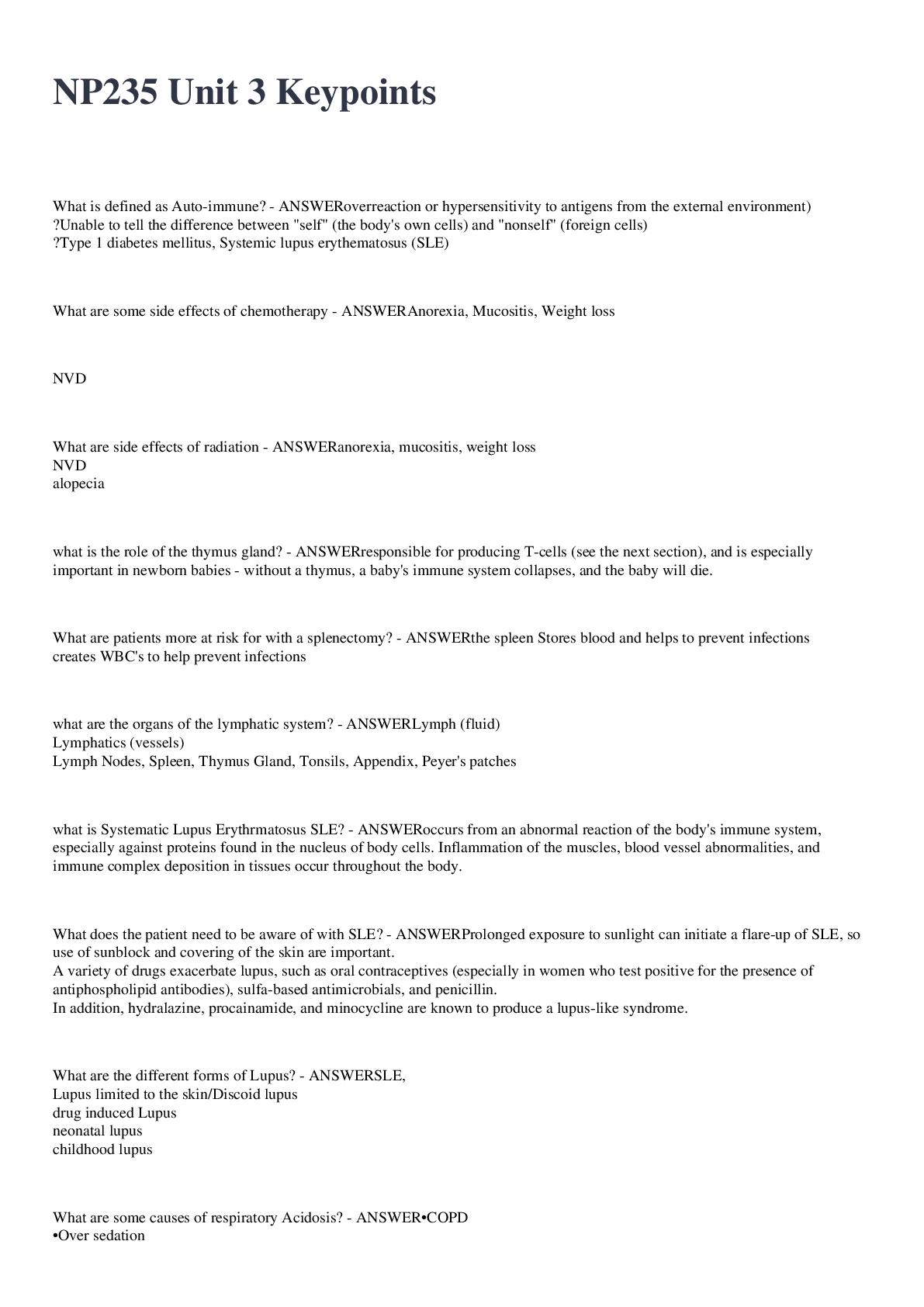
complete blood count test
Red blood cells, which carry oxygen
White blood cells, which fight infection
Hemoglobin, the oxygen-carrying protein in red blood cells
Hematocrit, the proportion of red blood cells to the f
...
[Show More]
Last updated: 3 years ago
Preview 1 out of 18 pages
Instant download

Buy this Document to get the Full Access Instantly
Provided by Students Who Aced it
We Verify Document Content to Gurantee Accuracy
Reviews( 0 )
Document information
Connected school, study & course
About the document
Uploaded On
Oct 20, 2022
Number of pages
18
Written in
All

Additional information
This document has been written for:
Uploaded
Oct 20, 2022
Downloads
0
Views
99
Topic Tags
Related Subjects & Courses
Explore similar study resources and related concepts.
Recommended For You
Get more on EXAM »
$12
7 Pages
NP235 Exam 2 Deb's review questions with complete solution

$11
10 Pages
NP235 Exam 2 Review questions with complete solution updated 2...

$12
6 Pages
NP 235 EXAM 2 DEB’S REVIEW COMPLETE SOLUTIN VERIFIED AND GRADE...


$11
8 Pages
NP 235 EXAM 2 REVIEW QUESTIONS AND ANSWERS COMPLETE GUIDE SOLU...



$6
4 Pages
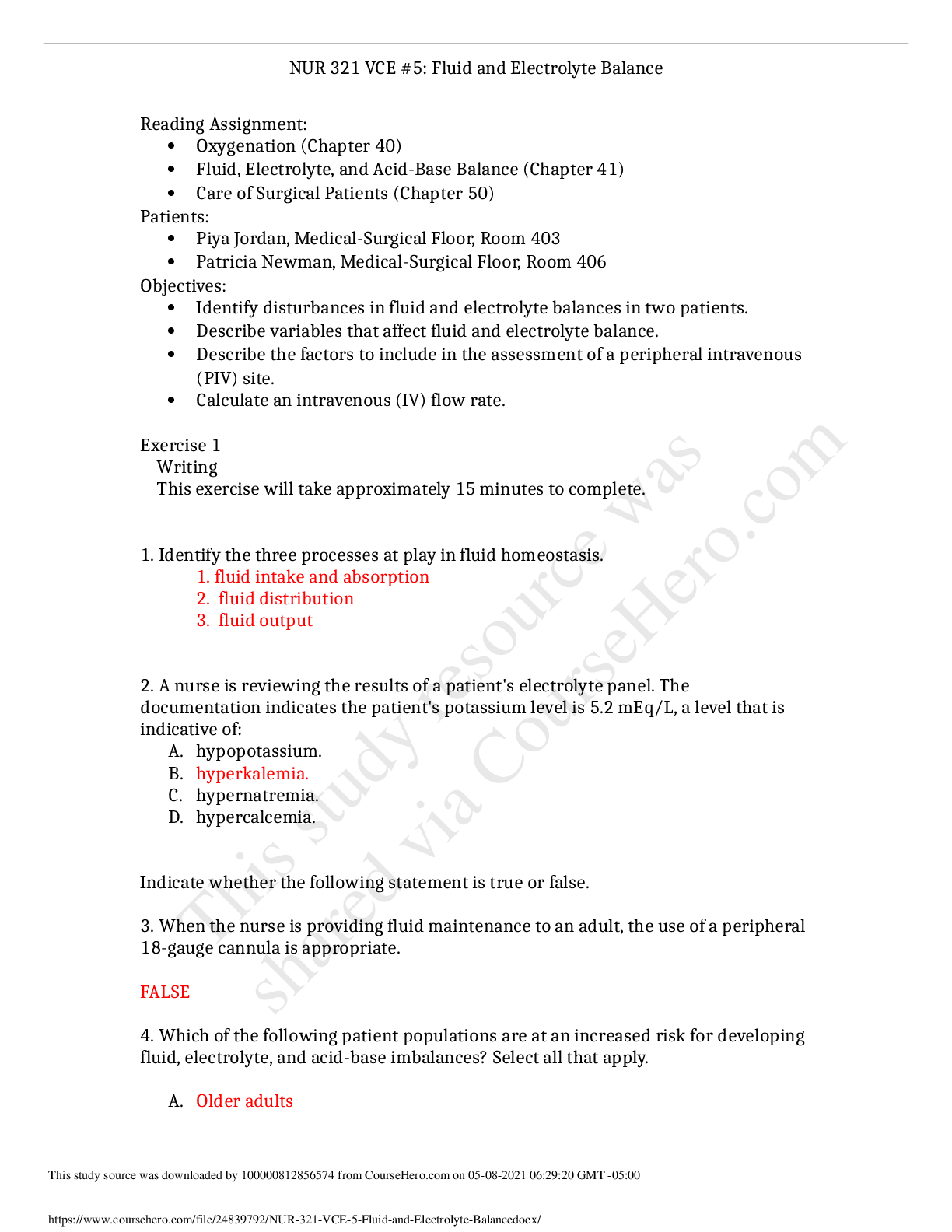
NUR 321 VCE #5 Fluid and Electrolyte Balance QUESTIONS AND ANS...

$8
6 Pages
NUR 321 VCE # 1 Lesson 3- Critical Thinking in Nursing Practic...
More related documents below


![Preview of ATI critical points (1/1)[updated 2022/2023]](https://scholarfriends.com/storage/ATI critical points.png)