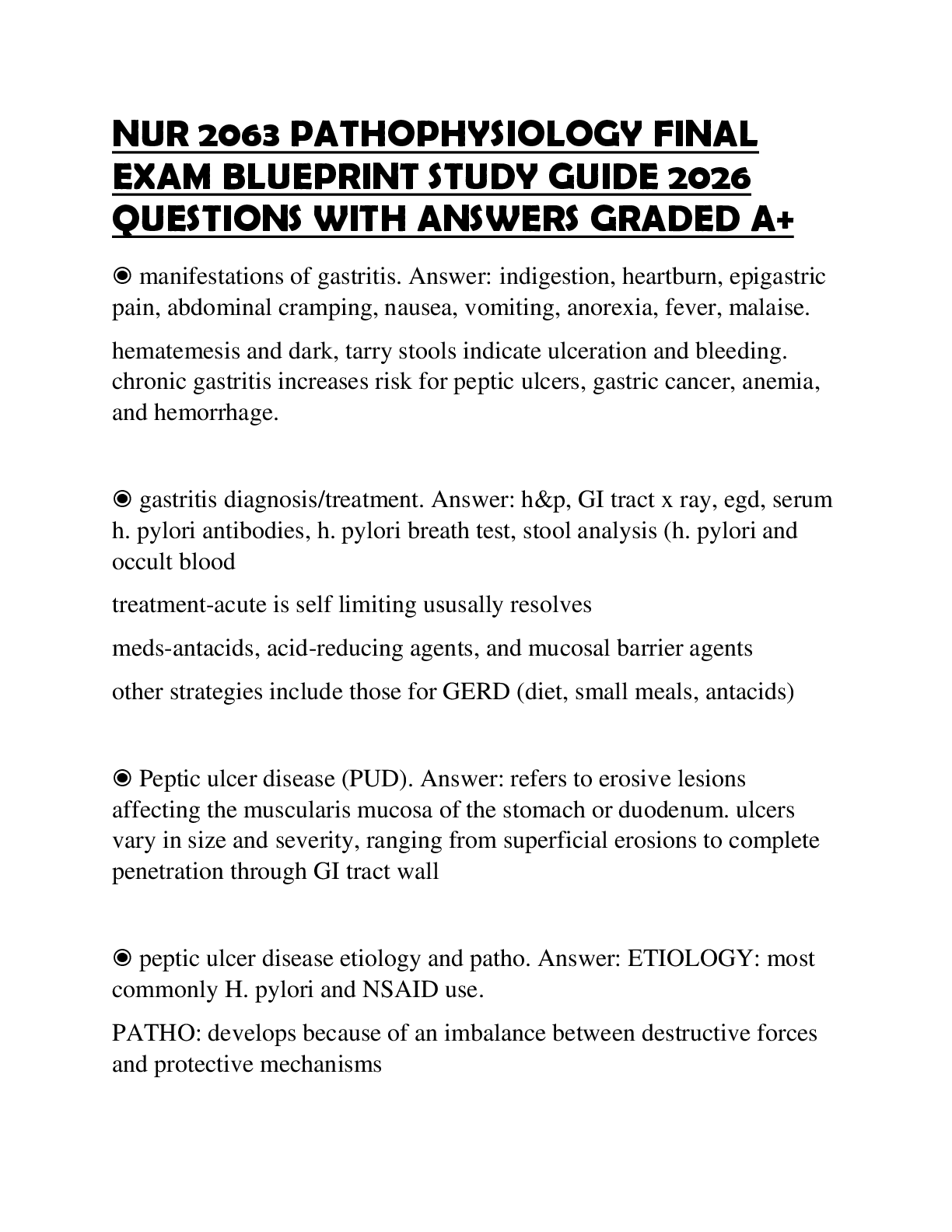
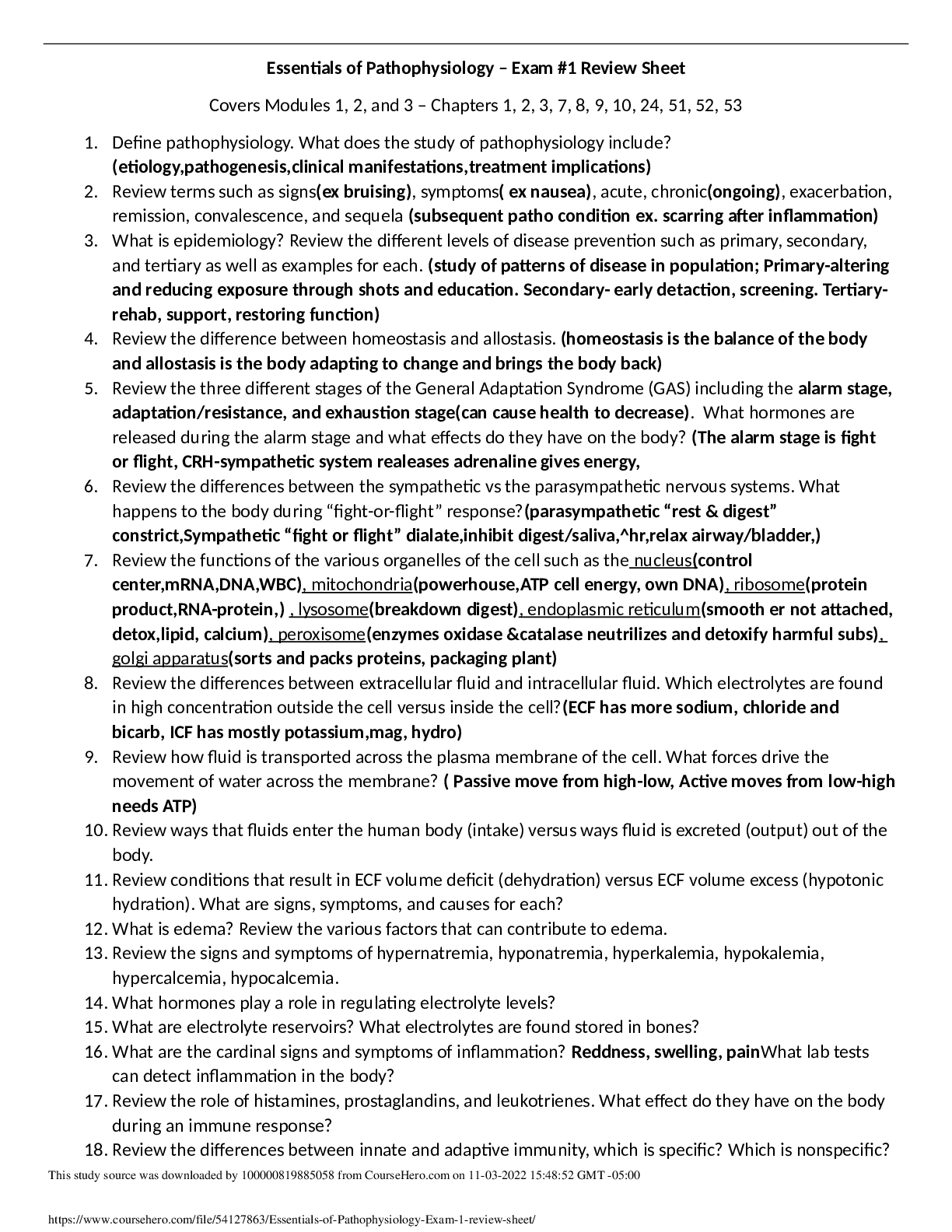
What is Pathophysiology - is the study of what happens when the normal anatomy and physiology go wrong, causing disorder and disease process of the human body.
What 4 things does pathophysiology include? - Etiology, P
...
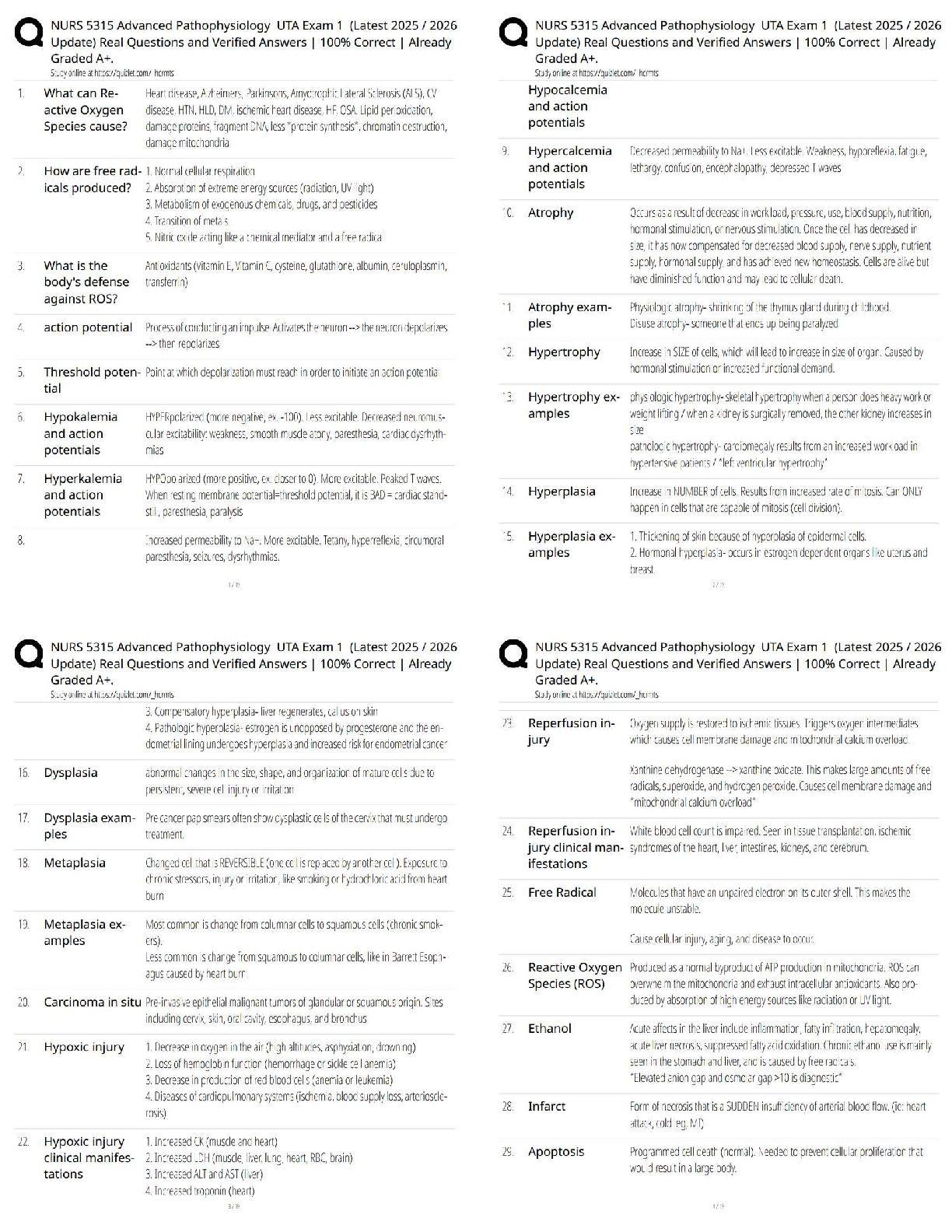
What is Pathophysiology - is the study of what happens when the normal anatomy and physiology go wrong, causing disorder and disease process of the human body.
What 4 things does pathophysiology include? - Etiology, Pathogenesis, Clinical Manifestations, and Treatment Implications
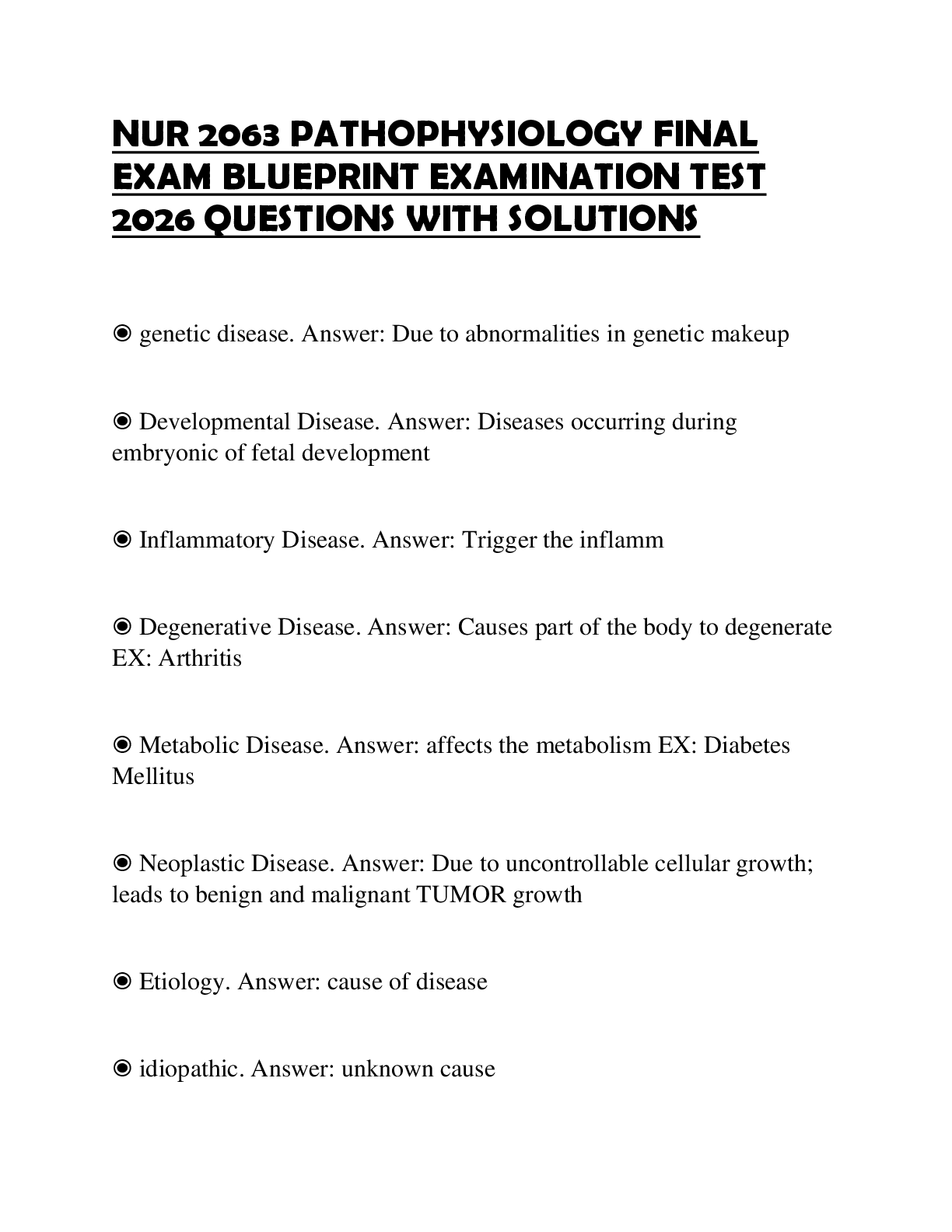
What is etiology - study of causes or reasons for phenomena. Includes Idiopathic conditions that have an unknown origin or cause.
What is pathogenesis? - development or evolution of disease from initial stimulus to the expression of manifestations as time occurs.
What are clinical manifestations? - Signs and symptoms of disorder.
What are treatment implications? - Which combine the etology, pathogenesis, and clinical manifestations to determine the best treatment of condition per individual.
What are signs? - Objective or observed manifestations of disease.
What are symptoms? - Subjective feelings of abnormality in the body.
What is objective data - What you observe and can measure.
What are examples of objective data? - rash, low blood pressure, bleeding
What is subjective data? - What the patient may report to you
What are examples of subjective data? - pain scale, they feel suicidal, fatigued.
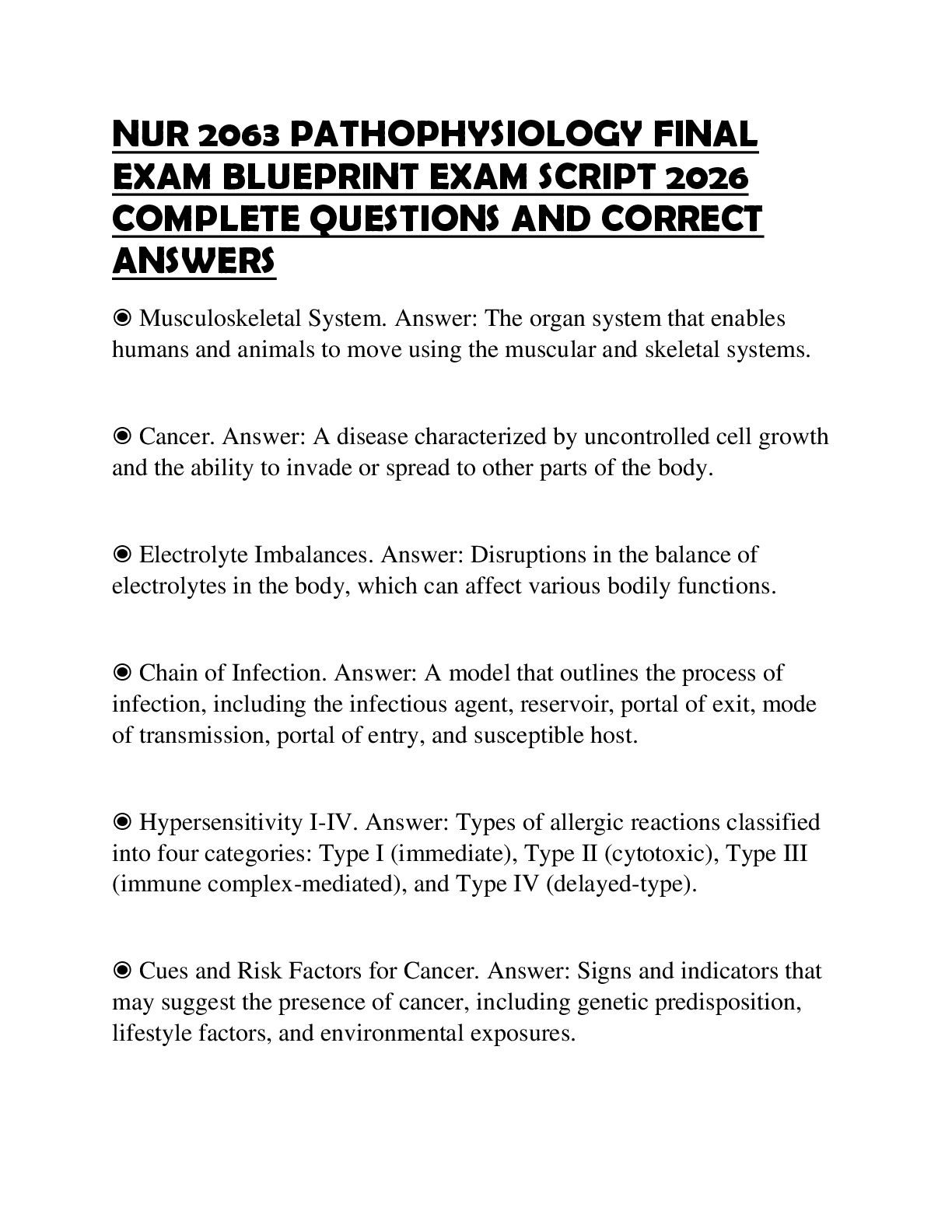
What is epidemiology? - study of the patterns of disease involving populations. Based on the spread and contact of diseases in people.
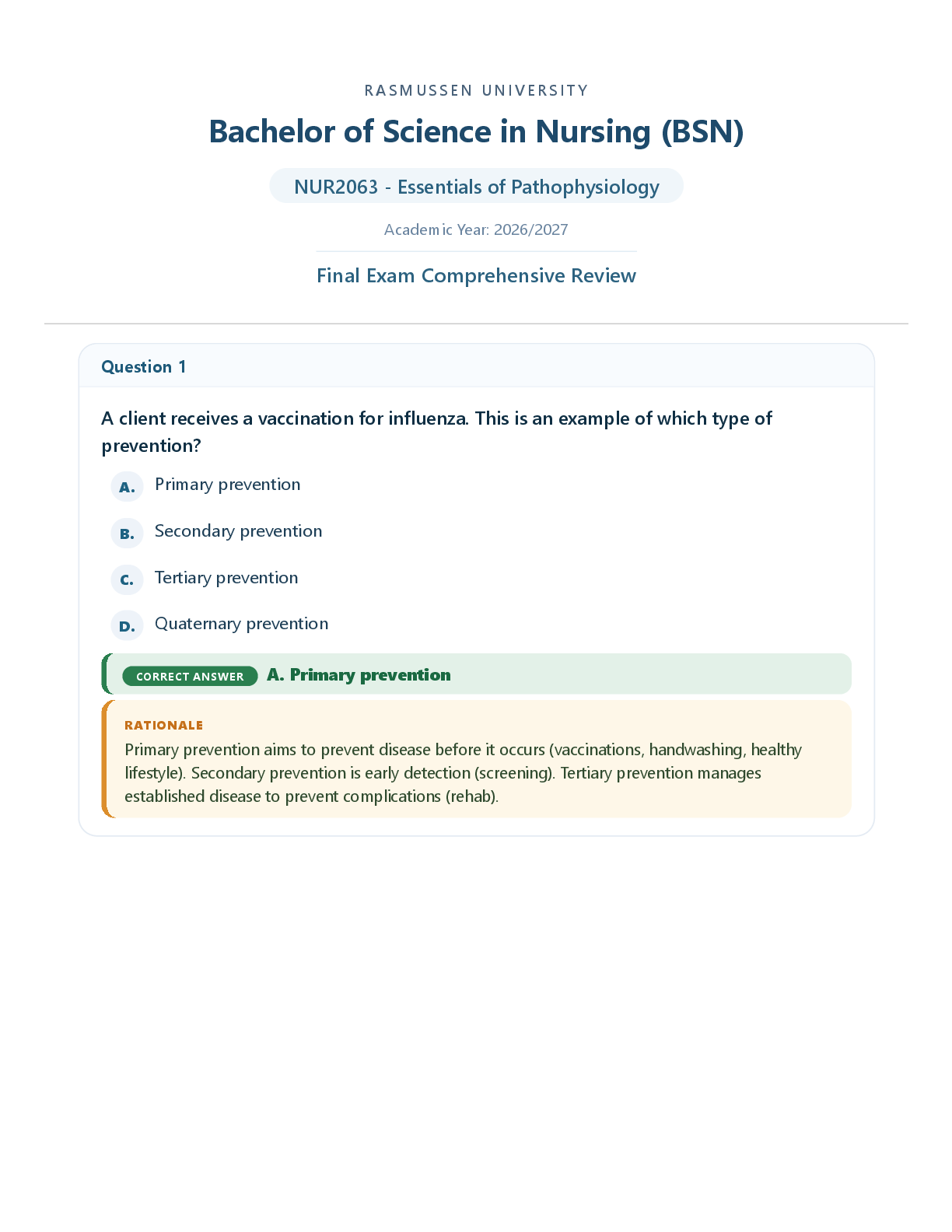
What are the levels of disease prevention? - Primary, Secondary, Tertiary
Explain Primary Prevention - "Preventing"; altering susceptibility or reducing exposure of disease for people.
Examples of Primary Prevention - Vaccinations and Handwashing
Explain Secondary Prevention - "Screening"; early detection, screening, and management of disease to catch disease early before it spreads
[Show More]





![Preview of eBook [PDF] Pathophysiology 7th Edition by Jacquelyn L. Banasik](https://scholarfriends.com/storage/YslD4meI2026-05-26-01-356a14ce9ff0e6c.png)
![Preview of eBook [PDF] Pathophysiology Physical Assessment, and Pharmacology Advanced Integrative Cli](https://browseimages.nyc3.digitaloceanspaces.com/paper-images/2025/Feb/23/cZKmrjQr2025-02-23-10-1067bb72a77ab14.png)