Microeconomics > EXAMs > WGU C719 Macroeconomics Exam (Actual) Graded A+ (All)
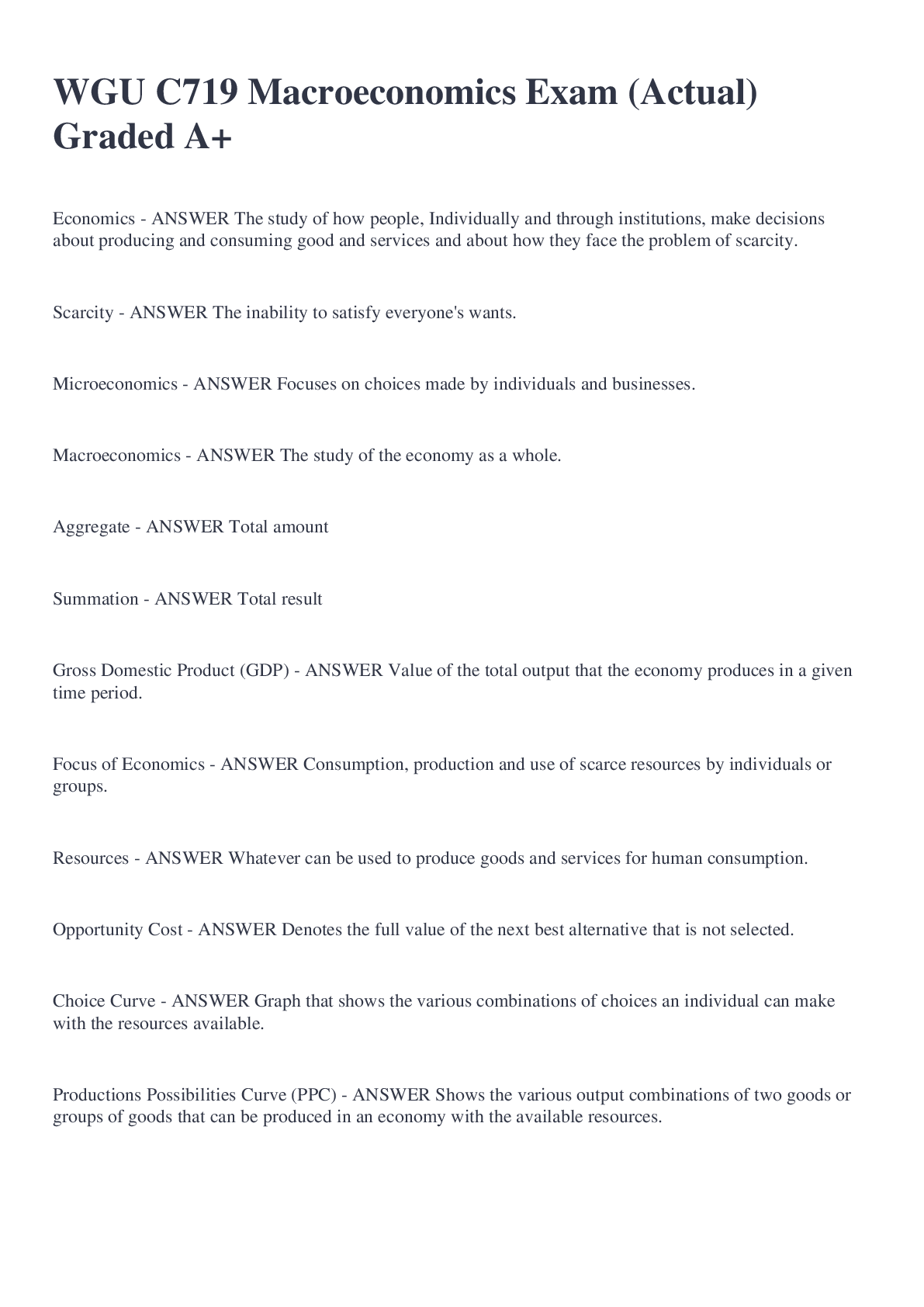
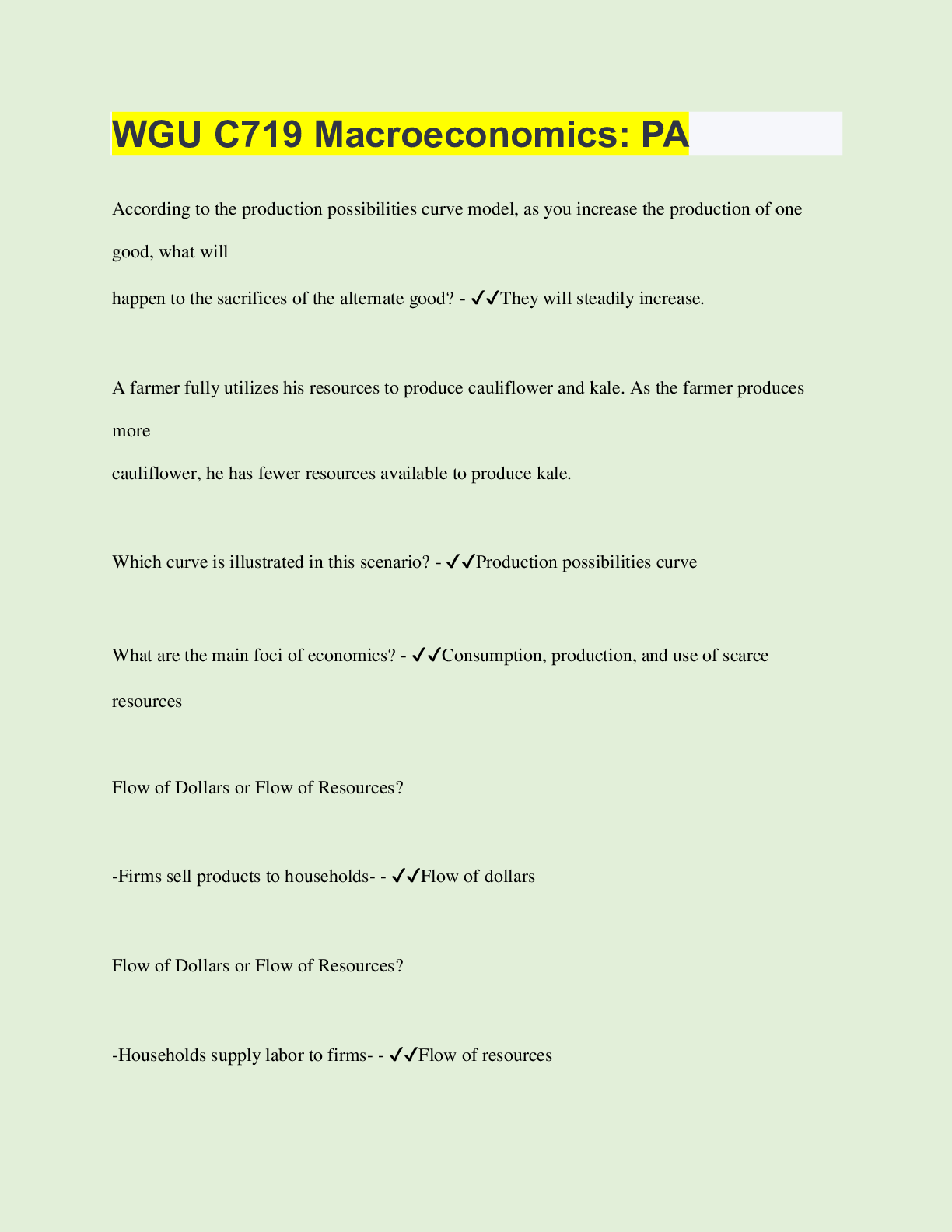
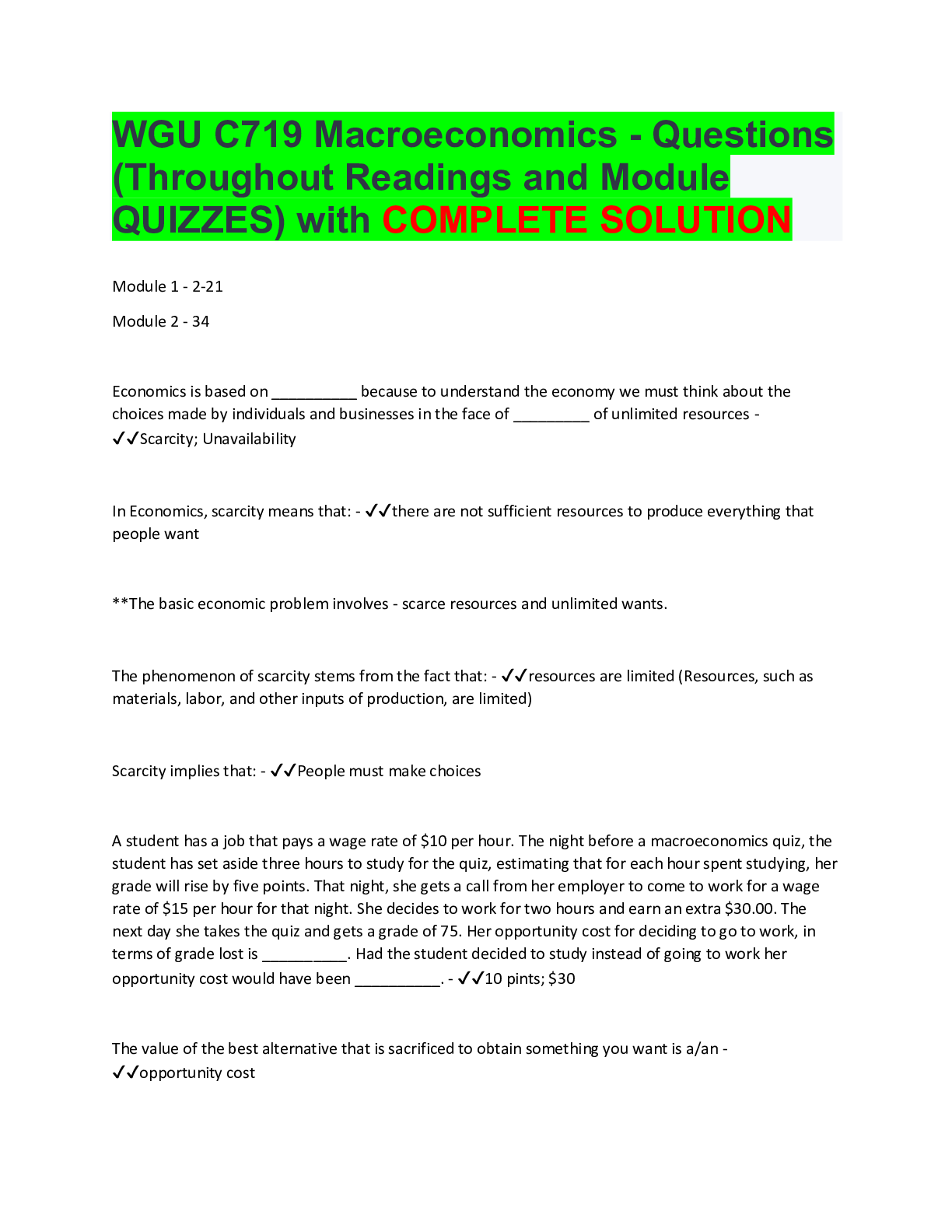
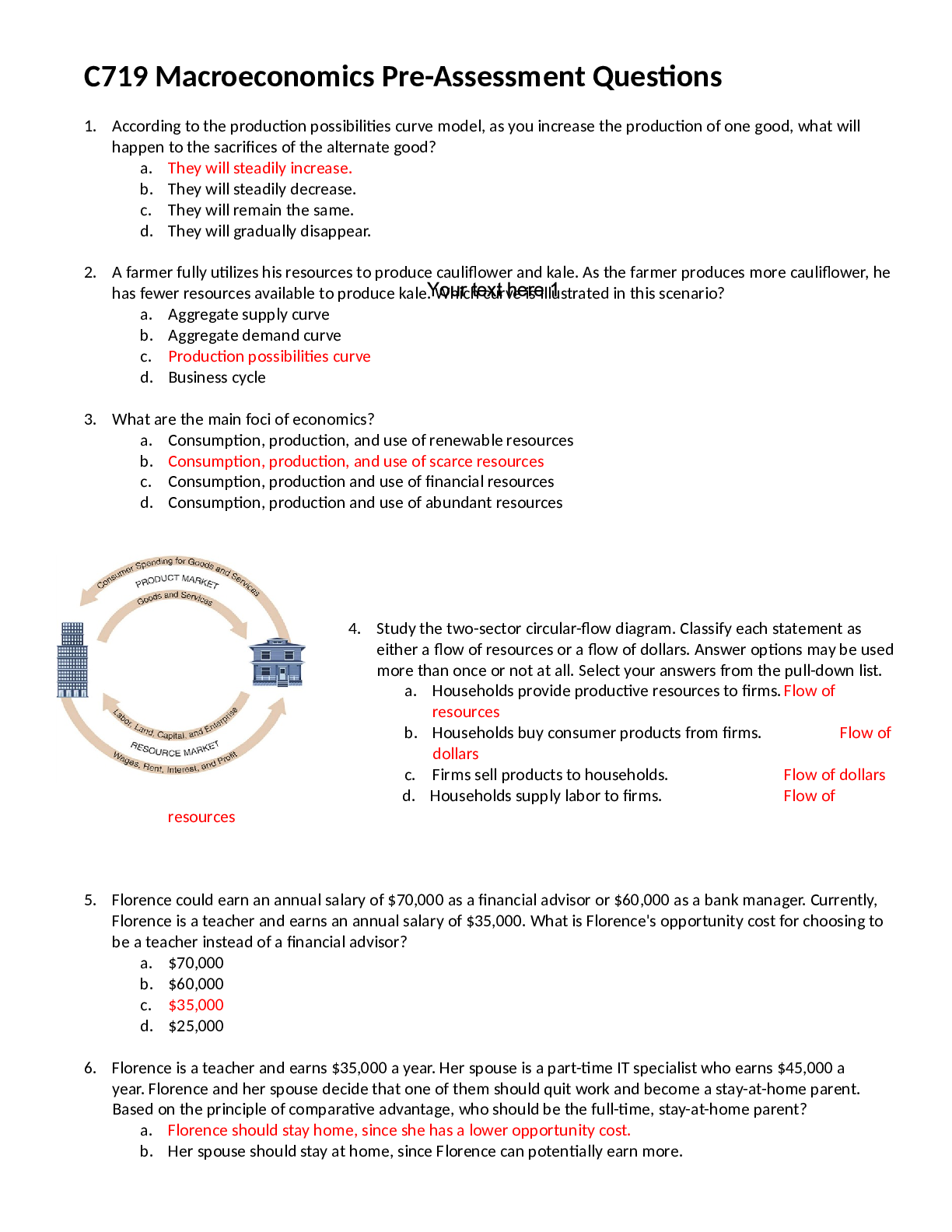
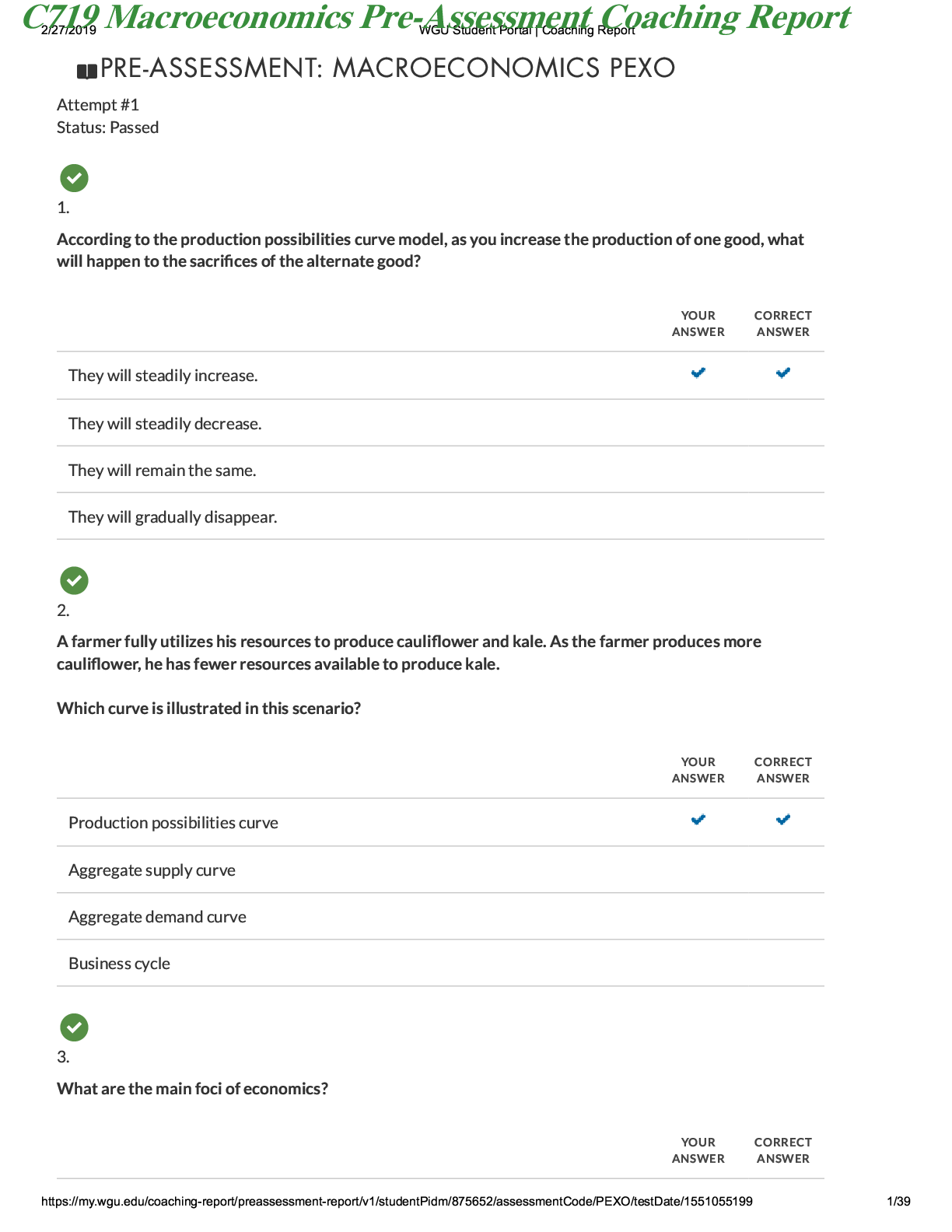
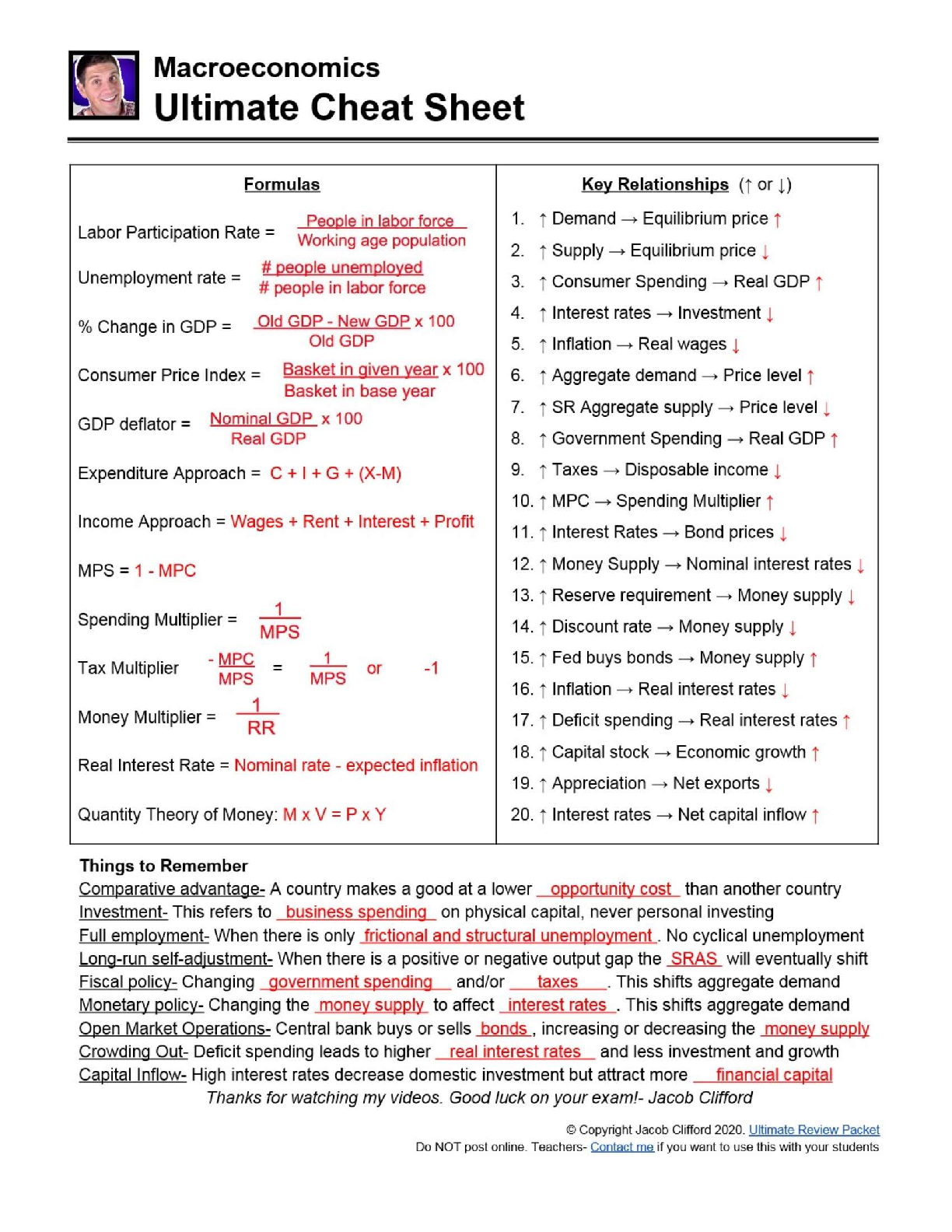
Economics - ANSWER The study of how people, Individually and through institutions, make decisions about producing and consuming good and services and about how they face the problem of scarcity. Sc ... arcity - ANSWER The inability to satisfy everyone's wants. Microeconomics - ANSWER Focuses on choices made by individuals and businesses. Macroeconomics - ANSWER The study of the economy as a whole. Aggregate - ANSWER Total amount Summation - ANSWER Total result Gross Domestic Product (GDP) - ANSWER Value of the total output that the economy produces in a given time period. Focus of Economics - ANSWER Consumption, production and use of scarce resources by individuals or groups. Resources - ANSWER Whatever can be used to produce goods and services for human consumption. Opportunity Cost - ANSWER Denotes the full value of the next best alternative that is not selected. Choice Curve - ANSWER Graph that shows the various combinations of choices an individual can make with the resources available. Productions Possibilities Curve (PPC) - ANSWER Shows the various output combinations of two goods or groups of goods that can be produced in an economy with the available resources. Productions Possibilities Curve (PPC) Assumptions - ANSWER 1. All of the economy's productive resources are fully employed. This means that everyone who wants a job has one. Also, factories, land, and other resources are being used to full capacity. 2. There are only two goods (or types of goods) in the economy. 3. The resources used in production are interchangeable. One worker is the same as another, one machine can be substituted for another, and all land is equally useful for producing the two goods. 4. We are looking at the economy at a specific period of time (the short run). During this time period, both the quantity and quality of resources are fixed, and the technology does not change. Ceteris Paribus - ANSWER Latin phrase meaning "all else being equal." Self-Interested Behavior - ANSWER People trying to get the most out of something they want out of available resources. Four Categories of Productive Resources - ANSWER 1. Labor 2. Land 3. Capital 4. Entrepreneurship Labor - ANSWER Physical and mental work of human beings. Wages - ANSWER Payments labor receives for its productive resources. Human Capital - ANSWER Development of labor skills as an investment. Land - ANSWER All natural resources that can be used an inputs to production. Rent - ANSWER Income paid to the factor of land. Capital - ANSWER All aids to production that are human creations. Interest - ANSWER Payments to capital. Investment - ANSWER Act of adding to capital. Entrepreneurship - ANSWER Activities of combining the other productive resources to produce goods and services, taking risks and introducing new methods and new products. Innovation - ANSWER New products Profit - ANSWER Reward for innovation, risk taking and organization. Market - ANSWER Arrangement met by a group of buyers and sellers of a product that come together to trade. What - ANSWER Mix of goods and services to be produced. How - ANSWER Input combination will be used to produce the chosen goods and services. For Whom - ANSWER Who will get the goods and services produced and how much each person will receive. Comparative Economic Systems - ANSWER The study of different ways of organizing economic activity. 3 Broad Types of Economies - ANSWER 1. Traditional 2. Command (Planned) 3. Market Traditional Economy - ANSWER Answers economic questions by how they have been answered in the past. Example: Farming economy Command Economy - ANSWER Answers basic economic questions through central command and control. Example: Communism - government controlled Market Economy - ANSWER Relies on incentives and self-interested behavior to direct production and consumption through market exchanges. Example: Exchange of dollars - extremes of wealth and poverty Mixed Economy - ANSWER Basic decision method is the market, but some economic choices are made by government. Goal of Mixed Economy - ANSWER To leave economic decisions to the market when it works well, but to intervene in the economy when the market outcome is not acceptable. Nonrival - ANSWER A good or service is not used in consumption. Public Goods - ANSWER Goods that are nonrival in consumption and not subject to exclusion. [Show More]
Last updated: 3 years ago
Preview 1 out of 6 pages
Buy this document to get the full access instantly
Instant Download Access after purchase
Buy NowInstant download
We Accept:
Can't find what you want? Try our AI powered Search
Connected school, study & course
About the document
Uploaded On
Oct 27, 2022
Number of pages
6
Written in
All
This document has been written for:
Uploaded
Oct 27, 2022
Downloads
0
Views
63
Scholarfriends.com Online Platform by Browsegrades Inc. 651N South Broad St, Middletown DE. United States.
We're available through e-mail, Twitter, and live chat.
FAQ
Questions? Leave a message!
Copyright © Scholarfriends · High quality services·