*NURSING > CASE STUDY > NR 601 Week 5 Case Study.LATEST 2022-2023 (All)
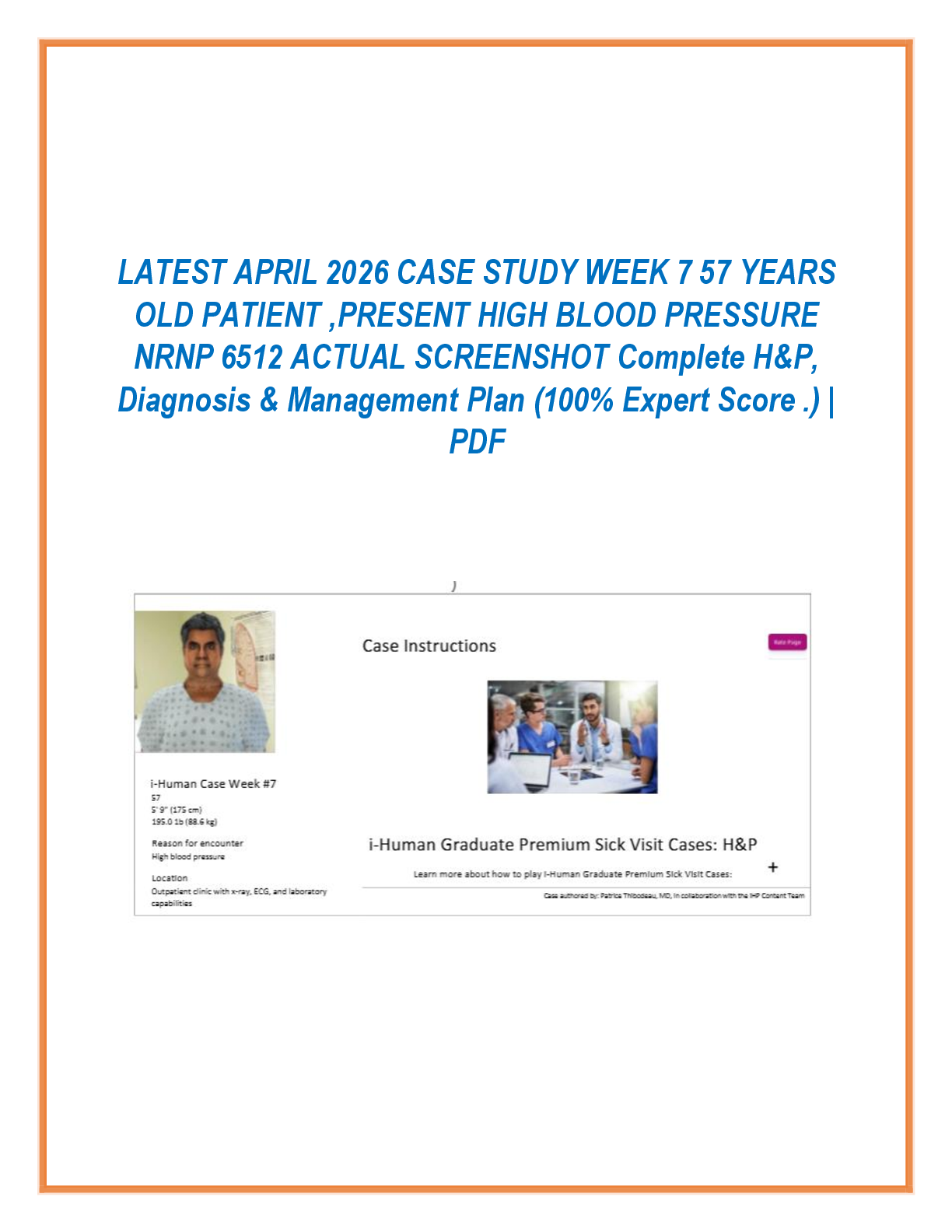
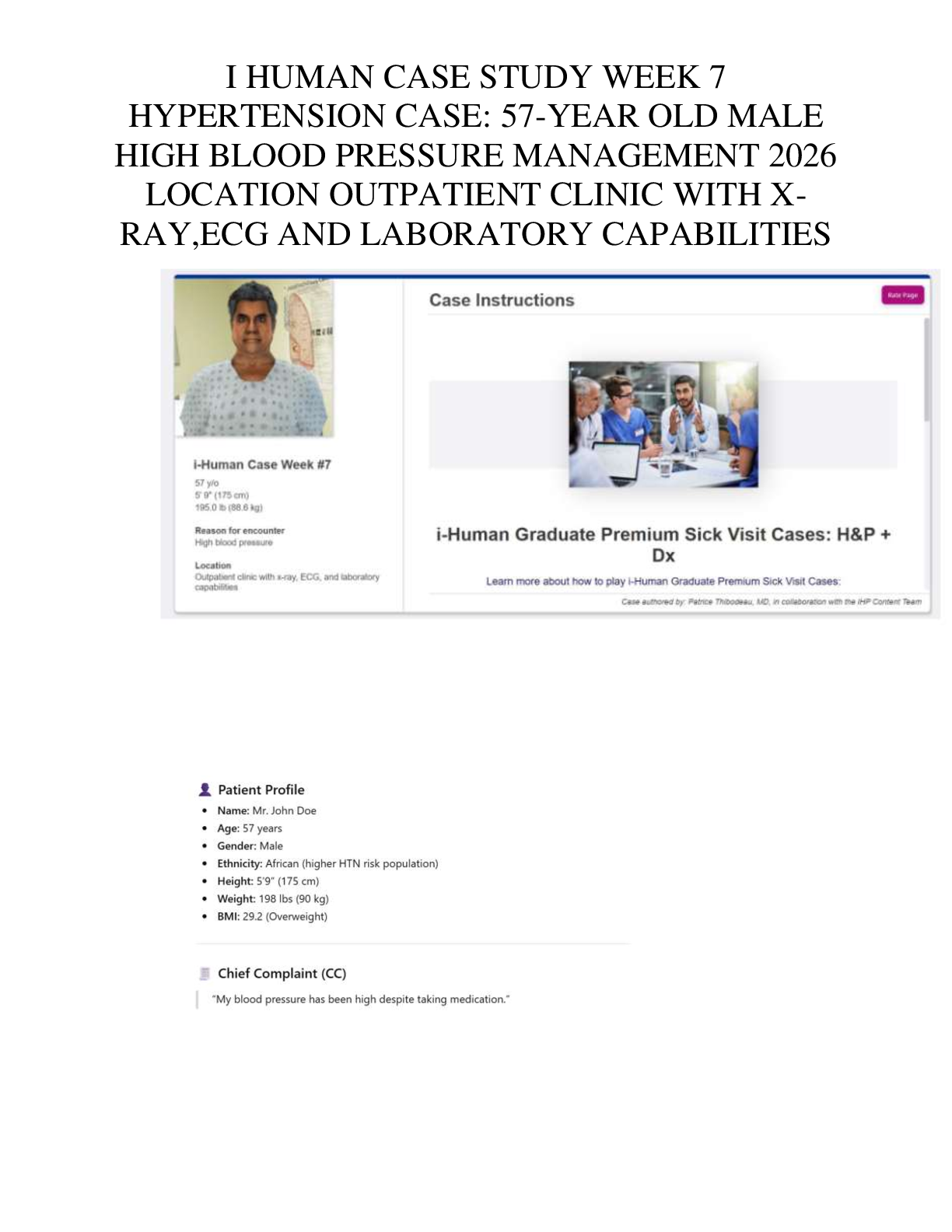
Primary Care of the Maturing and Aged Family Case Study The purpose of this paper is to analyze a case study provided with patient information, lab work, subjective, and objective data. Diagnosis wi ... ll be developed from reviewing the given information, as well as a management plan will be implemented. Demonstrating skills, such as writing a SOAP note, will be mastered, and this paper will help the FNP prepare for upcoming patients and case studies in the future, by mastering this assignment. Assessment Primary Diagnosis: Type 2 diabetes mellitus (E11) Pathophysiology: Type 2 diabetes mellitus is a metabolic disorder, which occurs when the body does not utilize insulin properly (ADA, 2019). The pancreas will try to overcompensate by making more insulin in efforts to get glucose into cells, but over time the pancreas can not keep up, leading to an excess amount of sugar in the blood (ADA, 2019). Classic signs and symptoms include the following: polydipsia, polyuria, and polyphagia (ADA, 2019). Pertinent positive findings: Type 2 diabetes mellitus was chosen because of many subjective and objective findings. The patient has risk factors such as his race (African American), age of 57 years, and weight of 210 pounds (ADA, 2019). According to the American Diabetes Association, people are at a higher risk of developing type 2 diabetes, who are overweight, are of Hispanic or African American decent, and live a sedentary lifestyle. Pertinent negative findings: This patient does not live a sedentary lifestyle, as he has mentioned working out at least 3-4 days a week, and walking for 30 minutes on the 2 CASE STUDY treadmill. Despite his efforts of living a more active lifestyle, he is still overweight, with a BMI of 31 (obese), which puts him at risk for T2DM (ADA, 2019). Rationale for the diagnosis: Lab values contributing to this diagnosis are the following: glucose of 136, hemoglobin A1C 6.8%, and small amount of glucose (+1) found in urine. According to the American Diabetes Association guidelines, patients with an A1C greater than 6.5% puts you at the diabetes mark, along with a glucose over 126 mg/dl (2019). Secondary Diagnosis: Hyperlipidemia (E78.5) Pathophysiology: Hyperlipidemia occurs when there are high levels of fat or lipids due to an overproduction of lipoproteins by the liver (Shattat, 2014). Patients will not typically present with any symptoms, and it is diagnosed using lab values. Pertinent positive findings: Patient’s total cholesterol is just a little bit over 200. Pertinent negative findings: LDL, HDL, and tryglycerides are out of range, and much higher than the norm. Rationale for the diagnosis: His triglycerides are 225, LDL 134, HDL 32, TC 202; the normal for triglycerides should be below 150, LDL should be less than 70 (for patients with heart disease or diabetes), and HDL should be greater than 60, and the total cholesterol should be less than 200, this would indicate hyperlipidemia (ACC, 2018). Secondary Diagnosis: Obesity (E66.0) Pathophysiology: Obesity is linked to the central circuit mechanisms of the brain becoming impaired, and causing neuro-endocrinological dysfunctions of the hormones (Zhang et al., 2014). Pertinent positive findings: Patient does workout regularly, and is being mindful of making lifestyle changes. [Show More]
Last updated: 3 years ago
Preview 1 out of 16 pages
Buy this document to get the full access instantly
Instant Download Access after purchase
Buy NowInstant download
We Accept:
Can't find what you want? Try our AI powered Search
Connected school, study & course
About the document
Uploaded On
Nov 04, 2022
Number of pages
16
Written in
All
This document has been written for:
Uploaded
Nov 04, 2022
Downloads
0
Views
106
Scholarfriends.com Online Platform by Browsegrades Inc. 651N South Broad St, Middletown DE. United States.
We're available through e-mail, Twitter, Facebook, and live chat.
FAQ
Questions? Leave a message!
Copyright © Scholarfriends · High quality services·