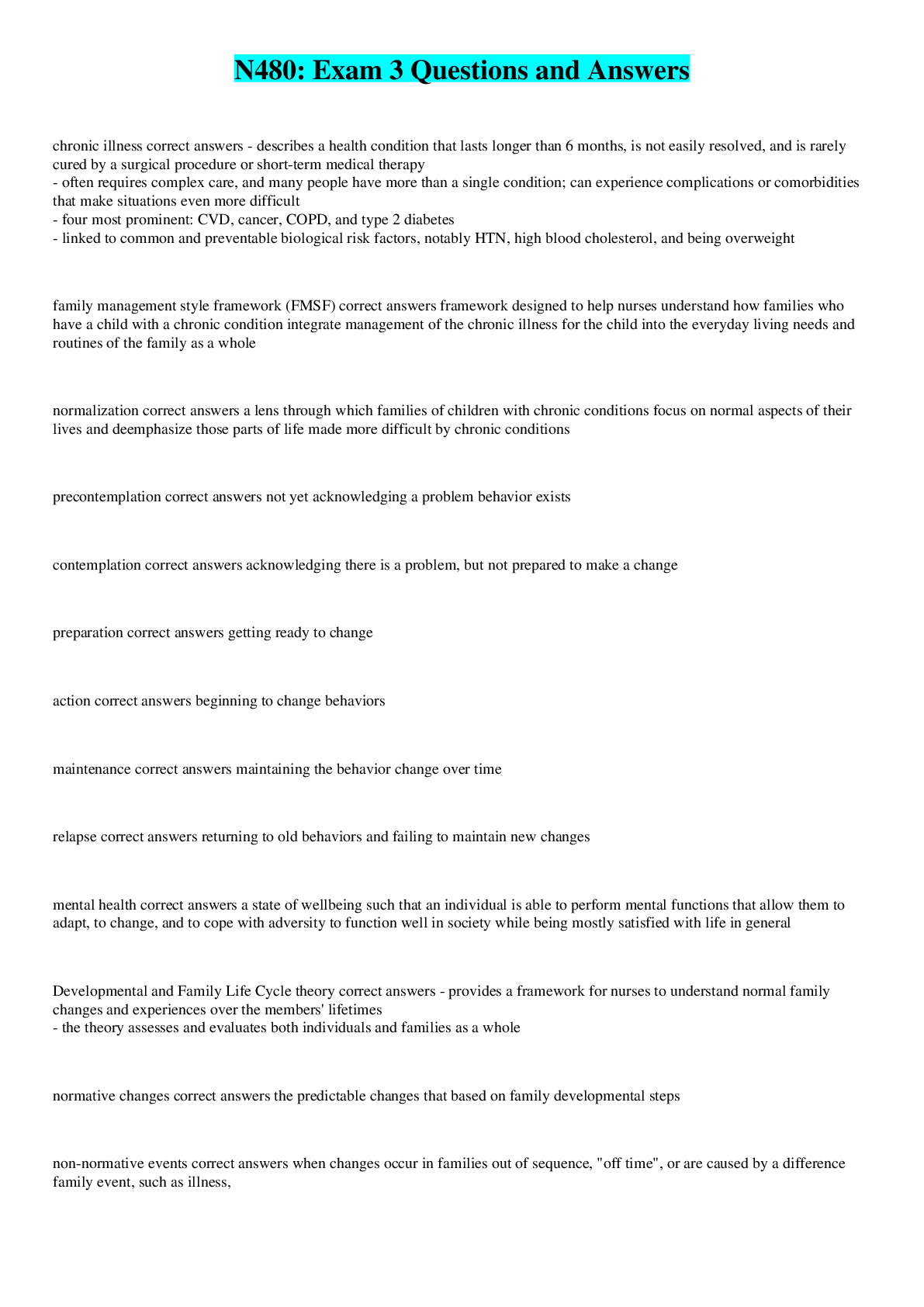
chronic illness correct answers - describes a health condition that lasts longer than 6 months, is not easily resolved, and is rarely cured by a surgical procedure or short-term medical therapy
- often requires complex
...
chronic illness correct answers - describes a health condition that lasts longer than 6 months, is not easily resolved, and is rarely cured by a surgical procedure or short-term medical therapy
- often requires complex care, and many people have more than a single condition; can experience complications or comorbidities that make situations even more difficult
- four most prominent: CVD, cancer, COPD, and type 2 diabetes
- linked to common and preventable biological risk factors, notably HTN, high blood cholesterol, and being overweight
family management style framework (FMSF) correct answers framework designed to help nurses understand how families who have a child with a chronic condition integrate management of the chronic illness for the child into the everyday living needs and routines of the family as a whole
normalization correct answers a lens through which families of children with chronic conditions focus on normal aspects of their lives and deemphasize those parts of life made more difficult by chronic conditions
precontemplation correct answers not yet acknowledging a problem behavior exists
contemplation correct answers acknowledging there is a problem, but not prepared to make a change
preparation correct answers getting ready to change
action correct answers beginning to change behaviors
maintenance correct answers maintaining the behavior change over time
relapse correct answers returning to old behaviors and failing to maintain new changes
mental health correct answers a state of wellbeing such that an individual is able to perform mental functions that allow them to adapt, to change, and to cope with adversity to function well in society while being mostly satisfied with life in general
Developmental and Family Life Cycle theory correct answers - provides a framework for nurses to understand normal family changes and experiences over the members' lifetimes
- the theory assesses and evaluates both individuals and families as a whole
normative changes correct answers the predictable changes that based on family developmental steps
non-normative events correct a
[Show More]