Week 1: Chapter 35 “Maternity and Newborn Medications”
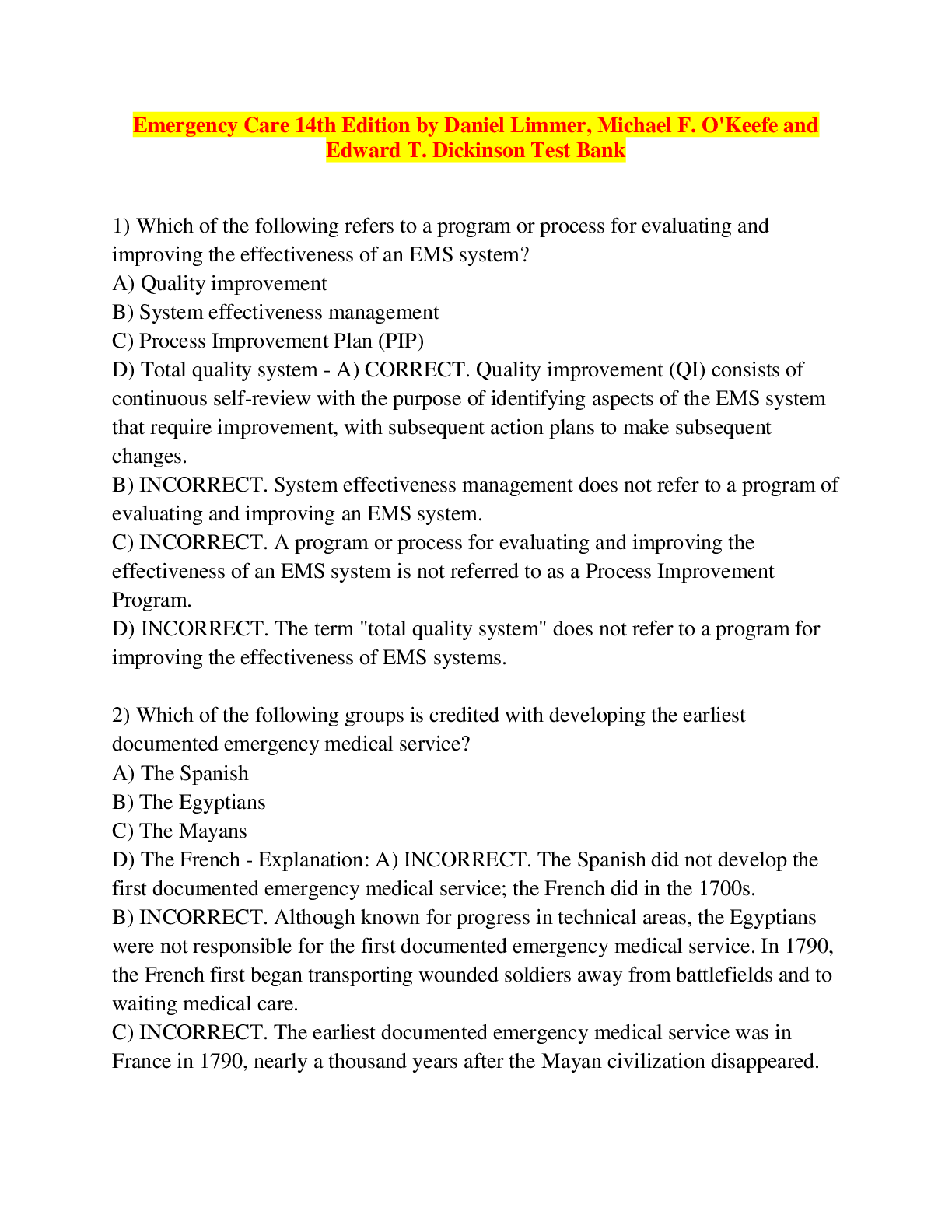
Questions Answers and Rationales
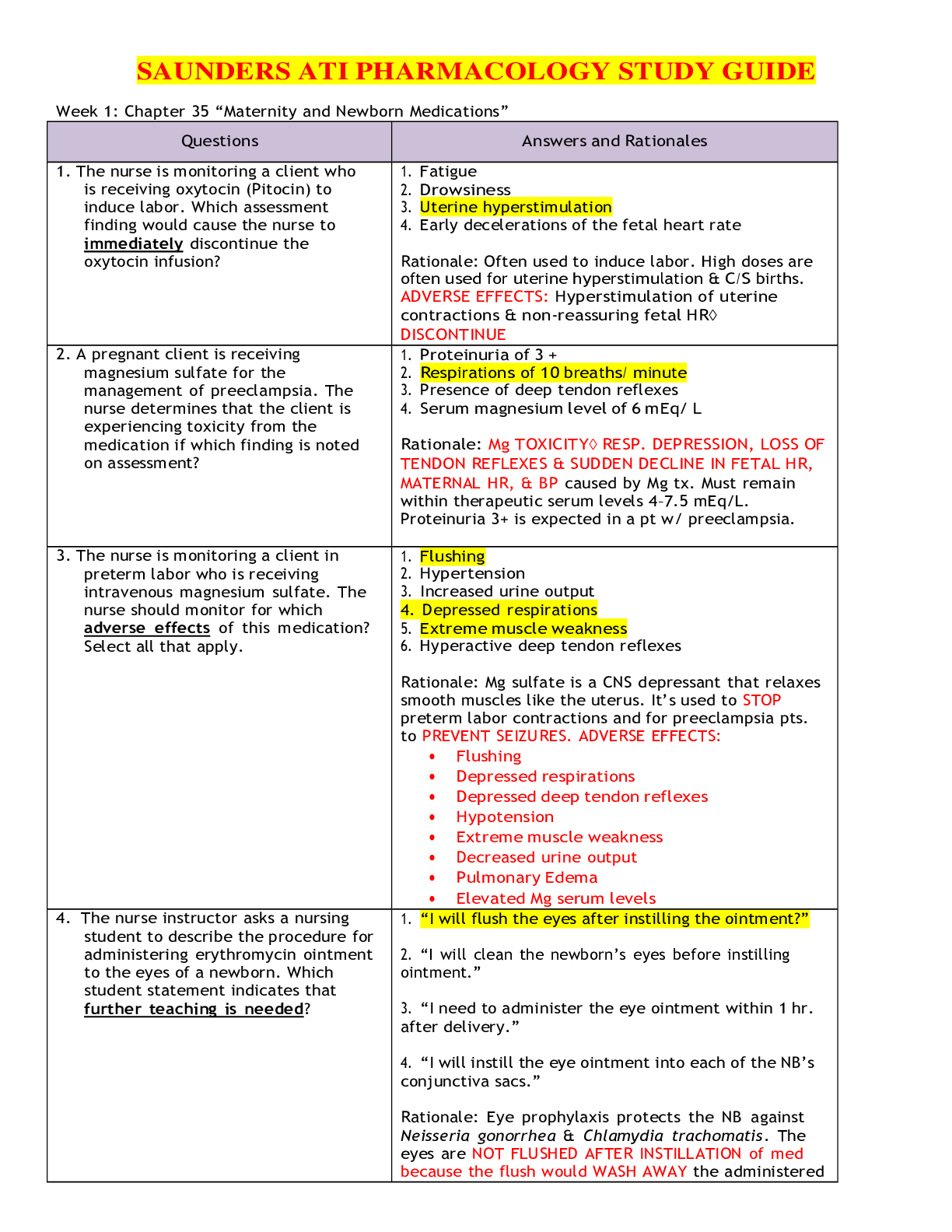
1. The nurse is monitoring a client who is
receiving oxytocin (Pitocin) to induce labor.
Which assessment finding would cause th
...
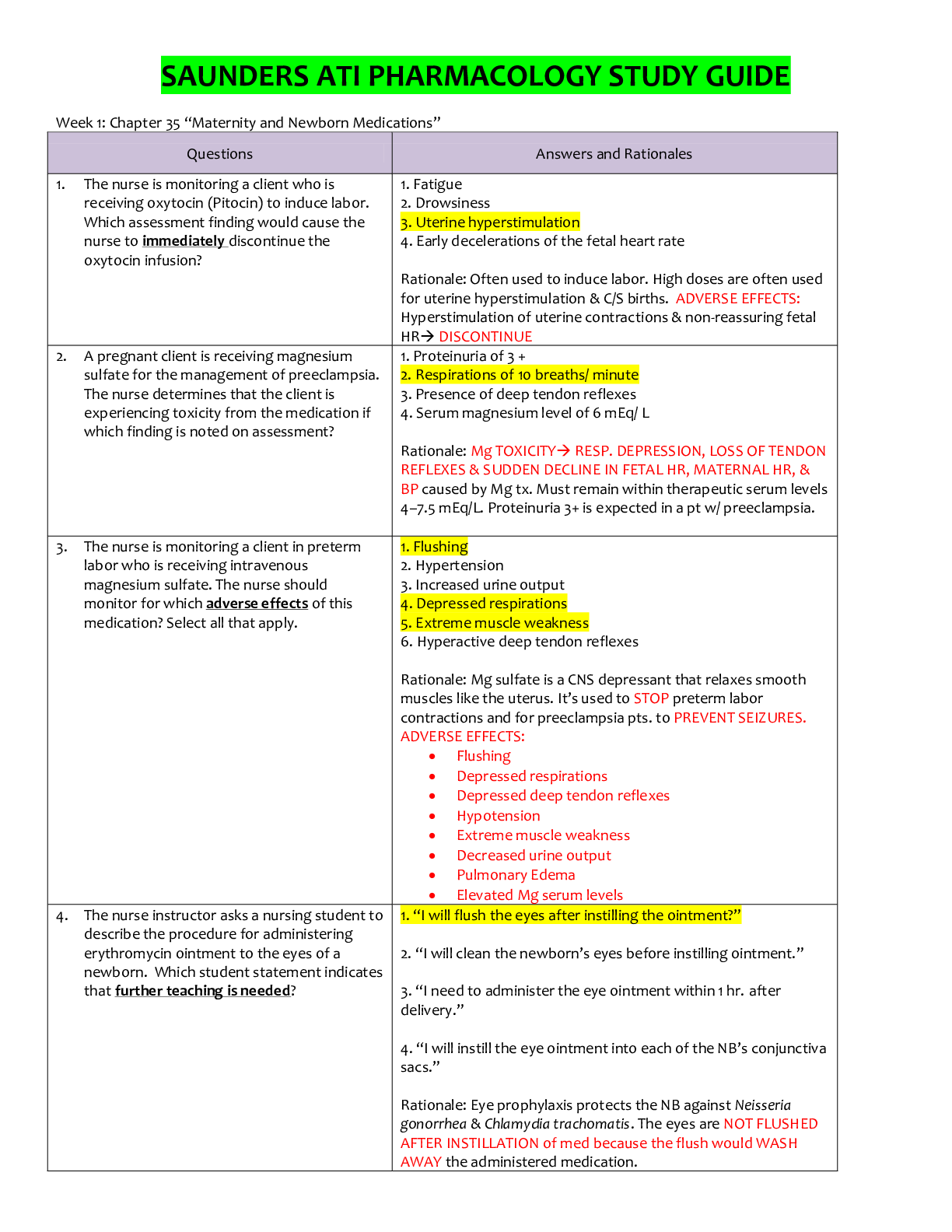
Week 1: Chapter 35 “Maternity and Newborn Medications”
Questions Answers and Rationales
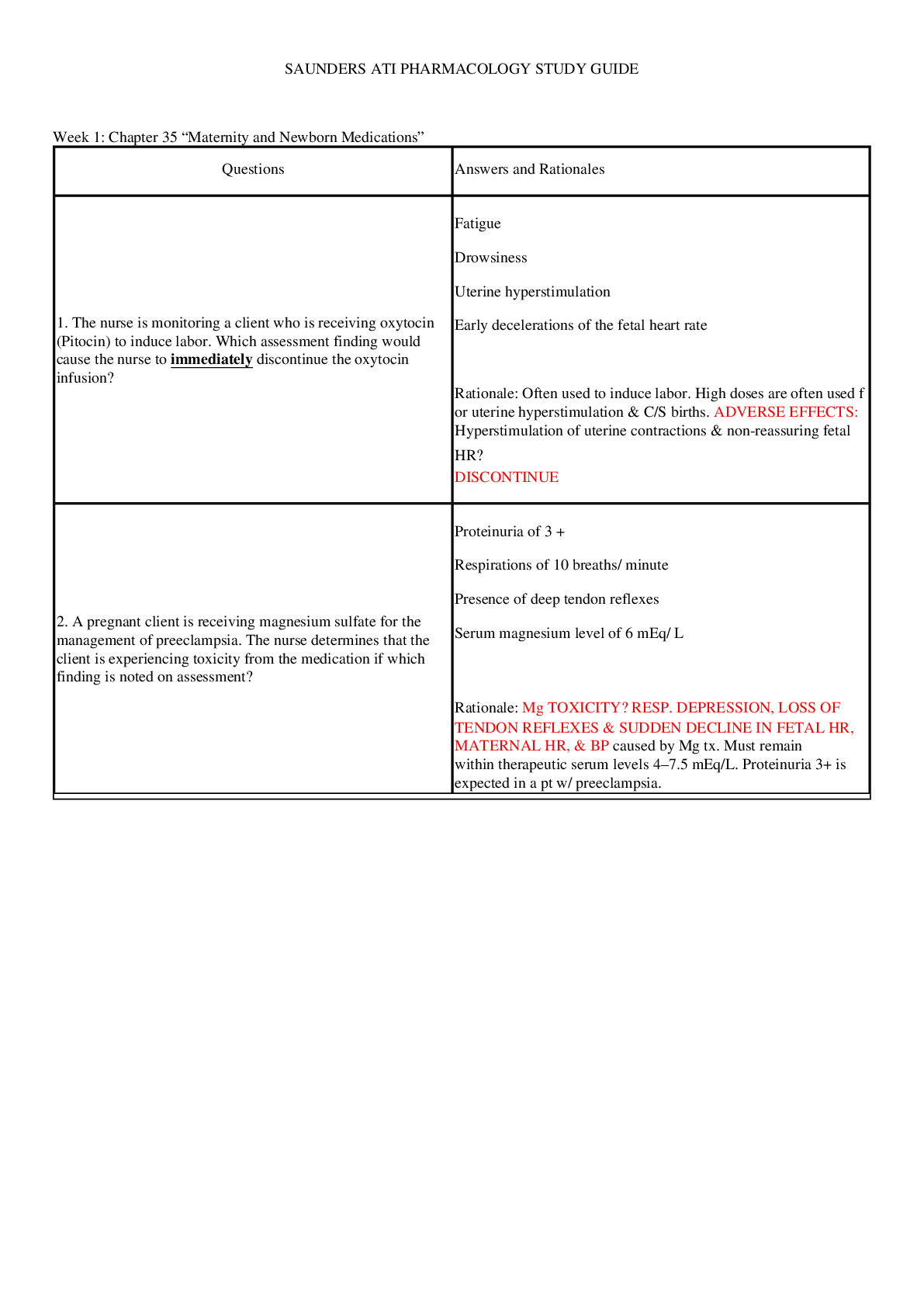
1. The nurse is monitoring a client who is
receiving oxytocin (Pitocin) to induce labor.
Which assessment finding would cause the
nurse to immediately discontinue the
oxytocin infusion?
1. Fatigue
2. Drowsiness
3. Uterine hyperstimulation
4. Early decelerations of the fetal heart rate
Rationale: Often used to induce labor. High doses are often used
for uterine hyperstimulation & C/S births. ADVERSE EFFECTS:
Hyperstimulation of uterine contractions & non-reassuring fetal
HR DISCONTINUE
2. A pregnant client is receiving magnesium
sulfate for the management of preeclampsia.
The nurse determines that the client is
experiencing toxicity from the medication if
which finding is noted on assessment?
1. Proteinuria of 3 +
2. Respirations of 10 breaths/ minute
3. Presence of deep tendon reflexes
4. Serum magnesium level of 6 mEq/ L
Rationale: Mg TOXICITY RESP. DEPRESSION, LOSS OF TENDON
REFLEXES & SUDDEN DECLINE IN FETAL HR, MATERNAL HR, &
BP caused by Mg tx. Must remain within therapeutic serum levels
4–7.5 mEq/L. Proteinuria 3+ is expected in a pt w/ preeclampsia.
3. The nurse is monitoring a client in preterm
labor who is receiving intravenous
magnesium sulfate. The nurse should
monitor for which adverse effects of this
medication? Select all that apply.
1. Flushing
2. Hypertension
3. Increased urine output
4. Depressed respirations
5. Extreme muscle weakness
6. Hyperactive deep tendon reflexes
Rationale: Mg sulfate is a CNS depressant that relaxes smooth
muscles like the uterus. It’s used to STOP preterm labor
contractions and for preeclampsia pts. to PREVENT SEIZURES.
ADVERSE EFFECTS:
Flushing
Depressed respirations
Depressed deep tendon reflexes
Hypotension
Extreme muscle weakness
Decreased urine output
Pulmonary Edema
Elevated Mg serum levels
4. The nurse instructor asks a nursing student to
describe the procedure for administering
erythromycin ointment to the eyes of a
newborn. Which student statement indicates
that further teaching is needed?
1. “I will flush the eyes after instilling the ointment?”
2. “I will clean the newborn’s eyes before instilling ointment.”
3. “I need to administer the eye ointment within 1 hr. after
delivery.”
4. “I will instill the eye ointment into each of the NB’s conjunctiva
sacs.”
Rationale: Eye prophylaxis protects the NB against Neisseria
gonorrhea & Chlamydia trachomatis. The eyes are NOT FLUSHED
AFTER INSTILLATION of med because the flush would WASH
AWAY the administered medication.
5. A client in preterm labor (31 weeks) who is
dilated to 4 cm has been started on
magnesium sulfate and contractions have
stopped. If the client’s labor can be inhibited
for the next 48 hours, the nurse anticipates a
prescription for which medication?
1. Nalbuphine (Nubain)
2. Betamethasone (Celestone)
3. Rho(D) immune globulin (RhoGAM)
4. Dinoprostone (Cervidil vaginal insert)
Rationale: Betamethasone, a glucocorticoid increases the
production of surfactant to stimulate fetal lung maturation. It is
administered to clients in preterm labor at 28 to 32 weeks of
gestation if the labor can be inhibited for 48 hours.
Nalbuphine (Nubain) is an opioid analgesic.
Rho(D) immune globulin (RhoGAM) is given to Rh-negative
clients to prevent immunological condition aka Rh disease
(hemolytic disease of NB); it takes out the + cells that were
transported from maternal blood stream fetal circulation.
Dinoprostone (Cervidil vaginal insert) is a prostaglandin given to
ripen and soften the cervix and to stimulate uterine contractions.
6. Methylergonovine (Methergine) is prescribed
for a woman to treat postpartum
hemorrhage. Before administration of
methylergonovine, what is the priority
nursing assessment?
1. Uterine tone
2. Blood pressure ABC!!!
3. Amount of lochia
4. Deep tendon reflexes
Rationale: Methylergonovine is an ERGOT ALKALOID prevents or
controls postpartum hemorrhage by contracting the uterus. This
med continuous uterine contractions and can elevate BP
CHECK BP report to MD if HTN is present
7. The nurse is preparing to administer
beractant (Survanta) to a premature infant
who has respiratory distress syndrome. The
nurse plans to administer the medication by
which route?
1. Intradermal
2. Intratracheal
3. Subcutaneous
4. Intramuscular
Rationale: Respiratory distress syndrome is a serious lung
disorder caused by immaturity and the inability to produce
surfactant hypoxia and acidosis. It is common in premature
infants and may be due to lung immaturity as a result of
surfactant deficiency. The mainstay of tx=exogenous surfactant,
which is administered by the intratracheal route.
* Note relationship that question states “respiratory distress
syndrome” Intratracheal
8. An opioid analgesic is administered to a
client in labor. The nurse assigned to care for
the client ensures that which medication is
readily available if respiratory depression
occurs?
1. Naloxone Antidote!
2. Morphine sulfate
3. Betamethasone (Celestone)
4. Meperidine hydrochloride (Demerol)
[Show More]