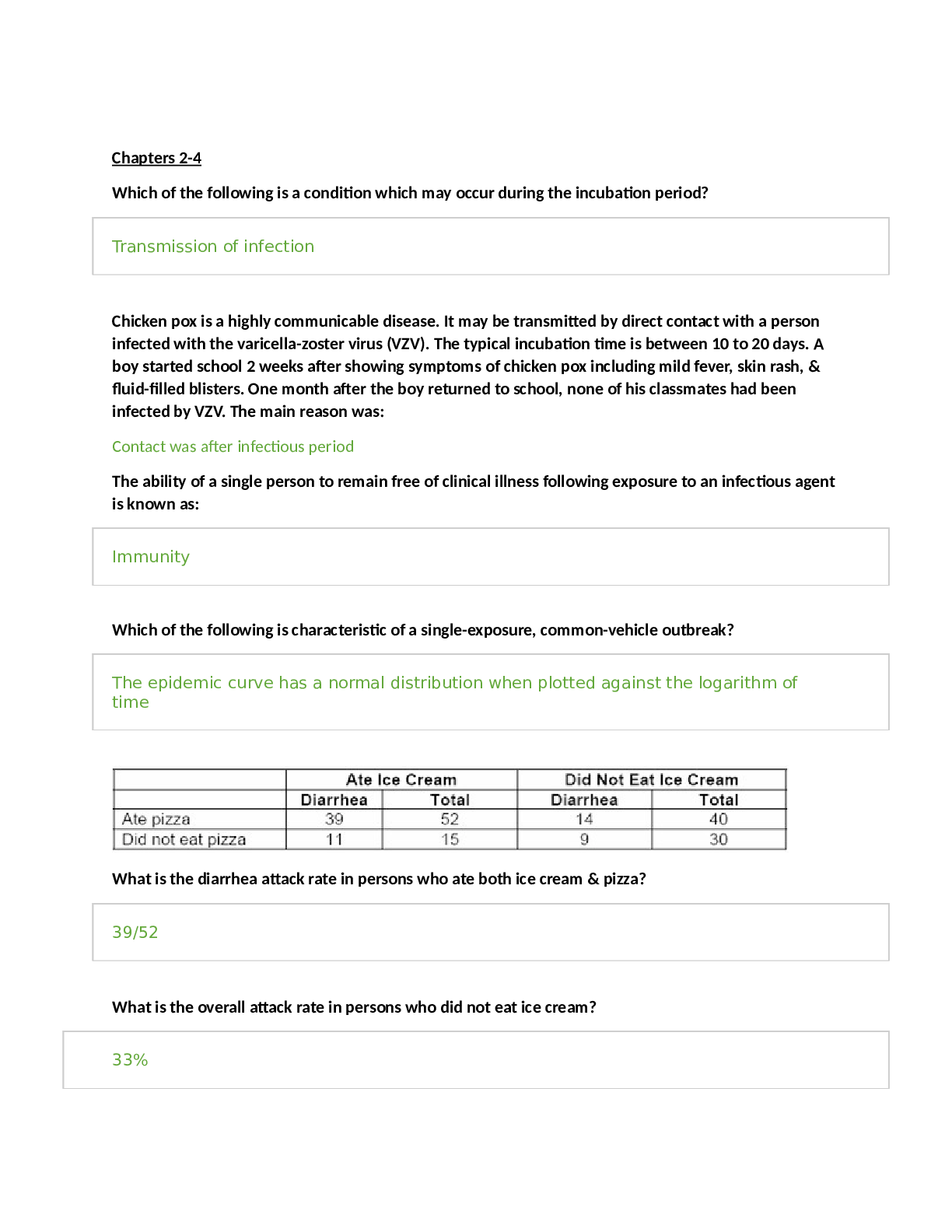
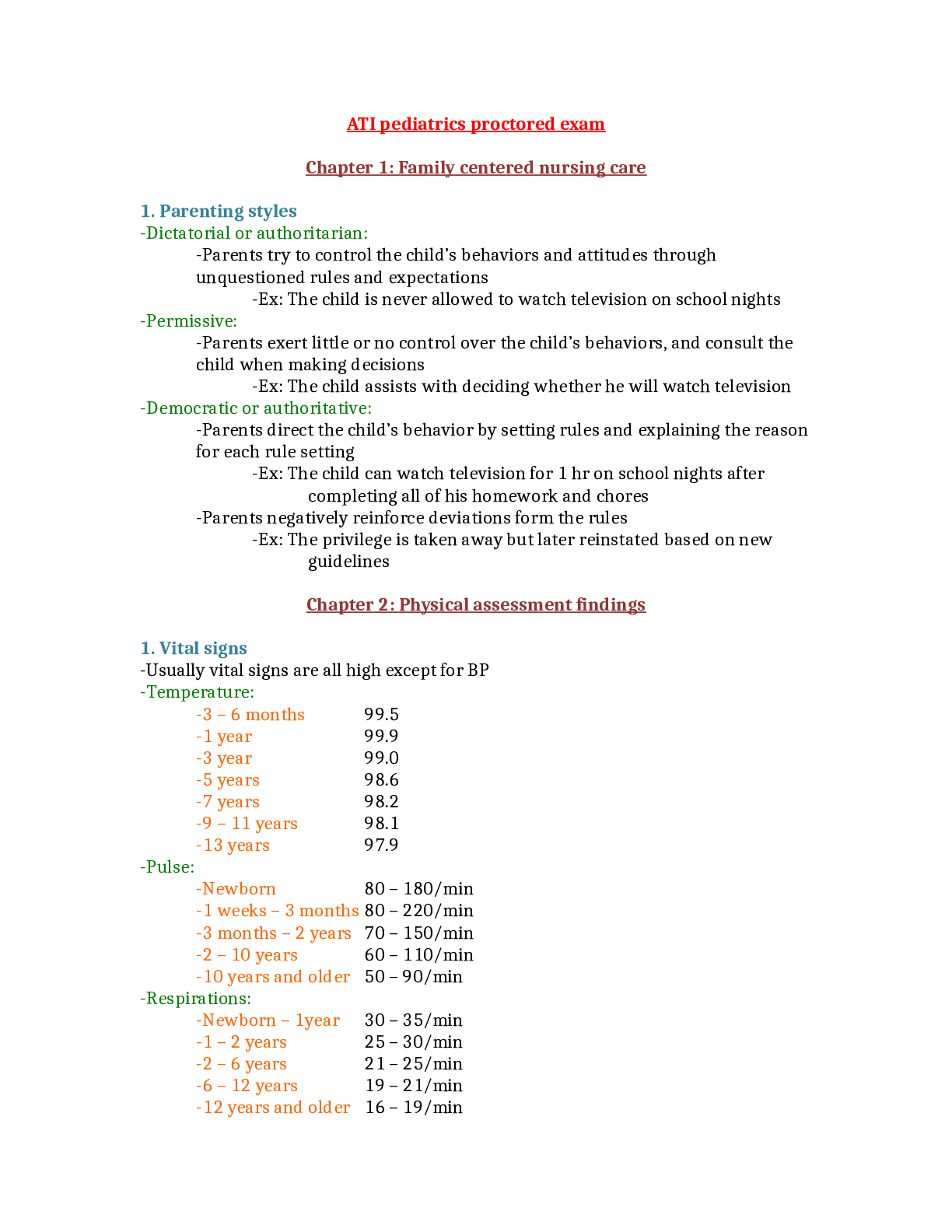
Statistics > EXAM > STAT 200 Week 5 Homework SOLUTIONGRADED A+ (All)
STAT 200 Week 5 Homework SOLUTIONGRADED A+
Document Content and Description Below
Last updated: 3 years ago
Preview 1 out of 6 pages
Instant download

Buy this Document to get the Full Access Instantly
Provided by Students Who Aced it
We Verify Document Content to Gurantee Accuracy
Reviews( 0 )
Document information
Connected school, study & course
About the document
Uploaded On
Nov 04, 2022
Number of pages
6
Written in
All

Additional information
This document has been written for:
Uploaded
Nov 04, 2022
Downloads
0
Views
94
Topic Tags
Recommended For You
Get more on EXAM »
STAT 200 FINAL EXAM 1 ; Latest Complete Solutions with shown w...

STAT 200 Week 2 Homework |Latest Questions And Answers {Comple...
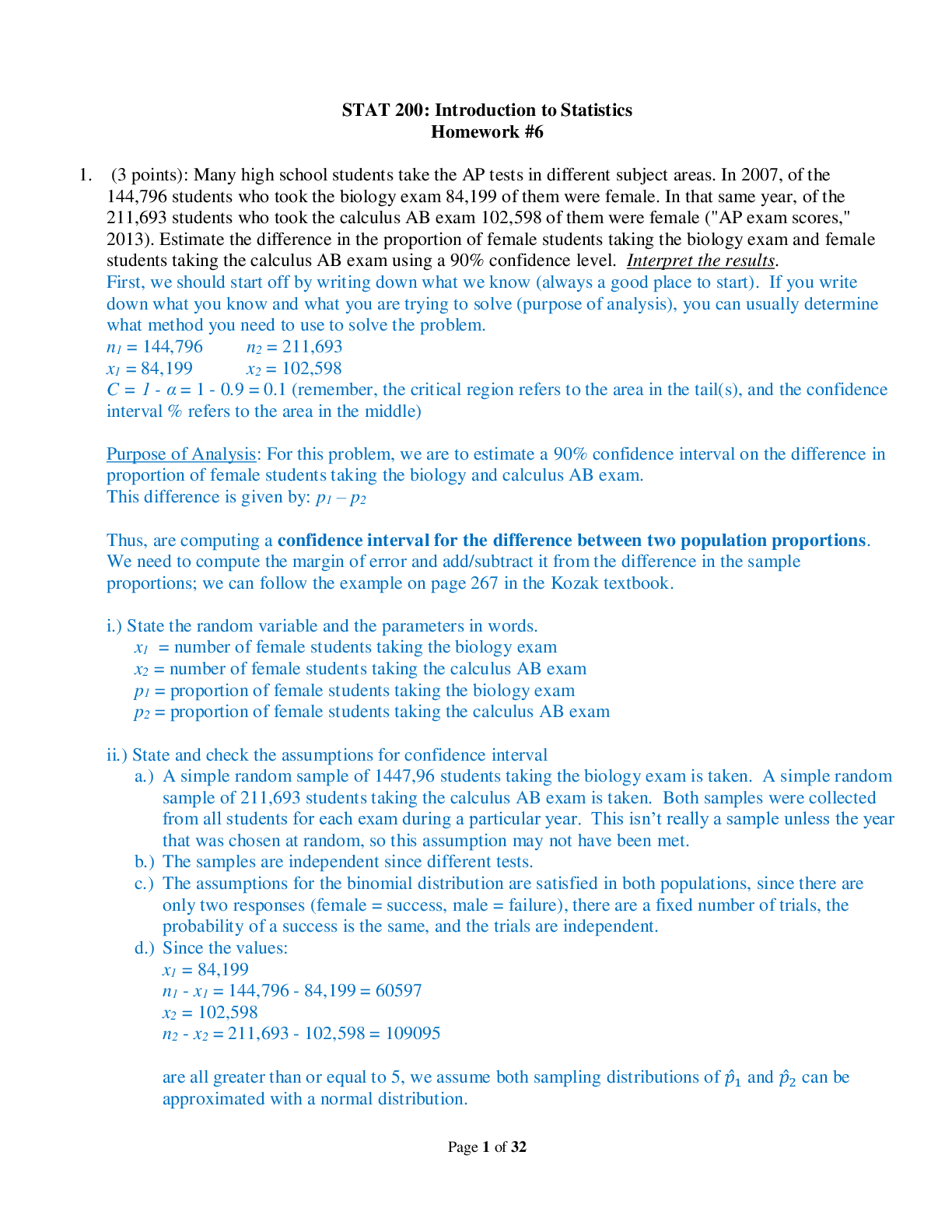

STAT 200 STAT200 MIDTERM EXAM ANSWERS (2021) - UMUC (all solut...

STAT 200 FINAL EXAM 1 ; Latest Complete Solutions with shown w...

STAT 200 6372 Introduction to Statistics (2202) / STAT 200 wee...
STAT 200 6372 Introduction to Statistics (2202) / STAT 200 wee...

University of Maryland, University College - STAT 200 3150; St...

STAT 200 Week 7 Homework Problems | Solved Spring 2025/2026 |...

University of Maryland - STAT 200; Week 7 Homework Problems, A...

![Preview of eBook [PDF] Dynamic Equations on Time Scales and Applications 1st Edition By Ravi P. Agarw](https://browseimages.nyc3.digitaloceanspaces.com/paper-images/2024/Aug/30/9DfphUrl2024-08-30-02-2866d1acfa45613.png)
eBook [PDF] Dynamic Equations on Time Scales and Applications...
![Preview of eBook [PDF] Intelligent Fatigue Statistics 1st Edition By Zhentong Gao, Jiajin Xu](https://browseimages.nyc3.digitaloceanspaces.com/paper-images/2024/Aug/30/QOdPqilt2024-08-30-02-1966d1aad11d303.png)


 Complete solutions.png)
 NURS 3247Pharmacology - Proctored Assessment,.png)