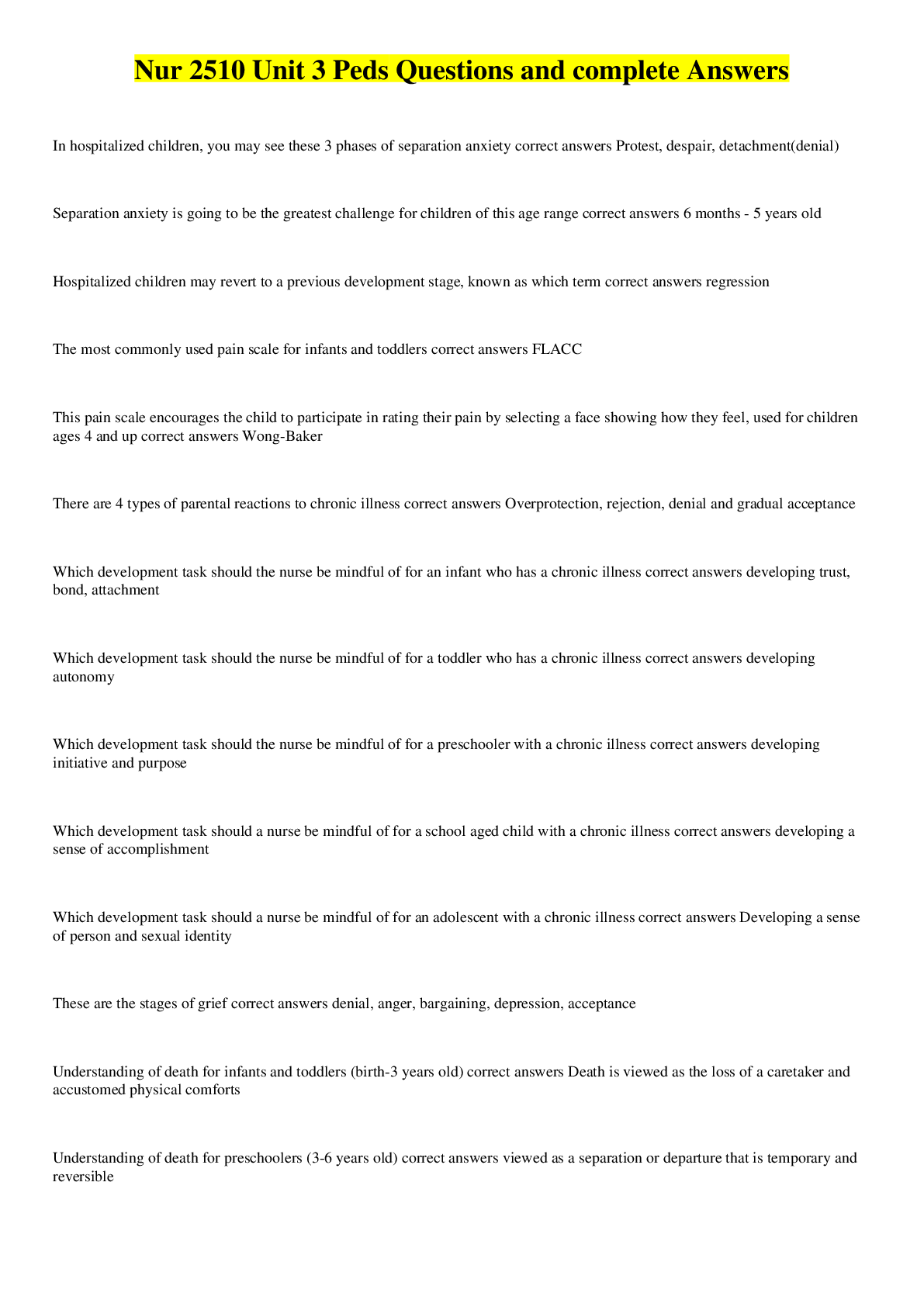
In hospitalized children, you may see these 3 phases of separation anxiety correct answers Protest, despair, detachment(denial)
Separation anxiety is going to be the greatest challenge for children of this age range c
...
In hospitalized children, you may see these 3 phases of separation anxiety correct answers Protest, despair, detachment(denial)
Separation anxiety is going to be the greatest challenge for children of this age range correct answers 6 months - 5 years old
Hospitalized children may revert to a previous development stage, known as which term correct answers regression
The most commonly used pain scale for infants and toddlers correct answers FLACC
This pain scale encourages the child to participate in rating their pain by selecting a face showing how they feel, used for children ages 4 and up correct answers Wong-Baker
There are 4 types of parental reactions to chronic illness correct answers Overprotection, rejection, denial and gradual acceptance
Which development task should the nurse be mindful of for an infant who has a chronic illness correct answers developing trust, bond, attachment
Which development task should the nurse be mindful of for a toddler who has a chronic illness correct answers developing autonomy
Which development task should the nurse be mindful of for a preschooler with a chronic illness correct answers developing initiative and purpose
Which development task should a nurse be mindful of for a school aged child with a chronic illness correct answers developing a sense of accomplishment
Which development task should a nurse be mindful of for an adolescent with a chronic illness correct answers Developing a sense of person and sexual identity
These are the stages of grief correct answers denial, anger, bargaining, depression, acceptance
Understanding of death for infants and toddlers (birth-3 years old) correct answers Death is viewed as the loss of a caretaker and accustomed physical comforts
Understanding of death for preschoolers (3-6 years old) correct answers viewed as a separation or departure that is temporary and reversible
Understanding of death for a school age child (6-12 years old) correct answers death is viewed as sad and irreversible, inevitable only for adults
Understanding of death for an adolescent (12-19 years old) correct answers death is viewed as inevitable and irreversible, adolescents has fully developed an understanding of death
This genetic disorder, also known as Trisomy 21, is the most common cause of intellectual disability correct answers Down Syndrome
This is the most common anomaly in a child with Down Syndrome correct answers congenital heart disease
[Show More]



![Preview of AORN PERIOP 101 FINAL EXAM 2026 QUESTIONS AND VERIFIED ANSWERS [LATEST UPDATE]](https://browseimages.nyc3.digitaloceanspaces.com/paper-images/2026/04/07/sGJvJ3aH2026-04-07-04-5869d464cbba16f.png)