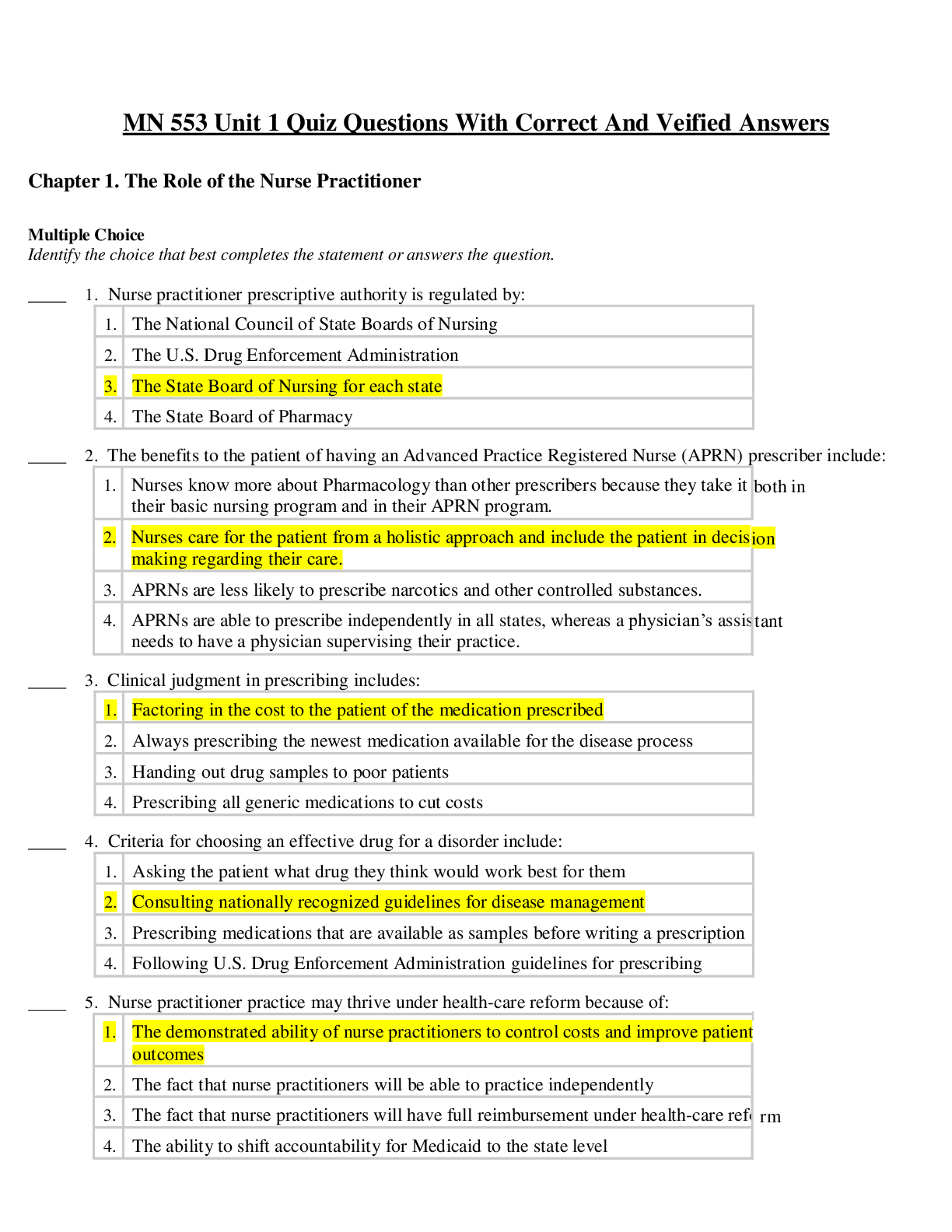
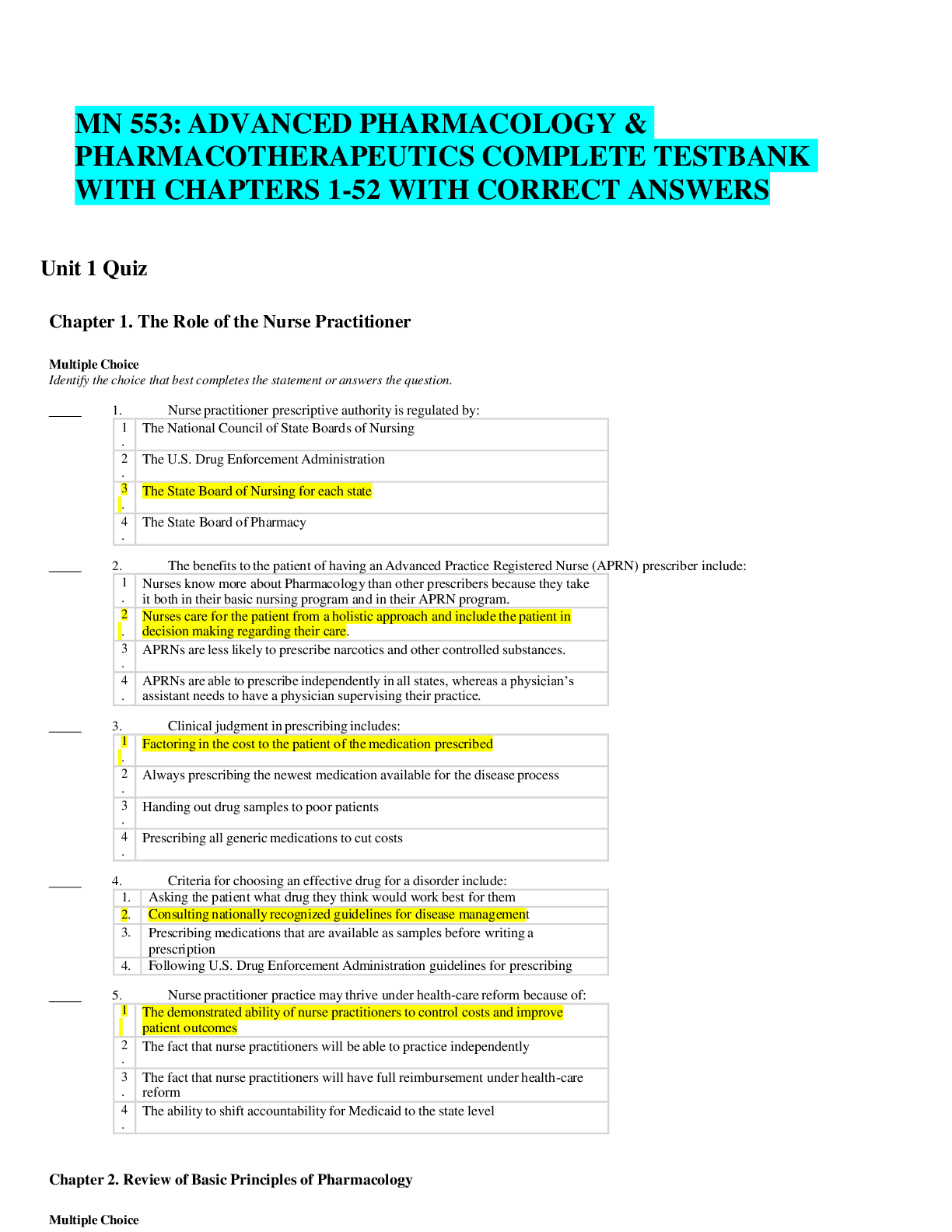
Prescriptive Authority correct answers *States vary in their laws related to prescriptive authority for APRNs.
*Scope of practice is determined by the individual NP's license under the nurse practice act of the licensin
...
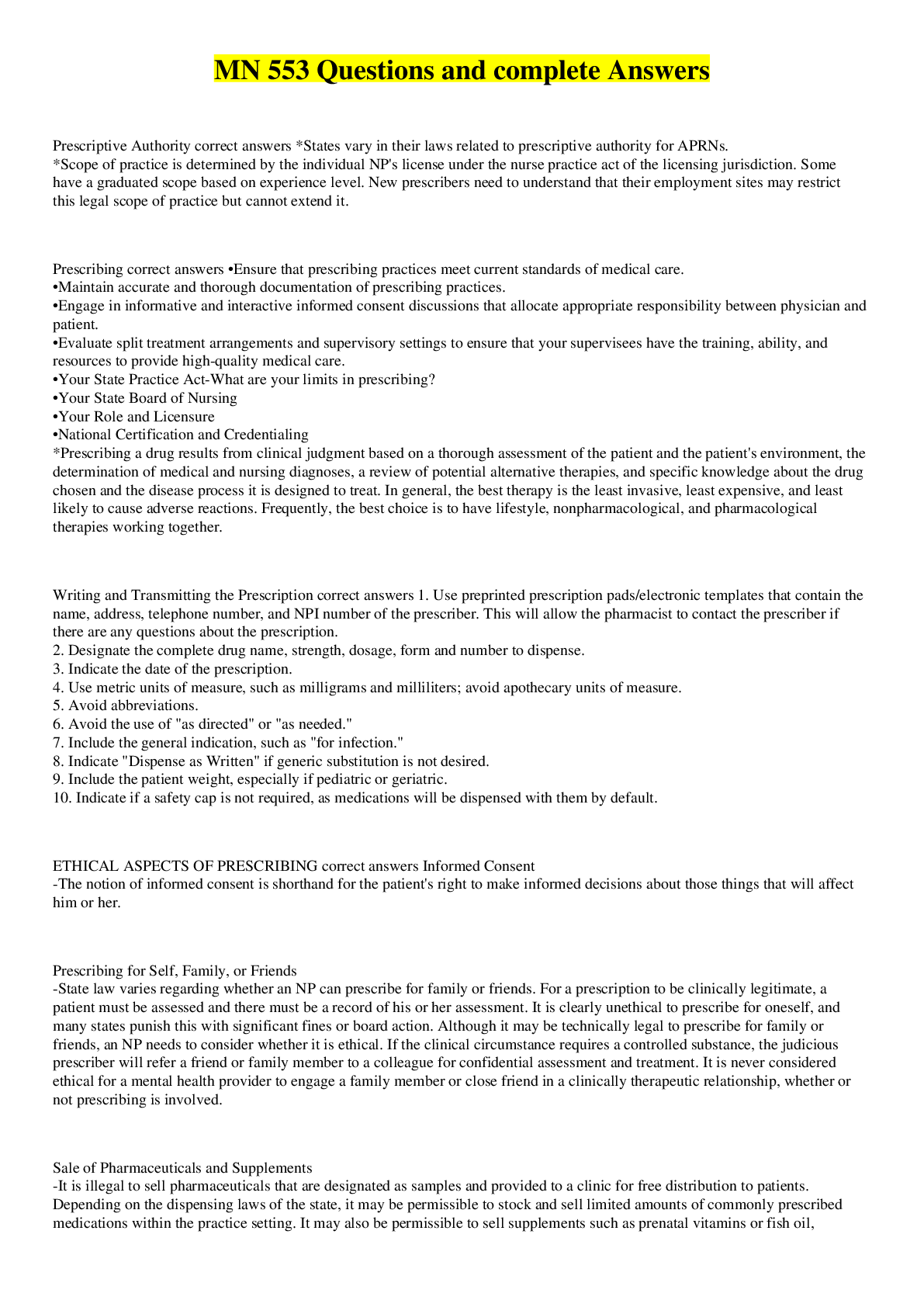
Prescriptive Authority correct answers *States vary in their laws related to prescriptive authority for APRNs.
*Scope of practice is determined by the individual NP's license under the nurse practice act of the licensing jurisdiction. Some have a graduated scope based on experience level. New prescribers need to understand that their employment sites may restrict this legal scope of practice but cannot extend it.
Prescribing correct answers •Ensure that prescribing practices meet current standards of medical care.
•Maintain accurate and thorough documentation of prescribing practices.
•Engage in informative and interactive informed consent discussions that allocate appropriate responsibility between physician and patient.
•Evaluate split treatment arrangements and supervisory settings to ensure that your supervisees have the training, ability, and resources to provide high-quality medical care.
•Your State Practice Act-What are your limits in prescribing?
•Your State Board of Nursing
•Your Role and Licensure
•National Certification and Credentialing
*Prescribing a drug result from clinical judgment based on a thorough assessment of the patient and the patient's environment, the determination of medical and nursing diagnoses, a review of potential alternative therapies, and specific knowledge about the drug chosen and the disease process it is designed to treat. In general, the best therapy is the least invasive, least expensive, and least likely to cause adverse reactions. Frequently, the best choice is to have lifestyle, nonpharmacological, and pharmacological therapies working together.
Writing and Transmitting the Prescription correct answers 1. Use preprinted prescription pads/electronic templates that contain the name, address, telephone number, and NPI number of the prescriber. This will allow the pharmacist to contact the prescriber if there are any questions about the prescription.
2. Designate the complete drug name, strength, dosage, form and number to dispense.
3. Indicate the date of the prescription.
4. Use metric units of measure, such as milligrams and milliliters; avoid apothecary units of measure.
5. Avoid abbreviations.
6. Avoid the use of "as directed" or "as needed."
7. Include the general indication, such as "for infection."
8. Indicate "Dispense as Written" if generic substitution is not desired.
9. Include the patient weight, especially if pediatric or geriatric.
10. Indicate if a safety cap is not required, as medications will be dispensed with them by default.
ETHICAL ASPECTS OF PRESCRIBING correct answers Informed Consent
-The notion of informed consent is shorthand for the patient's right to make informed decisions about those things that will affect him or her.
Prescribing for Self, Family, or Friends
-State law varies regarding whether an NP can prescribe for family or friends. For a prescription to be clinically legitimate, a patient must be assessed and there must be a record of his or her assessment. It is clearly unethical to prescribe for oneself, and many states punish this with significant fines or board action. Although it may be technically legal to prescribe for family or friends, an NP needs to consider whether it is ethical. If the clinical circumstance requires a controlled substance, the judicious prescriber will refer a friend or family member to a colleague for confidential assessment and treatment. It is never considered ethical for a mental health provider to engage a family member or close friend in a clinically therap
[Show More]



.png)