(calories per gram)
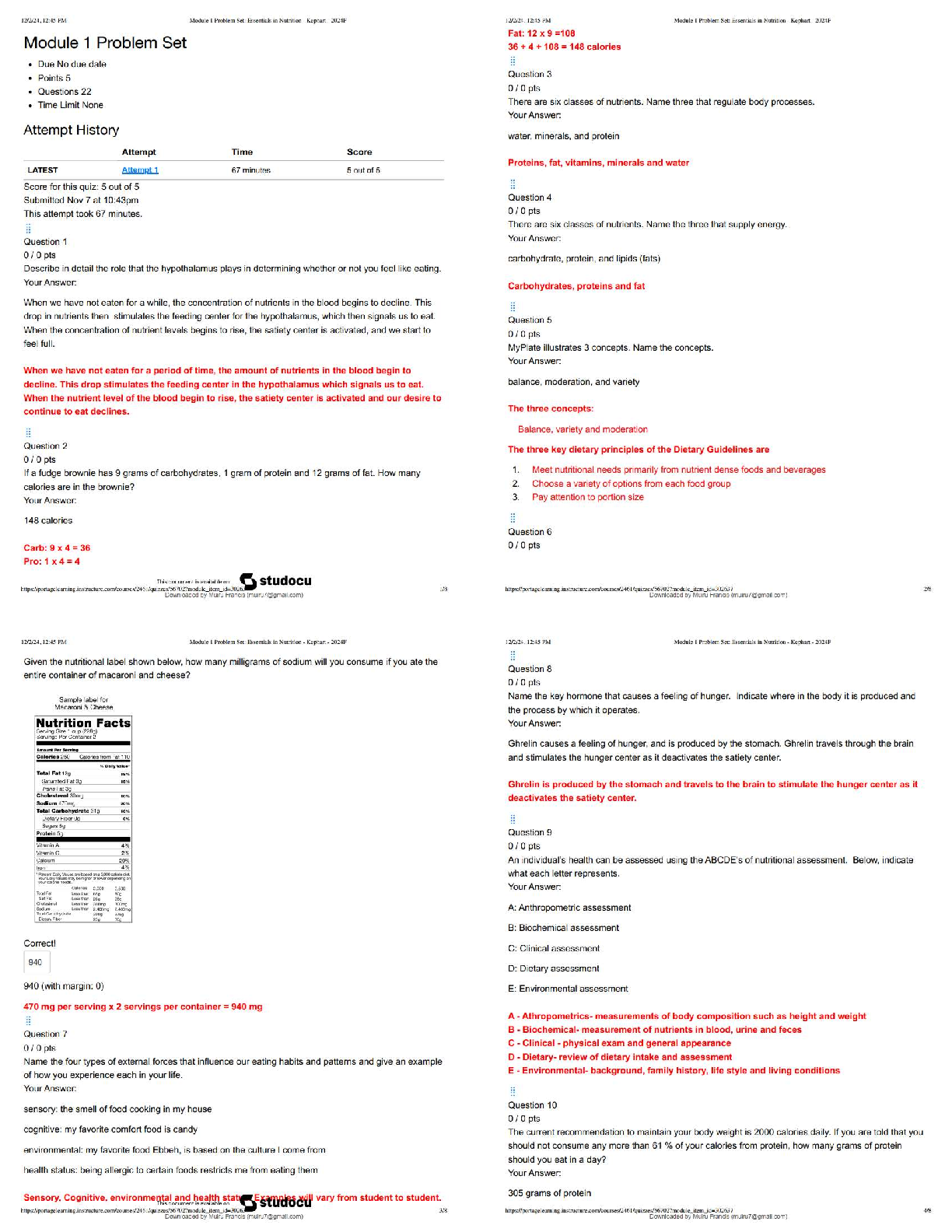
CARBS - ANSWER 4 cal/g
(calories per gram)
FATS (LIPIDS) - ANSWER 9 cal/g
(calories per gram)
PROTEIN - ANSWER 4 cal/g
(calories per gram)
ALCOHOL - ANSWER 7 cal/g
5 characteristics
...
(calories per gram)
CARBS - ANSWER 4 cal/g
(calories per gram)
FATS (LIPIDS) - ANSWER 9 cal/g
(calories per gram)
PROTEIN - ANSWER 4 cal/g
(calories per gram)
ALCOHOL - ANSWER 7 cal/g
5 characteristics of a healthy diet - ANSWER Variety
Moderation
Calorie Control
Balance
Adequacy
6 major nutrients - ANSWER Carbs
Fats/lipids
Protein
Vitamins
Minerals
Water
Energy-yielding nutrients - ANSWER Carbs, fats/lipids, and protein
Helper (regulator) nutrients - ANSWER Vitamins, minerals, and water
(CONVERSIONS)
3 teaspoons...
16 Tablespoons...
8 fluid ounces...
2.2 pounds... - ANSWER 1 Tablespoon
1 cup
1 cup
1 kilogram
Stages of behavioral change (6) - ANSWER 1. Precontemplation (don't know, don't care)
2. Contemplation (wondering/thinking about it)
3. Preparation (deciding and getting ready to do it)
4. Action (actually doing it)
5. Maintenance (getting used to it, it becoming a habit)
6. Adoption (moving on)
DRI - ANSWER Dietary Reference Intakes
give recommendations for the safety zone (not too much, not too little)
RDA - ANSWER Recommended Dietary Allowances
not as much scientific research as AIs
good for 98% of the population
AI - ANSWER Adequate Intakes
has more scientific research backing it up than RDAs
good for 98% of the population
EAR - ANSWER Estimated Average Requirements
center of the bell curve, used to find AIs and RDAs
UL - ANSWER Upper Limits
more than this is a toxic level
DV - ANSWER Daily Values
used mostly as a means to compare
DGA - ANSWER Dietary Guidelines for Americans
1. Balancing calories to manage weight
2. Foods and food components to reduce
3. Foods and nutrients to increase
4. Building healthy eating patterns
AMDR - ANSWER Acceptable Macronutrient Distribution Range
% daily calories that should come from each macronutrient
AMDR for Carbs, Protein, and Fat - ANSWER CARBS = 45 - 65%
PROTEIN = 10 - 35%
FAT = 20 - 35%
The Scientific Method - ANSWER Observation & Question
Hypothesis & Prediction
Experiment
Results & Interpretations
If hypothesis supported --> theory, if not --> new observations and questions
"High" - ANSWER greater than or equal to 20% DV
"Good" - ANSWER 10 - 19% DV
"Healthy" - ANSWER low in fat, saturated fat, trans fat, cholesterol, and sodium
greater than or equal to 10% DV in vit A, vit C, iron, calcium, protein, OR fiber
"Free" - ANSWER none, or trivial amount
Nutrient Density - ANSWER ratio of nutrients to calories
a way to measure nutrient richness, has nothing to do with who eats it or how much is eaten because it is a characteristic of the food itself
Recommended amounts of food for 2400 calorie diet
(fruits, vegetables, grains, meats/legumes, milk) - ANSWER Fruits....2 cups
Veggies....3 cups
Grains....8 oz.
Meats/legumes....6.5 oz.
Milk....3 cups
(equivalents)
1 cup of FRUIT - ANSWER 1 cup fresh, frozen, or canned fruit
1/2 cup dried fruit
1 cup fruit juice
(equivalents)
1 cup VEGETABLES - ANSWER 1 cup cut-up raw or cooked vegetables
1 cup cooked legumes
1 cup vegetable juice
2 cups raw, leafy greens
(equivalents)
1 ounce grains - ANSWER 1 slice of bread
1/2 cup cooked rice, pasta, or cereal
1 oz. dry pasta or rice
1 cup ready-to-eat cereal
3 cups popped popcorn
(equivalents)
1 ounce meat - ANSWER 1 oz. cooked lean meat, poultry, or seafood
1 egg
1/4 cup cooked legumes or tofu
1 Tbs peanut butter
1/2 oz. nuts or seeds
(equivalents)
1 cup milk - ANSWER 1 cup milk, fortified soy milk, or yogurt
1.5 oz. natural cheese
2 oz. processed cheese
(equivalents)
1 tsp oil - ANSWER 1 Tbs low-fat mayonnaise
2 Tbs light salad dressing
1 tsp vegetable oil
1 tsp soft margarine
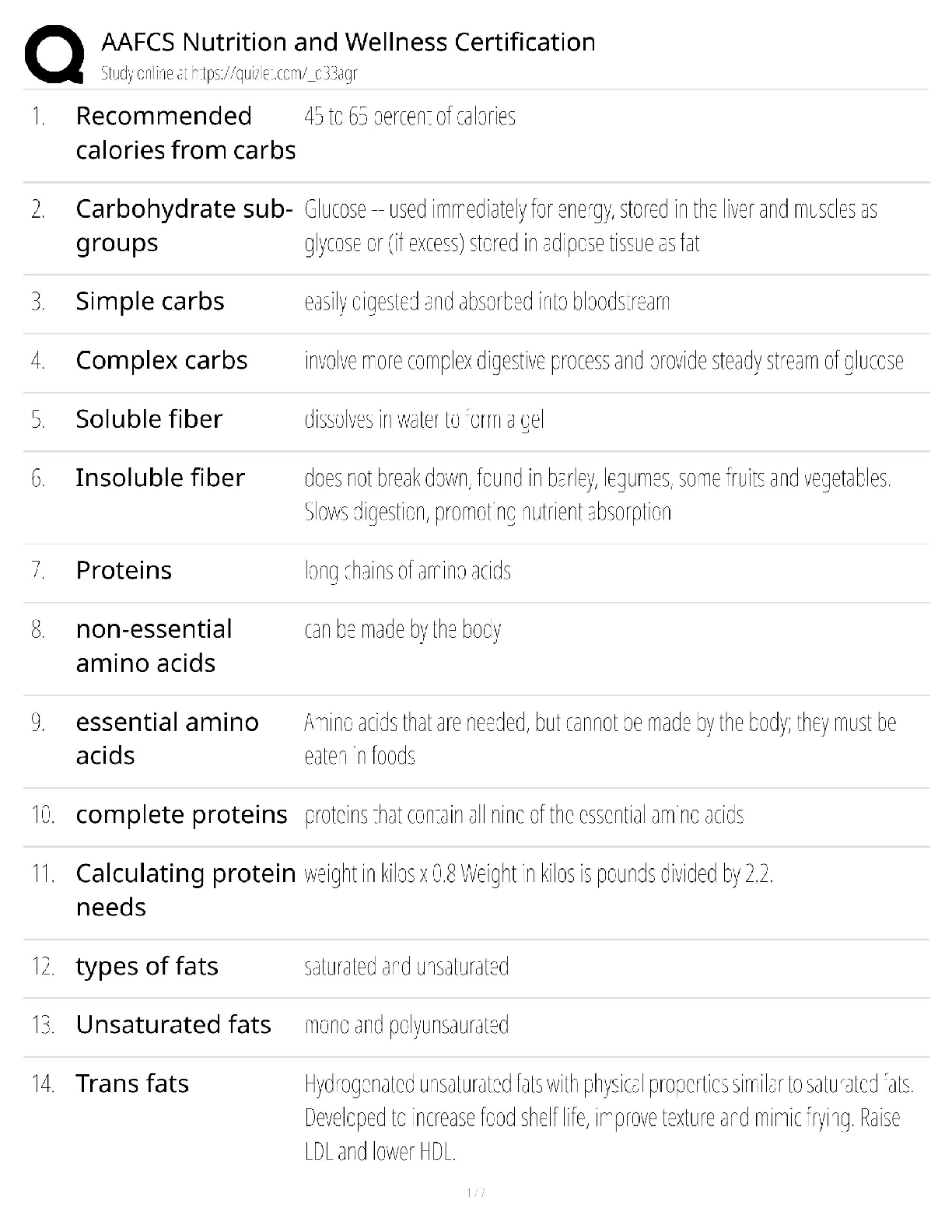
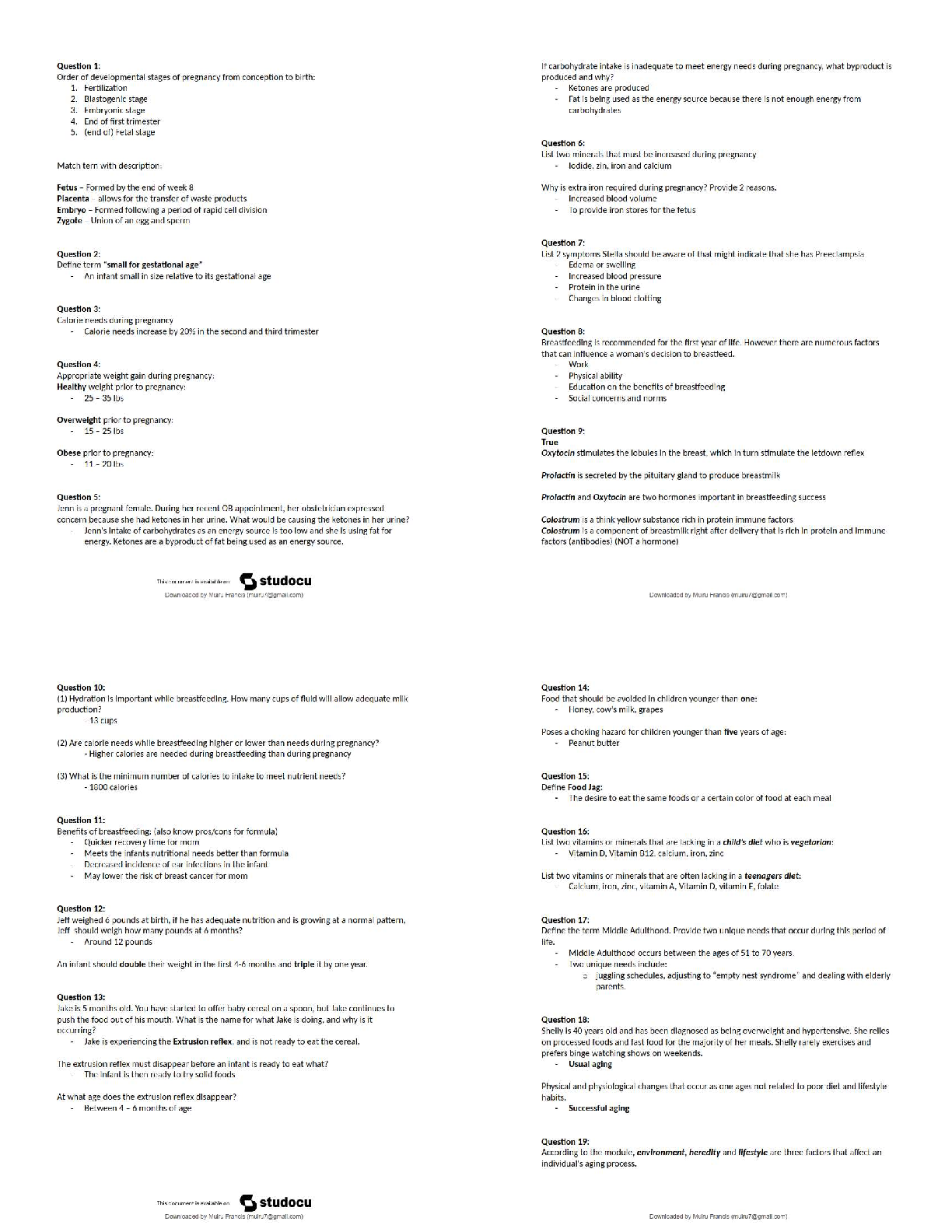
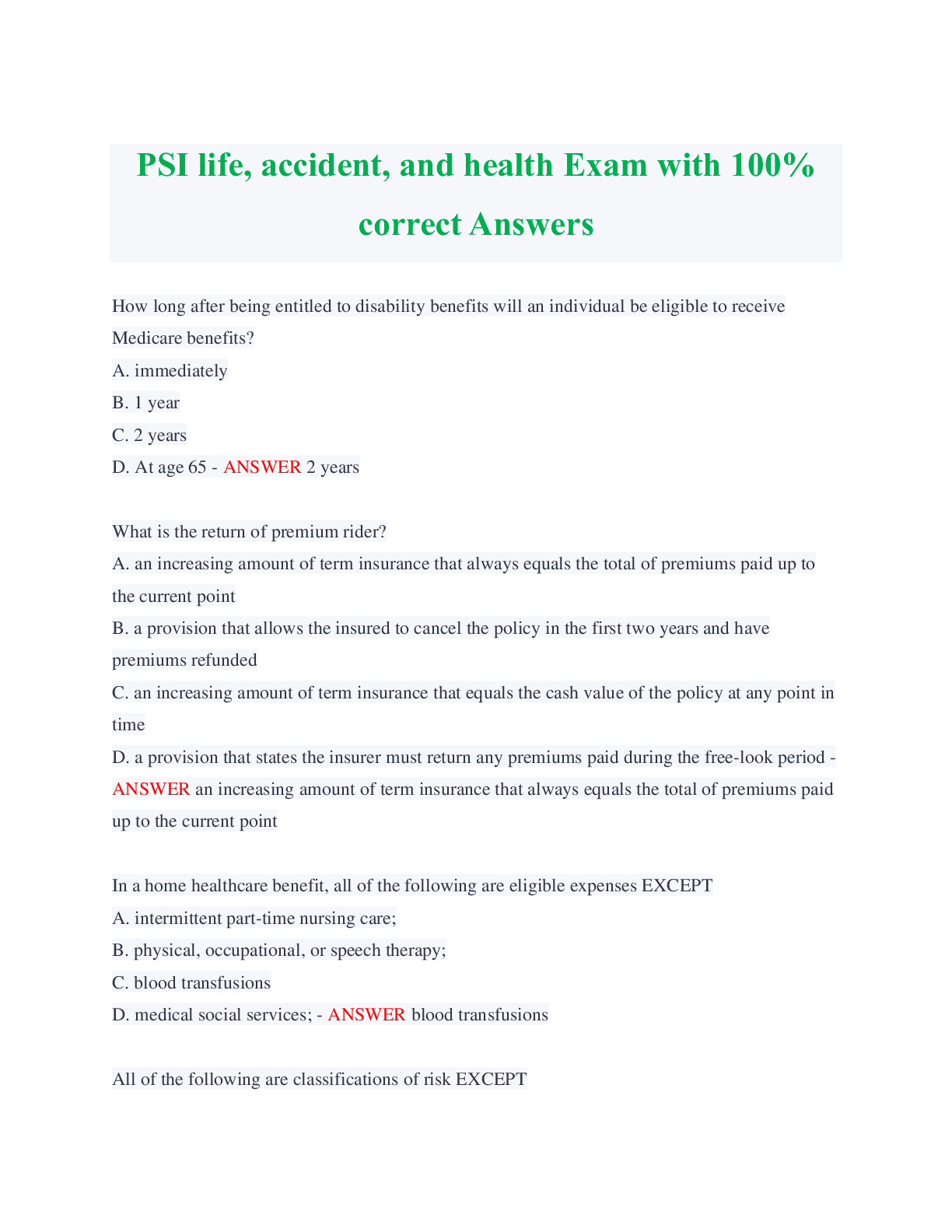
2000 calorie diet is for.... - ANSWER sedentary women 19 - 25 years old
active women 61+ years old
sedentary men 61+ years old
2400 calorie diet is for.... - ANSWER active women 19 - 30 years old
sedentary men 21 - 40 years old
3000 calorie diet is for.... - ANSWER active men 19 - 35 years old
phytochemical - ANSWER compound of plants that confers color, taste, or other characteristics
benefit of alcohol - ANSWER one drink a day will reduce the risk of heart diseases
Mouth/salivary glands - ANSWER chews and mixes food with saliva
donates a starch-digesting enzyme and a trace of a fat-digesting enzyme
Esophagus - ANSWER passes food to stomach
Liver - ANSWER manufactures bile, a detergent-like substance that facilitates digestion of fats
Stomach - ANSWER adds acid, enzymes, and fluid
churns, mixes, and grinds food to a liquid mass
Gallbladder - ANSWER stores bile until needed
Pancreas - ANSWER breaks down energy-yielding nutrients
releases bicarbonate to neutralize stomach acid that enters small intestine
Small Intestine - ANSWER secretes enzymes that digest carbohydrate, fat, and protein
cells lining intestine absorb nutrients into blood and lymph
Large Intestine (Colon) - ANSWER Reabsorbs water and minerals
Passes waste (fiber, bacteria, any unabsorbed nutrients) and some water to rectum
Complex carbohydrates - ANSWER long chains of sugar units arranged to form start or fiber
Simple carbohydrates - ANSWER sugars, including both single sugar units and linked pairs of sugar units
basic sugar unit is a molecule containing six carbon atoms, together with oxygen and hydrogen atoms
glucose - ANSWER a monosaccharide used in both plants and animal tissues for energy
necessary for the brain and for complete fat metabolism
fructose - ANSWER monosaccharide (fruit sugar)
galactose - ANSWER monosaccharide in lactose
Three monosaccharides - ANSWER glucose, fructose, and lactose
Three disaccharides - ANSWER sucrose (fructose and glucose)
maltose (two glucoses)
lactose (galactose and glucose)
Enzymes that break down those three disaccharides - ANSWER sucrase
maltase
lactase
Three polysaccharides - ANSWER starch (in plants)
glycogen (in humans, in the liver and muscles)
fiber (also in plants, doesn't get digested)
Fiber recommendations
what Americans actually get - ANSWER 19 - 50 year old
females = 25 g/d
males = 38 g/d
American average intake = about 15 g/d
Lactose Intolerance - ANSWER insufficient lactase to digest lactose
Milk allergy - ANSWER immune response
antibodies formed in reaction to absorbing undigested milk protein
glycogen - ANSWER polysaccharide
storage form of glucose in humans
Glucagon - ANSWER hormone
controls blood sugar
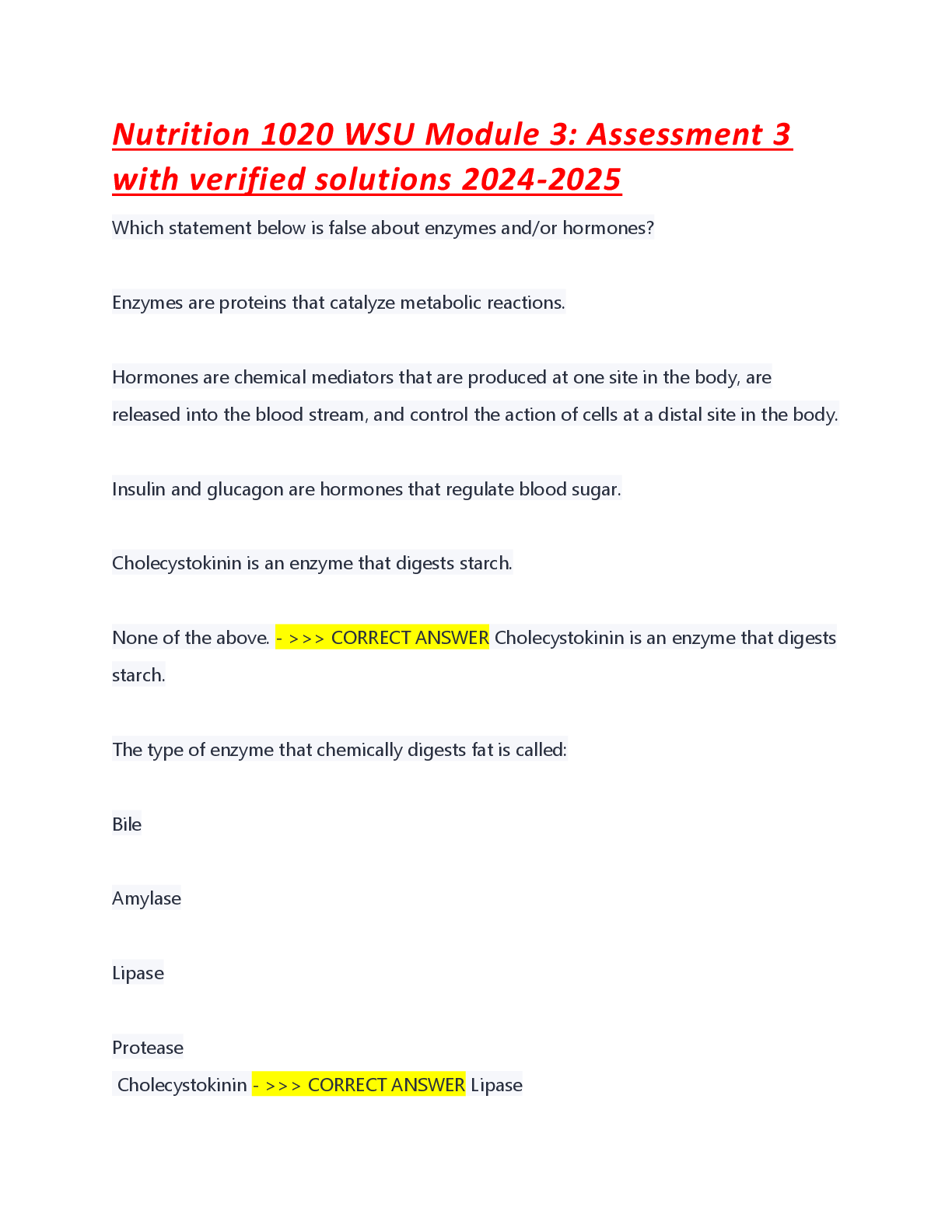
Insulin v. Glucagon - ANSWER "In"sulin takes sugar out of blood and into cells = DECREASES BLOOD SUGAR
Gluca"gon(e)" takes sugar out of cells and makes them gone, and into the blood = INCREASES BLOOD SUGAR
Type 1 Diabetes - ANSWER Beta cells in pancreas that make insulin DIE, so they don't have insulin
Type 2 Diabetes - ANSWER Beta cells are fine, so they have plenty of insulin, but the cells don't accept insulin--they're insulin-resistant
related to obesity
Exercise relating to Diabetes - ANSWER Regular exercise improves glucose uptake and helps with weight loss
[Show More]