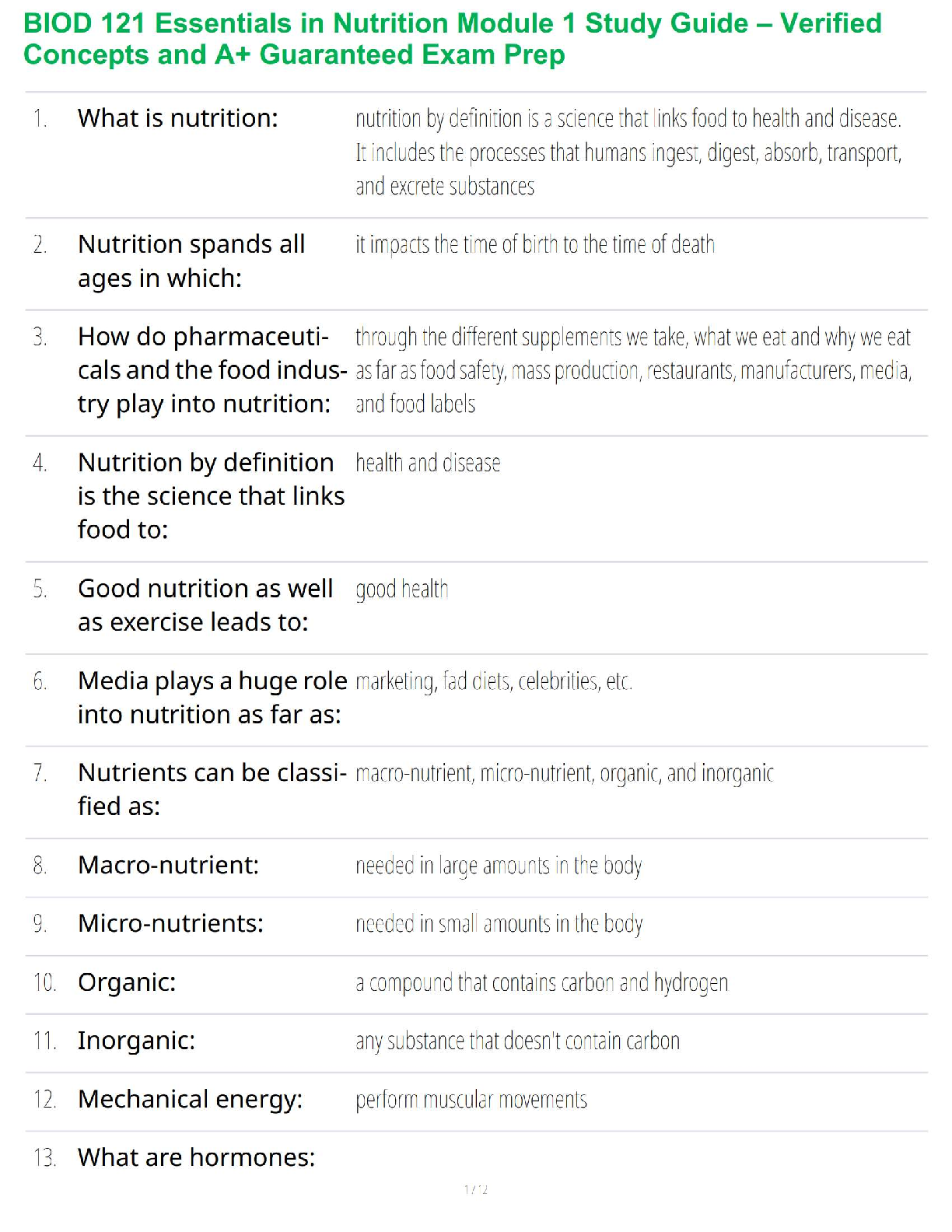
What is nutrition - ANSWER the science that studies food and how food nourishes our body and influences our health
What are chronic diseases - ANSWER diseases that come on slowly and can persist for years, often despi
...
What is nutrition - ANSWER the science that studies food and how food nourishes our body and influences our health
What are chronic diseases - ANSWER diseases that come on slowly and can persist for years, often despite treatment
how do you prevent scurvy - ANSWER regular consumption of citrus fruits, vitamin C
what is pellagra and how do you prevent it - ANSWER a skin rash, diarrhea, and mental impairment, brewer's yeast/vitamin niacin
what are the 8 areas of study in nutrition - ANSWER food consumption, food digestion, food absorption, food storage, factors that influences eating patterns, recommended amounts of types of food, food safety, the global food supply
what is wellness - ANSWER a multidimensional, active process by which people make choices to enhance their lives
how does nutrition support health - ANSWER physical, emotional, social, occupational, and spiritual health
how can nutrition prevent diseases - ANSWER provide nutrients to prevent deficiencies leading to diseases like pellagra and scurvy
what are the two leading causes of death in the US - ANSWER heart disease and cancer
what are the main points of health people 2020 - ANSWER attain high quality longer lives free of preventable disease, disability, injury and premature death, achieve health equity, eliminate disparities and improve the health of all groups, create social and physical environments that promote good health for all, and promote quality of life healthy development and health behaviors across all life stages
poor nutrition can lead to what - ANSWER development of brittle bones called osteoporosis, progression of cancer, heart disease, stroke, and diabetes
what are nutrients - ANSWER chemicals found in foods that are critical to human growth and function
what are organic nutrients - ANSWER a substance or nutrient that contains the elements of carbon and hydrogen
what are inorganic nutrients - ANSWER a substance or nutrient that does not contain carbon and hydrogen
what are macronutrients - ANSWER nutrients that our body need in relatively large amounts to support normal function and health
what are the types of macronutrients - ANSWER carbohydrates, proteins, and fats
what is a kilocalorie - ANSWER the amount of heat required to raise the temperature of 1 kilogram of water by one degree Celsius
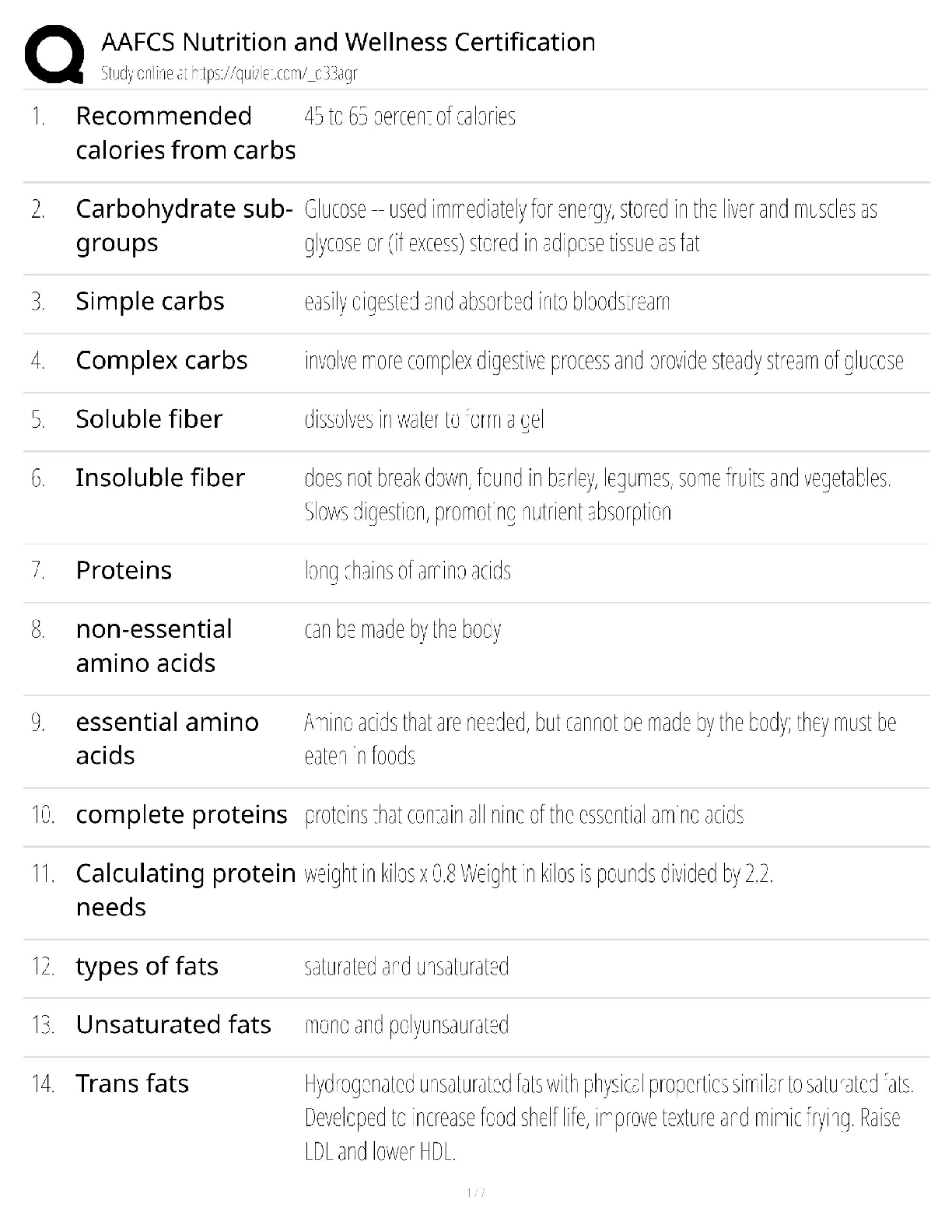
how many kcals are in carbohydrates per gram - ANSWER 4 kcals
how many kcals are in fats - ANSWER 9 kcals
how many kcals are in proteins - ANSWER 4 kcals
how many kcals are in alcohol - ANSWER 7 kcals
what are the six essential nutrients - ANSWER carbohydrates, vitamins, fats/oils, minerals, proteins, and water
why are carbohydrates important to human health - ANSWER the primary source of fuel for the body and brain, contain carbon/hydrogen/oxygen, found in grains, vegetables, fruits, legumes, dairy, nuts, and seeds
why are fats important - ANSWER composed of lipids, molecules that are insoluble in water, contain carbon/hydrogen/oxygen, found in butter, margarine, vegetable oils, important during times of rest or low intensity exercise, source of fat-soluble vitamins and essential fatty acids
why are proteins important - ANSWER chains of amino acids, not usually primary source of energy, contain carbon/hydrogen/oxygen/nitrogen, meats, dairy products, seeds, nuts, and legumes
what is cholesterol - ANSWER form of lipid that our body can produce independently and it can also be consumed in the diet
what are micronutrients - ANSWER nutrients needed in relatively small amounts to support normal health and body functions
what are some micronutrients - ANSWER vitamins and minerals
what are vitamins - ANSWER organic compounds that assist in the regulation of many body processes and the maintenance of many body functions, do not contain energy
what is the metabolism - ANSWER the chemical reactions by which large compounds such as carbs, fats, and proteins are broken down into smaller units the body can use, assembly of smaller units into larger compounds
what are the two types of vitamins - ANSWER fat soluble and water soluble
what are fat soluble vitamins - ANSWER vitamins that are not soluble in water but are soluble in fats, vitamins A, D, E, and K
what are water soluble vitamins - ANSWER vitamins that are soluble in water, vitamins C and B
what are minerals - ANSWER inorganic elements that assist in the regulation of many body processes and the maintenance of many body issues, cannot be broken down/destroyed
what makes something inorganic - ANSWER does not contain carbon and hydrogen
what are examples of minerals - ANSWER sodium, calcium, iron, potassium, and magnesium
what are the functions of minerals - ANSWER fluid regulation and energy production, essential to bones and blood, and help eliminate harmful by products of metabolism
why is water important to the human body - ANSWER inorganic nutrient, involved in bodily processes such as fluid balance, nutrient transport, nerve impulses, removal of wastes, muscle contractions, and body temperature
what are major minerals - ANSWER minerals we need to consume in amounts of at least 100 grams per day and of which the total amount in our body is at least 5 grams
what are trace minerals - ANSWER minerals we need to consume in amounts less than 100 grams per day and of which the total amount in our body is less than 5 grams
what are DRIs - ANSWER dietary reference intakes, a set of nutritional reference values for the US and Canada that applies to healthy people to prevent deficiency diseases and reduce risk of chronic diseases
what are the four values used to make up DRIs - ANSWER estimated average requirement (EAR), recommended dietary allowance (RDA), adequate intake (AI), tolerable upper intake level (UL)
what is the estimated average requirement - ANSWER the average daily intake level of a nutrient that will meet the needs of half of the healthy people in a particular life stage and gender group
what is the recommended dietary allowance - ANSWER the average daily intake level required to meet the needs of 97-98% of healthy people in a particular life stage and gender group
what is adequate intake - ANSWER recommended average daily intake level for a nutrient that is assumed to be adequate, based on observations and estimates from experiments, vitamin D, vitamin K, fluoride, and chromium
what is tolerable upper level intake - ANSWER highest average daily intake level that is not likely to have adverse effects on the health of most people, consumption of a nutrient at levels above the UL is not considered safe
the DRIs related to energy - ANSWER the acceptable macronutrient distribution range (AMDR) and the estimated energy requirement (EER)
what is the estimated energy requirement (EER) - ANSWER the average dietary energy intake that is predicted to maintain energy balance in a healthy individual
what is the acceptable macronutrient distribution range (AMDR) - ANSWER a range of intakes for a particular energy source that is associated with a reduced risk for chronic disease but provides adequate intakes of essential nutrients
how does the body use proteins - ANSWER break down dietary proteins into amino acids and reassemble them to build our body proteins, play a major role in building new cells and tissues, maintaining the structure and strength of bones, repairing damaged structures, and assisting in regulating the breakdown of food and fluid balance
what vitamins are toxic when taken in large amounts - ANSWER A, D, E, K, C, B-vitamins
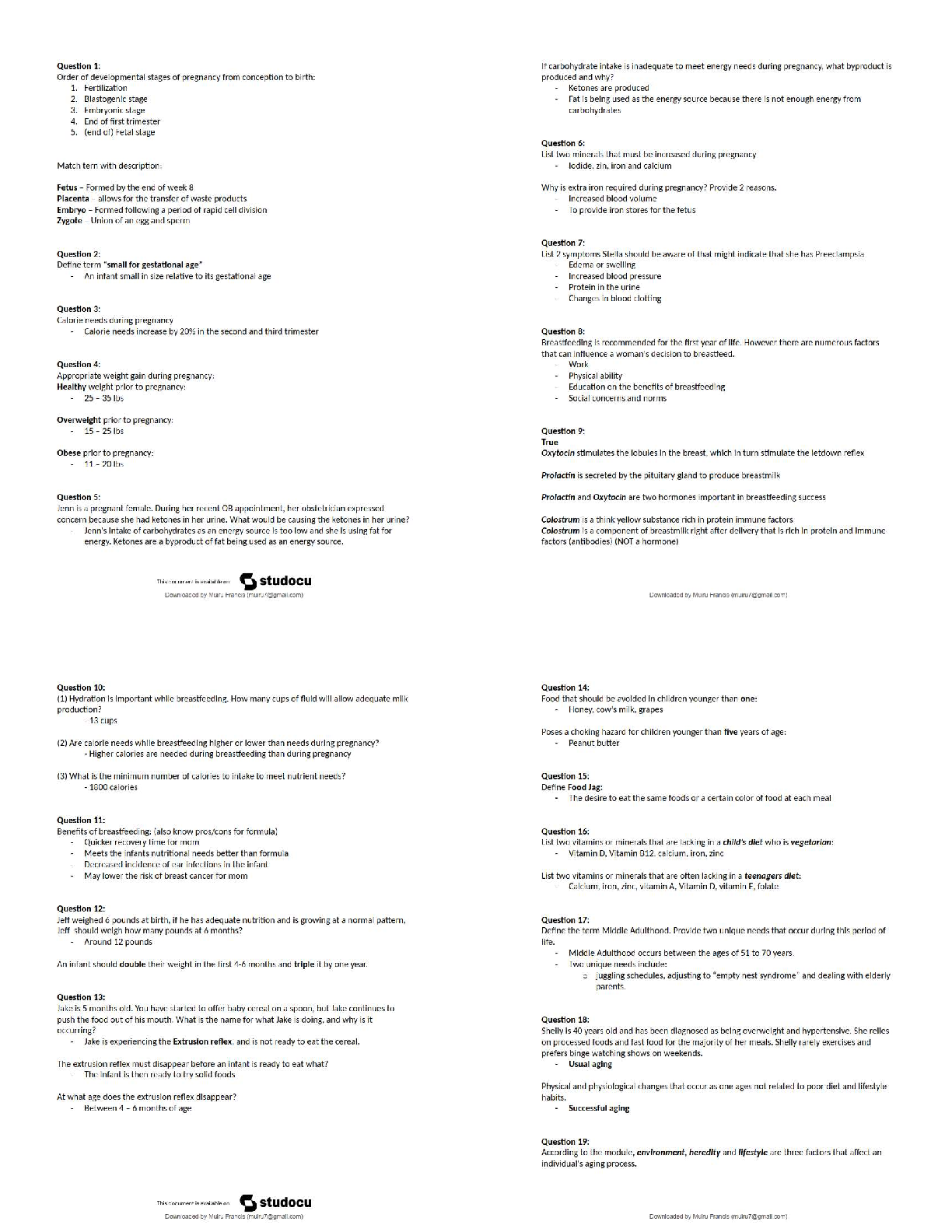
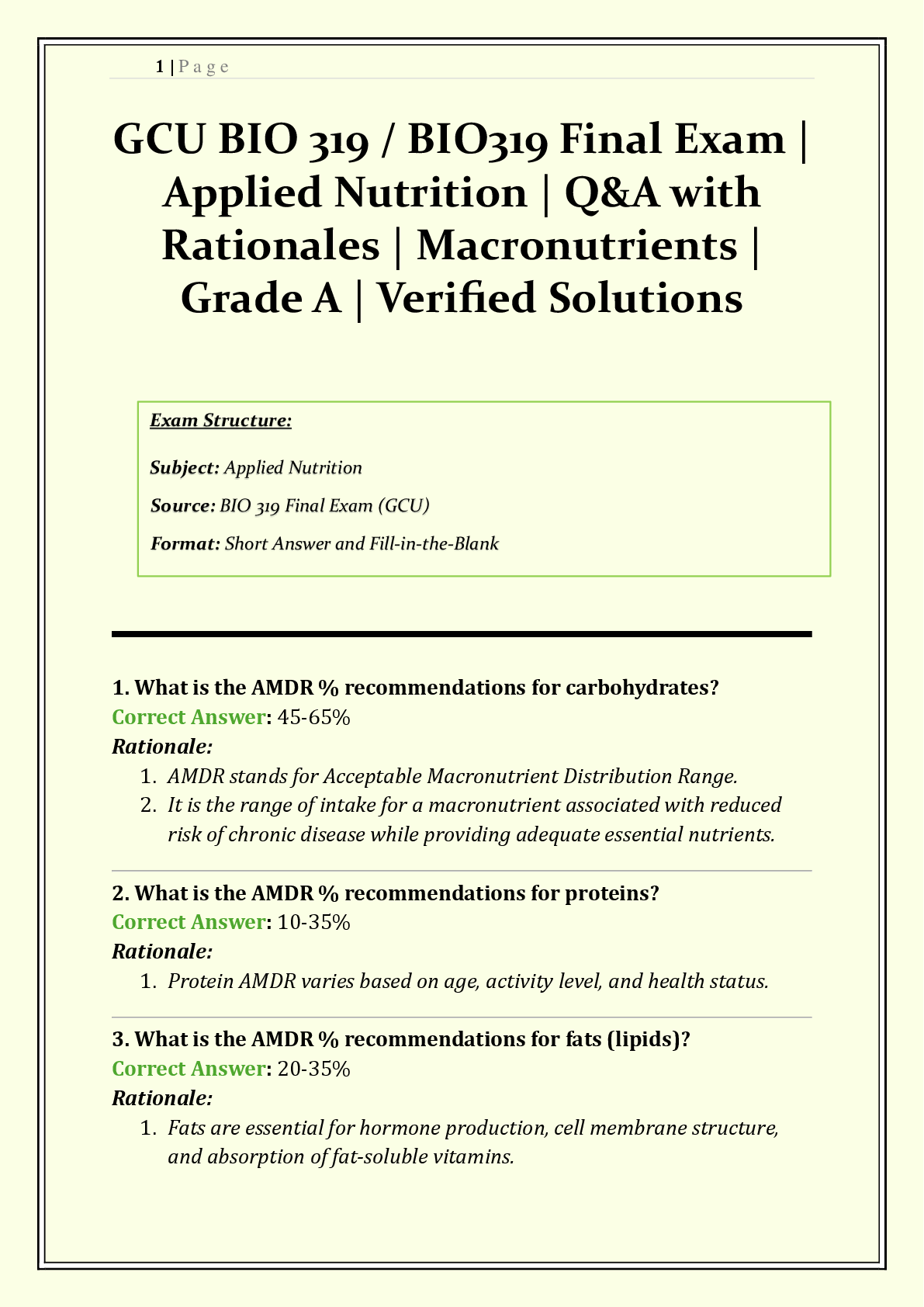
from the AMDR how much of your diet should be carbohydrates, fats, and proteins - ANSWER 45-65%, 20-35%, 10-35%
what is the difference between a nutritionist and a registered dietitian - ANSWER nutritionists deal with general nutritional aims and behaviors, often employed in schools, hospitals, etc and dietitians are qualified to diagnose eating disorders and design diets to treat specific medical conditions
what are the types of scientific studies - ANSWER animal versus human studies, epidemiological studies, observational studies, case control studies, and clinical studies
what professional organizations provide reliable nutrition information - ANSWER academy of nutrition and dietetics (AND), the american society for nutrition (ASN), the american college of sports medicine (ACSM), the obesity society (TOS)
what are nutrigenomics - ANSWER a scientific discipline studying the interactions among genes, the environment, and nutrition
what are GI flora - ANSWER helpful bacteria in our gastrointestinal tract
what are probiotics - ANSWER contain live microorganisms that improve the intestinal microbial balance
what are prebiotics - ANSWER nondigestible food ingredients that stimulate the growth and activity of probiotic bacteria
what are phytochemicals - ANSWER naturally occurring plant compounds believed to have health promoting effects in humans
what is the difference between biological urge and psychological desire - ANSWER hunger is a basic biological urge, while appetite is a psychological desire influenced by sensory data, learning, social/cultural/emotional cues
what is a healthful diet - ANSWER adequate, moderate, balanced, nutrient dense, varied
what foods are exempt from standard food labeling - ANSWER meat, poultry, fish, coffee, fresh produce, and most spices
what are the tools for designing a healthful diet - ANSWER food labels, 2010 dietary guidelines for americans, the USDA food patterns and myplate graphic
what are the five components of food labels - ANSWER statement of identity, net contents of the package ingredient list, name and address of the food manufacturer, packer, or distributor, and nutrition information
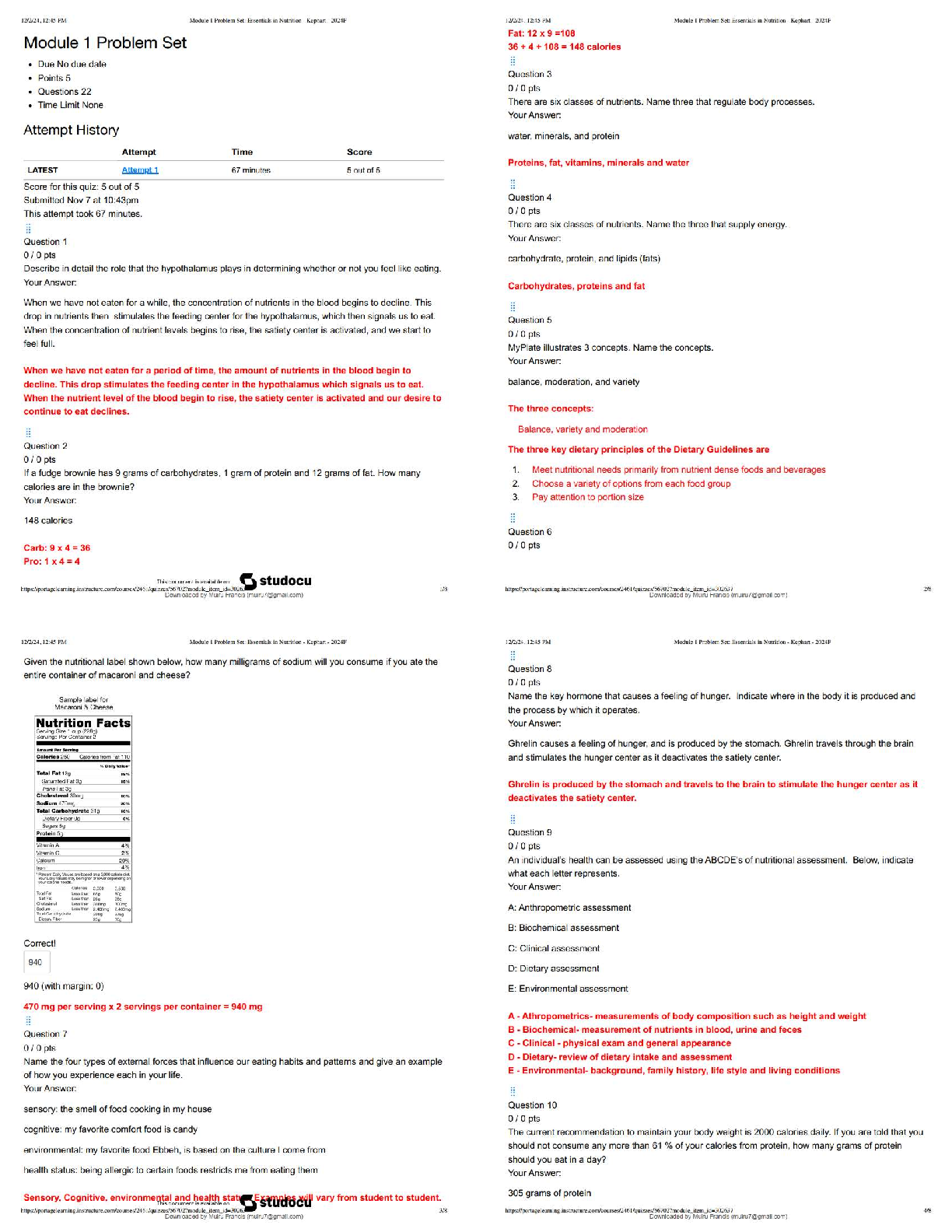
what is the nutrition facts panel - ANSWER contains the nutrition info required by the FDA, serving size and servings per container, Calories and calories from fat per serving, list of nutrients, percent daily value, footnote
what are the nutrients on nutrition facts panels - ANSWER fat, cholesterol, sodium, carbohydrates, protein, some vitamins and minerals
what are empty calories - ANSWER calories from solid fats or added sugars that provide few or not nutrients
what is the dietary guidelines for Americans - ANSWER set of principles developed by the US department of health and human services/agriculture, designed to promote health, reduce risk of chronic disease, reduce the prevalence of overweigh and obesity
what is myplate - ANSWER the visual representation of the USDA food patterns, replaced the food pyramid
what is a nutrient dense food - ANSWER the relative amount of nutrients and fiber per amount of energy, spinach salad, turkey sandwich, etc
what are the food groups - ANSWER grains, vegetables, fruits, dairy foods, proteins foods
how are glucose levels maintained - ANSWER through the endocrine hormones of the pancreas
what is the mediterranean diet - ANSWER olive oil is the primary fat, dairy foods are grains/legumes/nuts/vegetables/cheese/yogurt, vine is included in moderation
what are atoms - ANSWER smallest units of matter, bond together to form molecules
what are molecules - ANSWER groups of atoms bonded in specific configurations, carbs/proteins/fats/vitamins are very large molecules
what are the goals of digestion - ANSWER break down large molecules into smaller molecules, absorb the smaller molecules into the cells of the body
what is the cell membrane - ANSWER outer layer enclosing each cell of the body, composed of two layers of phospholipids, cholesterol and proteins are embedded in the membrane
what does the cell membrane enclose - ANSWER cytoplasm (liquid within a cell), organelles (tiny structures that perform many functions)
what is the organization of the body - ANSWER cells join together to form tissues (muscular, nervous), tissues combine to form organs (stomach,heart,brain), organs working together (GI system)
what is hunger - ANSWER a physiological drive to eat that occurs when our body senses that we need food
part of the brain responsible for hunger - ANSWER the hypothalamus region contains a cluster of nerve cells known as the feeding center and the satiety center
[Show More]

.png)