nutrition - ANSWER The American Medical Association defines THIS as the "science of food; the nutrients and the substances therein; their action, interaction, and balance in relation to health and disease; and the proces
...
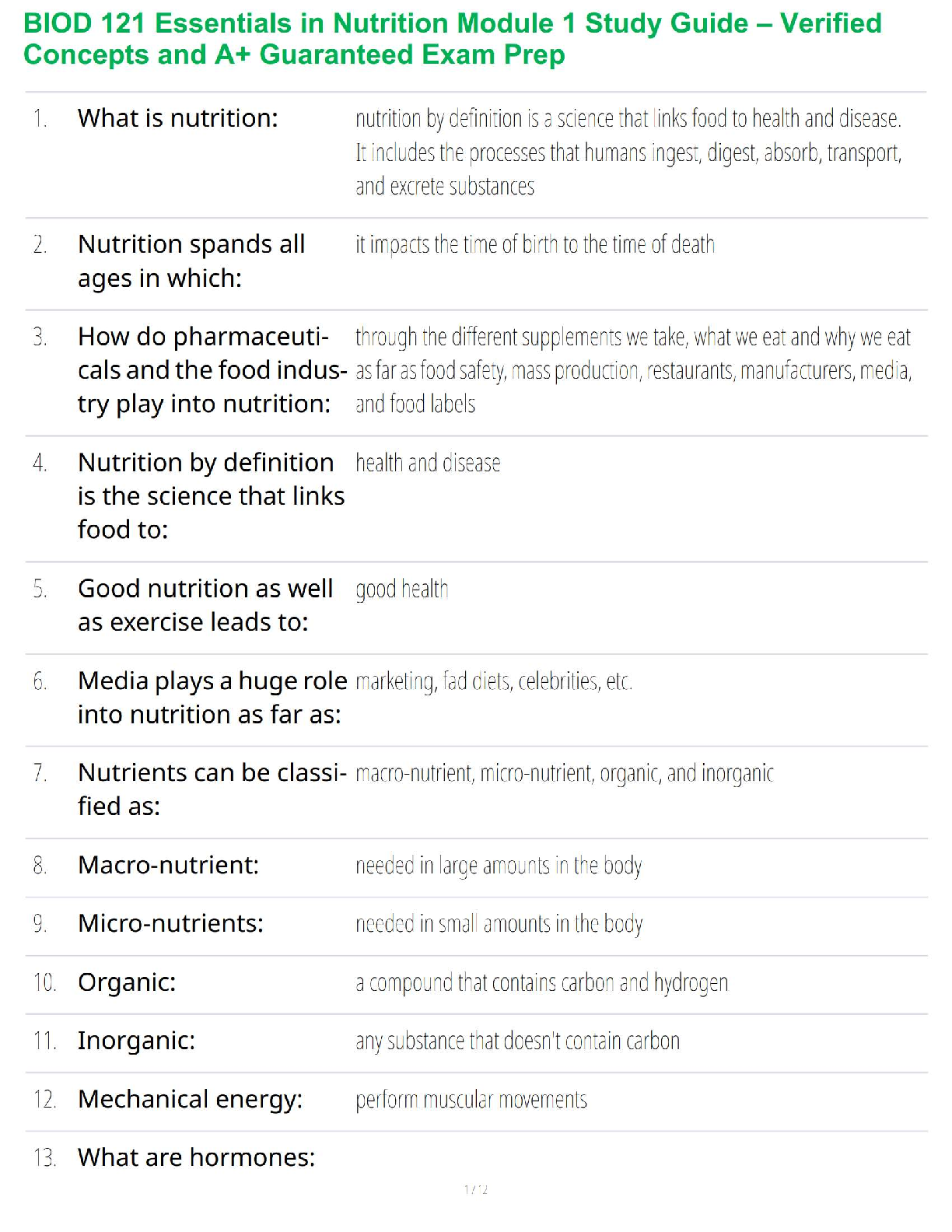
nutrition - ANSWER The American Medical Association defines THIS as the "science of food; the nutrients and the substances therein; their action, interaction, and balance in relation to health and disease; and the process by which the organism (e.g. human body) ingests, digests, absorbs, transports, utilizes, and excretes food substances." Food provides the nutrients needed to fuel, build, and maintain body cells.
high nutrient density food - ANSWER foods that contain more nutrients per calorie
low nutrient density food - ANSWER foods that contain less nutrients per calorie
Provide energy (calories = measure of energy), Provide structure, Regulate body processes - ANSWER 3 functions of nutrients
essential nutrients - ANSWER our bodies cannot make them, so it is important that we consume them
non-essential nutrients - ANSWER our bodies can make them from other nutrients, so it is NOT important that we consume them
fortified foods - ANSWER nutrients are added to food
phytochemical - ANSWER Non-nutrient substances in food FROM PLANTS thought to be beneficial to the human body
zoochemical - ANSWER Non-nutrient substances in food IN ANIMALS thought to be beneficial to the human body
functional foods - ANSWER Provide health benefits beyond functions of nutrients
Examples:
Broccoli for prevention of cancer
Oatmeal for lowering cholesterol
Salmon for prevention of heart disease
Designer foods - ANSWER Functional foods with added nutrients
Examples:
Water with added vitamins
Margarine with added plant sterols
Orange juice with added calcium
carbohydrates, protein, lipids, water, vitamins, minerals - ANSWER identify the 6 nutrients
7 - ANSWER alcohol has _____ cal/gram
4 - ANSWER protein has _____ cal/gram
4 - ANSWER carbohydrates have _____ cal/gram
9 - ANSWER fat has _____ cal/gram
over-nutrition - ANSWER too much of a nutrient or nutrients or calories
under-nutrition - ANSWER too little of a nutrient or nutrients or calories
50% - ANSWER about what percentage of all deaths are due to nutrition-related diseases?
genes, diet and lifestyle - ANSWER What 2 factors affect your risk of developing a nutrition-related disease such as obesity?
Personalized nutrition - ANSWER diets based on a person's genes
nutrigenomics - ANSWER The study of interactions between genes and nutrition
Variety, Balance, Moderation - ANSWER a healthy diet contains these 3 things
Variety - ANSWER Eating foods from a _______ of food groups
Eating a _______ of foods within each food group
Balance - ANSWER ______ unhealthy choices with healthy choices
______ calories in with calories burned
______ foods within food groups
Moderation - ANSWER ______ portion sizes
______ consumption of each food
scientific method - ANSWER observation-->hypothesis-->esperiment-->theory
Epidemiological - ANSWER studies populations
example: fatty fish & heart disease in Alaska natives
Laboratory - ANSWER conducted on cells, animals, or humans completely within a laboratory
example: eat a meal and test blood glucose
Experimental or clinical - ANSWER compares an experimental or treatment group with a control group
example: treatment group drinks takes supplement and control group takes placebo
macro-nutrient - ANSWER nutrient that must be broken down more to be used by the body
micro-nutrient - ANSWER nutrient already in its smallest form, doesn't need to be broken down
ex: minerals, vitamins
Dietary Reference Intakes - ANSWER DRI
Recommendations for amount of energy, nutrients and other food components
For healthy people to stay healthy, decrease chronic disease risk, and prevent deficiencies
Set for each gender and various life stages
Recommended Daily Allowance - ANSWER RDA
factors for nutritional status - ANSWER Health as it is influenced by intake and use of nutrients
In populations, includes analysis of food intakes or food availability
In individuals, includes analysis of food and nutrient intake, physical health (including measuring nutrients), medical and family history, and lifestyle
Estimated Average Requirements - ANSWER EAR
Nutrient intakes estimated to meet the needs of 50% of healthy individuals within a gender and life-stage group
Used to assess population's nutrition adequacy but not for an individual's intake
Adequate Intakes - ANSWER AI
Estimation of amounts needed to sustain health
Based on what healthy people typically eat
Amounts people should consume on average over several days or weeks
Tolerable Upper Intake Limits - ANSWER UL
Maximum daily nutrient intakes unlikely to pose health risk for almost all individuals within a gender or life-stage group
Depending on nutrient, UL is set for all sources, for supplements, or for supplements and fortified foods
RDA, EAR, AI, UL - ANSWER Identify the 4 components of the DRIs
RDA - ANSWER Which DRI value(s) is/are set at a level that will meet the needs of most healthy people in a population?
UL - ANSWER Which DRI value represents the amount above which toxicity becomes more likely?
EER, AMDR - ANSWER DRI energy intake recommendations
Acceptable Macronutrient Distribution Ranges - ANSWER AMDR
Recommended protein, carbohydrate, and fat intake ranges to decrease disease risk and provide diet flexibility
Estimated Energy Requirements - ANSWER EER
Average energy intake values predicted to maintain weight in healthy individuals
Based on age, gender, height, weight, and physical activity
10-35% - ANSWER AMDR Protein
45-65% - ANSWER AMDR Carbohydrates
20-35% - ANSWER AMDR Fats
age, gender, height, weight, and physical activity - ANSWER What are the five variables that affect your energy needs?
Dietary Guidelines for Americans - ANSWER Set of diet and lifestyle recommendations designed to promote health and reduce the risk of overweight, obesity, and chronic diseases in the U.S. population
key recommendations for the Dietary Guidelines - ANSWER Balance calorie intake with activity
Eat 2.5 cups of fruits and vegetables daily
Select more fruits that fruit juices
Eat a variety of vegetables and protein sources (e.g., beans, peas, seafood)
Replace refined grains with whole grains, high-fat dairy with low-/no-fat dairy, and fats with oils
Limit intake of solid fats (saturated fat, trans fat) and cholesterol, sodium, added sugars, refined grains, and alcohol
[Show More]