Hesi Fundamentals Practice Test Questions and Answers
Document Content and Description Below
Last updated: 3 years ago
Preview 1 out of 23 pages
Instant download

Buy this Document to get the Full Access Instantly
Provided by Students Who Aced it
We Verify Document Content to Gurantee Accuracy
Also available in bundle (1)
Click Below to Access Bundle(s)
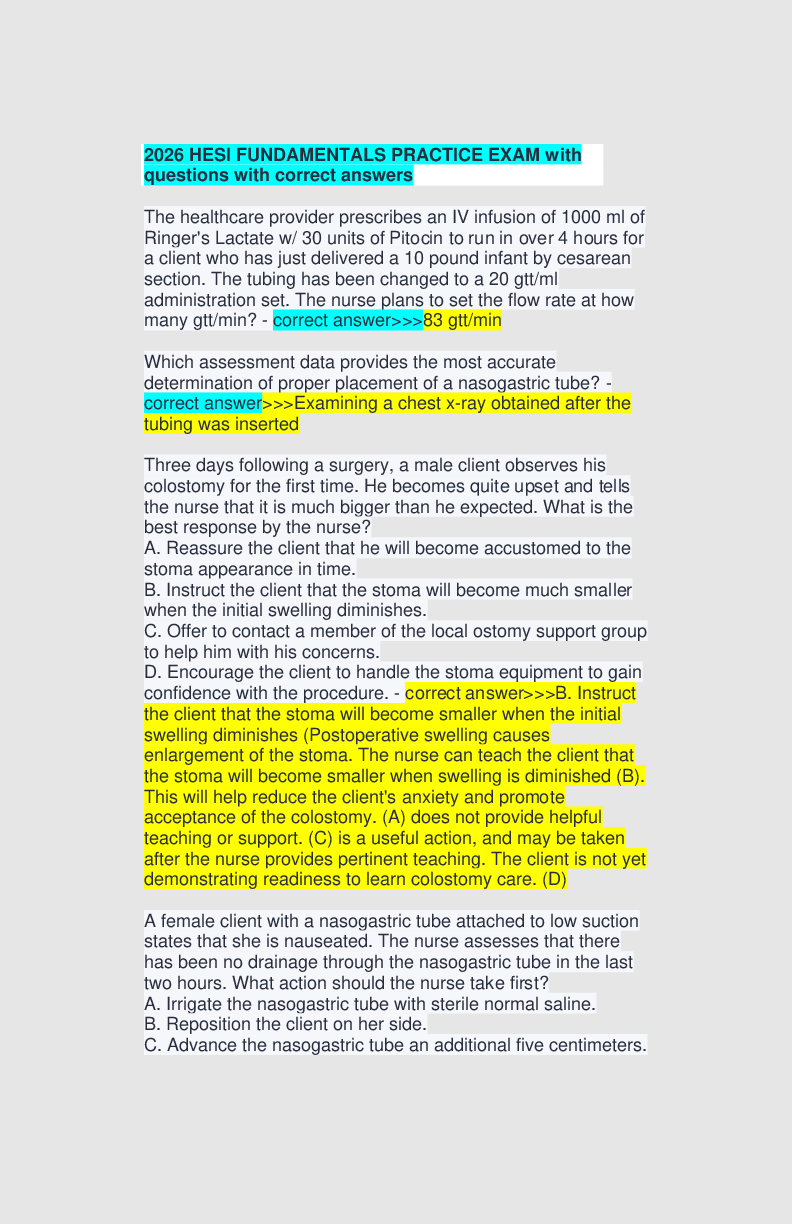
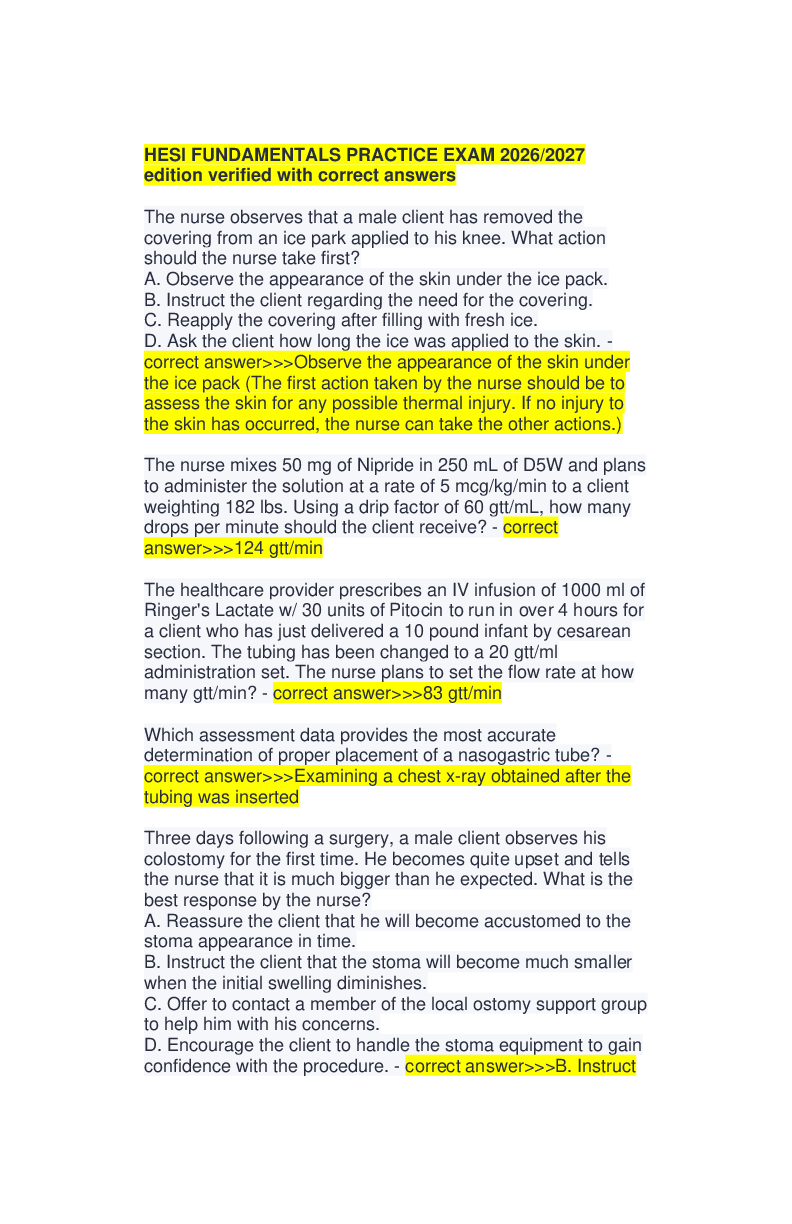
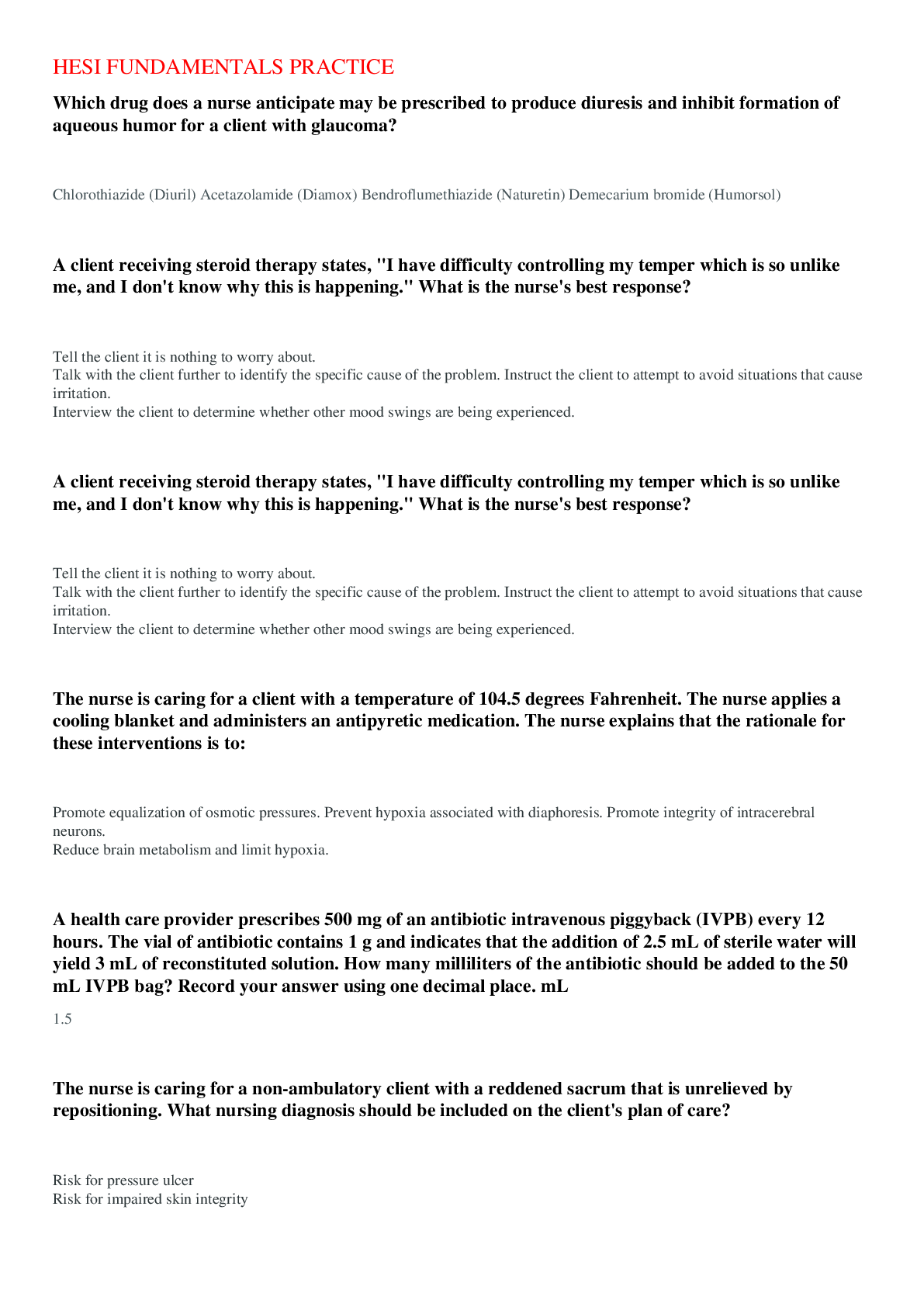
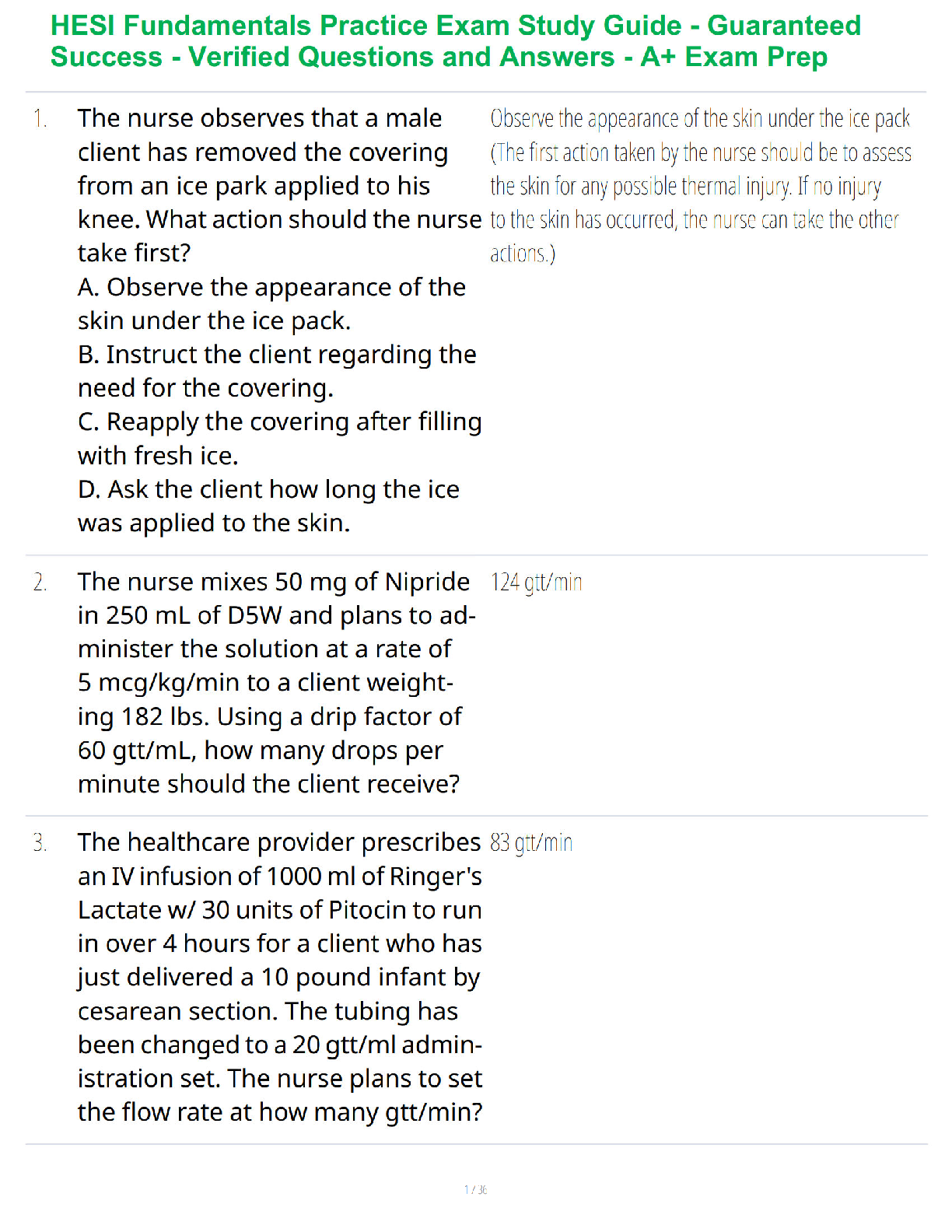
HESI Comprehensive Exit ExamHESI Fundamentals of Nursing exam ALL VERSIONS COVERED 2021|HESI Fundamentals Practice Exam QUESTIONS AND ANSWERS ALL CORRECT
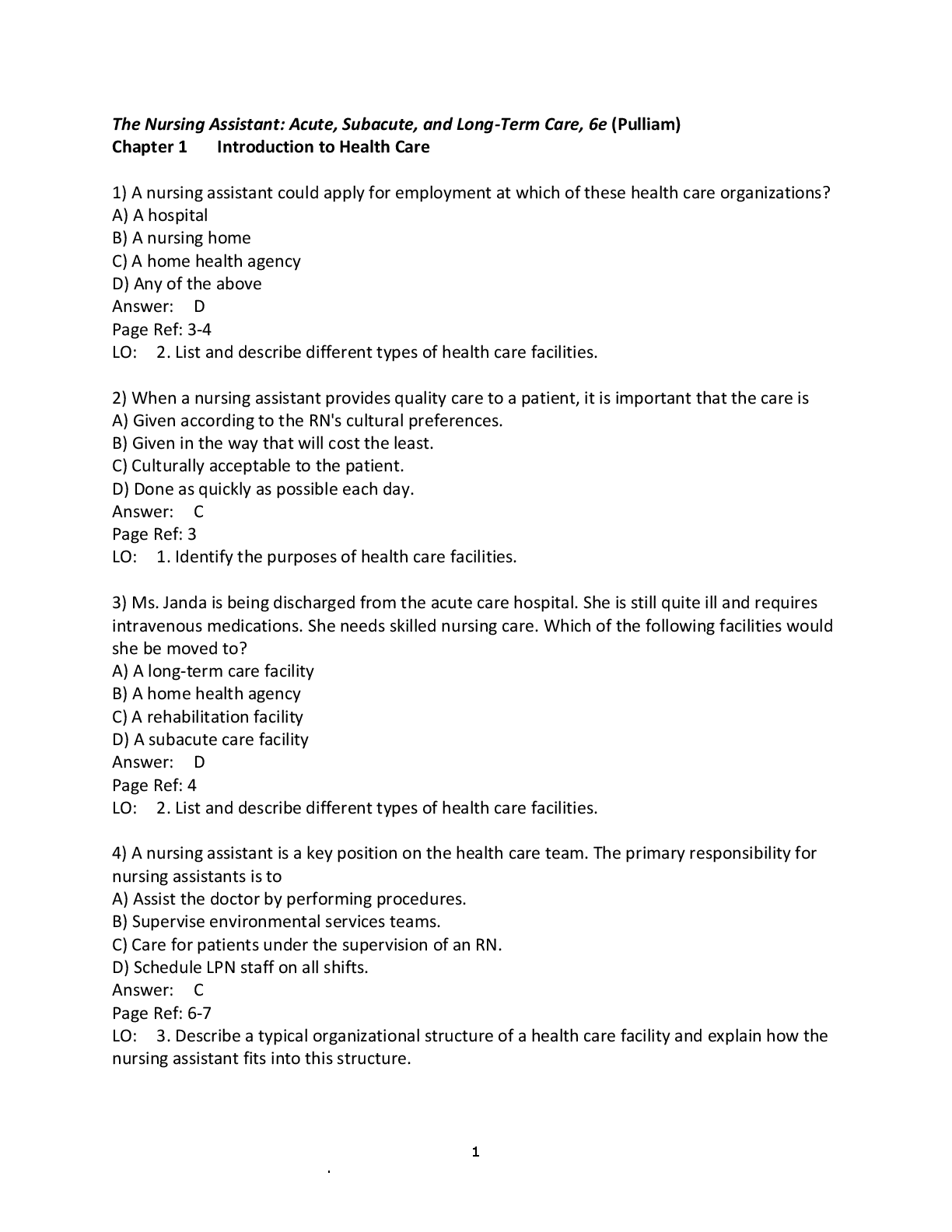
1) The LPN/LVN is preparing to ambulate a postoperative client after cardiac surgery. The nurse plans to do which to enable the client to best tolerate the ambulation? 1. Provide the client with...
By ETSY 3 years ago
$22.5
3
Reviews( 0 )
Document information
Connected school, study & course
About the document
Uploaded On
Nov 10, 2022
Number of pages
23
Written in
All

Additional information
This document has been written for:
Uploaded
Nov 10, 2022
Downloads
0
Views
264
Topic Tags
Related Subjects & Courses
Explore similar study resources and related concepts.
Recommended For You
Get more on HESI »
N120 HESI Fundamentals Practice Test Questions with accurate a...

Hesi Fundamentals Practice Questions AND ANSWERS EXPLAINED,100...
 (1).png)
Fundamental Nursing_knowledge_Assessment_Practice_Exam, Hesi F...
.png)
HESI PN FUNDAMENTALS PROCTORED EXAM (9 LATEST VERSIONS, Qu...
 Questions, Answers & Rationale, A+ Guide.png)

NGN Nursing Med-Surg HESI Exit Exam – Latest 2025 Test Bank wi...



Complete Test Bank For Lehnes Pharmacotherapeutics for Advance...