1. A nurse is caring for a client who is at 36 weeks of gestation and who has a suspected placenta
previa. Which of the following findings support this diagnosis?
a. Painless red vaginal bleeding
• Placenta previa is
...
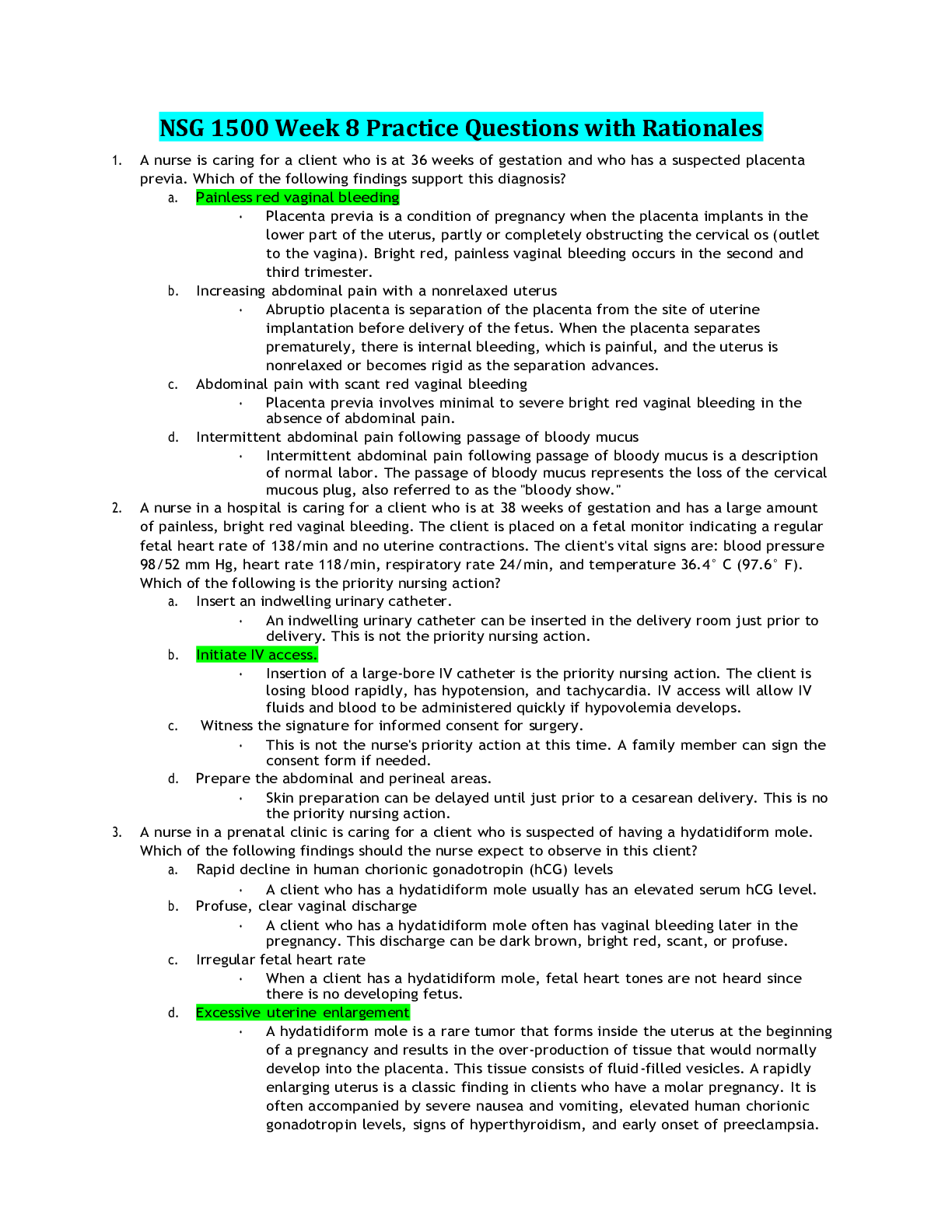
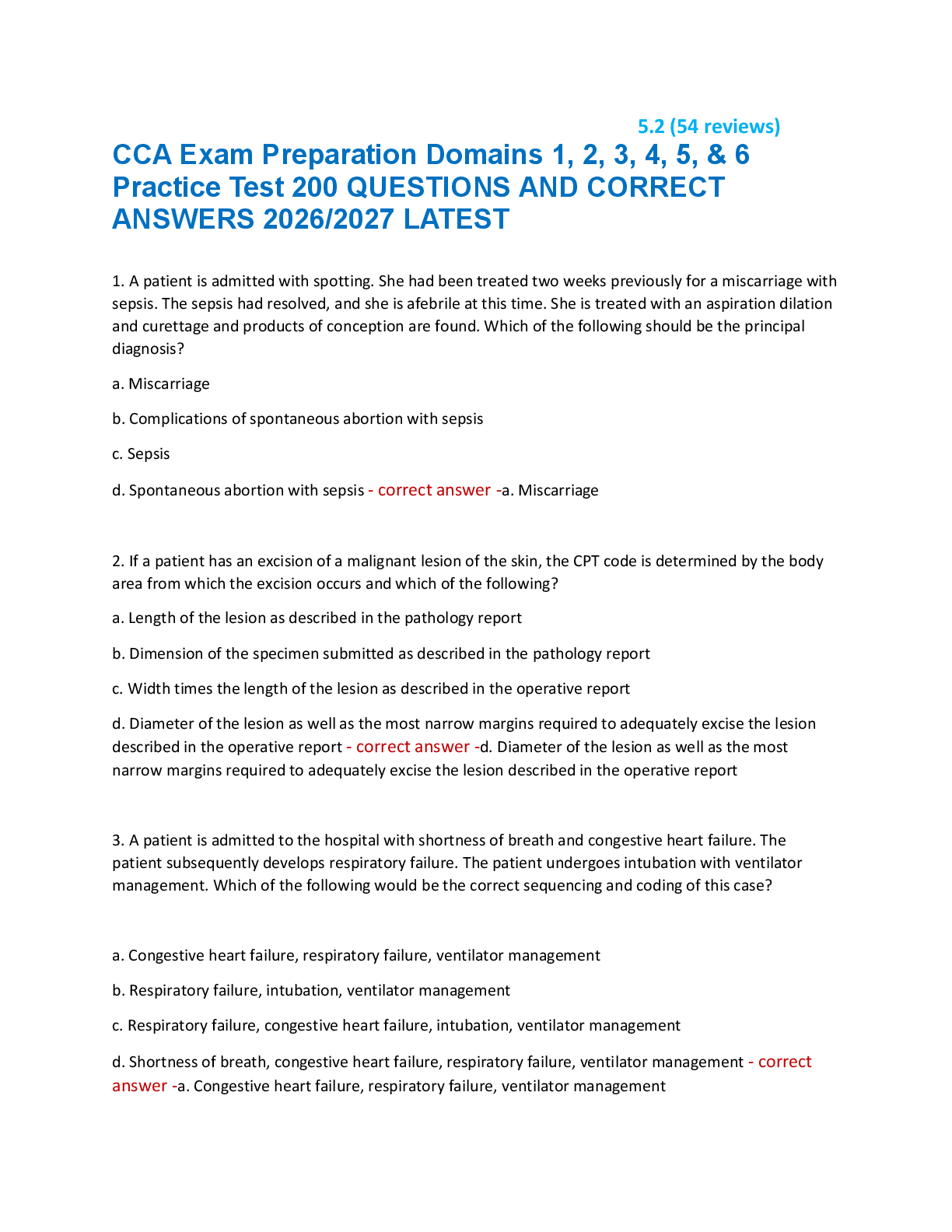
1. A nurse is caring for a client who is at 36 weeks of gestation and who has a suspected placenta
previa. Which of the following findings support this diagnosis?
a. Painless red vaginal bleeding
• Placenta previa is a condition of pregnancy when the placenta implants in the
lower part of the uterus, partly or completely obstructing the cervical os (outlet
to the vagina). Bright red, painless vaginal bleeding occurs in the second and
third trimester.
b. Increasing abdominal pain with a nonrelaxed uterus
• Abruptio placenta is separation of the placenta from the site of uterine
implantation before delivery of the fetus. When the placenta separates
prematurely, there is internal bleeding, which is painful, and the uterus is
nonrelaxed or becomes rigid as the separation advances.
c. Abdominal pain with scant red vaginal bleeding
• Placenta previa involves minimal to severe bright red vaginal bleeding in the
absence of abdominal pain.
d. Intermittent abdominal pain following passage of bloody mucus
• Intermittent abdominal pain following passage of bloody mucus is a description
of normal labor. The passage of bloody mucus represents the loss of the cervical
mucous plug, also referred to as the "bloody show."
2. A nurse in a hospital is caring for a client who is at 38 weeks of gestation and has a large amount
of painless, bright red vaginal bleeding. The client is placed on a fetal monitor indicating a regular
fetal heart rate of 138/min and no uterine contractions. The client's vital signs are: blood pressure
98/52 mm Hg, heart rate 118/min, respiratory rate 24/min, and temperature 36.4° C (97.6° F).
Which of the following is the priority nursing action?
a. Insert an indwelling urinary catheter.
• An indwelling urinary catheter can be inserted in the delivery room just prior to
delivery. This is not the priority nursing action.
b. Initiate IV access.
• Insertion of a large-bore IV catheter is the priority nursing action. The client is
losing blood rapidly, has hypotension, and tachycardia. IV access will allow IV
fluids and blood to be administered quickly if hypovolemia develops.
c. Witness the signature for informed consent for surgery.
• This is not the nurse's priority action at this time. A family member can sign the
consent form if needed.
d. Prepare the abdominal and perineal areas.
• Skin preparation can be delayed until just prior to a cesarean delivery. This is no
the priority nursing action.
3. A nurse in a prenatal clinic is caring for a client who is suspected of having a hydatidiform mole.
Which of the following findings should the nurse expect to observe in this client?
a. Rapid decline in human chorionic gonadotropin (hCG) levels
• A client who has a hydatidiform mole usually has an elevated serum hCG level.
b. Profuse, clear vaginal discharge
• A client who has a hydatidiform mole often has vaginal bleeding later in the
pregnancy. This discharge can be dark brown, bright red, scant, or profuse.
c. Irregular fetal heart rate
• When a client has a hydatidiform mole, fetal heart tones are not heard since
there is no developing fetus.
d. Excessive uterine enlargement
• A hydatidiform mole is a rare tumor that forms inside the uterus at the beginning
of a pregnancy and results in the over-production of tissue that would normally
develop into the placenta. This tissue consists of fluid-filled vesicles. A rapidly
enlarging uterus is a classic finding in clients who have a molar pregnancy. It is
often accompanied by severe nausea and vomiting, elevated human chorionic
gonadotropin levels, signs of hyperthyroidism, and early onset of preeclampsia.
[Show More]