Ensure that the manual resuscitator is connected to an oxygen source. Correct Answer: A RT is
manually Ventilating a pt during a cardiopulmonary resuscitation attempt. An ABG is drawn and
the results are as follows
pH
...
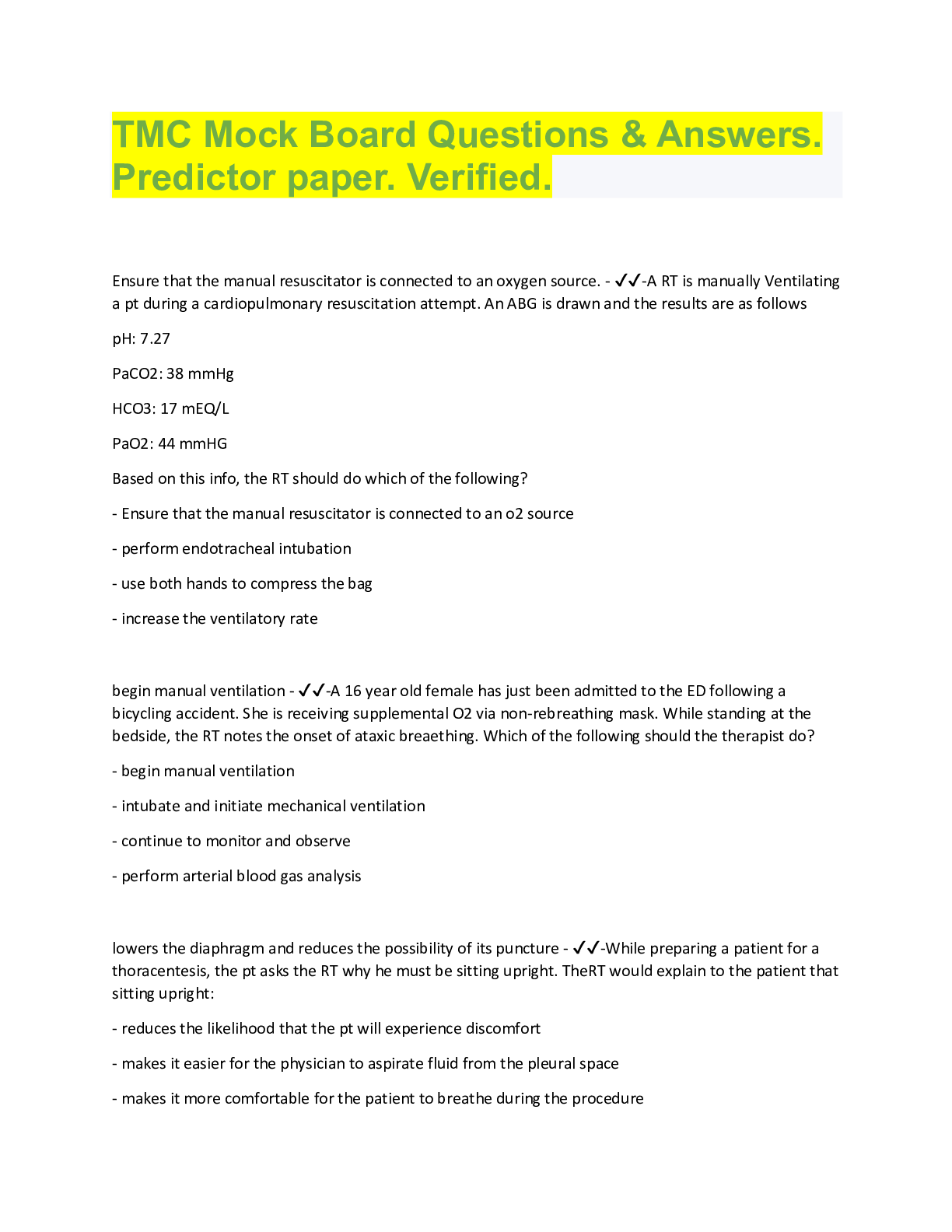
Ensure that the manual resuscitator is connected to an oxygen source. Correct Answer: A RT is
manually Ventilating a pt during a cardiopulmonary resuscitation attempt. An ABG is drawn and
the results are as follows
pH: 7.27
PaCO2: 38 mmHg
HCO3: 17 mEQ/L
PaO2: 44 mmHG
Based on this info, the RT should do which of the following?
- Ensure that the manual resuscitator is connected to an o2 source
- perform endotracheal intubation
- use both hands to compress the bag
- increase the ventilatory rate
begin manual ventilation Correct Answer: A 16 year old female has just been admitted to the
ED following a bicycling accident. She is receiving supplemental O2 via non-rebreathing mask.
While standing at the bedside, the RT notes the onset of ataxic breaething. Which of the
following should the therapist do?
- begin manual ventilation
- intubate and initiate mechanical ventilation
- continue to monitor and observe
- perform arterial blood gas analysis
lowers the diaphragm and reduces the possibility of its puncture Correct Answer: While
preparing a patient for a thoracentesis, the pt asks the RT why he must be sitting upright. TheRT
would explain to the patient that sitting upright:
- reduces the likelihood that the pt will experience discomfort
- makes it easier for the physician to aspirate fluid from the pleural space
- makes it more comfortable for the patient to breathe during the procedure
- lower the diaphragm adn reduces the possibility of its puncture
Increase the frequency of suctioning through the catheter Correct Answer: A patient with
chronic hypercapnia is receiving home oxygen therapy by transtracheal cather at 1 LPM. He
calls the respiratory clinic and informs the RT that he has had increasing episodes of rice sized
mucus balls lodging in the catheter. Which of the following would NOT be appropriate advice
for the therapist to give the patient?
- increase the frequency of suctioning through the catheter
-call his physician to prescribe a mucoevacuent
- increase his intake of systemic fluids
- increase the frequency of cleaning the catheter
insert a smaller restrictive orifice in the device Correct Answer: A RT is asked to assess a COPD
patient who is in a pulmonary rehabilitation program. During the interview, the patient tells the
[Show More]