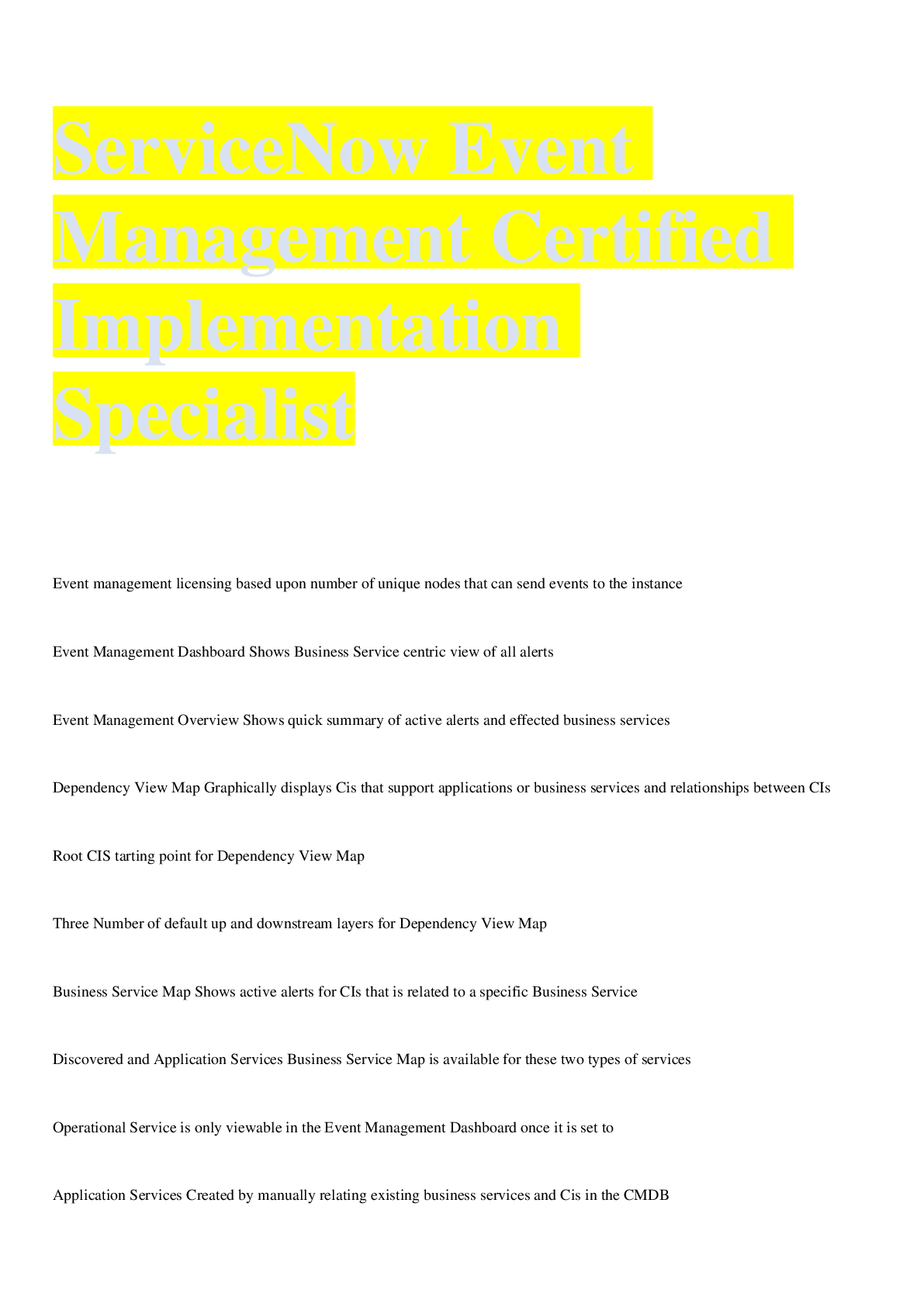
Linguistics > EXAM > LETRS Module 2 test Questions and answers (All)
LETRS Module 2 test Questions and answers
Document Content and Description Below
Last updated: 3 years ago
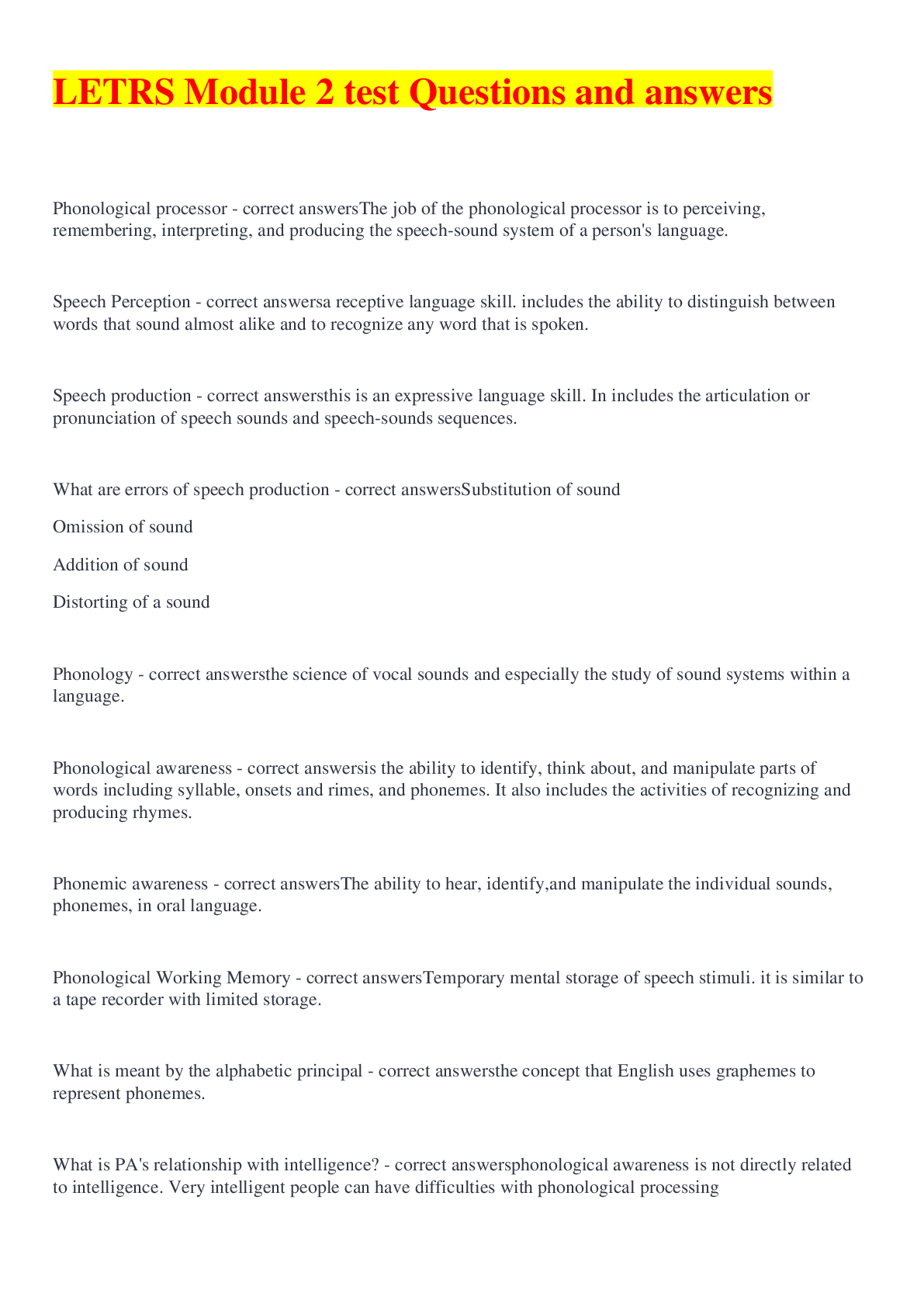
Preview 1 out of 2 pages
Instant download
Buy this Document to get the Full Access Instantly
Provided by Students Who Aced it
We Verify Document Content to Gurantee Accuracy
Reviews( 0 )
Document information
Connected school, study & course
About the document
Uploaded On
Nov 17, 2022
Number of pages
2
Written in
All

Additional information
This document has been written for:
Uploaded
Nov 17, 2022
Downloads
0
Views
112
Topic Tags
Recommended For You
Get more on EXAM »


LIN1502 MAY EXAM 2020 ALL ANSWERS SOLUTION 100% CORRECT AID GR...

Test Bank for A Concise Introduction to Linguistics, 6th Editi...

Contemporary Logistics, 12e Paul Murphy, Michael Knemeyer (Sol...

Contemporary Logistics, (Global Edition), 12e Paul Murphy, Mic...

Quiz 3: Phonology: LING 200 A Su 20: Introduction To Linguisti...
Contemporary Linguistic Analysis_An Introduction 9th Edition b...
Test Bank for Language in Mind 2nd Edition An Introduction to...

LETRS Units 5 - 8 Pre & Post Test, Questions and answers, rate...
Test Bank for A Concise Introduction to Linguistics 3rd Editio...

Fundamentals of Nursing NCLEX Test Bank Quiz #2: 75 Questions-...
Solution Manual for A Concise Introduction to Linguistics 3rd...
NUR 410V Test Bank - Pathophysiology The Biologic Basis for Di...
.png)


![Preview of ATI critical points (1/1)[updated 2022/2023]](https://scholarfriends.com/storage/ATI critical points.png)