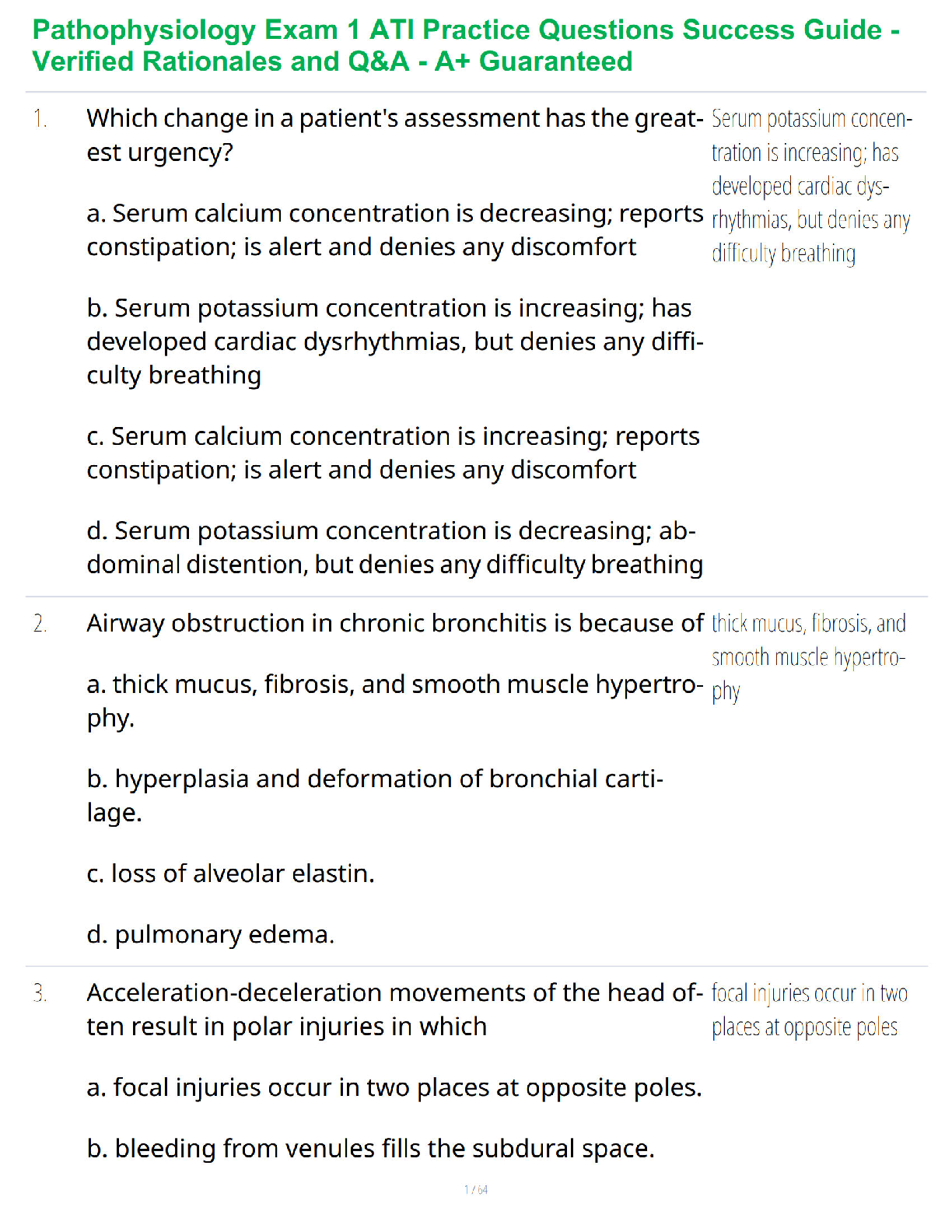
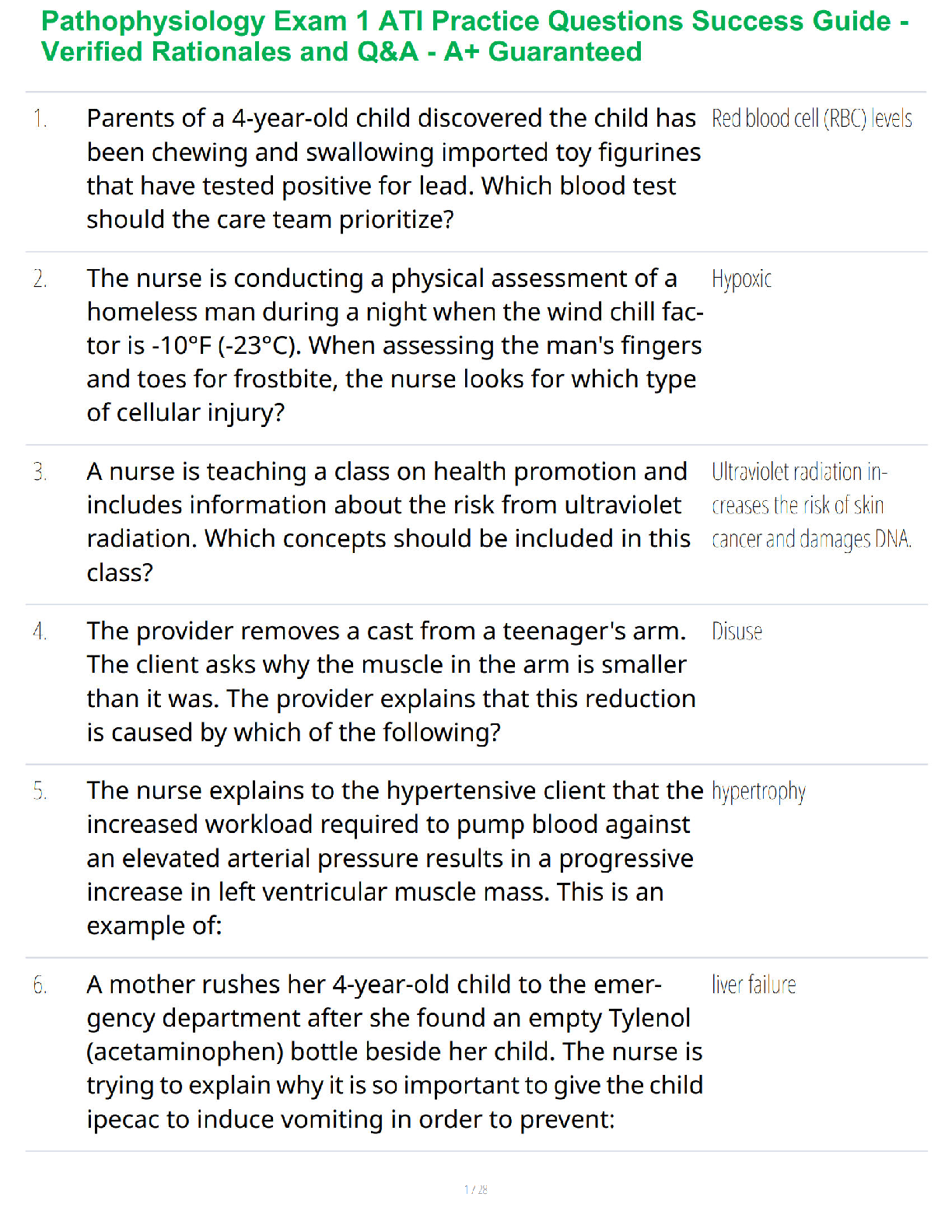
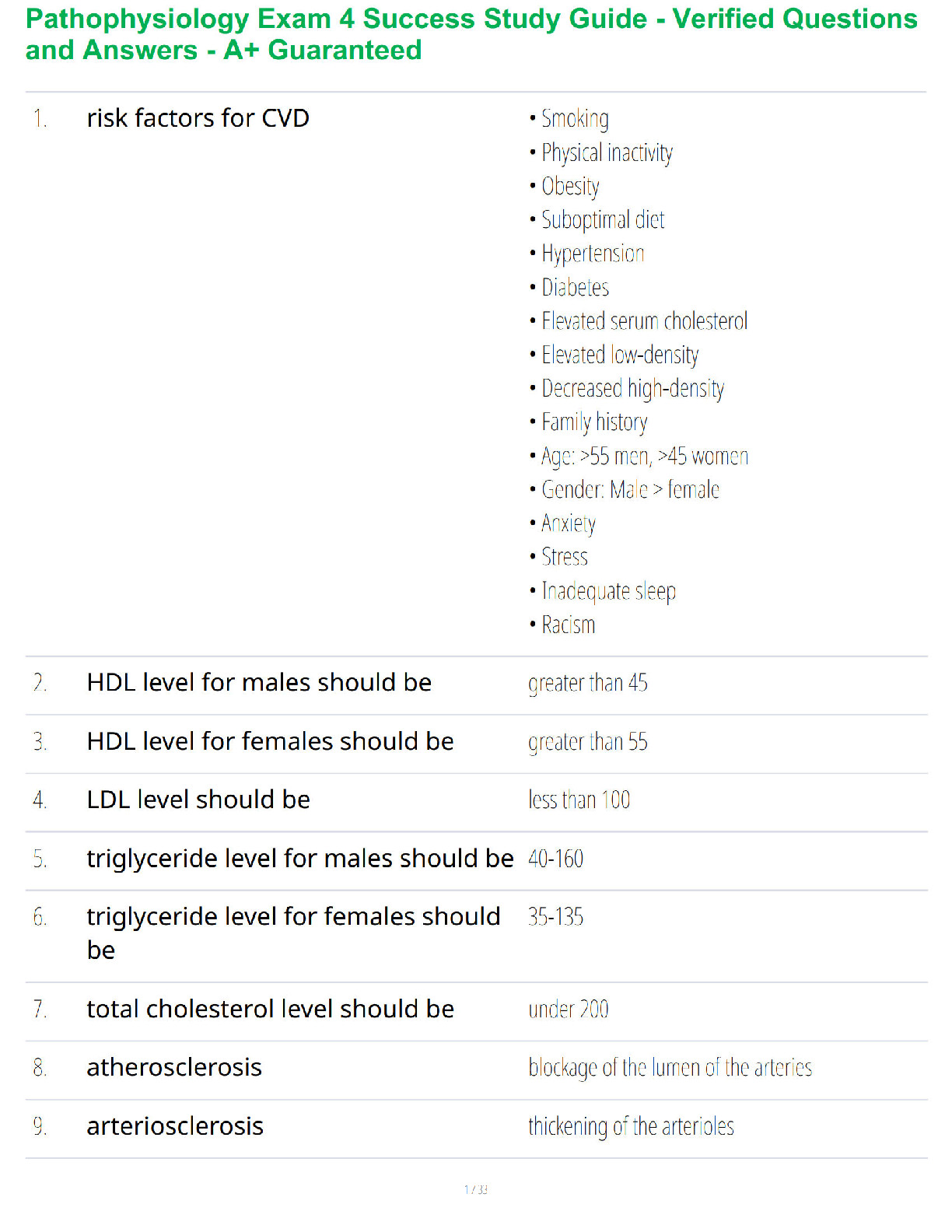
Pathophysiology > QUESTIONS & ANSWERS > PA (ASCP) Certification Exam Questions and Answers Graded A (All)
PA (ASCP) Certification Exam Questions and Answers Graded A Hypertrophy ✔✔Increased cell and organ size, often in response to increased workload: induced by mechanical stress and by growth fact ... ors; occurs in tissue incapable of cell division Hyperplasia ✔✔Increased cell numbers in response to hormones and other growth factors; occurs in tissues whose cells are able to divide Atrophy ✔✔Decreased cell and organ size, as a result of decreased nutrient supply or disuse: associated with decreased synthesis and increased proteolytic breakdown of cellular organelles Metaplasia ✔✔Change in phenotype of differentiated cells, often a response to chronic irritation that makes cells better able to withstand the stress Hypoxia ✔✔Oxygen deficiency which interferes with aerobic oxidative respirations and is an extremely important and common cause of cell injury and death Ischemic ✔✔Loss of blood supply in a tissue due to impeded arterial flow or reduced venous drainage Coagulative necrosis ✔✔A form of tissue necrosis in which the component cells are dead but the basic tissue architecture is preserved for at least several days Liquefactive necrosis ✔✔A form of necrosis seen in focal bacterial or occasionally fungal infections because microbes stimulate the accumulation of inflammatory cells and the enzymes of leukocytes digest the tissue Caseous necrosis ✔✔A form of necrosis encountered most often in foci of tuberculous infections Fat necrosis ✔✔Term referring to focal areas of fat destruction, typically resulting from release of activated pancreatic lipases into the peritoneal cavity Fibrinous necrosis ✔✔A special form of necrosis usually seen in immune reactions involving blood vessels Autophagy ✔✔Lysosomal digestion of the cell's own components Apoptosis ✔✔A pathway of cell death that is induced by a tightly regulated suicide program in which the cells destined to die activate enzymes capable of degrading the cells own nuclear DNA Steatosis (fatty change) ✔✔Refers to any abnormal accumulation of triglycerides within parenchymal cells It is most often seen in the liver Dystrophic calcification ✔✔Depositions of calcium at sites of cell injury and necrosis Metastatic calcification ✔✔Deposition of [Show More]
Last updated: 3 years ago
Preview 1 out of 47 pages
Buy this document to get the full access instantly
Instant Download Access after purchase
Buy NowInstant download
We Accept:
ASCP BUNDLED EXAMS QUESTIONS AND ANSWERS WITH COMPLETE AND VERIFIED SOLUTIONS. 100% PASS
By Nutmegs 3 years ago
$30
31
Can't find what you want? Try our AI powered Search
Connected school, study & course
About the document
Uploaded On
Nov 19, 2022
Number of pages
47
Written in
All
This document has been written for:
Uploaded
Nov 19, 2022
Downloads
0
Views
135
Scholarfriends.com Online Platform by Browsegrades Inc. 651N South Broad St, Middletown DE. United States.
We're available through e-mail, Twitter, Facebook, and live chat.
FAQ
Questions? Leave a message!
Copyright © Scholarfriends · High quality services·