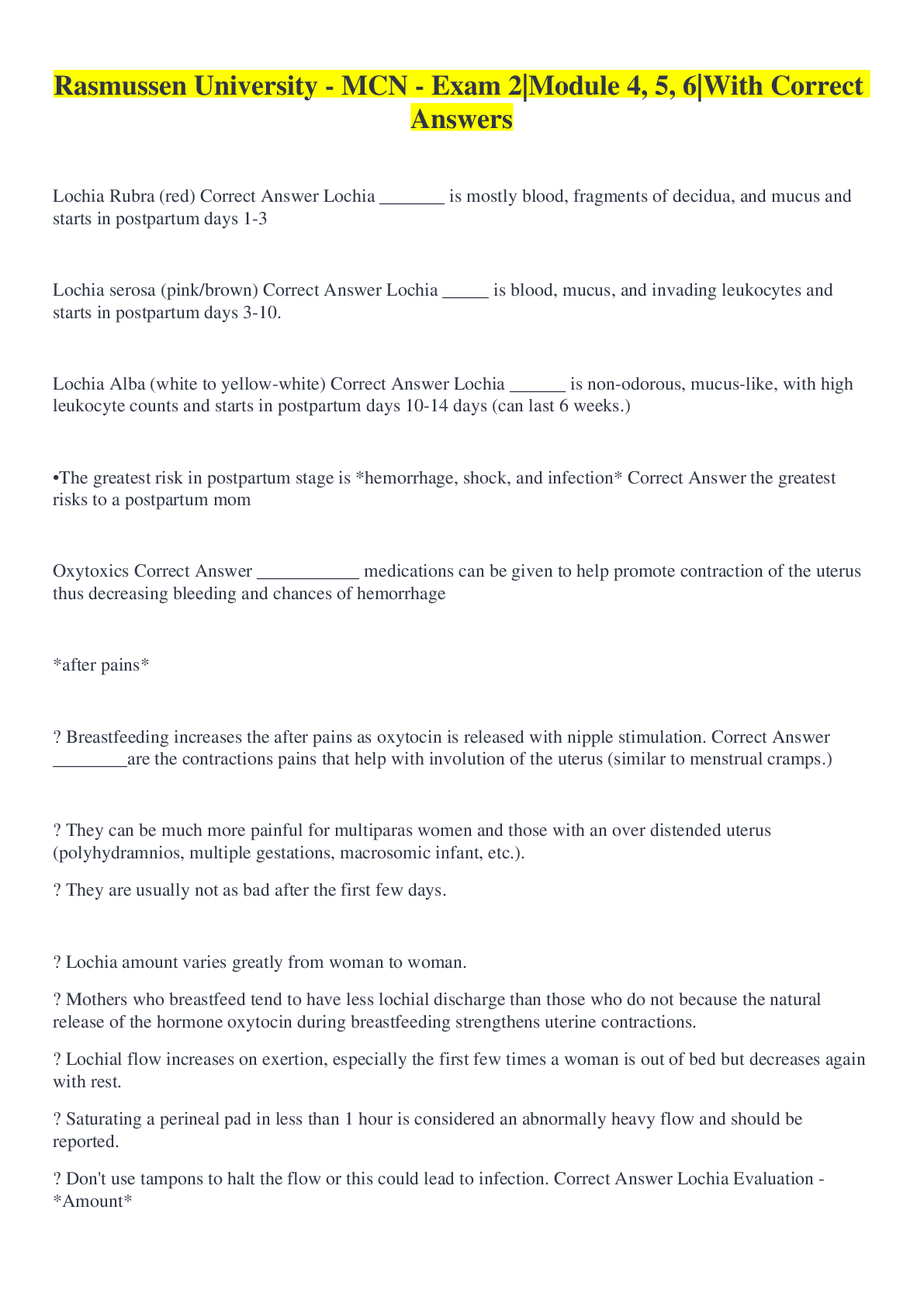
Lochia Rubra (red) Correct Answer Lochia _______ is mostly blood, fragments of decidua, and mucus and starts in postpartum days 1-3
Lochia serosa (pink/brown) Correct Answer Lochia _____ is blood, mucus, and invading
...
Lochia Rubra (red) Correct Answer Lochia _______ is mostly blood, fragments of decidua, and mucus and starts in postpartum days 1-3
Lochia serosa (pink/brown) Correct Answer Lochia _____ is blood, mucus, and invading leukocytes and starts in postpartum days 3-10.
Lochia Alba (white to yellow-white) Correct Answer Lochia ______ is non-odorous, mucus-like, with high leukocyte counts and starts in postpartum days 10-14 days (can last 6 weeks.)
•The greatest risk in postpartum stage is *hemorrhage, shock, and infection* Correct Answer the greatest risks to a postpartum mom
Oxytoxics Correct Answer ___________ medications can be given to help promote contraction of the uterus thus decreasing bleeding and chances of hemorrhage
*after pains*
▪ Breastfeeding increases the after pains as oxytocin is released with nipple stimulation. Correct Answer ________are the contractions pains that help with involution of the uterus (similar to menstrual cramps.)
▪ They can be much more painful for multiparas women and those with an over distended uterus (polyhydramnios, multiple gestations, macrosomic infant, etc.).
▪ They are usually not as bad after the first few days.
▪ Lochia amount varies greatly from woman to woman.
▪ Mothers who breastfeed tend to have less lochial discharge than those who do not because the natural release of the hormone oxytocin during breastfeeding strengthens uterine contractions.
▪ Lochial flow increases on exertion, especially the first few times a woman is out of bed but decreases again with rest.
▪ Saturating a perineal pad in less than 1 hour is considered an abnormally heavy flow and should be reported.
▪ Don't use tampons to halt the flow or this could lead to infection. Correct Answer Lochia Evaluation - *Amount*
▪ Lochia should contain no exceedingly large clots as these may indicate a portion of the placenta has been retained and is preventing closure of the maternal uterine blood sinuses.
[Show More]