Nursing 101 SKILLS FINAL EXAM Guide. Module 7 Glaucoma: Increased ocular pressure: Cupping and atrophy of optic disc. Symptoms • Headache or brow pain • Nausea and vomiting • Colored halos around lights • Sudden blurred
...
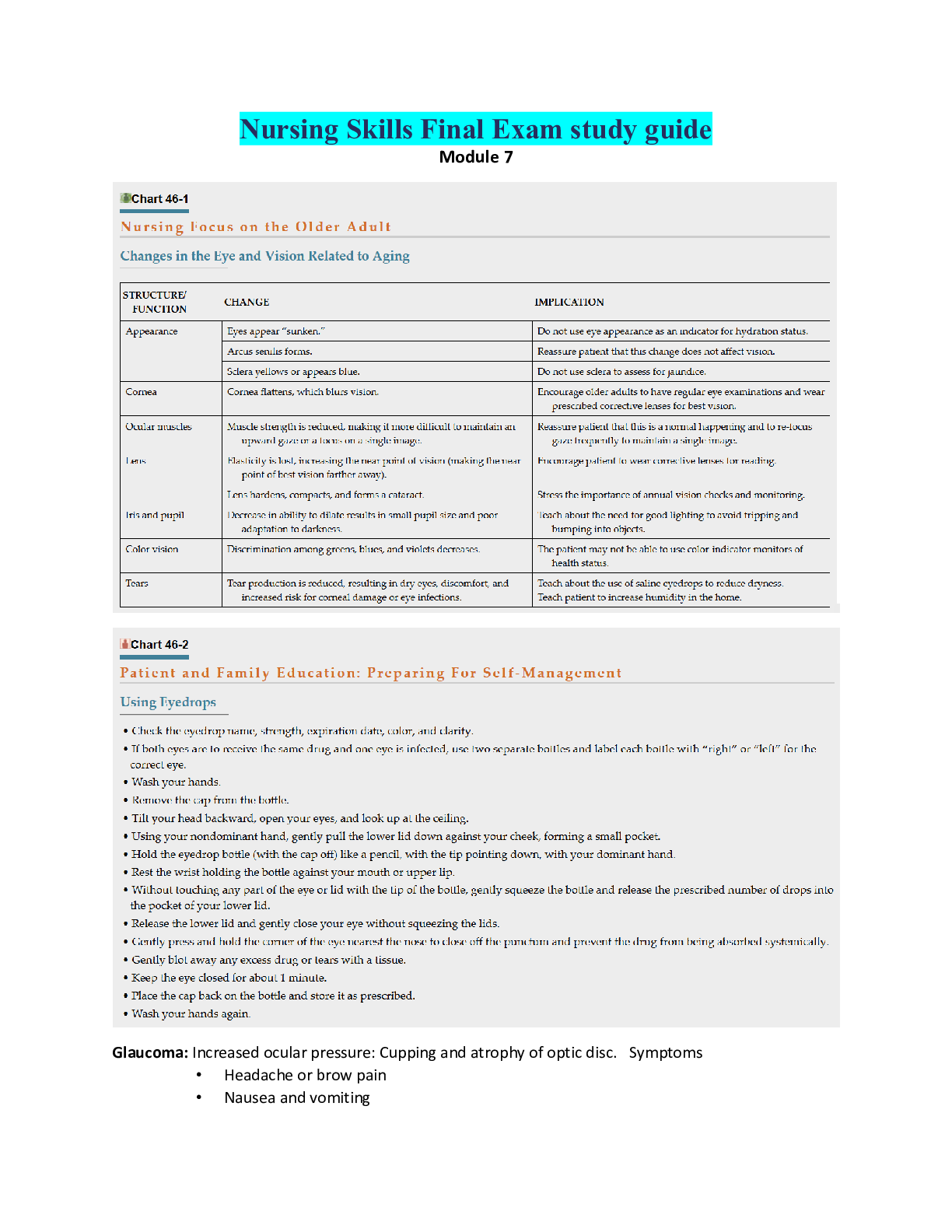
Nursing 101 SKILLS FINAL EXAM Guide. Module 7 Glaucoma: Increased ocular pressure: Cupping and atrophy of optic disc. Symptoms • Headache or brow pain • Nausea and vomiting • Colored halos around lights • Sudden blurred vision with decreased light perception Cataract: Clouding and blurring of lens, Opacity makes it difficult to see retina. Requires transplantation of the cornea to improve quality of life Macular degeneration (AMD): Deterioration of the macula-central vision • Central vision declines, and patients describe mild blurring and distortion at first • Highest risk for development of age-related Smokers, hypertension, female, short, family history, long-term diet poor in carotene and vit E. Nursing Focus on the Older Adult: Promote Independent Living in Patients With Impaired Vision • Drugs • • Having a neighbor, relative, friend, or visiting nurse visit once a week to measure the proper drugs for each day may be helpful. • • If the patient is to take drugs more than once each day, it is helpful to use a container of a different shape (with a lid) each time. For example, if the patient is to take drugs at 9 AM, 1 PM, and 9 PM, the 9 AM drugs would be placed in a round container, the 1 PM drugs in a square container, and the 9 PM drugs in a triangular container. • • It is helpful to place each day's drug containers in a separate box with raised letters on the side of the box spelling out the day. • • “Talking clocks” are available for the patient with low vision. • • Some drug boxes have alarms that can be set for different times. • Communication • • Telephones with large, raised block numbers may be helpful. The best models are those with black numbers on a white phone or white numbers on a black phone. • • Telephones that have a programmable automatic dialing feature (“speed dial”) are very helpful. Programmed numbers should include those for the fire department, police, relatives, friends, neighbors, and 911. • Safety • • It is best to leave furniture the way the patient wants it and not move it. • • Throw rugs are best eliminated. • • Appliance cords should be short and kept out of walkways. • • Lounge-style chairs with built-in footrests are preferable to footstools. • • Nonbreakable dishes, cups, and glasses are preferable to breakable ones. • • Cleansers and other toxic agents should be labeled with large, raised letters. • • Hook-and-loop (Velcro) strips at hand level may help mark the locations of switches and electrical outlets. • Food Preparation • • Meals on Wheels is a service that many older adults find helpful. This service brings meals at mealtime, cooked and ready to eat. The cost of this service varies, depending on the patient's ability to pay. • • Many grocery stores offer a “shop by telephone” service. The patient can either complete a computer booklet indicating types, amounts, and brands of items desired; or the store will complete this booklet over the telephone by asking the patient specific information. The store then delivers groceries to the patient's door (many stores also offer a “put-away” service) and charges the patient's bank card. • • A microwave oven is a safer means of cooking than a standard stove, although many older patients are afraid of microwave ovens. If the patient has and will use a microwave oven, others can prepare meals ahead of time, label them, and freeze them for later use. Also, many microwavable complete frozen dinners that comply with a variety of dietary restrictions are available. • • Friends or relatives may be able to help with food preparation. Often relatives do not know what to give an older person for birthdays or other gift-giving occasions. One suggestion is a homemade prepackaged frozen dinner that the patient enjoys. • Personal Care • • Handgrips should be installed in bathrooms. • • The tub floor should have a nonskid surface. • • Male patients should use an electric shaver rather than a razor. • • Choosing a hairstyle that is becoming but easy to care for (avoiding parts) helps in independent living. • • Home hair-care services may be available. • Diversional Activity • • Some patients can read large-print books, newspapers, and magazines (available through local libraries and vision services). • • Books, magazines, and some newspapers are available on audiotapes or discs. • • Patients experienced in knitting or crocheting may be able to create items fashioned from straight pieces such as afghans. • • Card games, dominoes, and some board games that are available in large, high-contrast print may be helpful for patients with low vision. Hearing Loss Position directly in front of the patient Not sitting or standing in front of a bright light or window (can’t see lips) Well lighted room (use hand gestures/paper) Move closer to the better hearing ear Speak clearly and slowly Do not shout Minimal distractions (quiet room) Rephrase sentences and repeat information Hearing Aid Care Keep the hearing aid dry. Clean the ear mold with mild soap and water while avoiding excessive wetting. Using a toothpick, clean debris from the hole in the middle of the part that goes into your ear. Turn off the hearing aid when not in use. Check and replace the battery frequently. Keep extra batteries on hand. Keep the hearing aid in a safe place. Avoid dropping the hearing aid or exposing it to temperature extremes. Adjust the volume to the lowest setting that allows you to hear to prevent feedback squeaking. Avoid using hair spray, cosmetics, oils, or other hair and face products that might come into contact with the receiver. If the hearing aid does not work: Change the battery. Check the connection between the ear mold and the receiver. Check the on/off switch. Clean the sound hole. Adjust the volume. Take the hearing aid to an authorized service center for repair. Focused Assessment: The Patient With Suspected Hearing Loss Assess whether the patient has any of these ear problems: Pain Feeling of fullness or congestion Dizziness or vertigo Tinnitus Difficulty understanding conversations, especially in a noisy room Difficulty hearing sounds The need to strain to hear The need to turn the head to favor one ear or the need to lean forward to hear Assess visible ear structures, particularly the external canal and tympanic membrane: Position and size of the pinna Patency of external canal; presence of cerumen or foreign bodies, edema, or inflammation Condition of the tympanic membrane: intact, edema, fluid, inflammation Assess functional ability, including: Frequency of asking people to repeat statements Withdrawal from social interactions or large groups Shouting in conversation Failing to respond when not looking in the direction of the sound Answering questions incorrectly Osteoporosis- chronic disease of cellular regulation in bone loss Primarily lack of calcium and estrogen or testosterone Risk factors: History, Genetic, Culture Euro-American postmenopausal, Diet Common Causes of Secondary Osteoporosis Diabetes mellitus Hyperthyroidism Hyperparathyroidism Cushing's syndrome Growth hormone deficiency Metabolic acidosis Female hypogonadism Rheumatoid arthritis Prolonged immobilization Bone cancer Cirrhosis HIV/AIDS Corticosteroids Antiepileptic drugs (AEDs) (e.g., phenytoin) Barbiturates (e.g., phenobarbital) Ethanol (alcohol) Drugs that induce hypogonadism (decreased levels of sex hormones) High levels of thyroid hormone Cytotoxic agents Immunosuppressants Loop diuretics Aluminum-based antacids Implementation: The priority problem for patients with osteoporosis or osteopenia is potential for fractures due to weak, porous bone tissue. Safety precautions Medications: Calcium, Vit D, bisphosphonates, estrogen agonist/antagonist, parathyroid hormone Nutrition: adequate amounts of calcium and vitamin D for bone remodeling. Avoid excessive alcohol and caffeine consumption. People who are lactose intolerant can choose a variety of soy and rice products that are fortified with calcium and vitamin D. Calcium and vitamin D are added to fruit juices, bread, and cereal products. Exercise is important in the prevention and management of osteoporosis. PT may prescribe exercises for muscle strengthening Strengthening the abdominal and back muscles for those at risk for vertebral fractures. Weight-bearing exercise program Teach patients that walking for 30 minutes three to five times a week is the single most effective exercise for osteoporosis prevention. Patients with osteoporosis are usually managed at home unless they have major fragility fractures. Some patients do not know that they have osteoporosis until they experience a fall and have one or more fractures. Collaborate with members of the interprofessional health team to ensure that the patient's home is safe and hazard free to help prevent falling. Home modifications may be needed, such as ramps instead of stairs or handrails near toilets and bathtubs/showers. Teach patients to prevent clutter in the home for clear pathways, avoid slippery floors, wear rubber-soled shoes, and avoid scatter rugs. Teach patients about lifestyle practices that can help prevent additional bone loss. For example, to help prevent vitamin D deficiency, daily sun exposure (at least 5 minutes each day) is the most important source of vitamin D. If vitamin D levels remain low, teach patients to take their vitamin D3 and calcium supplements as described earlier. Increase calcium and vitamin D sources in the diet. Considerations for Older Adults: Patient-Centered Care Teach older adults about the risk factors for hip fracture, including physiologic aging changes, disease processes, drug therapy, and environmental hazards. Physiologic changes include sensory changes such as diminished visual acuity and hearing; changes in gait, balance, and muscle strength; and joint stiffness. Disease processes such as osteoporosis, foot disorders, bony metastases, and changes in cardiac function increase the risk for hip fracture. Drugs, such as diuretics, antihypertensives, antidepressants, sedatives, opioids, and alcohol, are factors that increase the risks for falling in older adults. Use of three or more drugs at the same time drastically increases the risk for falls. Throw rugs, loose carpeting, floor clutter, inadequate lighting, uneven walking surfaces or steps, and pets are environmental hazards that also cause falls. The older adult with hip fracture usually reports groin pain or pain behind the knee on the affected side. In some cases, the patient has pain in the lower back or no pain at all. However, the patient is not able to stand without pain. X-ray or other imaging assessment confirms the diagnosis. Amputation: Health Promotion and Maintenance Adherence to diabetic disease management plan may help prevent need for amputation. Maintain healthy weight. Exercise. Avoid smoking. Avoid risky vehicle behaviors; use appropriate safety precautions. Amputations: Cultural/ Spiritual Considerations: Patient-Centered Care In addition to assessing the patient's psychosocial status, assess the family's reaction to the surgery or trauma. Their response usually correlates directly with the patient's progress during recovery and rehabilitation and his or her values and beliefs. Expect the family to grieve for the loss and allow them time to adjust to the change. Establish a trusting relationship and reassure the patient and family that you are available to listen to their concerns and needs. Assess the patient's and family's coping abilities and help them identify personal strengths and weaknesses. Assess the patient's religious, spiritual, and cultural beliefs. Some groups (e.g., Jewish) require that the amputated body part be stored for later burial with the rest of the body or buried immediately. Cultural customs and rituals may apply, depending on the group with which the patient associates. Amputation Home Care Management. • At home, the patient with a leg amputation needs to have enough room to use a wheelchair if the prosthesis is not yet available. He or she must be able to use toileting facilities and have access to areas necessary for self-management, such as the kitchen. Structural home modifications may be required before the patient goes home. • After the sutures or staples are removed, the patient begins residual limb care. A home care nurse may be needed to teach the patient and/or family how to care for the limb and the prosthesis if it is available. The limb should be rewrapped three times a day with an elastic bandage applied in a figure-eight manner. For many patients, a shrinker stocking or sock is easier to apply. After the limb is healed, it is cleaned each day with the rest of the body during bathing with soap and water. Teach the patient and/or family to inspect it every day for signs of inflammation or skin breakdown. • Limb and prosthetic care • After the sutures or staples are removed, the patient begins residual limb care. • A home care nurse may be needed to teach the patient and/or family how to care for the limb and the prosthesis if it is available • The limb should be rewrapped three times a day with an elastic bandage applied in a figure-eight manner • For many patients, a shrinker stocking or sock is easier to apply. • After the limb is healed, it is cleaned each day with the rest of the body during bathing with soap and water. • Teach the patient and/or family to inspect it every day for signs of inflammation or skin breakdown. • At home, the patient with a leg amputation needs to have enough room to use a wheelchair if the prosthesis is not yet available. • He or she must be able to use toileting facilities and have access to areas necessary for self-management, such as the kitchen. • Structural home modifications may be required before the patient goes home. Module 8 GI Physiologic Change Disorders R/T Change Atrophy of the gastric mucosa leads to decreased hydrochloric acid levels Dec absorption of iron and vit B12 and proliferation of bacteria. Atrophic gastritis Peristalsis decreases and nerve impulses are dulled Dec sensation to defecate can result in postponement of bowel movements Distention and dilation of pancreatic ducts change. Calcification of pancreatic vessels occur with a decrease in lipase production Dec lipase level results in dec fat absorption and digestion. Steatorrhea, or excess fat in the feces, due to dec fat digestion Decrease in the number and size of hepatic cells lead to decreased liver weight and mass. Inc fibrous tissue decreased protein synthesis and change to liver enzymes. Dec enzyme activity depresses drug metab, leads to accumulation of drugs-possibly to toxic levels. Endoscopy: fiberoptic endoscope (GI tract) – Evaluates bleeding, ulceration, inflammation, tumors, cancer – Biopsy or cell study H-pylori • Upper GI Diagnostic Assessment – Priority: patient safety EGD prevent aspiration – No fluids or food until gag reflex returns (30-60 min post procedure) – Monitor for signs of perforation (pain, bleeding, fever, V/S) – Cannot drive 12-18 hours after procedure – Education: hoarse voice or sore throat normal for days. Consider throat lozenges Colostomy • Home Care Management: Assess all patients for their ability for self-management within limitations. For those requiring assistance with care, home care visits by nurses or assistive nursing personnel can be provided. For the patient who has undergone a colostomy, review the home situation to help the patient arrange for care. Ostomy products should be kept in an area (preferably the bathroom) where the temperature is neither hot nor cold (skin barriers may become stiff or melt in extreme temperatures) to ensure proper functioning. No changes are needed in sleeping accommodations. A moisture-proof covering may initially be placed over the bed mattress if patients feel insecure about the pouch system. They may consume their usual diet on discharge. Colorectal cancer (CRC) • Teach adults about the need for diagnostic screening. When an adult turns 40 years of age, he or she should discuss with the primary health care provider the need for colon cancer screening. The interval depends on level of risk. Adults of average risk who are 50 years of age and older and without a family history should undergo regular CRC screening. The screening includes fecal occult blood testing (FOBT) every year, colonoscopy every 10 years, or double-contrast barium enema every 5 years. Adults who have a personal or family history of the disease should begin screening earlier and more frequently. Teach all patients to follow the American Cancer Society recommendations for CRC screening • Teach adults, regardless of risk, to modify their diets as needed to decrease fat, refined carbohydrates, and low-fiber foods. • Encourage baked or broiled foods, especially those high in fiber and low in animal fat. • Remind adults to eat increased amounts of brassica vegetables, including broccoli, cabbage, cauliflower, and sprouts. • Educate about the hazards of smoking, excessive alcohol, and physical inactivity. • Refer patients as needed for smoking- or alcohol-cessation programs and recommend ways to increase regular physical exercise. Factors Contributing to Decreased Lower Esophageal Sphincter Pressure • • Caffeinated beverages, such as coffee, tea, and cola • • Chocolate • • Citrus fruits • • Tomatoes and tomato products • • Smoking and use of other tobacco products • • Calcium channel blockers • • Nitrates • • Peppermint, spearmint • • Alcohol • • Anticholinergic drugs • • High levels of estrogen and progesterone • • Nasogastric tube placement GERD Assess: Dyspepsia, regurgitation, coughing, hoarseness, wheezing at night, water brash (hypersalivation), dysphagia, odynophagia (painful swallowing), epigastric pain, generalized abdominal pain, belching, flatulence, nausea, pyrosis (heartburn), globus (feeling of something in back of throat), pharyngitis, dental caries • Eat four to six small meals a day. • Limit or eliminate fatty foods, coffee, tea, cola, and chocolate. • Reduce or eliminate any food or spice that increases gastric acid and causes pain. • Limit or eliminate alcohol and tobacco and reduce exposure to secondhand smoke. • Do not snack in the evening and do not eat for 2 to 3 hours before you go to bed. • Eat slowly and chew your food thoroughly to reduce belching. • Remain upright for 1 to 2 hours after meals, if possible. • Elevate HOB 6-12 inches using wooden blocks or elevate head using foam wedge. • Never sleep flat in bed. • If you are overweight, lose weight. • Do not wear constrictive clothing. • Avoid heavy lifting, straining, and working in a bent-over position. • Chew “chewable” antacids thoroughly and follow with a glass of water. • antacids, histamine blockers, PPI • Most important role of nurse in caring for a patient with Hiatal Hernia is health teaching: – Avoid eating in late evening & foods assoc with reflux – Teach pt and family that patient should follow a restricted diet and exercise regularly – Reduce weight – Teach positioning: sleep at night with HOB elevated 6 inch, upright for several hours after eating – Avoid straining and excessive vigorous exercise – Refrain from wearing clothing that is tight or constrictive around the abdomen Patient and Family Education: Preparing for Self-Management: Gastritis Prevention • Eat a well-balanced diet. • Avoid drinking excessive amounts of alcoholic beverages. • Use caution in taking large doses of aspirin, other NSAIDs (e.g., ibuprofen), and corticosteroids. • Avoid excessive intake of coffee (even decaffeinated). • Be sure that foods and water are safe to avoid contamination. • Manage stress levels using complementary and integrative therapies such as relaxation and meditation techniques. • Stop smoking. • Protect yourself against exposure to toxic substances in the workplace such as lead and nickel. • Seek medical treatment if you are experiencing symptoms of esophageal reflux Chronic gastritis: Chronic inflammation of gastric mucosa • Appears as a patchy diffuse inflammation of the mucosal lining of the stomach. – Parietal cell injury and intrinsic factor lost, no absorption of Vit B12, causing Pernicious Anemia PUD: Mucosal lesion of stomach or duodenum • Occurs when mucosal defenses become impaired; epithelium not protected from effects of acid and pepsin Commonly used complementary and integrative therapies for gastritis and peptic ulcer disease. • Herbs and Vitamins – Cranberry – Deglycyrrhizinated licorice (DGL) – Ginger – Probiotics – Slippery elm – Vitamin C • Homeopathy – Carbo vegetabilis – Ipecacuanha – Nux vomica – Pulsatilla After esophagogastroduodenoscopy (EGD), monitor vital signs, heart rhythm, and oxygen saturation frequently until they return to baseline. In addition, frequently assess the patient's ability to swallow saliva. The patient's gag reflex may initially be absent after an EGD because of anesthetizing (numbing) the throat with a spray before the procedure. After the procedure, do not allow the patient to have food or liquids until the gag reflex is intact!us the neutralizing effect is reduced Home Care Assessment: The Patient With Ulcer Disease: Assess gastrointestinal and cardiovascular status, including: • Vital signs, including orthostatic vital signs • Skin color • Presence of abdominal pain (location, severity, character, duration, precipitating factors, and relief measures) • Character, color, and consistency of stools • Changes in bowel elimination pattern • Hemoglobin and hematocrit • Bowel sounds; palpate for areas of tenderness Assess nutritional status, including: • Dietary patterns and habits • Intake of coffee and alcohol • Relationship of food ingestion to symptoms Assess medication history: • Use of steroids • Use of NSAIDs • Use of over-the-counter medications Assess patient's coping style: • Recent stressors • Past coping style Assess patient's understanding of illness and ability to adhere to the therapeutic regimen: • Symptoms to report to health care provider • Expected and side effects of medications • Food and drug interactions • Need for smoking cessation IBS • Health teaching – 30-40 grams of fiber daily – Promote normal bowel function • Drug therapy – Symptom specific • Stress reduction – Relaxation – Meditation – Yoga • Avoid GI stimulants, caffeine, alcohol, and milk and milk products, and to manage stress. • For patients with increased intestinal bacterial overgrowth: – Daily probiotic supplements • Probiotics effective for reducing bacteria and successfully alleviating GI symptoms of IBS – Peppermint oil capsules may be effective in reducing symptoms for patients with IBS Hemorrhoids are common and not significant unless they cause pain or bleeding. Because of the increase in abdominal pressure, the condition worsens during pregnancy, or with constipation with straining, obesity, heart failure, prolonged sitting or standing, and strenuous exercise and weight lifting. Decreased fluid intake can also cause hemorrhoids because of the development of hard stool and subsequent constipation. Straining while evacuating stool causes hemorrhoids to enlarge. • Prevention of constipation is most essential • Prevented by increasing fiber in the diet, – Eat more whole grains and raw vegetables and fruits. • Encourage patients to drink plenty of water unless contraindicated (e.g., kidney disease, heart disease). • Remind the patient to avoid straining at stool. • Remind him or her to exercise regularly with a gradual buildup in intensity. • Maintain healthy weight helps prevent hemorrhoids. Malabsorption Syndrome The health care provider prescribes NUTRITION supplements according to the specific deficiency. Common supplements include: • • Water-soluble vitamins, such as folic acid and vitamin B complex • • Fat-soluble vitamins, such as vitamins A, D, and K • • Minerals, such as calcium, iron, and magnesium • • Pancreatic enzymes, such as pancrelipase (Pancrease, Viokase) • Antibiotics are used to treat disorders involving bacterial overgrowth. Bacterial overgrowth can be caused by a variety of disorders but is often treated with tetracycline and metronidazole (Flagyl, Novonidazol). • Drug therapy is used to control the signs and symptoms of malabsorption. Antidiarrheal agents, such as diphenoxylate hydrochloride and atropine sulfate (Lomotil, N-Lomotil), are often used to control diarrhea and steatorrhea. Anticholinergics, such as dicyclomine hydrochloride (Bentyl, Bentylol), may be given before meals to inhibit gastric motility. IV fluids may be necessary to replenish fluid losses associated with diarrhea. • Provide special measures to protect the skin when chronic diarrhea occurs. Conduct an ongoing assessment for signs and symptoms of malabsorption and relate these to activities and dietary intake. For example, patients with steatorrhea are monitored for FLUID AND ELECTROLYTE BALANCE and are encouraged to drink electrolyte-rich liquids liberally. Teach them the rationale for dietary, drug, and surgical management of nutritional deficiencies and evaluate interventions on the basis of changes in or resolution of signs and symptoms. Recognize that it is important to monitor stools for blood loss for the patient with ulcerative colitis. The blood may be bright red (frank bleeding) or black and tarry (melena). Monitor hematocrit, hemoglobin, and electrolyte values and assess vital signs. Prolonged slow bleeding can lead to anemia. Observe for fever, tachycardia, and signs of fluid volume depletion. Changes in mental status may occur, especially among older adults, and may be the first indication of dehydration or anemia. Preparing for Self-Management Ileostomy Care • Skin Protection – Use a skin barrier to protect your skin from contact with contents from the ostomy. – Use skin-care products, such as skin sealants and ostomy skin creams. – Skin come into contact with ostomy contents, select product to fill in problem areas and provide an even skin surface. – Watch skin for any irritation or redness. • Pouch Care – Empty your pouch when it is one-third to one-half full. – Change the pouch during inactive times, before meals, before retiring at night, on waking in AM, and 2 to 4 hours after eating. – Change the entire pouch system every 3 to 7 days. • Nutrition – Chew food thoroughly. – Be cautious of high-fiber and high-cellulose foods. – You may need to eliminate these from diet if they cause severe problems (diarrhea, constipation, or blockage). • Drug Therapy – Avoid taking enteric-coated and capsule medications. – Inform HCP who is prescribing medications for you that you have an ostomy. – Before having prescriptions filled, inform your pharmacist that you have an ostomy. – Do not take laxative or enemas. You should have loose stool and should contact a physician if no stool has passed in 6 to 12 hours. • Symptoms to Watch – Report any drastic increase or decrease in drainage to your health care provider. – If stomal swelling, abdominal cramping, or distention occurs or if ileostomy contents stop draining: • Remove the pouch with faceplate. • Lie down, assuming a knee-chest position. • Begin abdominal massage. • Apply moist towels to the abdomen. • Drink hot tea. • If none of these maneuvers is effective in resuming ileostomy flow or if abdominal pain is severe, call your health care provider right away. Crohn’s • Collaborate with CM and CWOCN/wound nurse to help plan self-management. • Control disease and related symptoms and manage NUTRITION. • Provide health teaching for drug therapy, including purpose, dose, and side effects. • Drugs, vitamin supplements, monthly vitamin B12 injections (inability of ileum to absorb these nutrients). • Collaborate with dietitian, follow low-residue, high-calorie diet and to avoid foods that cause discomfort, such as milk, gluten (wheat products), and other GI stimulants like caffeine. • Increased risk for bowel cancer, importance of frequent colorectal cancer screening Diverticular disease: Several abnormal outpouchings, or herniations, in the wall of the intestine, which are diverticula. These can occur anywhere in the small or large intestine but are found most often in the sigmoid, as shown in this figure. • Need education regarding a high-fiber diet. Encourage the patient with diverticulosis to eat a diet high in cellulose and hemicellulose types of fiber. These substances can be found in wheat bran, whole-grain breads, and cereals. Teach the patient to eat at least 25 to 35 grams of fiber per day. Fresh fruits and vegetables with high fiber content are added to provide bulk to stools. • If not accustomed to eating high-fiber foods, teach the patient to add them to the diet gradually to avoid flatulence and abdominal cramping. If he or she cannot tolerate the recommended fiber requirement, a bulk-forming laxative, such as psyllium hydrophilic mucilloid (Metamucil), can be taken to increase fecal size and consistency. Teach the patient to drink plenty of fluids to help prevent bloating that may occur with a high-fiber diet. Alcohol should be avoided because it irritates the bowel. Foods containing seeds or indigestible material that may block a diverticulum, such as nuts, corn, popcorn, cucumbers, tomatoes, figs, and strawberries, may need to be eliminated. Teach the patient that dietary fat intake should not exceed 30% of the total daily caloric intake. Celiac Disease: Multi-system autoimmune disease chronic inflammation of small intestinal mucosa • Cause bowel wall atrophy, malabsorption, and diarrhea. • Genetic, immunologic, and environmental factors. • Complication is cancer (non-Hodgkin’s Lymphoma or GI Cancers) Key Features: Celiac Disease • Classic Symptoms • • Weight loss • • Anorexia • • Diarrhea and/or constipation • • Steatorrhea • • Abdominal pain and distention • • Vomiting • Atypical Symptoms • • Osteoporosis • • Joint pain and inflammation • • Lactose intolerance • • Iron deficiency anemia • • Depression • • Migraines • • Epilepsy • • Autoimmune disorders • • Stomatitis • • Early menopause • • Protein-calorie malnutrition • • Infertility Celiac Diet: a gluten-free diet (GFD) results in healing the intestinal mucosa after about 2 years. Gluten is the primary substance in wheat and wheat-based products. Teach patients to carefully check for hidden sources of gluten that are in foods, food additives, drugs, and cosmetics. Patients often take vitamin and mineral supplements to replace those lost in avoiding gluten foods. A registered dietitian should be included in the patient's long-term planning and overall treatment. Cirrhosis: The amount of alcohol necessary to cause cirrhosis varies widely from individual to individual, and there are gender differences. In women, it may take as few as two or three drinks per day over a minimum of 10 years. In men, perhaps six drinks per day over the same time period may be needed to cause disease. However, a smaller amount of alcohol over a long period of time can increase memory loss from alcohol toxicity of the cerebral cortex. Binge drinking can increase risk for hepatitis and fatty liver. Cirrhosis: – Caring for a client who has had paracentesis performed Nutrition Therapy – Consume a diet that adheres to the guidelines set by your physician, nurse, or dietitian. – Excessive fluid in abdomen, follow the low-sodium diet prescribed for you. – Eat small, frequent meals that are nutritionally well balanced. – Include daily supplemental liquids (e.g., Ensure or Ensure Plus) and a multivitamin. • Drug Therapy – Take the diuretic or preventive beta blocker prescribed for you. • Muscle weakness, irregular heartbeat, or light-headedness, contact your PCP – Take the medication prescribed for you that helps prevent GI bleeding. – Take lactulose syrup to maintain two or three bowel movements every day. – Do not take any other medication (prescribed or over the counter) unless specifically prescribed by your health care provider. • Alcohol Abstinence – Do not consume any alcohol. – Seek support services for help if needed. Hepatitis: Maintain adequate sanitation and personal hygiene. Wash your hands before eating and after using the toilet. • Drink water treated by a water purification system. • If traveling in underdeveloped or nonindustrialized countries, drink only bottled water. Avoid food washed or prepared with tap water, such as raw vegetables, fruits, and soups. Avoid ice. • Use adequate sanitation practices to prevent the spread of the disease among family members. • Do not share bed linens, towels, eating utensils, or drinking glasses. • Do not share needles for injection, body piercing, or tattooing. • Do not share razors, nail clippers, toothbrushes, or Waterpiks® • Use a condom during sexual intercourse or abstain from this activity. • Cover cuts or sores with bandages. • If ever infected with hepatitis, never donate blood, body organs, or other body tissue. Several vaccines can also provide protection against hepatitis B (HBV) infection (e.g., Engerix-B and Recombivax-HB). Twinrix is a combination HAV and HBV vaccine that is also available for adults. Examples of groups for whom immunization against HBV should be used include: • People who have sexual intercourse with more than one partner • People with sexually transmitted infection (STI) or a history of STI • Men having sex with men (MSM) • People with any chronic liver disease (such as hepatitis C or cirrhosis) • Patients with human immune deficiency virus (HIV) infection • People who are exposed to blood or body fluids in the workplace, including health care workers, firefighters, and police • People in correctional facilities • Patients needing immunosuppressant drugs • Family members, household members, and sexual contacts of people with HBV infection Module 9 Endocrine changes with Age Decreased antidiuretic hormone (ADH) production Urine more dilute not concentrated when fluid is low Greater risk for dehydration UAP offer fluids at least every 2 hours while awake Decreased ovarian production of estrogen Bone density decreases, skin thinner drier, at risk for injury, perineal and vaginal tissues dry at risk for cystitis Regular exercise/wt bearing mtmn bone density handle pt carefully, reduce injury and fractures Avoid pulling, dragging patient, minimal tape, turn q2 Skin moisturizers, lubricants reduce damage and discomfort Perineal care twice daily, 2L fluids, urinate after sex Decreased glucose tolerance Wt greater than ideal (elev fasting BG, random BG, slow wound healing, freq yeast inf, polydipsia, polyuria) Fam hx of obesity and DM II, exercise, body wt within 10 lbs of ideal, s/s of DM see PCP DM testing with: persistent vag candidiasis, non-healing foot/leg skin wound 2 weeks, inc hunger and thirst, decreased energy level Decreased general metabolism Less tolerance to cold, appetite dec, HR & BP dec Add s/s: lethargy, constipation, dec cog, slowed speech, 97deg temp, HR below 60bmp, dress warm in cool or cold weather Hypopituitarism Assessment: Change in physical appearance: body/facial hair loss, dec libido, impotence, amenorrhea, dyspareunia, diplopia, headache, etc. Hyperprolactinemia Planning and implementation: Psychosocial support, medication, & surgery Goals (reduce prolactin level, preserve bone density) Pharmacology Dopaminergic medications: bromocriptine (Parlodel) and cabergoline (Dostinex) Surgery stereotactic radiosurgery or radiation Growth Hormone: Onset gradual to slow progression, change remain unnoticed for years before diagnosis Early detection and treatment are essential to prevent irreversible enlargement of face, hands and feet Inc skeletal thickness, hypertrophy of skin, enlarged liver, lungs, and heart, bone thinning/bone cell overgrowth, cartilage breakdown, hypertrophy of lig, vocal cords, eustachian tubes. Nerve entrapment, hyperglycemia Risk for cardiovascular, cerebrovascular, and respiratory disease, malignancies, and diabetes Addison’s disease: Weakness, fatigue, anorexia, GI symptoms, hypotension, salt craving, weight loss, malnutrition. Primary: Autoimmune: hyperpigmentation, hyperkalemia Manage hormone replacement (hydrocortisone sodium, dexamethasone) Hyperkalemia Management Hypoglycemia Management Cushings Patient safety: prevent falls/fractures Fluid and electrolyte, prevent infection, reduce HF, ADLs, wear medical identification, monitor glucose levels, & implement safety precautions. Drug therapy; Treat underlying cause (or symptom management) Nutrition therapy: fluid restriction, 2g-4g/day sodium Monitoring: I and O, weight, check urine color, rapid wt gain Hyperthyroid T3 inc, T4 inc, TSH low HR, BP, Temp q 4 hrs. Report palpitations, dyspnea, vertigo, CP Reducing stimulation: prevent s/s Rest, environment quiet, cool shower Promoting comfort: dec room temp, water Drug therapy: antithyroid drugs ie. Thionamides: methimazole (Tapazole), iodine preparations, radioactive iodine (RAI) therapy, Propylthiouracil (PTU) (can cause liver damage) Hypothyroidism High TSH, Low T3, T4 Hyperparathyroidism: Hypercalcemia and hypophosphatemia Polyuria and polydipsia, fractures, lethargy, fatigue, personality change, paresthesia, or depression) or severe (e.g., stupor and coma). GI symptoms such as dyspepsia, nausea, and constipation Fluid and electrolytes imbalance is the priority problem when a patient presents with hypercalcemia. Severe hypercalcemia requires hospitalization. 3-5L Fluid/Day, Vit D Hypoparathyroidism: Calcium decrease, phosphorus increases Numbness and tingling of lips and hands, tetany, carpopedal spasms (Trousseau’s sign), Chvostek’s sign, muscle and abdominal cramps, and psychological changes Interventions: Correcting hypocalcemia, vitamin D deficiency, hypomagnesemia • DM type 2: Features of the syndrome include: • • Abdominal obesity: waist circumference of 40 inches (100 cm) or more for men and 35 inches (88 cm) or more for women • • Hyperglycemia: fasting blood glucose level of 100 mg/dL or more or on drug treatment for elevated blood glucose levels • • Hypertension: systolic BP of 130 mm Hg or more or diastolic blood pressure of 85 mg Hg or more or on drug treatment for hypertension • • Hyperlipidemia: triglyceride level of 150 mg/dL or more or on drug treatment for elevated triglycerides; high-density lipoprotein (HDL) cholesterol less than 40 mg/dL for men or less than 50 mg/dL for women • Any one of these health problems increases the rate of atherosclerosis and the risk for stroke, coronary heart disease, and early death. Teach patients about the lifestyle changes that can improve health. • Blood tests • Fasting plasma glucose (FPG) greater than 126mg/dL • Oral glucose tolerance test (OGTT) • A1C greater than 6.5% • Screening • Ongoing assessment – Glycosylated hemoglobin assays, glycosylated serum proteins and albumin, urine tests, tests for kidney function DM Meds: Insulin stimulators, Biguanides, Insulin Sensitizers, Alpha-Glucosidase Inhibitors, Incretin Mimetics, DPP-4 Inhibitors, Amylin Analogs, Sodium-Glucose Contransport Inhibitors, Combination Products, and insulin Rapid-Acting Insulin Analogs, Short-Acting Insulin, Intermediate-Acting Insulin, Long-Acting Insulin Module 10 Kidney and Urinary Changes assoc. with Aging Decreased glomerular filtration rate (GFR) Monitor hydration, fluid intake, caution nephrotoxic Nocturia Nighttime lighting, availability, no fluid before, drug timing Decreased bladder capacity Void q 2hr, respond ASAP when needed Weakened urinary sphincters, shortened urethra in women Provide thorough perineal care after each void Tendency to retain urine Observe for urinary retention, UTI, privacy, assistance, stimulants, drugs Chronic Genitourinary diseases: • Renal Caliculi: Patients who are white, obese, or have diabetes or gout (hyperuricemia) have increased risk for initial stone formation • Other conditions assoc with stone formation and recurrence are hyperparathyroidism, urinary tract obstruction, inflammatory bowel diseases, and history of GI problems. • Diet not a risk, but calcium and vit D, high dose of ascorbic acid, have been implicated in stone formation. • High intake fluids, fruits, and vegetables; low consumption of protein, and a balanced intact of fats and carbs are prescribed to prevent and treat recurrent urolithiasis Chronic Pyelonephritis: • Hypertension • Inability to conserve sodium • Decreased ability to concentrate urine (Nocturia) • Development of hyperkalemia and acidosis • Potential for renal failure • Occurs from with structural deformities, urinary stasis, obstruction, or reflux • Preventing chronic kidney disease • Goals: Eradicate UTI/prevent damage to renal system & prevent further infection via patient education • Evidence-Based Care: Avoid catheterization (if able) or early removal of catheters (critical to preventing UTI). Polycystic Kidney Disease: Genetic disorder; fluid-filled cysts develop in nephrons Associated with hypertension, abdominal fullness and pain, cyst bleeding, hematuria, kidney stone formation, infections, systemic disease Pain, constipation, urine changes, hypertension, headaches, inc abd girth, dysuria, nocturia, hematuria, cloudy urine, proteinuria No way to prevent PKD although early detection and management of HTN may slow progression of kidney damage and impaired elimination Initially patients with PKD may have salt-wasting and should not follow a sodium restricted diet. As the disease progresses and sodium retention occurs, restricting sodium may then help control blood pressure. Managing blood pressure top priority ACE 1st, then CCB, BB, and vasodilators Avoid complications such as stroke, hemorrhaging, aneurysms, heart valve problems, LVH, Colonic Diverticula Managing pain no NSAIDS No sodium restriction initially (until CRF) Preventing constipation by increasing fluids Reduce infection: shower, freq voiding Slowing progression of chronic kidney disease Chronic Kidney Disease Progressive, irreversible kidney injury; kidney function does not recover Gradual onset, symptomatic at 75% loss, dialysis at 90% loss Treatment and lifestyle slow progression and delay onset of ESKD Stage of GFR, albuminuria Fatal w/o renal replacement Reduced lifespan and potential for complex medical regimen Creatinine increased by 0.5-1.0mg/dL every year. As high as 15-30mg/dL before symptoms of severe CKD present Serum Sodium varies Serum Potassium increased Serum Phosphorus increased Serum Calcium decreased Serum Magnesium increased Serum Carbon dioxide decreased Art pH decreased or normal Art bicarb decreased Art PaCo2 decreased Hemoglobin decreased Hematocrit decreased to 20% Blood osmolarity elevated Blood osmolality elevated Dietary restrictions (low Na, K, P, protein, cholesterol) Control diseases that lead to CKD Dietary adjustments Weight maintenance Smoking cessation Exercise Limitation of alcohol Loop Diuretics: Furosemide, Bumetanide Vitamins and Minerals: Phosphate binders, Renagel, MVI w/B, iron, vit D Erythropoietin Stimulating Agents: Epoetin alfa, darbepoetin alfa Parathyroid Hormone Modulator: Cinacalcet Hemodialysis: Arteriovenous (AV) fistula or graft for long-term permanent access Hemodialysis catheter, dual or triple lumen, or AV shunt for temporary access Drugs given after rather than before dialysis Aminoglycosides, antituberculosis, antiviral, antifungal, Cephalosporins, anticonvulsants, penicillin, etc. Postdialysis assessment Hypotension Headache Nausea, vomiting Malaise, dizziness Muscle cramps or bleeding Peritoneal Dialysis: Siliconized rubber catheter placed into abdominal cavity for infusion of dialysate. Peritoneal dialysis exchange for control of fluids, electrolytes, nitrogenous wastes, blood pressure, and acid–base balance. Complications Peritonitis Pain Tunnel infections Poor dialysate flow Fibrin clot formation Dialysate leakage Other complications Kidney transplant: Available kidneys matched based on tissue similarity between donor and recipient • Organs from LRDs have highest rates of kidney graft survival • Physical criteria must be met
[Show More]