The nurse is caring for patients in a primary care clinic. Which individual is most at risk to develop osteomyelitis caused by Staphylococcus aureus?
A. 22-year-old female with gonorrhea who is an IV drug user
B. 4
...
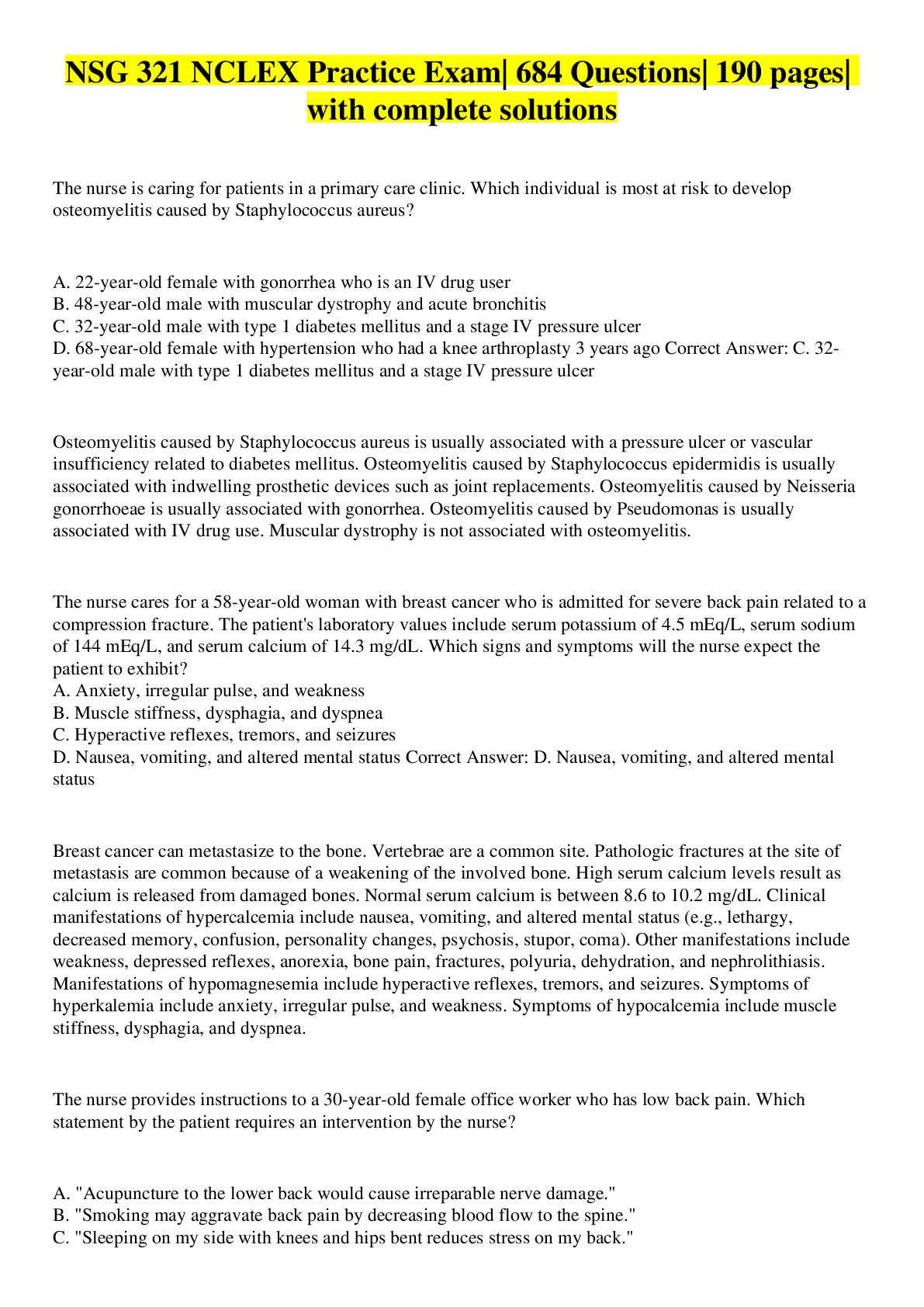
The nurse is caring for patients in a primary care clinic. Which individual is most at risk to develop osteomyelitis caused by Staphylococcus aureus?
A. 22-year-old female with gonorrhea who is an IV drug user
B. 48-year-old male with muscular dystrophy and acute bronchitis
C. 32-year-old male with type 1 diabetes mellitus and a stage IV pressure ulcer
D. 68-year-old female with hypertension who had a knee arthroplasty 3 years ago Correct Answer: C. 32-year-old male with type 1 diabetes mellitus and a stage IV pressure ulcer
Osteomyelitis caused by Staphylococcus aureus is usually associated with a pressure ulcer or vascular insufficiency related to diabetes mellitus. Osteomyelitis caused by Staphylococcus epidermidis is usually associated with indwelling prosthetic devices such as joint replacements. Osteomyelitis caused by Neisseria gonorrhoeae is usually associated with gonorrhea. Osteomyelitis caused by Pseudomonas is usually associated with IV drug use. Muscular dystrophy is not associated with osteomyelitis.
The nurse cares for a 58-year-old woman with breast cancer who is admitted for severe back pain related to a compression fracture. The patient's laboratory values include serum potassium of 4.5 mEq/L, serum sodium of 144 mEq/L, and serum calcium of 14.3 mg/dL. Which signs and symptoms will the nurse expect the patient to exhibit?
A. Anxiety, irregular pulse, and weakness
B. Muscle stiffness, dysphagia, and dyspnea
C. Hyperactive reflexes, tremors, and seizures
D. Nausea, vomiting, and altered mental status Correct Answer: D. Nausea, vomiting, and altered mental status
Breast cancer can metastasize to the bone. Vertebrae are a common site. Pathologic fractures at the site of metastasis are common because of a weakening of the involved bone. High serum calcium levels result as calcium is released from damaged bones. Normal serum calcium is between 8.6 to 10.2 mg/dL. Clinical manifestations of hypercalcemia include nausea, vomiting, and altered mental status (e.g., lethargy, decreased memory, confusion, personality changes, psychosis, stupor, coma). Other manifestations include weakness, depressed reflexes, anorexia, bone pain, fractures, polyuria, dehydration, and nephrolithiasis. Manifestations of hypomagnesemia include hyperactive reflexes, tremors, and seizures. Symptoms of hyperkalemia include anxiety, irregular pulse, and weakness. Symptoms of hypocalcemia include muscle stiffness, dysphagia, and dyspnea.
The nurse provides instructions to a 30-year-old female office worker who has low back pain. Which statement by the patient requires an intervention by the nurse?
A. "Acupuncture to the lower back would cause irreparable nerve damage."
B. "Smoking may aggravate back pa
[Show More]