Health Care > EXAM > CHAPTER 29: ASSESSMENT:HEMATOLOGIC SYSTEM 11 EDITION (All)
CHAPTER 29: ASSESSMENT:HEMATOLOGIC SYSTEM 11 EDITION
Document Content and Description Below
Last updated: 3 years ago
Preview 1 out of 8 pages
Instant download

Buy this Document to get the Full Access Instantly
Provided by Students Who Aced it
We Verify Document Content to Gurantee Accuracy
Reviews( 0 )
Document information
Connected school, study & course
About the document
Uploaded On
Nov 25, 2022
Number of pages
8
Written in
All

Additional information
This document has been written for:
Uploaded
Nov 25, 2022
Downloads
0
Views
102
Topic Tags
Recommended For You
Get more on EXAM ».png)
NURS 301- Health Assessment Exam Review 2; Multiple Choice Tes...
NURS 301- Health Assessment Exam Review 2; Multiple Choice Tes...
Introduction to Law and the Legal System 11th Edition By Frank...
BLAW Chapter 29 Questions With Complete Grade A+ Answers
Fundamentals II Exam 1 Chapter 29 – Wound Care (clean wounds)

NURS 301 Health Assessment Exam Review 2 | Multiple Choice Tes...

Test Bank-Kozier & Erb’s Fundamentals of Nursing, 10Ed-Chapter...
.png)
NURS 301- Health Assessment Exam Review 2; Multiple Choice Tes...
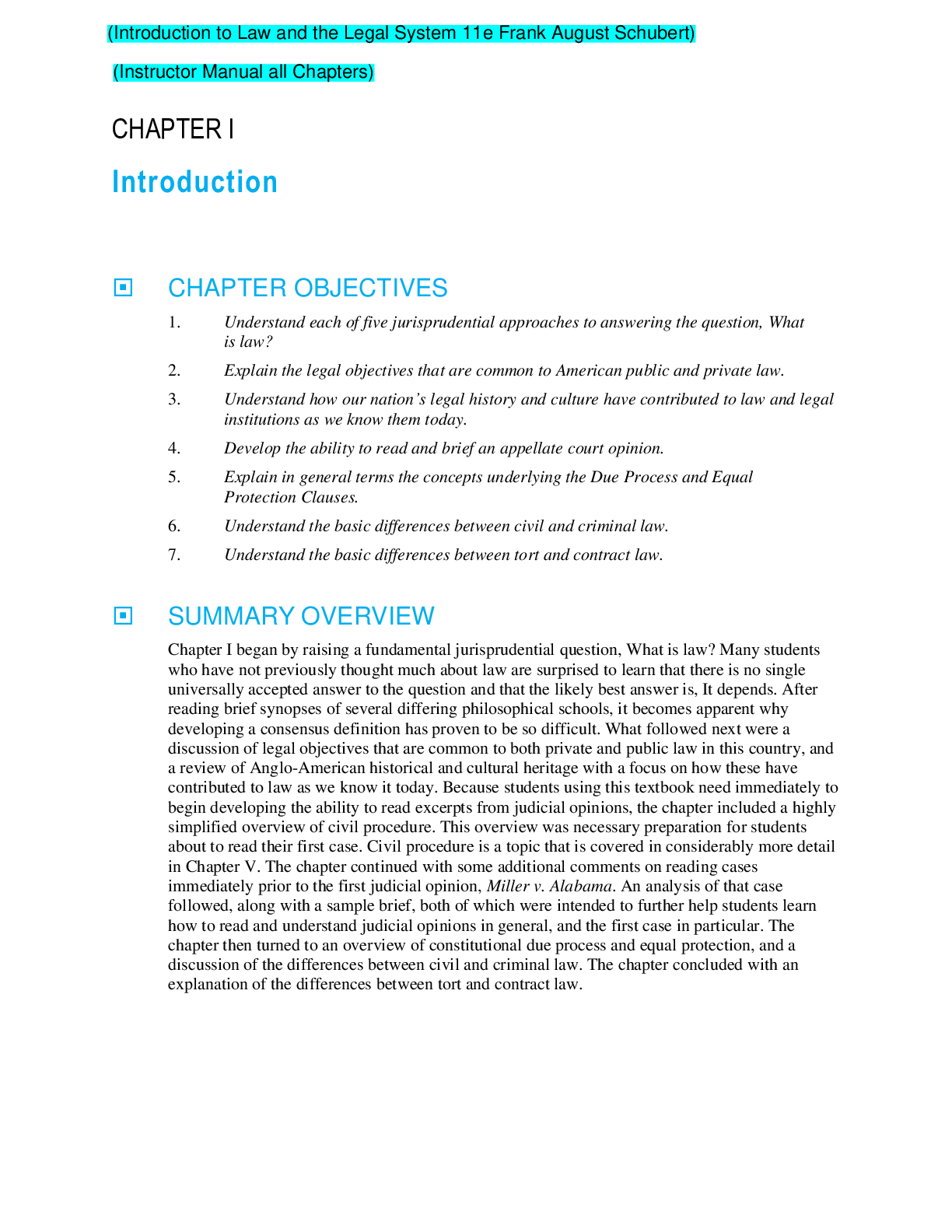
Introduction to Law and the Legal System 11th Edition By Frank...
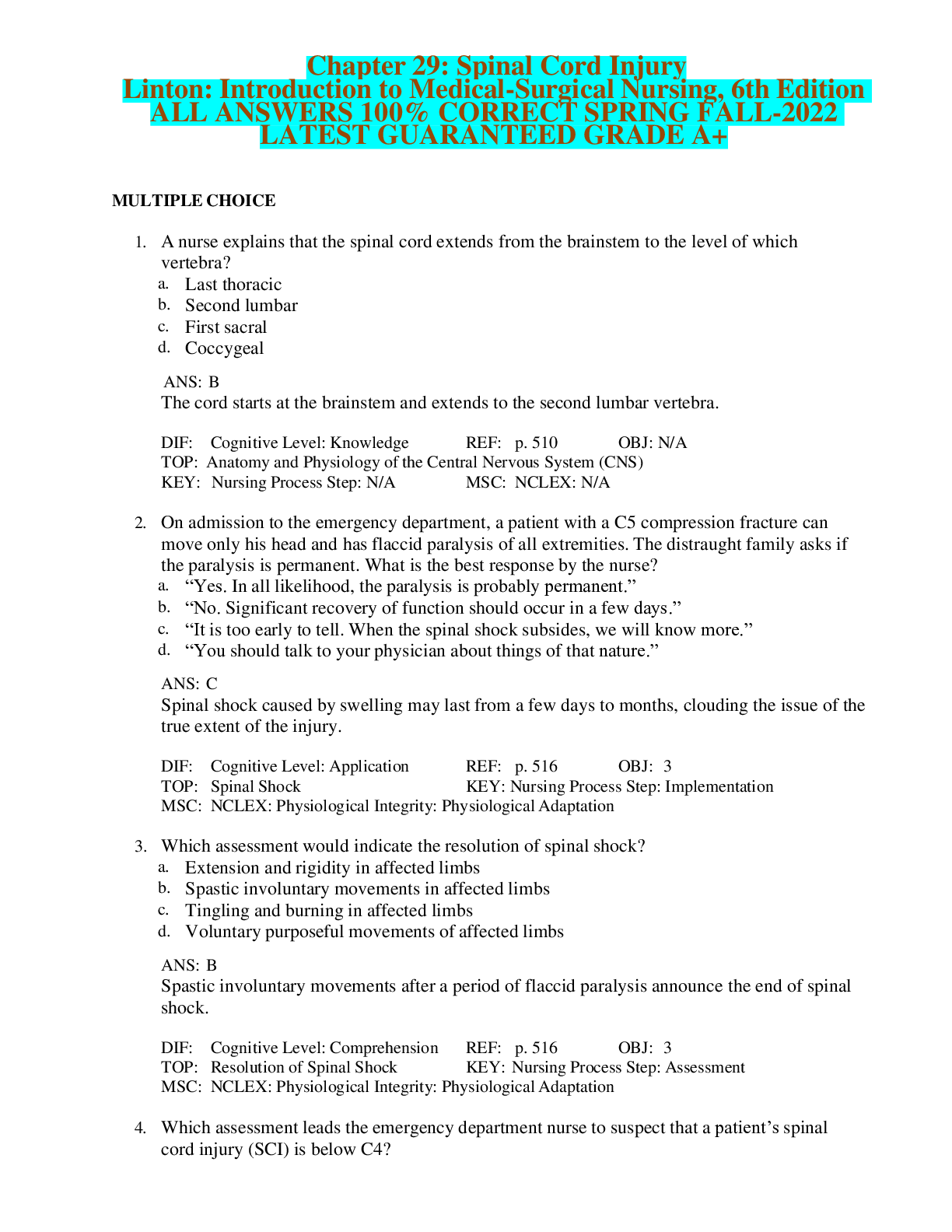
Chapter 29: Spinal Cord Injury Linton: Introduction to Medical...
.png)
Chapter 29: Infection Prevention and Control Potter et al.: Fu...

Chapter 29: Spinal Cord Injury Linton: Introduction to Medical...

Chapter 29 Outline: Care of Patients with Noninfectious Upper...
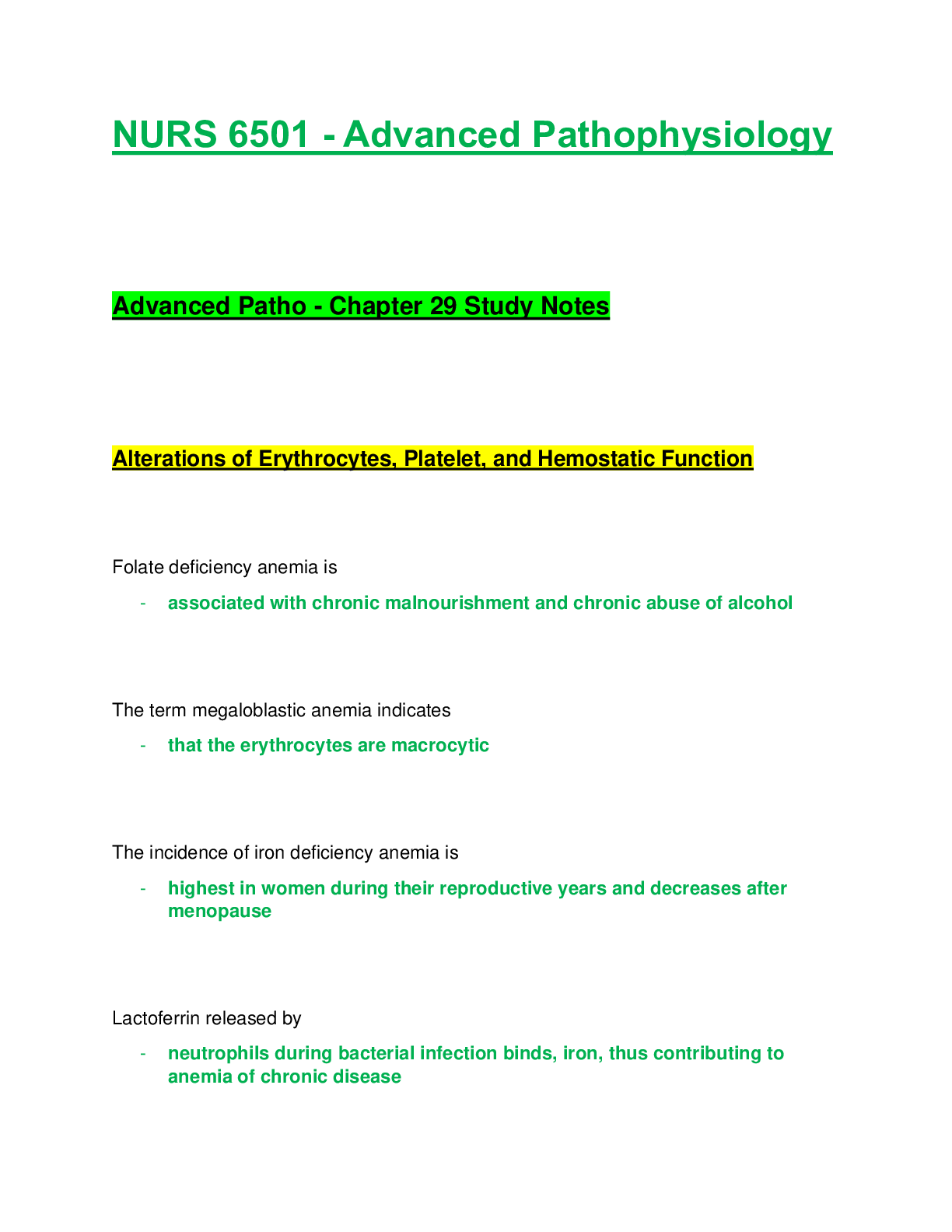
NURS 6501 / NURS6501: Advanced Pathophysiology - Chapter 29 St...

APUSH Chapter 29 Reading Notes Guided Reading & Analysis: L...
 Med Surg test Latest Verified Questions and all Correct Answers with Explanations Chapter 29 Management of Patients with Complications fro.png)
Sophia Milestone Adult Nursing (NUR 105) Med Surg test Latest...
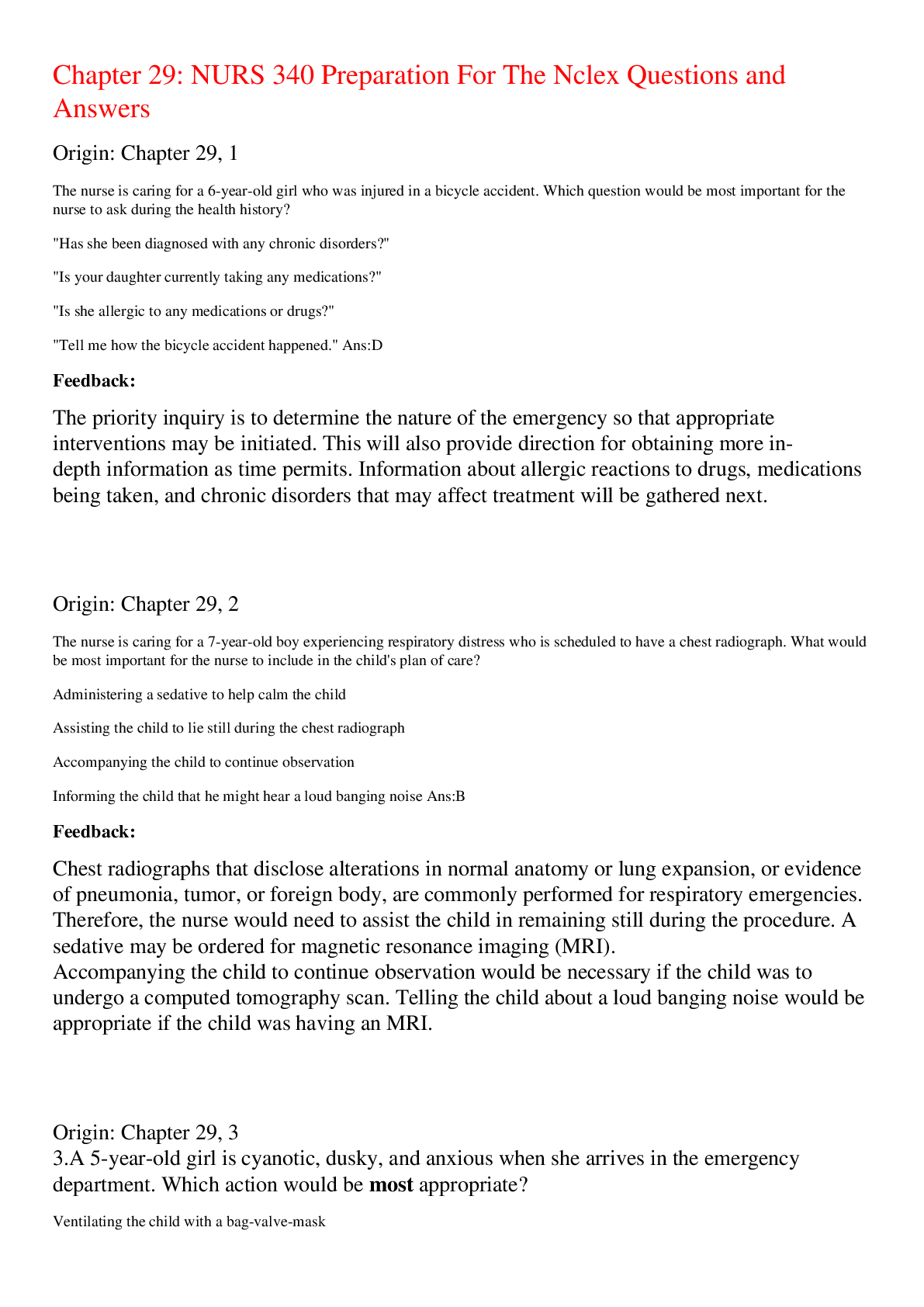
Chapter 29: NURS 340 Preparation For The Nclex Questions and A...
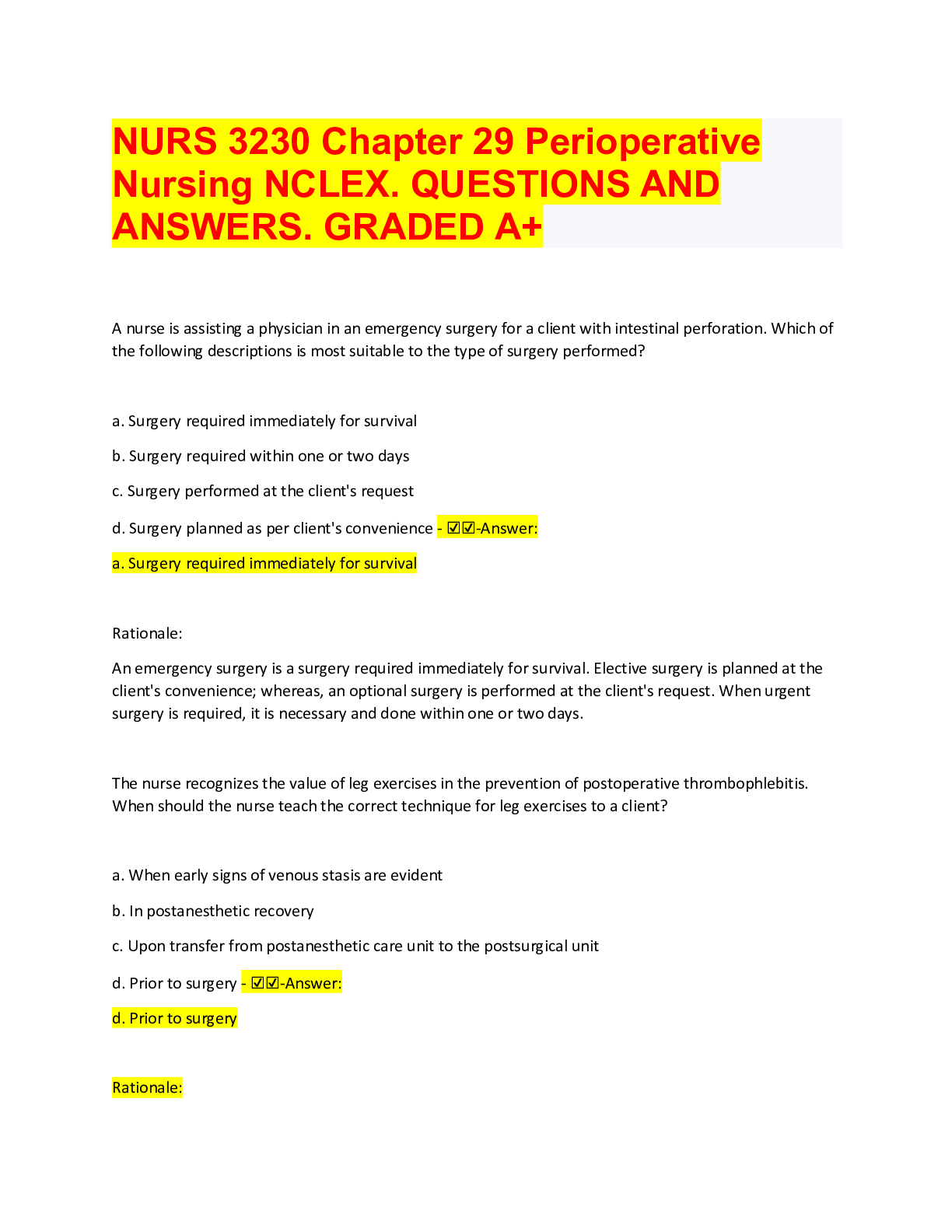
NURS 3230 Chapter 29 Perioperative Nursing NCLEX. QUESTIONS AN...
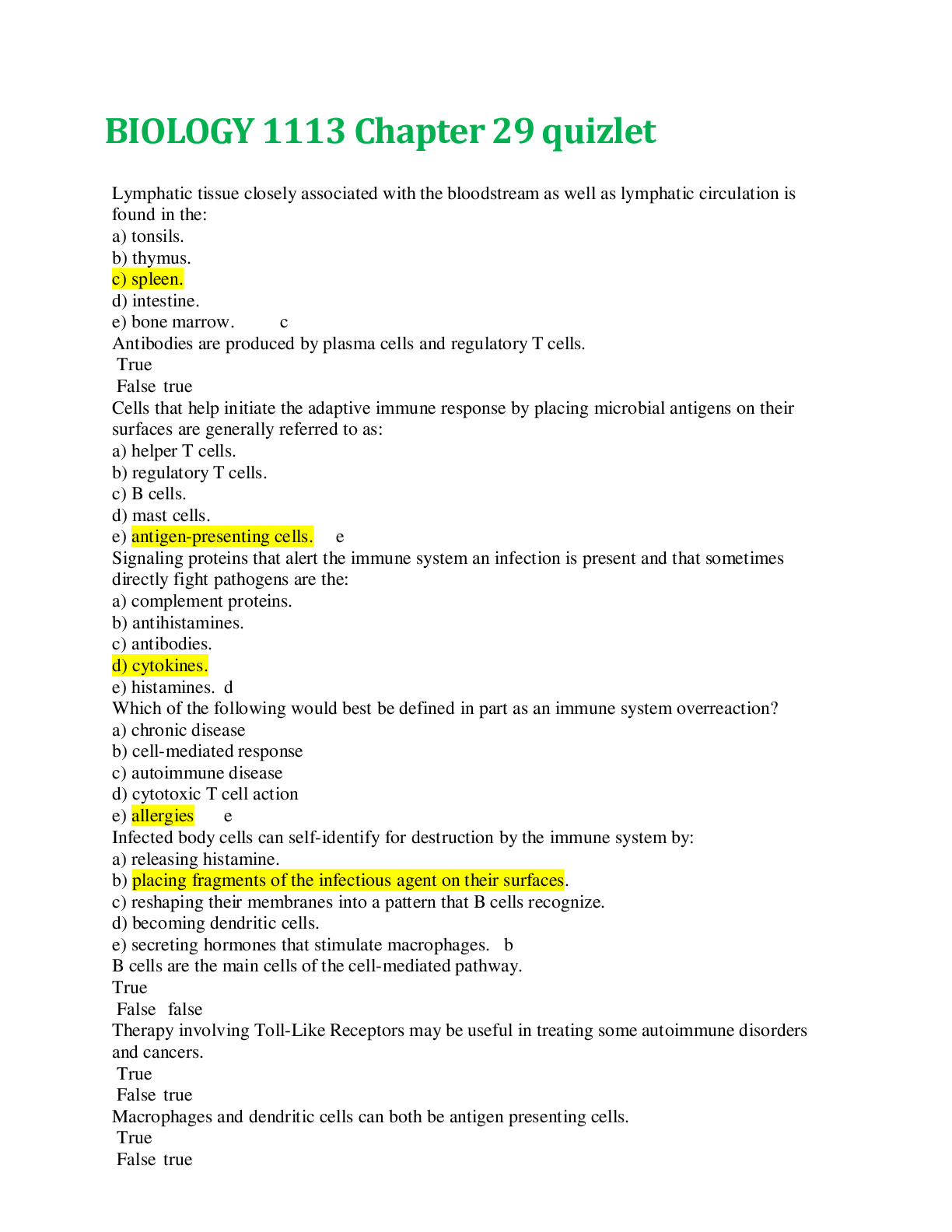
BIOLOGY 1113 Chapter 29 quizlet (GRADED A) /(Atom, Proton, Che...
 Correct Study Guide, Download to Score A.png)