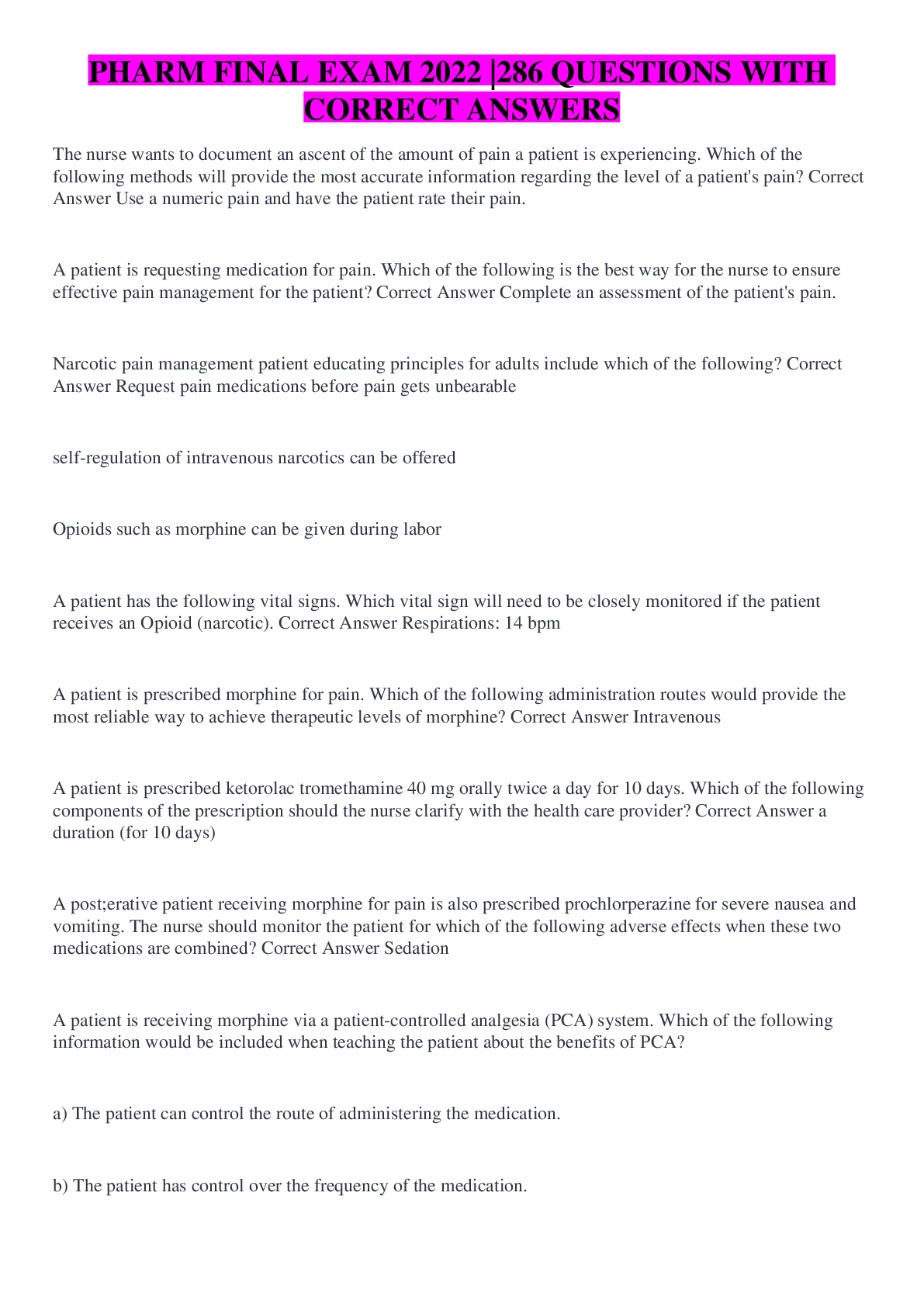
The nurse wants to document an ascent of the amount of pain a patient is experiencing. Which of the following methods will provide the most accurate information regarding the level of a patient's pain? Correct Answer Use
...
The nurse wants to document an ascent of the amount of pain a patient is experiencing. Which of the following methods will provide the most accurate information regarding the level of a patient's pain? Correct Answer Use a numeric pain and have the patient rate their pain.
A patient is requesting medication for pain. Which of the following is the best way for the nurse to ensure effective pain management for the patient? Correct Answer Complete an assessment of the patient's pain.
Narcotic pain management patient educating principles for adults include which of the following? Correct Answer Request pain medications before pain gets unbearable
self-regulation of intravenous narcotics can be offered
Opioids such as morphine can be given during labor
A patient has the following vital signs. Which vital sign will need to be closely monitored if the patient receives an Opioid (narcotic). Correct Answer Respirations: 14 bpm
A patient is prescribed morphine for pain. Which of the following administration routes would provide the most reliable way to achieve therapeutic levels of morphine? Correct Answer Intravenous
A patient is prescribed ketorolac tromethamine 40 mg orally twice a day for 10 days. Which of the following components of the prescription should the nurse clarify with the health care provider? Correct Answer a duration (for 10 days)
A post;erative patient receiving morphine for pain is also prescribed prochlorperazine for severe nausea and vomiting. The nurse should monitor the patient for which of the following adverse effects when these two medications are combined? Correct Answer Sedation
A patient is receiving morphine via a patient-controlled analgesia (PCA) system. Which of the following information would be included when teaching the patient about the benefits of PCA?
a) The patient can control the route of administering the medication.
b) The patient has control over the frequency of the medication.
c) The patient may request the specific concentration of narcotic used.
[Show More]