What is Starling's Law of Capillary forces?
How does this explain why a nutritionally deficient child would have edema?
Starling's Law describes how fluids move across the capillary membrane. There are two major oppo
...
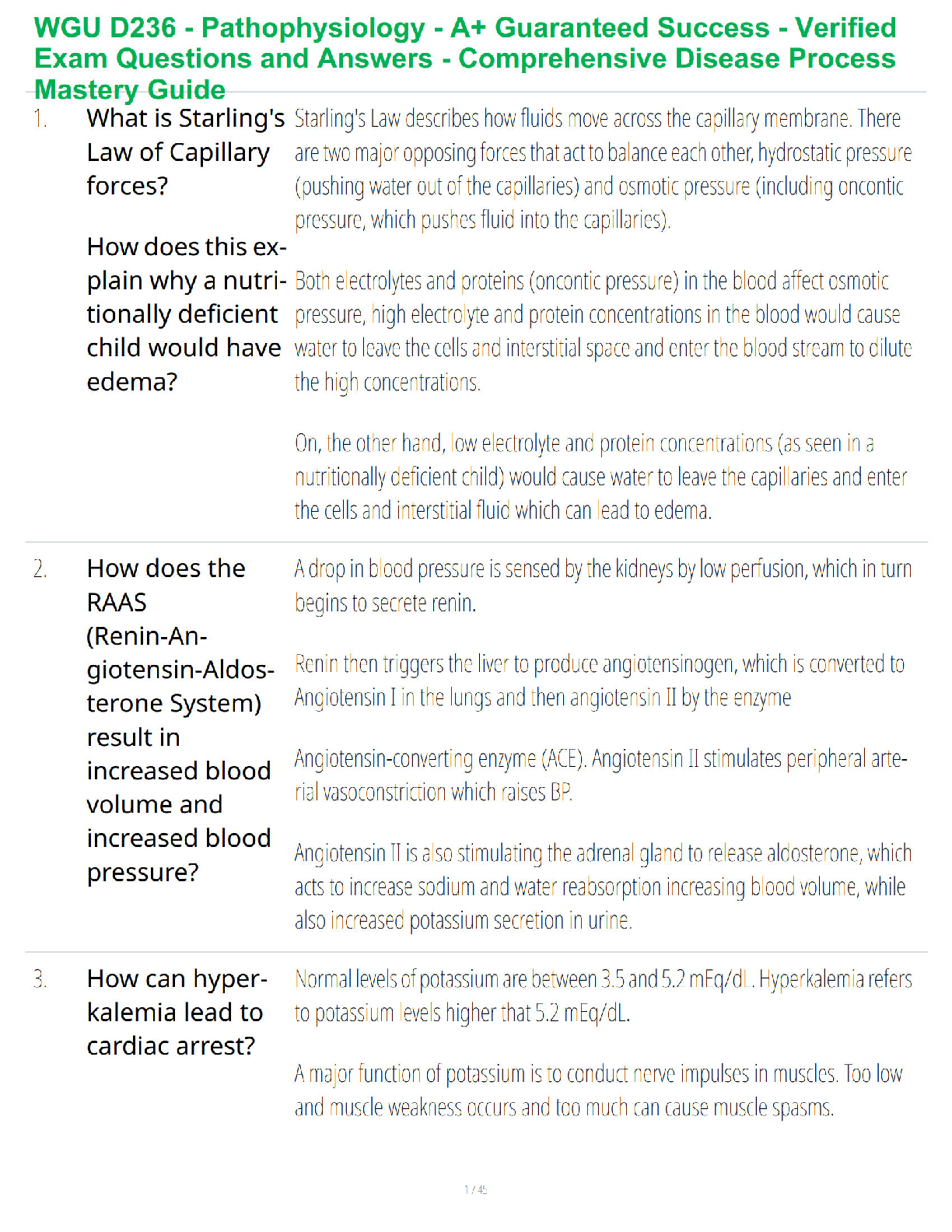
What is Starling's Law of Capillary forces?
How does this explain why a nutritionally deficient child would have edema?
Starling's Law describes how fluids move across the capillary membrane. There are two major opposing forces that act to balance each other, hydrostatic pressure (pushing water out of the capillaries) and osmotic pressure (including oncontic pressure, which pushes fluid into the capillaries).
Both electrolytes and proteins (oncontic pressure) in the blood affect osmotic pressure, high electrolyte and protein concentrations in the blood would cause water to leave the cells and interstitial space and enter the blood stream to dilute the high concentrations.
On, the other hand, low electrolyte and protein concentrations (as seen in a nutritionally deficient child) would cause water to leave the capillaries and enter the cells and interstitial fluid which can lead to edema.
How does the RAAS (Renin-Angiotensin-Aldosterone System) result in increased blood volume and increased blood pressure?
A drop in blood pressure is sensed by the kidneys by low perfusion, which in turn begins to secrete renin.
Renin then triggers the liver to produce angiotensinogen, which is converted to Angiotensin I in the lungs and then angiotensin II by the enzyme
Angiotensin-converting enzyme (ACE). Angiotensin II stimulates peripheral arterial vasoconstriction which raises BP.
Angiotensin II is also stimulating the adrenal gland to release aldosterone, which acts to increase sodium and water reabsorption increasing blood volume, while also increased potassium secretion in urine.
How can hyperkalemia lead to cardiac arrest?
Normal levels of potassium are between 3.5 and 5.2 mEq/dL. Hyperkalemia refers to potassium levels higher that 5.2 mEq/dL.
A major function of potassium is to conduct nerve impulses in muscles. Too low and muscle weakness occurs and too much can cause muscle spasms.
This is especially dangerous in the heart muscle and an irregular heartbeat can cause a heart attack
The body uses the Protein Buffering System, Phosphate Buffering System, and Carbonic Acid-Bicarbonate System to regulate and maintain homeostatic pH, what is the consequence of a pH imbalance
Proteins contain many acidic and basic group that can be affected by pH changes. Any increase or decrease in blood pH can alter the structure of the protein (denature), thereby affecting its function as well
Describe the laboratory findings associated with metabolic acidosis, metabolic alkalosis, respiratory acidosis and respiratory alkalosis. (ie relative pH and CO2 levels).
Normal ABGs (Arterial Blood Gases) Blood pH: 7.35-7.45 PCO2: 35-45 mm Hg PO2: 90-100 mm Hg HCO3-: 22-26 mEq/L SaO2: 95-100%
Respiratory acidosis and alkalosis are marked by changes in PCO2. Higher = acidosis and lower = alkalosis
Metabolic acidosis and alkalosis are caused by something other than abnormal CO2 levels. This could include toxicity, diabetes, renal failure or excessive GI losses.
Here are the rules to follow to determine if is respiratory or metabolic in nature. -If pH and PCO2 are moving in opposite directions, then it is the pCO2 levels that are causing the imbalance and it is respiratory in nature.
-If PCO2 is normal or is moving in the same direction as the pH, then the imbalance is metabolic in nature.
The anion gap is the difference between measured cations (Na+ and K+) and measured anions (Cl- and HCO3-), this calculation can be useful in determining the cause of metabolic acidosis.
Why would an increased anion gap be observed in diabetic ketoacidosis or lactic acidosis?
The anion gap is the calculation of unmeasured anions in the blood.
Lactic acid and ketones both lead to the production of unmeasured anions, which remove HCO3- (a measured anion) due to buffering of the excess H+ and therefore leads to an increase in the AG.
Why is it important to maintain a homeostatic balance of glucose in the blood (ie describe the pathogenesis of diabetes)?
Insulin is the hormone responsible for initiating the uptake of glucose by the cells. Cells use glucose to produce energy (ATP).
In a normal individual, when blood glucose increases, the pancreas is signaled to produced in insulin, which binds to insulin receptors on a cells surface and initiates the uptake of glucose.
Glucose is a very reactive molecule and if left in the blood, it can start to bind to other proteins and lipids, which can lead to loss of function.
AGEs are advanced glycation end products that are a result of glucose reacting with the endothelial lining, which can lead to damage in the heart and kidneys.
Compare and contrast Type I and Type II Diabetes
Type I diabetes is caused by lack of insulin. With out insulin signaling, glucose will not be taken into the cell and leads to high blood glucose (hyperglycemia). Type I is usually treated with insulin injections.
Type II diabetes is caused by a desensitization to insulin signaling. The insulin receptors are no longer responding to insulin, which also leads to hyperglycemia.
Type II is usually treated with drugs to increase the sensitization to insulin (metformin), dietary and life-style changes or insulin injections.
Describe some reasons for a patient needing dialysis
AEIOU-acidosis. Electrolytes, Intoxication/Ingestion, overload, uremia. Patients with kidney or heart failure.
A build up of phosphates, urea and magnesium are removed from the blood using a semi-permeable membrane and dialysate.
AEIOU:
A—acidosis;
E—electrolytes principally hyperkalemia;
I—ingestions or overdose of medications/drugs;
O—overload of fluid causing heart failure;
U—uremia leading to encephalitis/pericarditis
Compare and contrast hemodialysis and peritoneal dialysis.
What are some reasons for a patient choosing one over the other?
Hemodialysis uses a machine to pump blood from the body in one tube while dialysate (made of water, electrolytes and salts) is pumped in the separate tube in the opposite direction. Waste from the blood diffuses through the semipermeable membrane separating the blood from the dialysate.
Peritoneal Dialysis does not use a machine, but instead injects a solution of water and glucose into the abdominal cavity. The peritoneum acts as the membrane instead of dialysis tubing. The waste products diffuse into the abdominal cavity and the waste solution is then drained from the body.
Peritoneal dialysis offers continuous filtration and is less disruption to the patient's daily routines. However, it does require some training of the patient and is not recommended for individuals who are overweight or have severe kidney failure.
Hemodialysis provides medical care, but 3 times a week for several hours sitting at a hospital or clinic. Individuals with acute kidney failure are recommended to use hemodialysis.
How does homeostasis and maintaining optimal physiological health impact your wellbeing?
Homeostasis acts to create a constant and stable environment in the body despite internal and external changes. Proteins and other cellular processes require optimal conditions in order to carry out their functions.
Alterations in pH, salt concentration, temperature, glucose levels, etc. can have negative effects on health, so it is vital for mechanisms that regulate homeostasis to function properly for maintaining good health
Differentiate between Innate Immunity and Adaptive Immunity ?
The innate immune system encompasses physical barriers and chemical and cellular defenses. Physical barriers protect the body from invasion. These include things like the skin and eyelashes. Chemical barriers are defense mechanisms that can destroy harmful agent. Examples include tears, mucous, and stomach acid.
Cellular defenses of the innate immune response are non-specific. These cellular defenses identify pathogens and substances that are potentially dangerous and takes steps to neutralize or destroy them.
Adaptive immunity is an organism's acquired immunity to a specific pathogen. As such, it's also referred to as acquired immunity. Adaptive immunity is not immediate, nor does it always last throughout an organism's entire lifespan, although it can.
The adaptive immune response is marked by clonal expansion of T and B lymphocytes, releasing many antibody copies to neutralize or destroy their target antigen
What is a way that Adaptive Immunity can recruit innate immunity?
The innate immune response to microbes stimulates adaptive immune responses and influences the nature of the adaptive responses.
Conversely, adaptive immune responses often work by enhancing the protective mechanisms of innate immunity, making them more capable of effectively combating pathogenic microbes
Why are some infections harder on children while other infections are harder on the elderly?
Children have not been exposed to many pathogens yet, so they lack memory cells and have not built-up immunity yet.
The elderly have a depleted naïve T cell population from years of battling infections, so the likelihood of getting a match is less.
Describe how and why our injury response results in the signs of redness, swelling, heat, and pain?
(Be sure to use chemokines, histamine, and vasodilation in your response.)
An injury causes an inflammatory response which is responsible for the redness, swelling, heat and pain. Upon injury, cells on the surface begin to release chemokines which act as messengers that something has happened.
Mast cells are also alerted to release histamines which travel to the endothelial cells of capillaries and causes vasodilation, which is related to swelling and redness.
Vasodilation also causes the capillaries to become leaky which allows for histamines, chemokines and even pathogen particles to enter the blood stream where they are met by neutrophils (non-specific) which start to adhere to the capillary wall and squeeze through the leaky holes (diapedesis or extravasation) to phagocytose pathogens and damaged cells.
Dendritic cells just under the surface of skin are also activated to phagocytose foreign particles. Other B cells, T cells (specific) and the complement system also squeeze through the capillary wall to create an area of congestion.
Explain dominant vs recessive genetic diseases.
What is a "carrier" in recessive genetic diseases?
The human genome contains 23 pairs of chromosome (22 autosomes and 1 pair of sex chromosomes). The pairs are homologous and contain the same genes in the same order. This means that every gene has a copy, one inherited from your mother and the other from your father.
Not all versions of a gene (alleles) are treated the same by the cell. Some are expressed over others. A dominant gene is a gene that is expressed, even if you only have one copy. The dominant gene will be expressed over the recessive gene, which must have two copies to be expressed.
In a dominant genetic disease, all it takes is one copy of the disease to have the disease. Recessive genetic diseases require that the individual gets two copies of the gene to have the disease.
Someone who is a carrier for a recessive genetic disease is healthy, but contains a copy of the disease gene, potentially passing it to their offspring.
Describe how to determine the probability of clinical outcomes given information about the parents (eg two heterozygous carriers of sickle cell disease).
Punnett Squares can be used to determine the potential probabilities of certain traits being passed to offspring. If you know the genotypes of each parent (ie homozygous or heterozygous for the trait), you can determine the possible outcomes.
Heterozygous means that the parent has one copy of each gene, homozygous means the parent has the same copy for each gene (either both dominant genes or both recessive genes).
What are some of the consequences of alcohol exposure in pregnancy?
ND-PAE (neurobehavioral disorder-prenatal alcohol exposure) can cause birth defects and developmental disabilities (fetal alcohol spectrum disorders-FASDs).
Affects thinking and memory, causes behavioral issues and linked to trouble with everyday functioning
What are some of the distinctive features associated with trisomy 21, or Down's Syndrome?
Why is increased maternal age a risk factor?
Distinct features of Down's syndrome include intellectual disabilities and common physical features that include slanted eyes, flattened bridge of the nose and forehead, short in stature, poor muscle tone, loose joints and single palmar crease.
As a woman's eggs age, they can have mistakes in meiosis potentially leading to a nondisjunction event causing trisomy 21
What is Spina Bifida?
Why are relative deficiencies in Folic acid or B12 associated with Spina Bifida?
Failure to close the neural tube early in gestation due to low folic acid and B-12. These vitamins help activate DNA synthesis in the developing fetus in the first 4 weeks of pregnancy, that are responsible for closing up the spinal column.
Three types of spina bifida.
1) spina bifida occulta (most common, less severe)
2) Meningocele (least common)
3) Myelomeningocele (most severe).
Essential Question: How does the body's cellular responses and adaptations react to disruptions?
The body uses the RAAS system to regulate blood volume and pressure, the immune response reacts to fight infection, the inflammatory response reacts to injury
Describe how calcitonin, parathyroid hormone, and calcitriol (Vitamin D) work together to maintain normal blood calcium levels.
Vitamin D: UV light stimulates formation of cholecalciferol, which is hydroxylated in the liver and the kidney into the active form of Vitamin D, calcitriol.
Calcitriol stimulates absorption of calcium and phosphorus from the GI tract in the intestine and phosphate in the kidney. Calcitriol increases the calcification of osteoid.
Calcitriol also stimulates the formation of bone by raising the levels of calcium and phosphorus in the blood. Low vitamin D levels can cause hypocalcemia, which stimulates the parathyroid gland to release parathyroid hormone (PTH).
PTH stimulates osteoclasts to resorb bone calcium to increase blood calcium levels. PTH also stimulates osteoblasts to form bone. PTH stimulates kidneys to reabsorb calcium into the blood and to synthesize vitamin D.
When blood calcium gets too high, the thyroid is stimulated to release calcitonin (suppresses osteoclast activity and calcium will be used to form bone).
Describe the function of osteocytes within lacunae of bone
Osteocytes absorb nutrients from the bloodstream and distribute them within the bone structure.
Osteocytes absorb waste products from the bone and excrete them into the bloodstream.
Describe bone remodeling ?
Which cells are involved in this process and what is their function?
Osteoclasts breakdown older bone structure and secrete the release calcium into the bloodstream.
Osteoblasts absorb calcium from the bloodstream and use it to build new bone structure.
Working together, these two cell types allow for regeneration of damaged bone structure.
Describe the process of articular degeneration.
Which cells are involved in this process and what is their function?
Articular Degeneration is the thinning and breakdown of the articular cartilage that covers joints and acts as a lubricant and cushion. This articular cartilage is comprised of chondrocytes in a matrix of collagen and aggrecan.
The chondrocytes produce enzymes and other proteins that slowly break down and reform the matrix, allowing for regeneration.
Stress caused by being overweight or physical trauma can cause chondrocytes to speed up the matrix breakdown process relative to the reformation process, leading to a thinning of the articular cartilage.
What is rickets?
How does it develop?
Who usually develops rickets?
How can rickets be treated?
Rickets is, primarily, due to a deficiency of vitamin D (due to sunlight exposure), which leads to a deficiency of blood calcium. Rickets can lead to bone weakness, deformity, and susceptibility to fracture. Rickets results from a failure to calcify osteoid due to low amounts of blood calcium and low vitamin D (typically).
There are many different types of rickets. Children, especially under age 2, are most likely to be diagnosed with rickets. Infants can develop rickets if their mother's diet was low in vitamin D or in calcium, and breastmilk is low in vitamin D, so mother and baby need to supplement vitamin D (and calcium).
The best way to treat rickets is to prevent it by taking supplements of vitamin D and calcium, eating food/drink containing vitamin D/calcium, and getting sufficient sunlight.
Physical therapy with weight-bearing exercise can help to treat rickets, as well. It is a multi step process to make the active form of Vit D
How does Denosumab treat osteoporosis?
Denosumab is a monoclonal antibody that binds to osteoclasts and inhibits their Calcium- withdrawing capability.
Distinguish between open reduction and internal fixation (ORIF) and hip replacement surgery.
Open reduction and internal fixation involves "surgical opening' and insertion of hardware into the patient that assists with maintaining proper bone alignment during the healing process.
Hip replacement involves replacement of a fractured hip joint with a prosthesis.
What is degenerative disc disease?
What are some of the anatomical features of degenerative disc disease?
What are some symptoms of lumbar vs. cervical degenerative disc disease?
Degenerative disc disease (DDD) is a disorder of the intervertebral discs. When the discs deteriorate, they cause improper alignment of the spinal column. Some anatomical issues that result are thinning discs, herniated discs (nucleus pulposus leaking through annulus fibrosus cartilage), bulging discs, and degenerated discs (possible with the formation of osteophytes).
Lumbar DDD results in pain in the buttock and thighs that gets worse with sitting, bending, lifting or twisting; weakness and numbness in the lower body, such as sciatica.
Cervical DDD can result in chronic neck pain that radiates to shoulders and down the arms, weakness of arms/hands, and numbness and tingling in arms/hands.
What is sepsis ?
What are symptoms of sepsis, and how can sepsis be treated?
Sepsis is an infection of the blood. Fever, chills, and increased pressure in the affected area are symptoms, as well as the area of injury will be warm, edematous, and erythematous.
If the infection is advanced, a purulent (pus-like) discharge can develop, as well as a foul odor.
The patient is treated with IV antibiotics in the hospital. When they are allowed to go home, they are given oral antibiotics.
In the context of musculoskeletal injury, as part of treatment, the debridement of the wound and removal of orthopedic hardware will be needed to clean up infected region around injury, if it exists.
How does compartment syndrome develop?
Which part of our body tends to develop compartment syndrome?
How do patients typically recognize they may need to seek medical assistance for rhabdomyolysis?
What is the most sensitive laboratory test for rhabdomyolosis?
Because the fascia around the muscles, nerves and blood vessels do not stretch, compartments surrounded by fascia cannot tolerate swelling or bleeding internally.
When this happens, tissue pressure can exceed perfusion pressure, and compartment syndrome develops. The area can feel very hard due to the pressure. It is common in the lower leg and the forearm, and can be present in several potential body compartments.
Several issues develop, and then exacerbate, the compartment syndrome, including constriction of veins, then arteries and compressed nerves. These lead to tissue necrosis, ischemia, leaky capillaries, and edema. This gives even higher pressure and can lead to increase Mb in the blood as muscles break down (rhabdomyolysis).
Mb in the kidneys can lead to renal toxicity and tea-colored urine, which is, typically, a patient's first indication that they have rhabdomyolysis. The most sensitive laboratory test is an elevated creatine
What is a pulmonary embolism?
What is a fat embolism?
When might a patient develop a pulmonary embolism?
When might a patient develop a fat embolism?
How are they treated?
A pulmonary embolism is a blood clot that has obstructed an artery in the lungs. A fat embolism occurs when fat globules released from marrow of a fractured bone block microvasculature in the lung or other organs, such as the brain.
A pulmonary embolism may often develop due to orthopedic surgery and in individuals with low mobility and blood hypercoagulation tendency.
Anticoagulant may be administered during orthopedic surgery, and DVT may be treated through thrombolysis or pulmonary thrombectomy.
A fat embolism is often related to a deep fracture of a marrow-containing bone, such as the femur.
Early stabilization of marrow- containing bone fractures can help prevent fat embolisms, and fat embolisms may be treated by flushing the blood with solutions containing albumin to increase blood vessel volume and to dissolve the fat globules with the aid of the albumin.
Choose three of the seven roles (of your choice) of the integumentary system.
Describe the vital physiological function that each role serves.
Provide at least two examples that illustrate the function for each role you have chosen.
1) Indicator of general health. Changes in the color of skin or nailbeds can indicate diseases of heart, liver, or blood cell synthesis. Examples: see slides provided. Anemia /shock: pallor. Oxygen deficit: blue skin.
2) Barrier protection. Protect body from chemical and environmental hazards. The stratum corneum is a barrier to antigens and is waterproof.
3) Thermoregulation. Maintain a constant body temperature. Temperature sensors in the dermis send signal to thermoregulatory center in hypothalamus. If warm, will sweat and have capillary dilation. If cold, hairs stand up, surface vessels constrict, and body shivers.
4) Immunological surveillance. Non-specific protection from antigens. Keratinocytes secrete keratin and regulate immune response.
5) Excretion/absorption. Regulate composition and volume of sweat, and help to manage total fluid volume. Many substances pass into and out of body through skin. See slides for more.
6) Mirror for internal disease processes. External signs of internal immune response/inflammatory processes, such as wheals, blisters, and bullae.
7) Production of Vitamin D. Regulates calcium and phosphorus metabolism. Role in bone development.
Describe Albinism ?
What portions of the body are negatively affected by Albinism?
Albinism is a genetic disorder in which the body does not produce the skin pigment melanin. Lack of melanin negatively impacts the skin and eyes:
The skin of albinos is easily sunburned and these individuals are prone to skin cancers.
The eyes of albinos are sensitive to and easily damaged by sunlight and albinos frequently have issues with vision.
Describe Eczema and Contact Dermatitis.
How can these conditions be mitigated?
Eczema is a disorder involving the immune system that leads to crusty, itchy, reddened skin. Eczema can be induced by a variety of factors, including stress, dietary intake of certain foods, and high or low temperatures.
Observation and determination of risk factors can allow for avoidance of these risk factors (i.e. stress reduction) to mitigate eczema breakouts.
Contact dermatitis is an allergic reaction that is localized at the area of contact that leads to redness and swelling.
Certain metals or other chemical compounds can be the culprits of contact dermatitis, and avoidance of exposure will mitigate the symptoms.
Describe Urticaria and associated Angioedema.
What potentially life- threatening scenario can be associated with these conditions?
Urticaria is the formation of red, blotchy, itchy patches (also called hives) associated with a large release of histamines.
Angioedema is the swelling of the eyes, face, lips, and mucous membranes that is often associated with urticaria.
Anaphylactic shock is often associated with these conditions.
Describe the three most common types of skin cancer.
Where in the skin does each occur, and what are risk factors for each?
Which are most likely to metastasize?
How are skin cancers diagnosed, and what are treatment options?
The most common type of skin cancer is basal cell carcinoma. Basal cell carcinoma is a cancer of the basal cells and is most commonly located on the face.
Basal cell carcinoma often appears as a shiny, pearly bump. Basal cell carcinoma is usually treated by excision and rarely metastasizes.
Squamous cell carcinoma is a cancer of the squamous cells that appears as a red, crusted, or scaly ulcer or bump. Squamous cell carcinoma rarely metastasizes (but can do so through the lymphatic system) and is treated by excision.
Melanoma is a cancer of the melanocytes that appears as an irregularly-shaped patch of skin with unusual pigmentation. The coloration of the melanoma is often dark but can appear as other colors such bright-pink or blue.
Melanoma has a very high risk of penetrating into blood vessels and the lymphatic system, and early detection and excision can prevent metastasis. Skin cancers are diagnosed through biopsy of the suspected area of skin.
Explain the Rule of Nines and the briefly describe the ABA classification system.
What are local effects and systemic effects of burns?
The Rule of Nines is a method to quickly estimate the effected burn area of a patient that divides the body into regions with multiples of 9% of total body surface area (TBSA). In adults, head is 9%, arms are 9% each, legs are 18% each, and torso is 18% front and back each (groin is 1%).
The ABA classification system groups burns into three types based on burn depth, percentage of TBSA, and whether or not certain body areas such as eyes and respiratory tract are affected.
Local effects of burns include edema brought on by increased hydrostatic pressure and decreased osmotic pressure, poor perfusion, and hypermetabolism.
Systemic effects of burns include pulmonary (edema of airways, inhalation injury, CO poisoning), gastrointestinal (decreased perfusion of GI tract and associated complications), Immune system (damage to outer barrier, decreased immune response), and Renal system (decreased kidney perfusion and associated complications).
What are potential complications of Albinism?
How can these complications be treated or mitigated?
Complications of albinism include skin cancer and visual problems.
Melanin is involved in eye development and lack of melanin can lead to problems with depth perception and focusing.
UV damage to skin and eyes in people with albinism may be mitigated by limiting UV exposure and usage of sunscreen and sunglasses.
Frequent checkups for skin abnormalities and vision problems should be conducted.
Certain visual motor issues caused by albinism may be treated through surgery.
What are potential complications of burns?
How would you prevent or lessen these complications?
Burns damage the skin's outer barrier to infection and can lead to localized infection and sepsis if not treated. Sterilization of the burn area and use of sterile and antibiotic-containing dressings can prevent burn wound infection.
The body undergoes a state of hypermetabolism in order to repair itself after a severe burn, and consumption of nutrients is increased drastically. The loss of fluids through the wound is also common. These nutrients and fluids should be replaced through oral and IV means to prevent loss of perfusion and nutrients to vital organs.
Adult respiratory distress syndrome can be caused by damaged lungs and large burn areas, and care should be taken to prevent swelling from blocking airflow.
Dead, inelastic tissue can lead to compartment syndrome and said tissue should be excised to prevent loss of blood flow and nerve signals.
What are the main differences between ischemic and hemorrhagic CVAs?
What are the similarities?
Ischemic stroke is caused by an embolus that blocks the cerebral artery and causes brain tissue death.
Hemorrhagic stroke is caused by cerebral artery rupture from excessive pressure; blood floods brain tissue, which causes cell death. Ischemic stroke is more common, in 85% of all CVA's.
Goal of treatment of ischemic is to remove blockage and goal of treatment of hemorrhagic is to create blood clot to stop internal bleeding.
These types of CVAs are similar in their risk factors (hypertension, age, ethnicity etc) and the symptoms they cause.
What are the ways in which the core of ischemic region may spread into the ischemic penumbra region?
The ischemic region is the region of the brain deprived of oxygen. The penumbra is the perimeter of that area.
Ischemia impairs cell metabolism and causes glutamate accumulation in the ischemic penumbra.
The glutamate opens ion channels and causes an influx of sodium and calcium.
The persistent elevation of intracellular calcium activates degradative enzymes and results in cell death, which extends the stroke region.
How are the bodily locations of CVA symptoms related to location of cerebral damage?
The cerebral hemisphere that is damaged is contralateral to the side of the body that displays the symptoms.
Why is it so important to have a patient with a suspected CVA to get a CT scan as soon as possible?
Explain while describing treatment options.
Because the treatment needs to begin asap.
For ischemic CVA, thrombolytic therapy can begin within 60 minutes with a goal of beginning within 3.5-4 hrs from event.
Hemorrhagic CVA treatment needs to create a blood clot asap to stop internal bleeding.
For each of the three types of nerves (sensory, motor and autonomic), describe 1-2 symptoms of neuropathy.
Sensory nerves cause numbness, tingling.
Motor nerves cause overall weakness, difficulty walking.
Autonomic nerves cause GI issues, lightheadedness.
Patients with neuropathy often have poor balance that worsens in the dark or when their eyes are closed.
Explain 2-3 ways in which neuropathy causes this reduced balance.
Neuropathy causes reduced balance by causing numbness in sensory nerves, by causing lack of feeling in feet and weakness in ankles by affecting motor nerves, and by causing lightheadedness by affecting autonomic nerves
What are the four different types of intracranial bleeding? How can you distinguish between them?
Epidural Hematoma (EDH)-occurs in the space below the skull and above the dura matter.
Subdural Hematoma (SDH)-occurs below dura mater and above arachnoid membrane.
Traumatic Subarachnoid Hemorrhage (SAH)-occurs within subarachnoid space
Aneurysmal Subarachnoid Hemorrhage (SAH)-occurs within subarachnoid space
What are the six neurodegenerative diseases we discussed?
Choose one of the diseases and describe the pathophysiology and symptoms of that disease.
The six neurodegenerative diseases are *Parkinson's,
*Amyotrophic Lateral Sclerosis,
*Multiple Sclerosis,
*Huntington's,
*Guillain-Barre Syndrome,
*Myasthenia Gravis.
The pathophysiology of ALS is that upper lower motor neurons become sclerotic and die.
Symptoms of ALS include weakness in upper and lower extremities, head drop, speech changes, dysphagia
Describe the pathophysiology of glaucoma.
How does it differ from that of age-related macular degeneration?
How is sight affected differently in both diseases?
In glaucoma, the ciliary muscle is relaxed which causes a build up of ocular fluid that increases IOP (intraocular pressure).
Increased IOP damages the optic nerve and irreversible vision loss ensues.
In AMD, drusen builds up and separates the layers of the RPE cells and choroid and/or new vasculature separates these eye layers and as a result retinal detachment ensues.
In glaucoma, peripheral sight is affected and central vision is left in-tact.
In AMD, central vision deteriorates and peripheral vision is left in tact.
Retinal detachment is a serious complication of diabetic retionopathy and AMD.
Describe how retinal detachment leads to vision loss.
In retinal detachment, the inner layers of the retina break away from retinal epithelial cells and the choroid layer, leading to ischemia of the retina and loss of vision.
Compare and contrast otitus media and Meniere's disease.
In the discussion, include the part of the ear affected, the symptoms, general age of people affected, and treatment strategies.
Otitis media occurs most commonly in children, it affects the middle ear space, causes earache, fever, hearing loss, and can be treated by antibiotics.
Meniere's disease most commonly occurs in individuals 40-50 years old, it affects the inner ear, causes hearing loss, tinnitus, vertigo, and can be treated by low-salt diet, diuretics, and anti-inflammatory meds.
Describe the difference between thrombus and embolus ?
A thrombus is an aggregation of platelets and red blood cells. A thrombus is found in the location where it formed.
An embolus can be a thrombus or other object that has travelled through the blood stream until becoming lodged in a blood vessel that is too small for it to pass through, blocking blood flow.
Describe two contributing factor to developing an aneurysm
An aneurysm is a weakening of an artery wall that results in bulging or dilation of the artery.
Aneurysms can be caused by arteriosclerosis, degenerative vascular disease, and other causes.
They are most prevalent in males over 60 and African Americans.
Please briefly explain the series of events that bring about atherosclerosis when cells are injured.
After endothelial cells are injured, white blood cells are recruited to the site of injury. These become incorporated into the tunica media.
The white blood cells differentiate into macrophages, which engulf LDLs. As the macrophages process the LDLs, they release cholesterol into their cytoplasm, becoming foam cells.
As the foam cells go through apoptosis, the release inflammatory signals, resulting in further foam cell formation.
The end result of this is fatty streaks in the blood vessel and reduced capacity for vasodilation. These plaques can rupture and cause occlusion of the vessel
What locations might angina symptoms be felt in and list any unique presentations of angina
Angina is classically defined as squeezing chest pain as a result of Acute Coronary Syndrome, but some people, especially women, experience angina equivalents, such as dyspnea, diaphoresis, feeling faint, dizziness, extreme fatigue, or heartburn.
Name two biomarkers that can be used to confirm a myocardial infaction occured and what types of molecules are they?
Two diagnostic markers of myocardial infarction are creatine phosphokinas MB and cardiac troponin.
These are proteins found in heart muscle that are released into the bloodstream when the heart is damaged
Of the types of dysrythmia presented, which can lead to death within 48hrs and explain why this can result in death?
Ventricular fibrillation can lead to death in 48 hours if not treated. Instead of pumping properly, the heart rhythm degenerates into a quivering of the ventricle, resulting in lack of blood flow.
What are some distinguishing characteristics of pericarditis and endocarditis?
Match the following (select either pericarditis or endocarditis as the correct answer):
1) Pericarditis or endocarditis - prosthetic valves and pacemakers are risk factors.
2) Pericarditis or endocarditis - a condition called cardiac tamponade can result if high levels of fluid accumulate and compress the heart.
3) Pericarditis or endocarditis - commonly occurs after myocardial infarction. *
Endocarditis is often caused by infection of the endocardium of the heart, while pericarditis is caused by inflammation of the pericardium, often due to myocardial infarction.
Matching:
1)Endocarditis - prosthetic valves and pacemakers are risk factors.
2) Pericarditis - a condition called cardiac tamponade can result if high levels of fluid accumulate and compress the heart.
3) Pericarditis - commonly occurs after myocardial infarction.
Does left ventricular failure (LVF) exhibit backward effects, forward effects, or both?
Briefly explain what happens
LVF occurs when the weakened left ventricle can not pump blood forward into the aorta and blood flow into the aorta is decreased.
This causes backwards effects, in that hydrostatic pressure builds up in the left atrium, pulmonary veins, and pulmonary capillaries.
The build up of pressure causes pulmonary edema. LVF causes forward effects in that the decrease of systemic arterial pressure leads to a sense of low blood pressure, decrease circulation to the kidneys, and decreased circulation to the brain
Name the two types of heart murmurs and briefly describe characteristics of each.
Dysfunctional heart valves can be stenotic or regurgitant. What do these terms mean?
Heart murmurs can be physiological or pathological. This means they can innocent or cause by abnormalities of the heart, respectively.
A stenotic heart valve is narrowed so it doesn't allow blood to flow freely across it, while a regurgitant valve does not close properly, which allows leakage of blood across it.
How does malignant hypertension differ from benign hypertension?
Name a few target organs that can be damaged. Is hypertension ever considered truly benign?
Explain why or why not.
Malignant hypertension is high blood pressure that has resulted in multiple complications.
While benign hypertension is high blood pressure without evidence of end target organ damage.
Hypertension is never truly benign, in that it causes damage to the endothelium that may not be evident for years.
What are the four main functions of the Lymphatic System?
Lymphatic system can be thought of the highway system.
The main functions are to protect the body from foreign invaders, maintain the body fluid levels by returning leaked fluid from bloodstream back to the blood, absorb fats from the digestive system and to remove cellular waste.
Name 5 of the 10 main parts of the Lymphatic System
• Lymph:
• Lymph nodes:
• Lymphatic vessels
• Collecting ducts:
• Spleen:
• Thymus:
• Tonsils and adenoid:
• Bone marrow: .
• Peyer's patches:
• Appendix
What is Lymph?
Is also known as lymphatic fluid.
It contains proteins, minerals, fats, nutrients, damaged cells, cancer cells and foreign invaders such as bacteria, viruses etc.
Lymph transports infection-fighting WBCs.
[Show More]