Pathophysiology > STUDY GUIDE > NSG5003 Week 6 Study Guide Graded A (All)
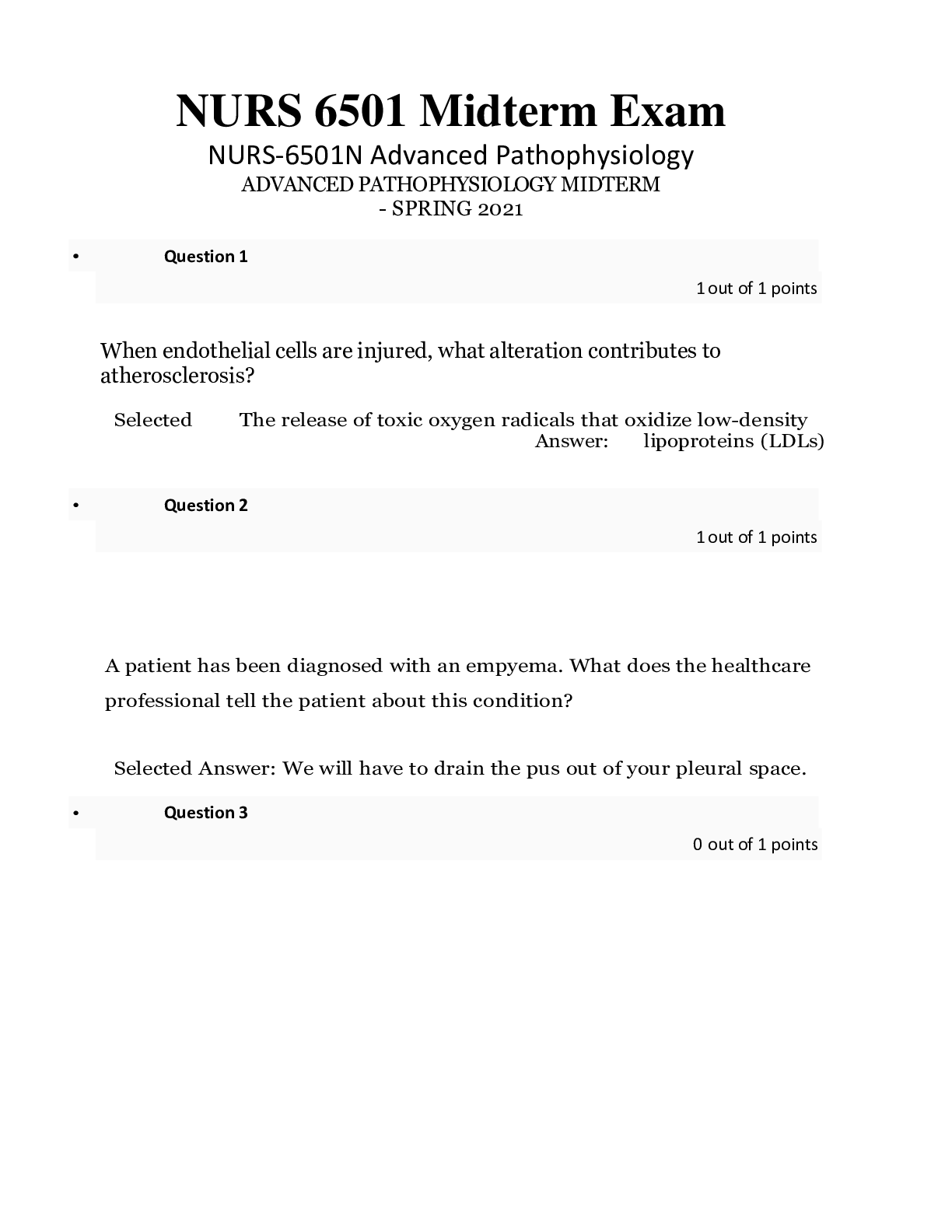
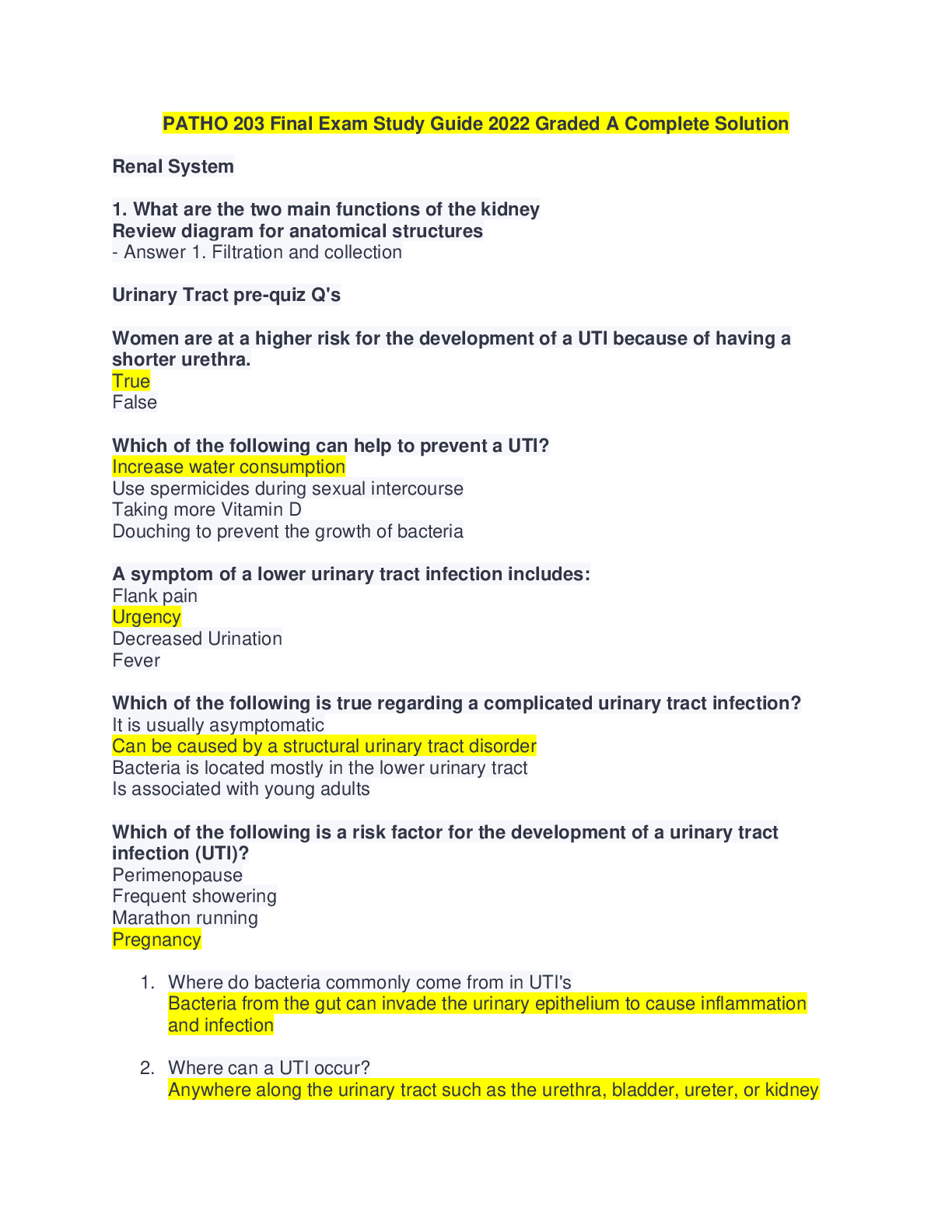
NSG5003 Week 6 Study Guide Graded A
Document Content and Description Below
Last updated: 3 years ago
Preview 1 out of 15 pages
Instant download

Buy this Document to get the Full Access Instantly
Provided by Students Who Aced it
We Verify Document Content to Gurantee Accuracy
Reviews( 0 )
Document information
Connected school, study & course
About the document
Uploaded On
Nov 27, 2022
Number of pages
15
Written in
All

Additional information
This document has been written for:
Uploaded
Nov 27, 2022
Downloads
0
Views
120
Topic Tags
Recommended For You
Get more on STUDY GUIDE »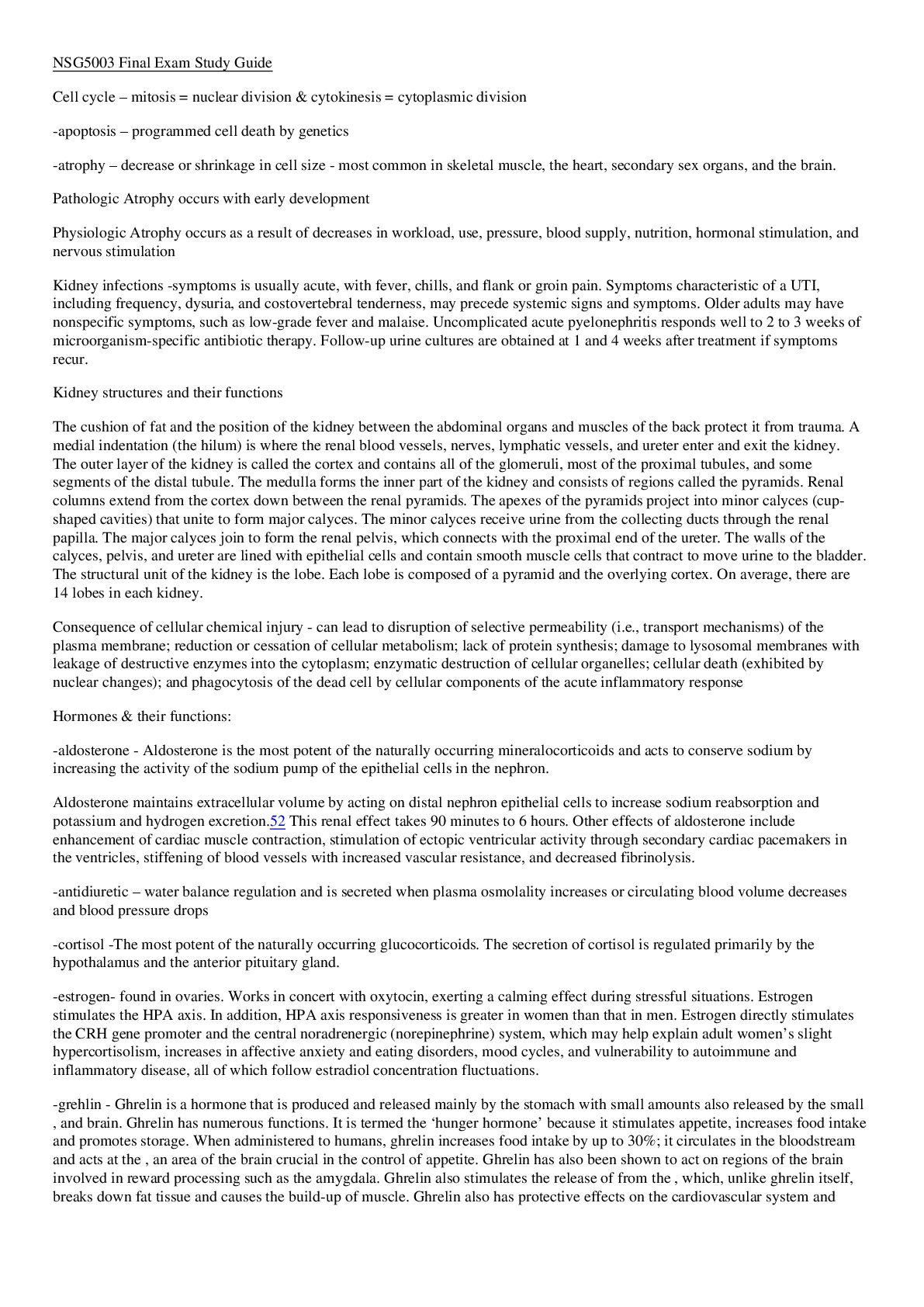

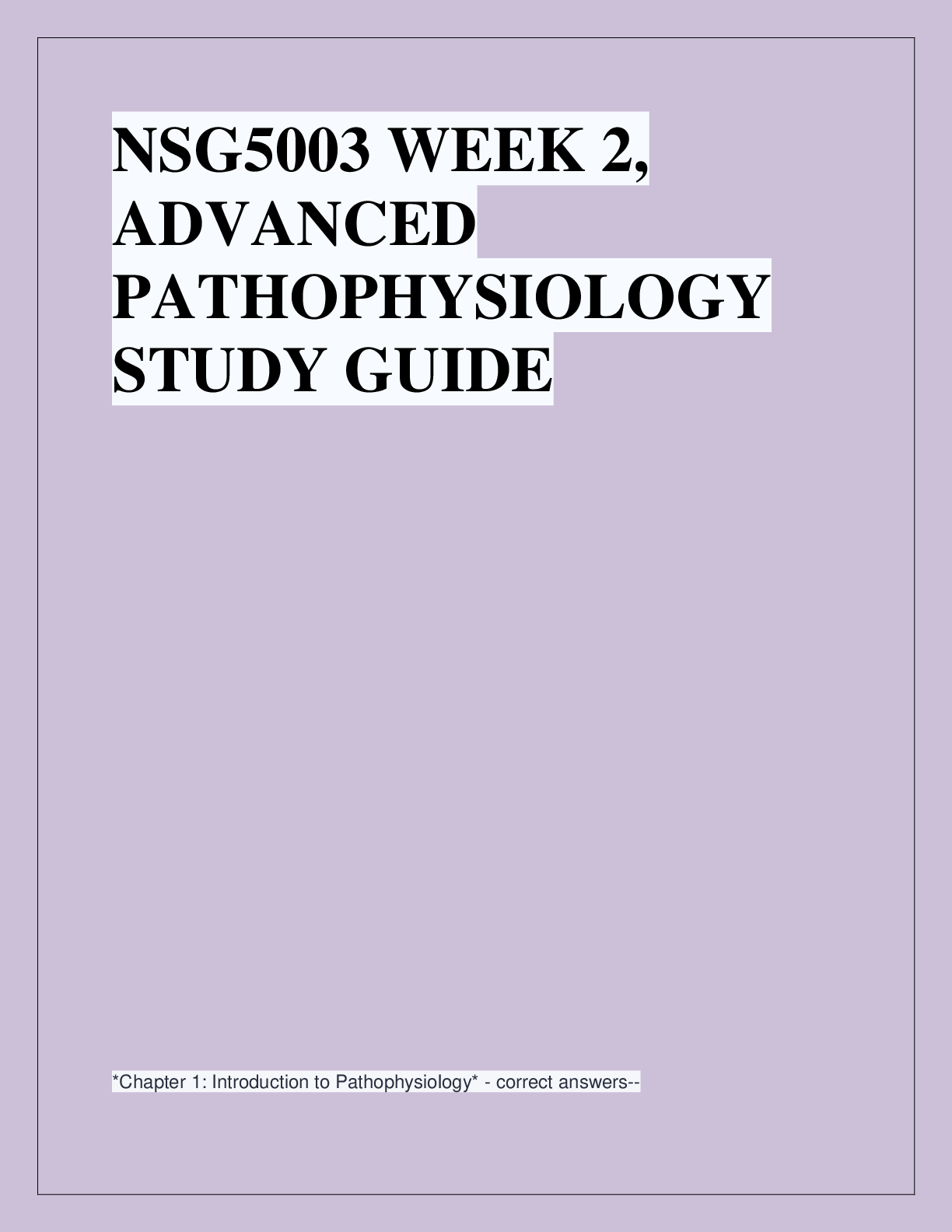
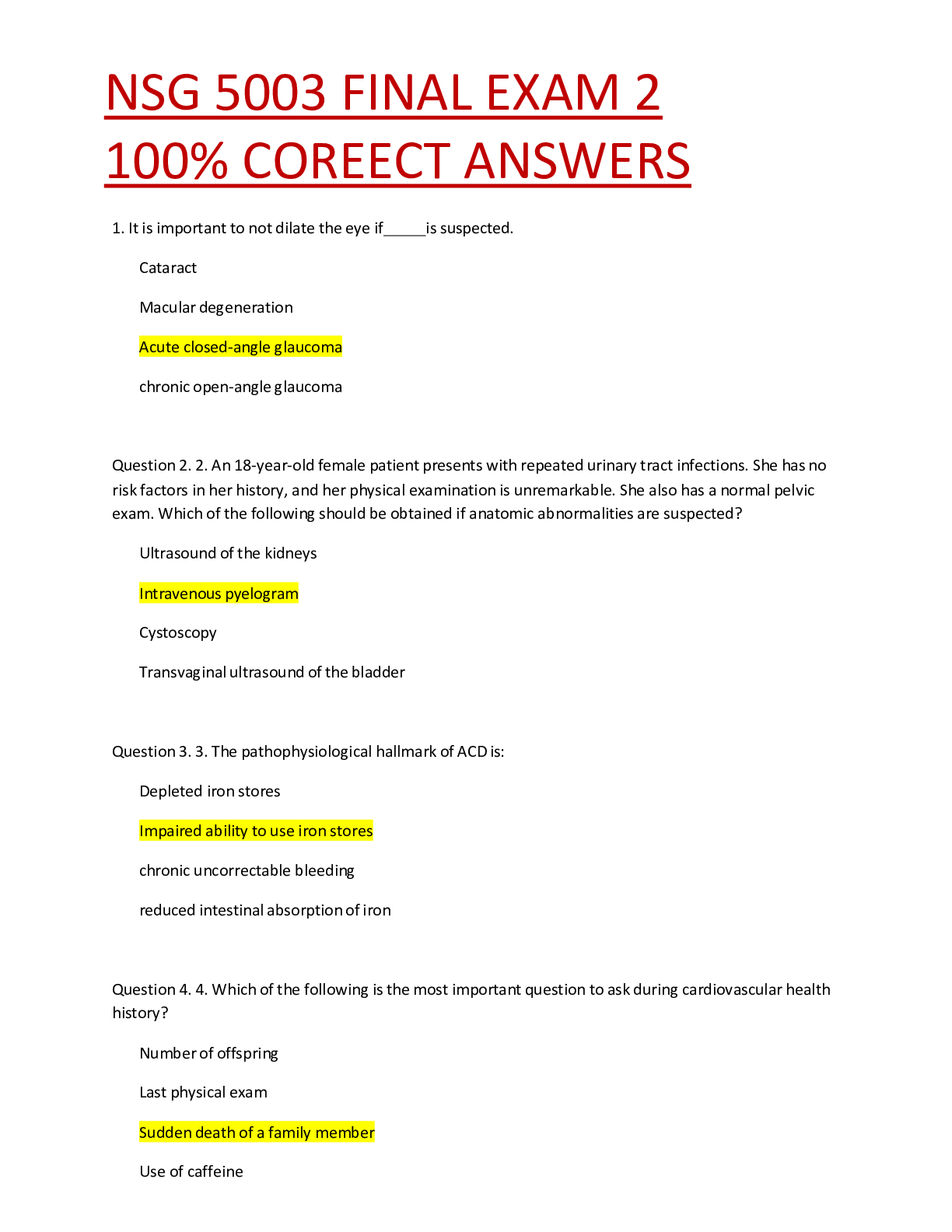
NSG 5003 FINAL EXAM 2 - Questions and Answers (latest 2020)

NSG 5003 Mid Term Exam 3 - Questions and Answers (Latest 2020)
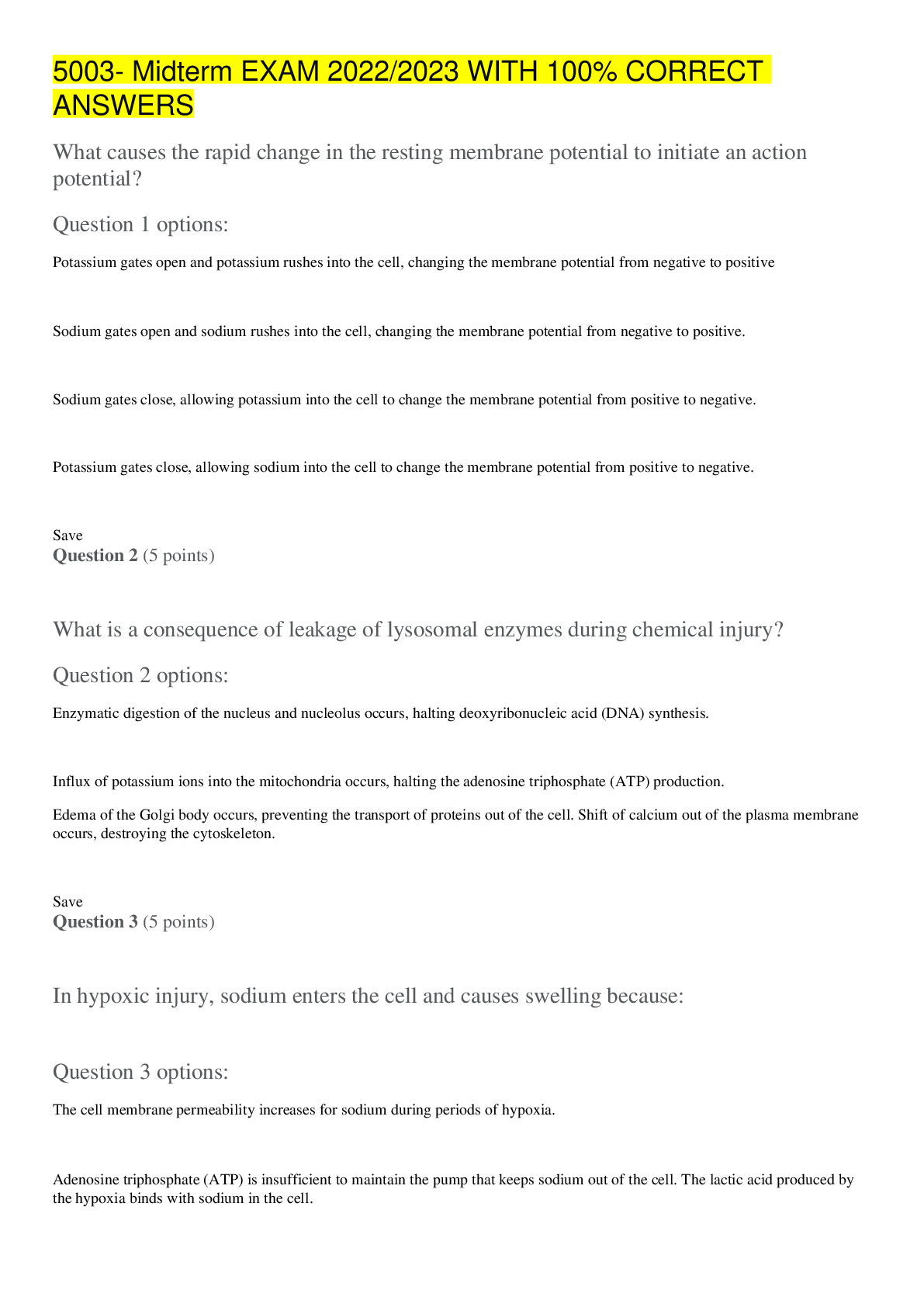
NSG 5003 Advanced Pathophysiology Midterm Exam-Questions and A...
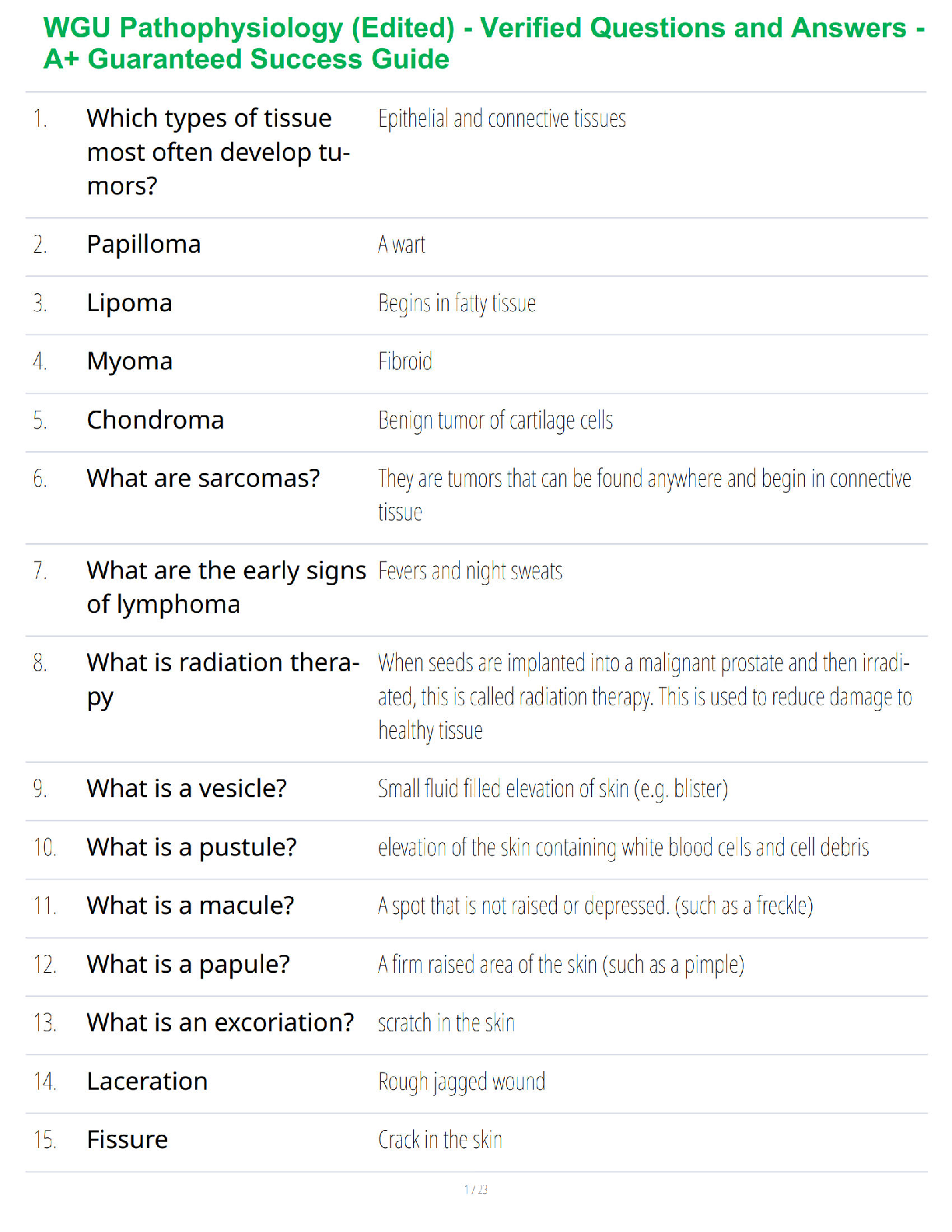
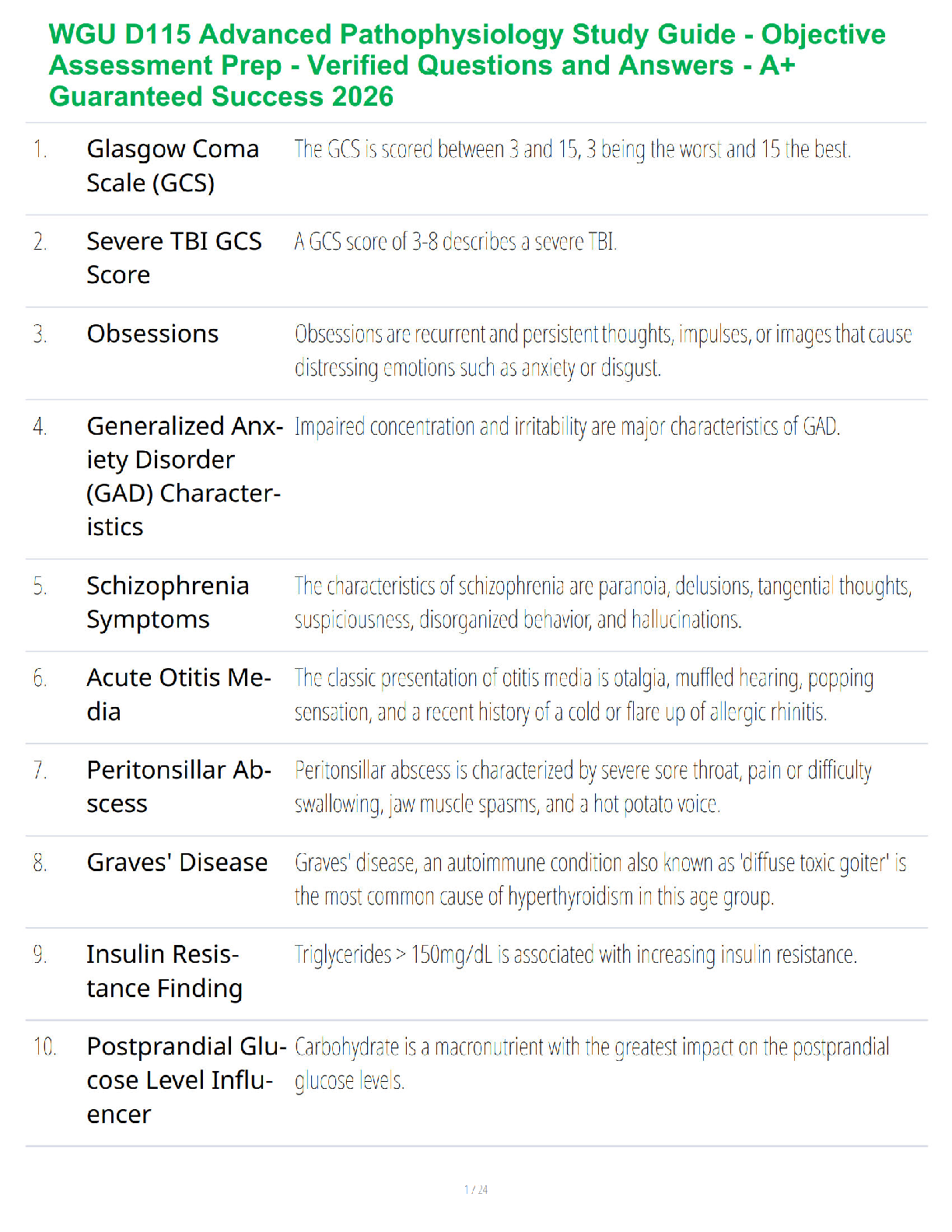
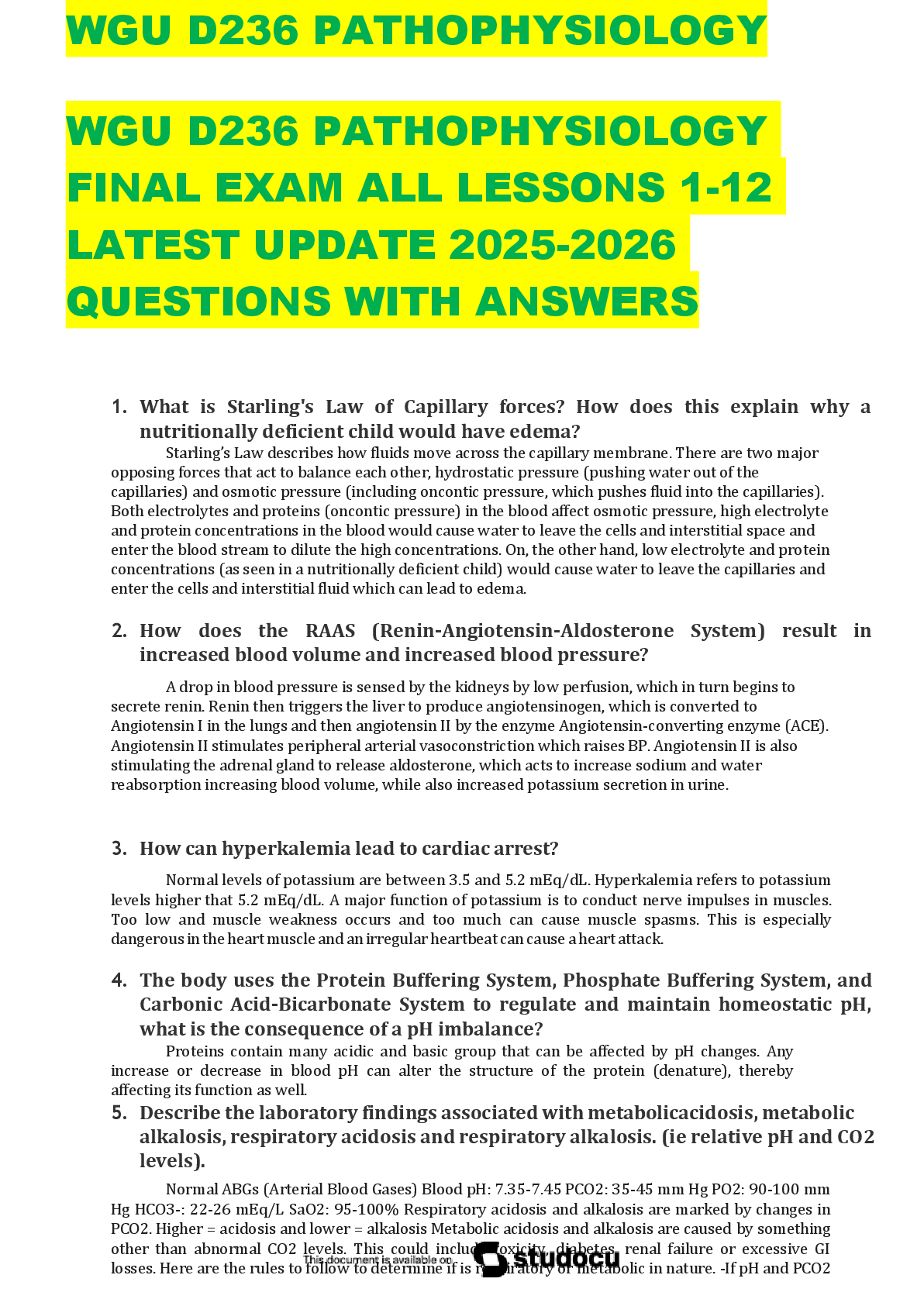
![Preview of eBook [PDF] Pathophysiology 7th Edition by Jacquelyn L. Banasik](https://scholarfriends.com/storage/YslD4meI2026-05-26-01-356a14ce9ff0e6c.png)
eBook [PDF] Pathophysiology 7th Edition by Jacquelyn L. Banasi...
Pathophysiology Physical Assessment, and Pharmacology Advanc...
eBook Pathophysiology, Physical Assessment, and Pharmacology A...
pdf (eBook) Pathophysiology, Physical Assessment, and Pharmaco...
![Preview of ebook [PDF] Pathophysiology 8th Edition By Sue E. Huether MS PhD, Kathryn L. McCance MS P](https://browseimages.nyc3.digitaloceanspaces.com/paper-images/2024/Aug/26/Z8DvWZha2024-08-26-01-1766cc561e9219c.png)
ebook [PDF] Pathophysiology 8th Edition By Sue E. Huether MS...