Dynamics Correct Answer volume and articulation of sounds
Form Correct Answer underlying organizational structure of the sounds
Texture Correct Answer phonic structure or relationships between the sounds
Pitch C
...
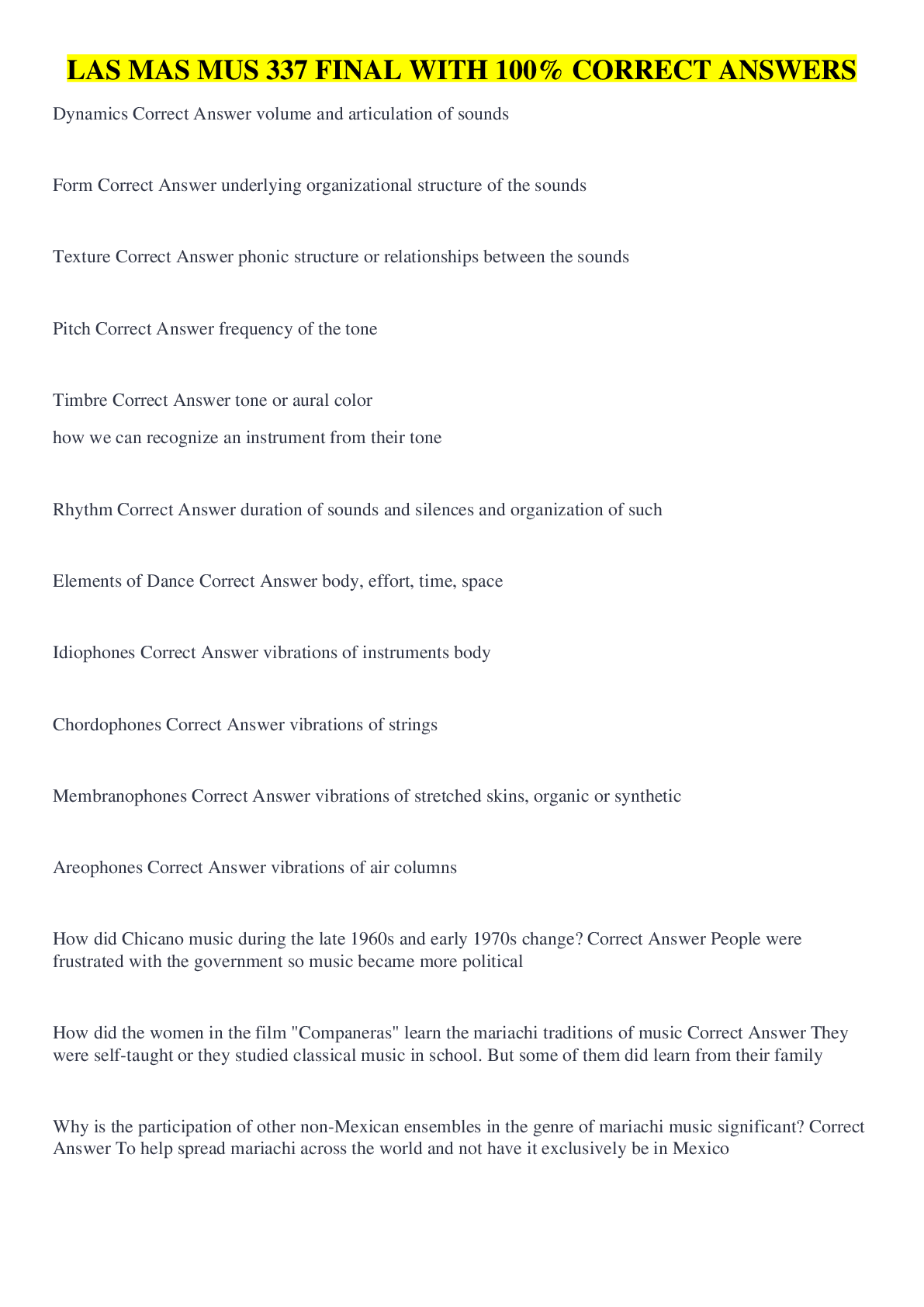
Dynamics Correct Answer volume and articulation of sounds
Form Correct Answer underlying organizational structure of the sounds
Texture Correct Answer phonic structure or relationships between the sounds
Pitch Correct Answer frequency of the tone
Timbre Correct Answer tone or aural color
how we can recognize an instrument from their tone
Rhythm Correct Answer duration of sounds and silences and organization of such
Elements of Dance Correct Answer body, effort, time, space
Idiophones Correct Answer vibrations of instruments body
Chordophones Correct Answer vibrations of strings
Membranophones Correct Answer vibrations of stretched skins, organic or synthetic
Areophones Correct Answer vibrations of air columns
How did Chicano music during the late 1960s and early 1970s change? Correct Answer People were frustrated with the government so music became more political
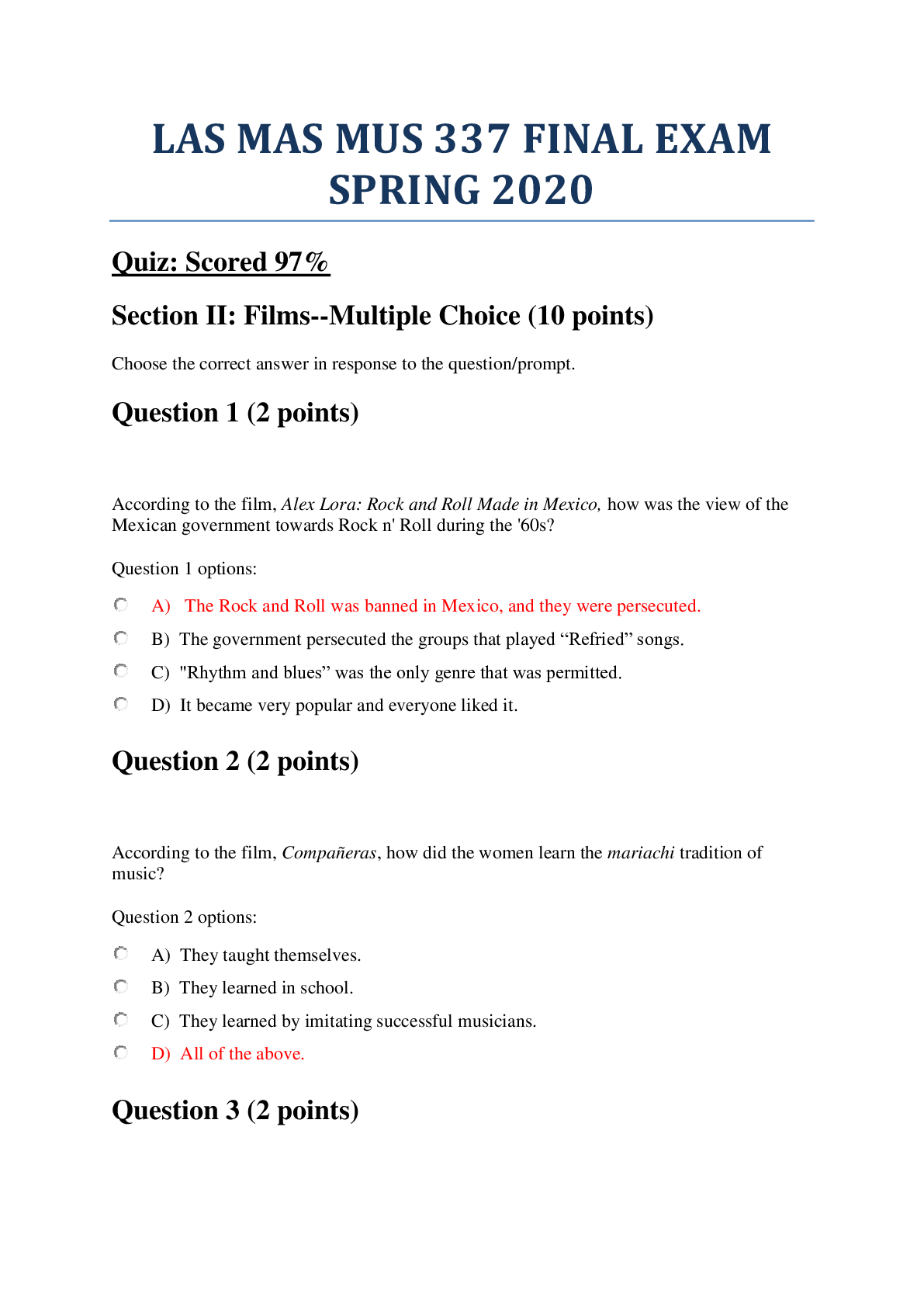
How did the women in the film "Companeras" learn the mariachi traditions of music Correct Answer They were self-taught or they studied classical music in school. But some of them did learn from their family
Why is the participation of other non-Mexican ensembles in the genre of mariachi music significant? Correct Answer To help spread mariachi across the world and not have it exclusively be in Mexico
What are some of the issues in Mexican corridos? Correct Answer Not only drugs but they also discuss immigration and the Mexican work ethic
What are some of the issue of Mexico mentioned in the film "Hecho en Mexico"? Correct Answer Gender, borders, and the environment/pollution
Essentialization Correct Answer The process of reducing people and their cultural expression to a limited set of essential characteristics
[Show More]