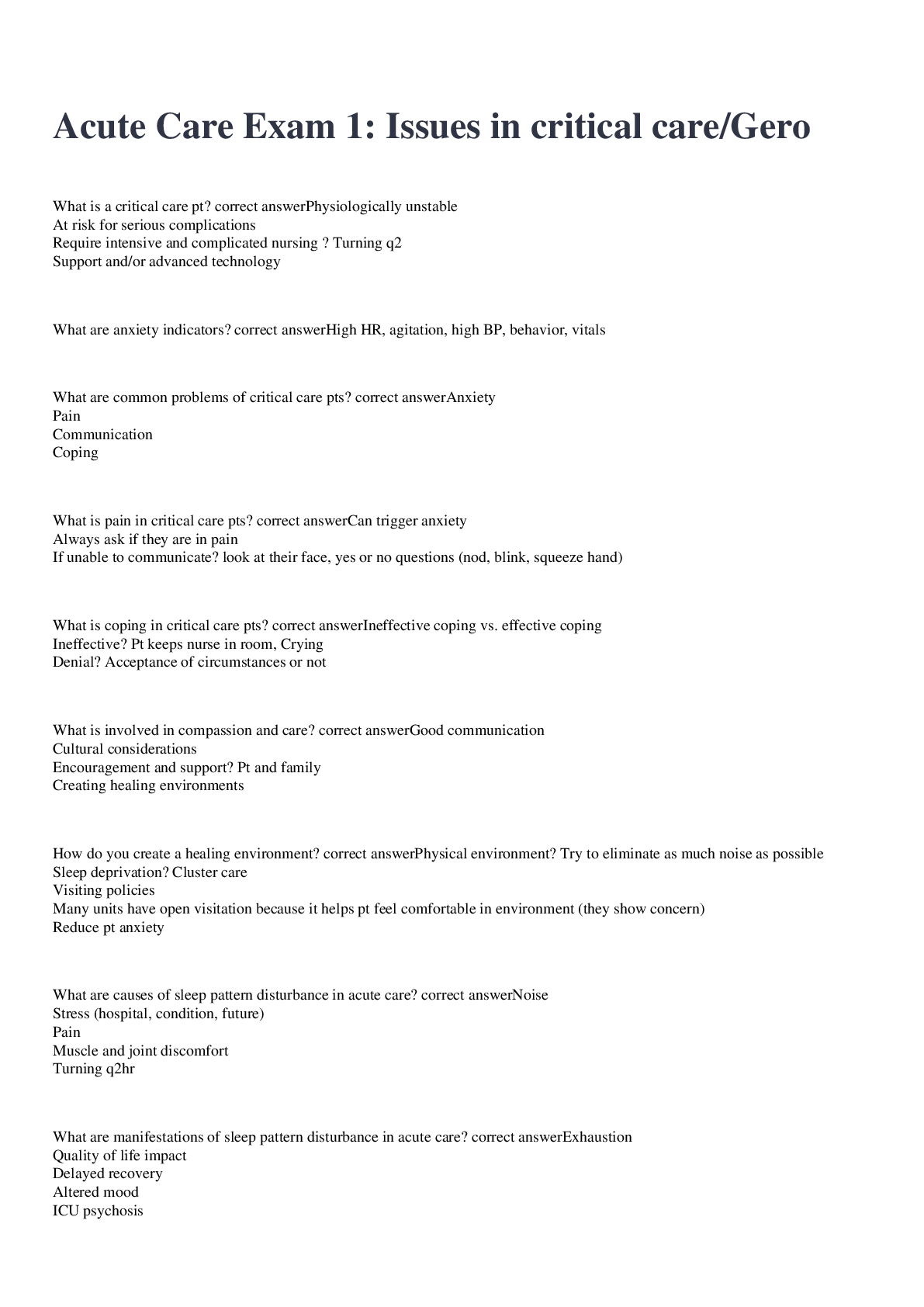
What is a critical care pt? correct answerPhysiologically unstable
At risk for serious complications
Require intensive and complicated nursing → Turning q2
Support and/or advanced technology
What are anxiety indica
...
What is a critical care pt? correct answerPhysiologically unstable
At risk for serious complications
Require intensive and complicated nursing → Turning q2
Support and/or advanced technology
What are anxiety indicators? correct answerHigh HR, agitation, high BP, behavior, vitals
What are common problems of critical care pts? correct answerAnxiety
Pain
Communication
Coping
What is pain in critical care pts? correct answerCan trigger anxiety
Always ask if they are in pain
If unable to communicate→ look at their face, yes or no questions (nod, blink, squeeze hand)
What is coping in critical care pts? correct answerIneffective coping vs. effective coping
Ineffective→ Pt keeps nurse in room, Crying
Denial→ Acceptance of circumstances or not
What is involved in compassion and care? correct answerGood communication
Cultural considerations
Encouragement and support→ Pt and family
Creating healing environments
How do you create a healing environment? correct answerPhysical environment→ Try to eliminate as much noise as possible
Sleep deprivation→ Cluster care
Visiting policies
Many units have open visitation because it helps pt feel comfortable in environment (they show concern)
Reduce pt anxiety
What are causes of sleep pattern disturbance in acute care? correct answerNoise
Stress (hospital, condition, future)
Pain
Muscle and joint discomfort
Turning q2hr
What are manifestations of sleep pattern disturbance in acute care? correct answerExhaustion
Quality of life impact
Delayed recovery
Altered mood
ICU psychosis
What is medical management of sleep pattern disturbance in acute care? correct answerPharmacologic intervention: Impact on elderly→ (hypnotic benzodiazepine) worsens condition (night tremors, nightmares, increased agitation)
What is nursing management of sleep pattern disturbance in acute care? correct answerInterventions to promote comfort and relaxation
Limit interruptions and coordinate/cluster care
Minimize awakenings
Drapes and blinds open at day (to get them to sleeping cycle)
Minimize noise
How do you determine the need for sedation/analgesia? correct answerAssess vitals
Pain assessment
Delirium assessment
What are causes of agitation? correct answerPainful procedures
Sleep deprivation
Fear and anxiety
[Show More]